Surrealism Chased the Dream, Painting Chases the Surface
In short
They part company at the destination. Both refuse the plan, and that is where the resemblance ends. Surrealist automatism was an instrument aimed at a specific target: the material the conscious mind censors — dreams, repressed desire, the unedited associative flow. An abstract painter working without a plan is aimed at something in the room, not in the mind. The question in front of her is what the last layer just did to the one under it, and what the colour is asking for next. One practice interrogates the self. The other answers the surface. Same refusal, opposite direction.
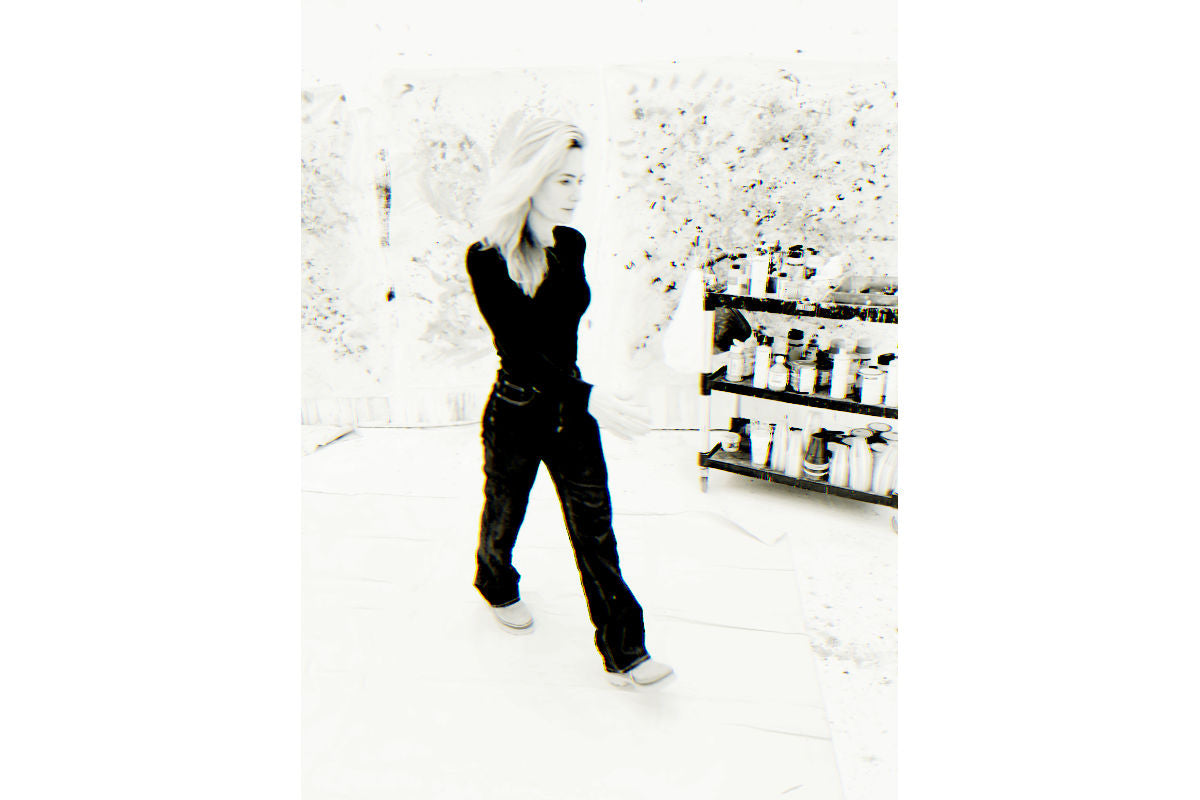
Angela Simeone is a contemporary abstract painter based in Nashville, Tennessee, working in oil and mixed media on canvas.
What did Breton actually mean by automatism?
Something narrower than the way the word gets used now. In the Manifeste du surréalisme, published in Paris in October 1924, André Breton defined Surrealism as "pure psychic automatism, by which one proposes to express — verbally, in writing, or in any other manner — the true function of thought, in the absence of control exerted by reason, and exempt from all aesthetic or moral concern." (Quoted in Leann Davis Alspaugh's translation, The New Criterion, 6 August 2026.)
Read that closely and the target is named twice: thought, and the absence of control exerted by reason. Automatism was a retrieval technique. Its subject was the mind, and painting was one of several instruments — Breton's manifesto was primarily about writing, and gave the visual arts a footnote. Only later, as the Frist Art Museum's own gallery text for the current Tate exhibition puts it, did artists develop their own automatic processes, so that "automatism let artists' suppressed thoughts and feelings flow outward, generating hidden forms that emerged from chance marks that could be accepted or augmented."
Chance marks that could be accepted or augmented. Every painter who has ever worked without a plan recognises that sentence. The difference is what the mark is understood to be evidence of.
What does the 2026 Tate exhibition in Nashville show about it?
"International Surrealism from Tate: Fifty Years of Dreams" is at the Frist Art Museum in Nashville through 30 August 2026, drawn from the Tate's collection and organised in six loose, transhistorical sections rather than a chronology — because, as the museum notes, Surrealism was made of individual responses rather than a single style.
Reviewing it for The New Criterion on 6 August 2026, Leann Davis Alspaugh makes the point that matters most here: the exhibition "takes a refreshingly wide view of Surrealism, reminding us that, while some artists were for a time companions, they soon moved far beyond the often-airless confines of what was initially an exhilarating but ultimately limited endeavor." She notes that, unlike the Impressionists and Cubists, "the Surrealists never dictated any one style" — Max Ernst's grattage landscapes, de Chirico's classical vistas, Dalí's dreamscapes and Man Ray's rayographs were all pursuing what Breton called a "unification" of "interior reality and exterior reality."
Unification of interior and exterior. That is the tell. The exterior — the canvas, the pigment, the actual surface — was a means of reaching the interior. It was never the point of arrival.
The exhibition also carries the movement's own most generous line about what automatism was for. The French Surrealist Adrien Dax described it in 1950, in a phrase the Frist quotes in its automatism gallery, as "a liberating re-education of sight." And the poet Louis Aragon, recalling in 1924 how artists entered trance states until images overwhelmed them, wrote: "We could no longer control them. We had become their domain, a setting for them." Both describe a person being worked on. Neither describes a person working a surface.
Where does an unplanned abstract painting go instead?
Into the material, and it stays there.
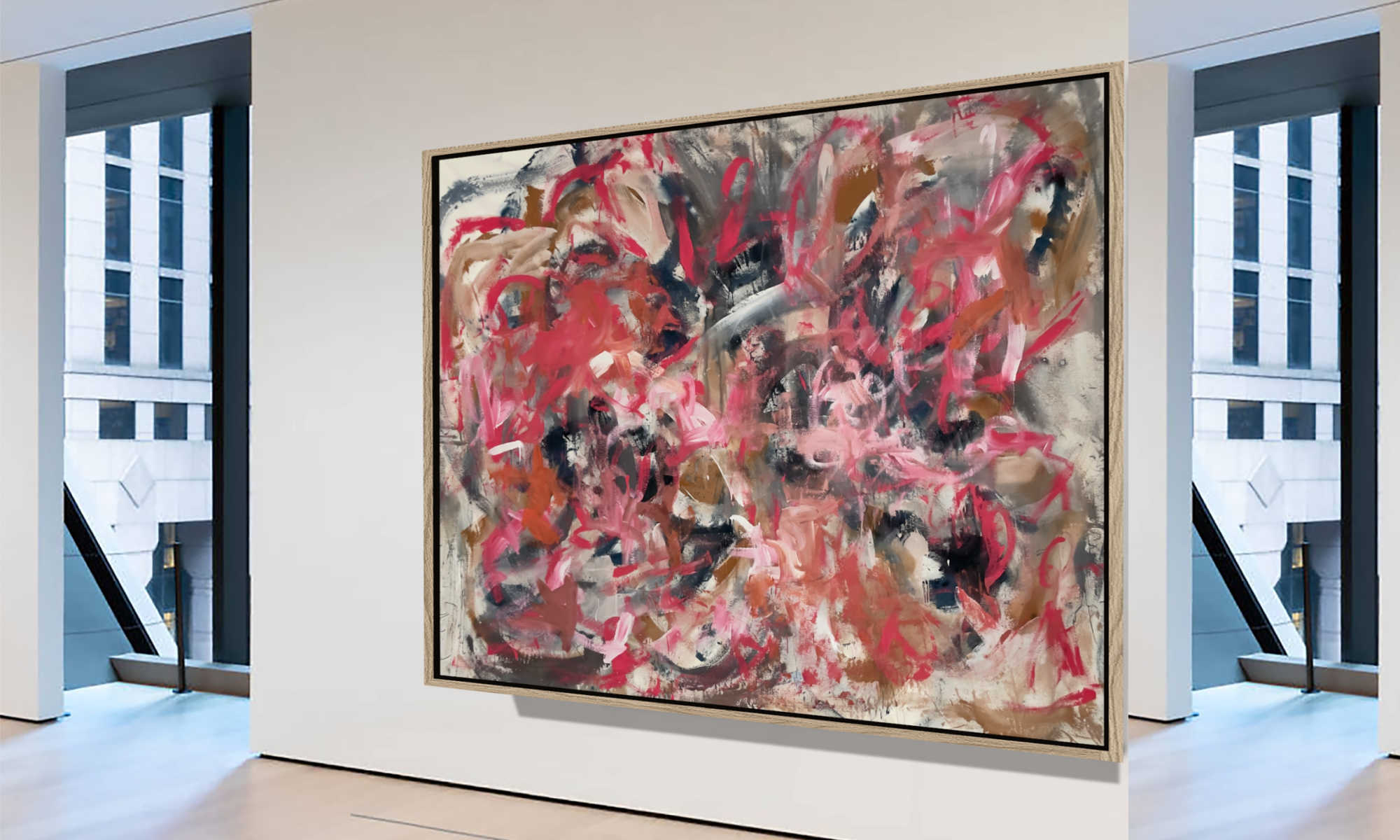
I don't plan a painting before I start it. That much is genuinely shared ground, and I have written before about how long a tradition that refusal belongs to. But what I am not doing is fishing. There is no submerged image I am trying to bring up, no censored content I am trying to get past. What I am doing is answering.
A colour goes down. It changes the value of the one beside it, which was correct an hour ago and is now wrong. I mix toward its neighbour to fix it, and that adjustment throws the third one off. Charcoal underdrawing shows through a thin passage and I decide to leave it readable, because burying it would cost the painting the record of its own thinking. Oil thinned with medium, a palette knife, a fingertip, sometimes weeks of a surface being worked back before it settles. The whole sequence is a conversation with a physical object that keeps changing its terms. Not knowing is the primary draw, but what I don't know is what the painting will do — not what I will turn out to have been hiding.
That is the divergence, and it is not a small one. Automatism treats the hand as a channel. Painting without a plan treats the hand as a respondent. One is listening inward; the other is looking at the canvas.
Does the distinction change anything for a person living with the work?
It changes what there is to look for, which is most of what looking is.
If a painting were a transcript of an unconscious, the honest response would be interpretation — what does this mean, what was she hiding, what is the symbol. If a painting is a record of decisions made in response to a surface, the honest response is closer to reading: which mark came first, what got covered and what got left, where did she change her mind, what is holding this field together. The second question is available to anyone standing in front of the canvas. It requires no theory and no key.
Claude Cahun, whose work is in the Tate show, wrote that "we must discover, handle, domesticate, make irrational objects for ourselves." That instinct — that the encounter belongs to the person having it, not to the person who made the thing — survives the difference between the two practices entirely. So does Suzanne Césaire's compression of what the whole enterprise was for: "a single magic word: liberty."
And the divergence is not a hierarchy. Alspaugh closes her review with Jean Arp's Sculpture to Be Lost in the Forest — a bronze the artist meant to be nestled outdoors and discovered by a passerby — and observes that "nothing is more surreal than reality itself." A painter answering a surface and a Surrealist answering a dream are both, in the end, betting that a made object can hold more than the person who made it consciously put there. They simply disagree about where that surplus comes from.
Where to go next
- Working Without A Plan Is A Real Painting Tradition
- Angela Simeone
- Paintings Available Now
- Trusting Your Own Eye Is Not A Beginners Mistake
Frequently asked questions
What is automatism in art?
Automatism is a set of techniques — automatic writing, improvised or trance drawing, dripping, spilling, grattage — that André Breton defined in his 1924 Surrealist Manifesto as a way of expressing "the true function of thought, in the absence of control exerted by reason." The aim was to bypass conscious censorship and reach unconscious material.
Is abstract painting the same as automatism?
No. They share a refusal to plan, but they aim at different things. Automatism aims at the unconscious mind. An abstract painter working without a plan is responding to what the paint and the surface are doing in front of her, decision by decision. The method looks similar from outside; the subject is different.
Can I see Surrealist automatism in person in 2026?
Yes, through 30 August 2026 — "International Surrealism from Tate: Fifty Years of Dreams" at the Frist Art Museum in Nashville includes a dedicated automatism section drawn from the Tate's collection.
How do you look at an abstract painting made without a plan?
Read it rather than decode it. Look for which mark came first, what was covered and what was deliberately left visible, where a colour was adjusted toward its neighbour, and what is holding the composition together. Those are answerable questions from a standing distance.
See the work
Every painting is an original, one of one, in oil and mixed media on canvas. View original paintings available now, or start a commission.