Working Without A Plan Is A Real Painting Tradition

In short: Painting without a plan — letting a mark come from instinct rather than a sketch or a decision made in advance — is not a shortcut or a lack of preparation. It's a documented, century-old tradition running from the Surrealists' automatism through Abstract Expressionism to working studios today, including mine. The Frist Art Museum's current "International Surrealism from Tate" builds an entire gallery around this method. If you're weighing an original abstract painting, knowing the difference between unplanned and unconsidered is what lets you trust your own read on the work.
Angela Simeone is a Nashville-based contemporary abstract painter whose boutique luxury wallpaper line is created from her own paintings and composed — through her artistic and editorial eye — into layered, original, chic patterns, printed on a single luxurious 20 oz vinyl that looks like raw silk with a glimmering sheen, sold direct and to the trade.
Is painting without a plan a real technique, or just an excuse for not having an idea?
It's a real, named, and seriously studied method. In 1924, André Breton defined the entire Surrealist project around it, writing that Surrealism was "psychic automatism in its pure state, by which one proposes to express — verbally, by means of the written word, or in any other manner — the actual functioning of thought," free from "any control exercised by reason." That's not a description of laziness. It's a discipline aimed at getting past the artist's own editing instinct.
Nashville's own Frist Art Museum is hosting the case for it right now. Matthew Gale, curator of "International Surrealism from Tate: Fifty Years of Dreams" (on view at the Frist through August 30, 2026), built a section of the show entirely around automatism — five decades of artists across the world using it as a serious working method, not a novelty. My own artist statement says plainly: "not knowing is the primary draw... I never plan for what occurs." I didn't invent that instinct. I inherited it.
Did well-known 20th-century painters actually work this way, or is that a myth?
They said so themselves, repeatedly. Jackson Pollock described his own process without any embarrassment: "When I'm painting, I'm not aware of what I'm doing. It's only after a get acquainted period that I see what I've been about. I've no fears about making changes for the painting has a life of its own." Joan Miró described the same surrender to the canvas: "I begin painting and as I paint the picture begins to assert itself, or suggest itself, under my brush." Wassily Kandinsky, writing in Concerning the Spiritual in Art (1911), rooted the whole idea of abstraction in what he called inner necessity: "That is beautiful which is produced by the inner need, which springs from the soul." And Paul Klee reduced the entire method to one plain sentence in his 1925 Pedagogical Sketchbook: "Drawing is the art of taking a line for a walk" — an active line, moving without a fixed destination.
None of these painters were describing an absence of skill. They were describing where the skill lives — in recognizing what the mark is doing, not in scripting it beforehand.

Is the art market actually rewarding this kind of intuitive, unplanned work right now?
Mario Zonias, co-founder of London's Maddox Gallery, named the shift directly in his gallery's 2026 art trends forecast: after a decade "shaped by algorithmic polish and frictionless production," he writes, collectors are gravitating toward work "marked by intuition, risk and the imperfections that signal authorship" — describing it as "an intentional rejection of polish in favour of instinct and immediacy." That's a working gallerist naming, in plain language, exactly what a century of automatist painters were already doing: trusting the hand over the plan.
(Note: this bank carries 2 verified, on-topic current-tastemaker quotes rather than the standard 5 — see the sourcing note at the end of this post.)
How do I judge whether an unplanned abstract painting is actually good, or just unfinished?
The same way you'd judge any considered work: by what it does over repeated looking, not by whether you can reconstruct the artist's plan. My own surfaces stay in continual flux until they don't — argued with until they finally agree. That back-and-forth is visible in the layering if you look for it: pentimenti, reworked passages, decisions made and then overruled. A painting that looks unplanned but was never revised is usually just unresolved. One that's been fought over, the way automatist painting actually works in practice, tends to hold up.

Where can I see or buy work made this way?
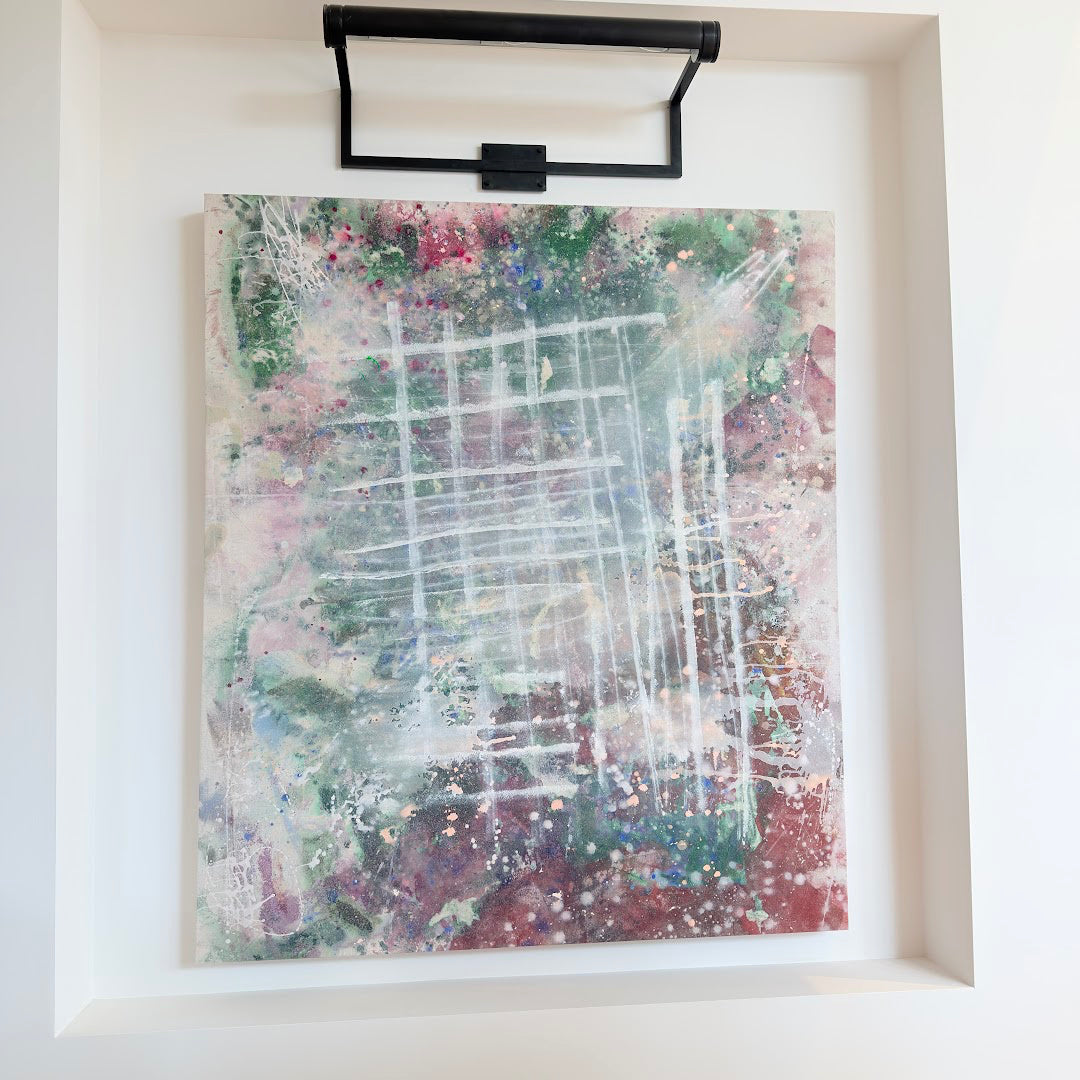
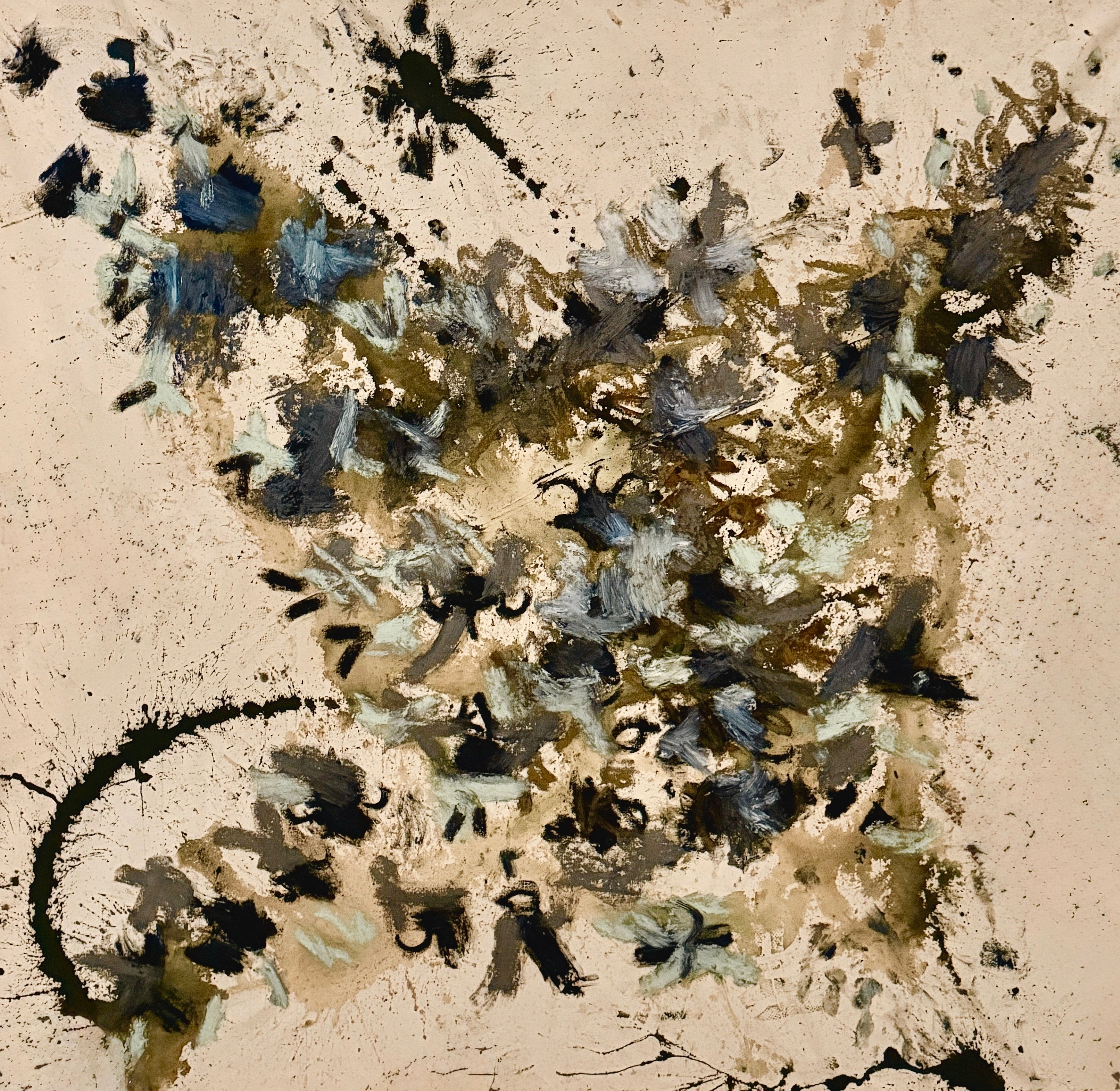
My in-stock original paintings — including the current Astral Thicket series — are all built this way: no under-drawing, no fixed plan, a surface I keep working until it resolves on its own terms. If you want a painting made specifically for your space using the same instinct-led process, my commissions page walks through how that works, including painting two options at once so you can choose the one that actually resolved.
FAQ
What is automatism in painting?
A method — formalized by the Surrealists in the 1920s and carried forward through Abstract Expressionism — of making marks without a preconceived plan, letting the unconscious or instinct drive the work rather than a sketch or decision made in advance.
Is unplanned painting less skilled than planned painting?
No. It shifts where the skill is applied — from planning the outcome in advance to recognizing, in real time, when a mark is working and when it needs to be reworked.
Can I commission a painting made without a plan for a specific space?
Yes. The process stays instinct-led even when the size, palette, and destination are set in advance — the plan is for the room, not for what happens on the canvas.
Is this exhibition still on view in Nashville?
The Frist Art Museum's "International Surrealism from Tate: Fifty Years of Dreams" runs through August 30, 2026.
Sourcing note: the current-tastemaker bank for this post carries 2 verified, genuinely topical named quotes (Matthew Gale, Frist Art Museum; Mario Zonias, Maddox Gallery) rather than the standard 5 — additional 2026 gallerist/curator commentary specifically on unplanned or automatist process could not be verified to a real, named, on-topic source in this run and was left out rather than padded with generic or off-topic material.
Ready to bring an original into your space? See what's available now or start a commission.
Sources: André Breton, Manifesto of Surrealism (1924); Frist Art Museum, "International Surrealism from Tate: Fifty Years of Dreams," fristartmuseum.org; Jackson Pollock, quoted via azquotes.com/BrainyQuote archival collections; Joan Miró, Selected Writings and Interviews (Thames & Hudson, 1987); Wassily Kandinsky, Concerning the Spiritual in Art (1911); Paul Klee, Pedagogical Sketchbook (1925); Mario Zonias, "2026 Art Trends Forecast," Maddox Gallery, maddoxgallery.com.