Ninety Percent of an Advisor's Job Is Saying No
In short
An advisor gets you filtering, not access. That is the job, stated plainly by the people who do it: the adviser Ralph DeLuca told Robb Report in March 2026 that "ninety percent of the time, my job is to say no," and described himself as "a hired bad cop." He is also candid that a gallery's loyalties run first to its artists and then to its own bottom line, so a new name may not be treated as a priority. Add the fact that most of the strongest work at a major fair is placed before the doors open, and the pattern is clear. Every conventional route to original art adds a person between you and the work. The shortest available route removes them all: buy from a working artist's studio.
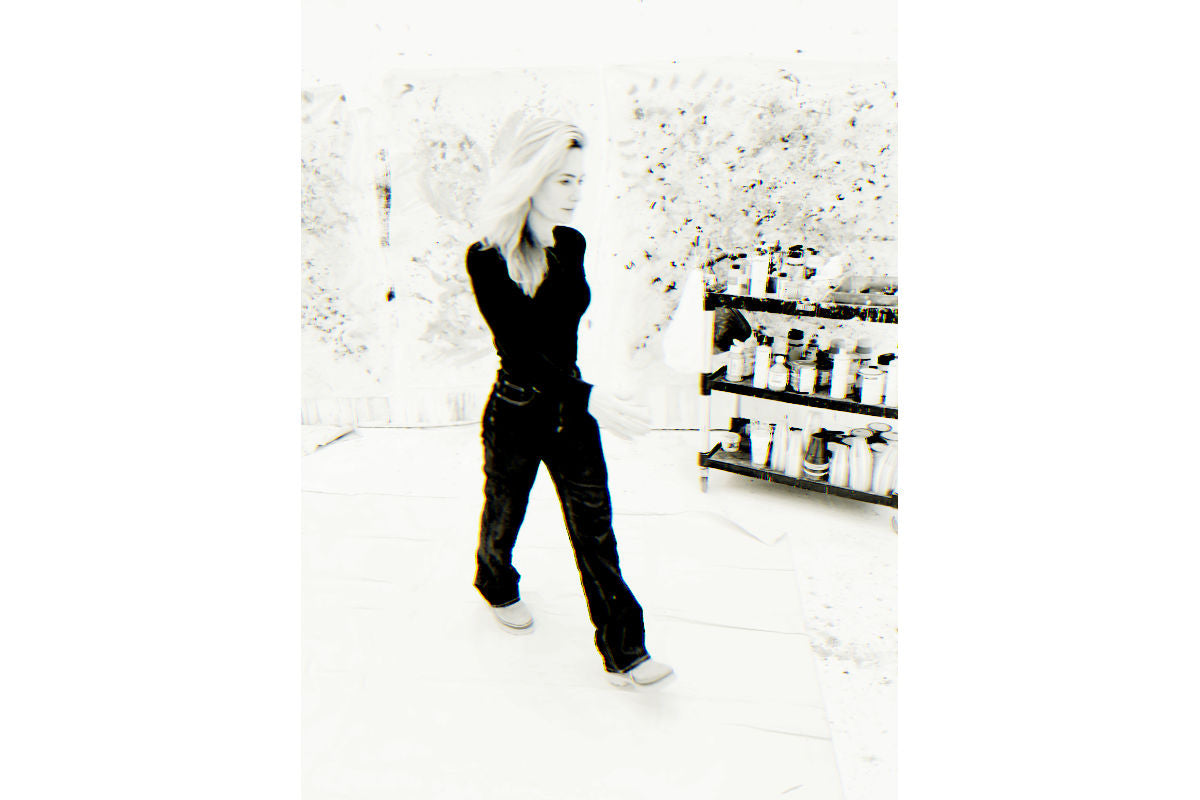
Angela Simeone is a contemporary abstract painter based in Nashville, Tennessee, working in oil and mixed media on canvas.
What does an art advisor actually do?
Says no, mostly, and that is a defensible service rather than a criticism. Ralph DeLuca — an adviser whose clients have included Leonardo DiCaprio, Steven Spielberg and Martin Scorsese, profiled by Robb Report in its March 2026 "Masters of Luxury" series — is unusually direct about the mechanics. "Ninety percent of the time, my job is to say no," he says, casting himself as "a hired bad cop." What a collector is buying is discipline: someone whose incentive is to talk you out of the wrong thing.
DeLuca is equally direct about the counterparty. Galleries' loyalties, he explains, sit first with their artists and then with their own bottom line, which means a client who is not yet a known quantity may not be treated as a priority. That is not a scandal. It is a business with a waiting list, behaving like one.
But it does answer the question people are really asking. An advisor does not hand you a key to a locked room. An advisor is a second filter placed in front of a first one.
Is walking an art fair how serious collectors find work?
Rarely, if the work is genuinely strong. DeLuca's account of fair week is that most of the best material is placed well in advance through existing relationships — which means opening day is frequently a public viewing of private decisions.
For a collector with a decades-deep Rolodex, that system works, because the relationship is the access. For everyone else, the aisles are a beautiful education and an unreliable acquisition strategy. Which raises the more useful question: if relationships are what actually move work, whose relationship is worth building?
Where do designers with the best-sourced rooms actually find art?
They name specific, small, direct sources — and they say it out loud. Business of Home's "Designers' best-kept-secret sources in wallcovering, art and more" put the question to working designers directly. ⚠ Worth stating plainly: that piece ran on 1 February 2019, not this season. The quotes below are verbatim and the designers are real; the vintage is disclosed rather than dressed up, because what they describe has become more true since, not less.
Shelly Lynch-Sparks, founder and principal designer at the New York firm Hyphen & Co., named art as the recurring friction point: "Whether it's on the commercial or residential side, we have found that sourcing art is always a challenge during the design process. Sometimes working with an art consultant can be intimidating or limiting, and the online options feel overwhelming and all over the place." What resolved it for her was not a bigger platform but a specific relationship — a named rep who works on-site with her and her clients, in a process she describes as "transparent but seamless," with a house that "commit[s] to the client and the artist" both.
Dayna Flory Rasschaert, founder and principal designer at Dayna Flory Interiors in Bloomfield Hills, Michigan, put the same instinct in one sentence: "Supporting artists and boutique wallpaper mills is a niche we have been exploring, and client response has been overwhelmingly positive." And Joy Moyler, founder and principal designer of Joy Moyler Interiors in New York, describing the London workshop she had walked past for years before going in, arrived at the same place from the craft side — "full-on magic," "the very best in craftsmanship."
Three designers, three categories, one answer. The insider channel is not a bigger Rolodex. It is a shorter line to whoever made the thing.
Is leasing an original painting a reasonable middle path?
For rotation, yes. For a one-of-one, it works against the reason you wanted it.
Leasing and lease-to-own are real behaviours, not marketing constructs — Lynch-Sparks names lease-to-own in that same 2019 piece as one of the reasons her source worked: "You can even lease-to-own if you aren't entirely ready to commit." For staging, for a commercial lobby on a refresh cycle, for a client who genuinely wants to change the walls every two years, that is a sensible instrument.
A one-of-one original asks for the opposite instinct. Part of what you are paying for is the fact that nobody else will ever own this exact canvas — the surface it has, the decisions left visible in it, the specific weeks it took to settle. A lease can give you the object for a while. It cannot give you the singularity, because the singularity is the part that does not transfer on a schedule.
Which is a useful test, actually. If a piece feels right to lease, it may be decor doing a good job. If the thought of returning it is unpleasant, that is the answer to a different question.
What does the shortest path actually look like?
One conversation, and no one standing in it.
Working directly with the artist means no advisor's filter, no gallery waitlist, no fair placed a month before you arrived. It means the person answering your questions about a painting is the person who mixed the colour. In my own practice that is also how commissions run: I paint the room its own piece and present finished options rather than a sketch, so the choice happens in front of real work. For trade, it means a direct line, a trade program, and no intermediary marking up the piece on its way to your client's wall.
Mary Cassatt — an American who built an entire career outside the channels available to her — put the case for that arrangement in nine words: "I am independent! I can live alone and I love to work." Faith Ringgold made it an instruction: "You can't sit around and wait for somebody to say who you are. You need to write it and paint it and do it." Corita Kent compressed the working philosophy behind it into her own studio rules — "Nothing is a mistake. There's no win and no fail. There's only make."
And the reason any of this matters is not procurement. Ben Nicholson described what he thought painting was actually for: "what we are all searching for is the understanding and realisation of infinity." Wolf Kahn said the same thing from the other end — "ambiguity is the essence of art." Neither is a description of a transaction. Both are descriptions of what you are trying to get into a room, and the fewer people standing between you and it, the more of it arrives.
Where to go next
- Buying Directly From A Working Artist Is A Third Path
- Commissions
- Trade Program
- Paintings Available Now
Frequently asked questions
Do I need an art advisor to buy original art?
Not to buy directly from a working artist. An advisor's value is judgment and filtering — the adviser Ralph DeLuca describes his own job as saying no ninety percent of the time. If you are buying from an artist's studio, there is no waitlist to navigate and no gallery hierarchy to enter, so the filtering role has much less to do.
Is the best art at a fair already sold before it opens?
Frequently, yes. According to DeLuca, most of the strongest fair material is placed well in advance through existing relationships, which makes opening day more of a preview of decisions already made than a first-come opportunity.
Where do interior designers source original art?
Increasingly through direct relationships with artists and small, specific sources rather than large marketplaces. Designers quoted by Business of Home describe art as the hardest category to source and name a direct, transparent relationship — one that commits to both client and artist — as what resolved it.
Should I lease art instead of buying it?
Leasing suits rotating, staged or short-cycle installations. A one-of-one original works against that logic: the thing you are paying for is that no one else will ever own that exact piece, and a lease cannot transfer that.
See the work
Every painting is an original, one of one, in oil and mixed media on canvas. View original paintings available now, or start a commission.