Wallpaper Carried to the Ceiling Changes What a Room Measures
In short
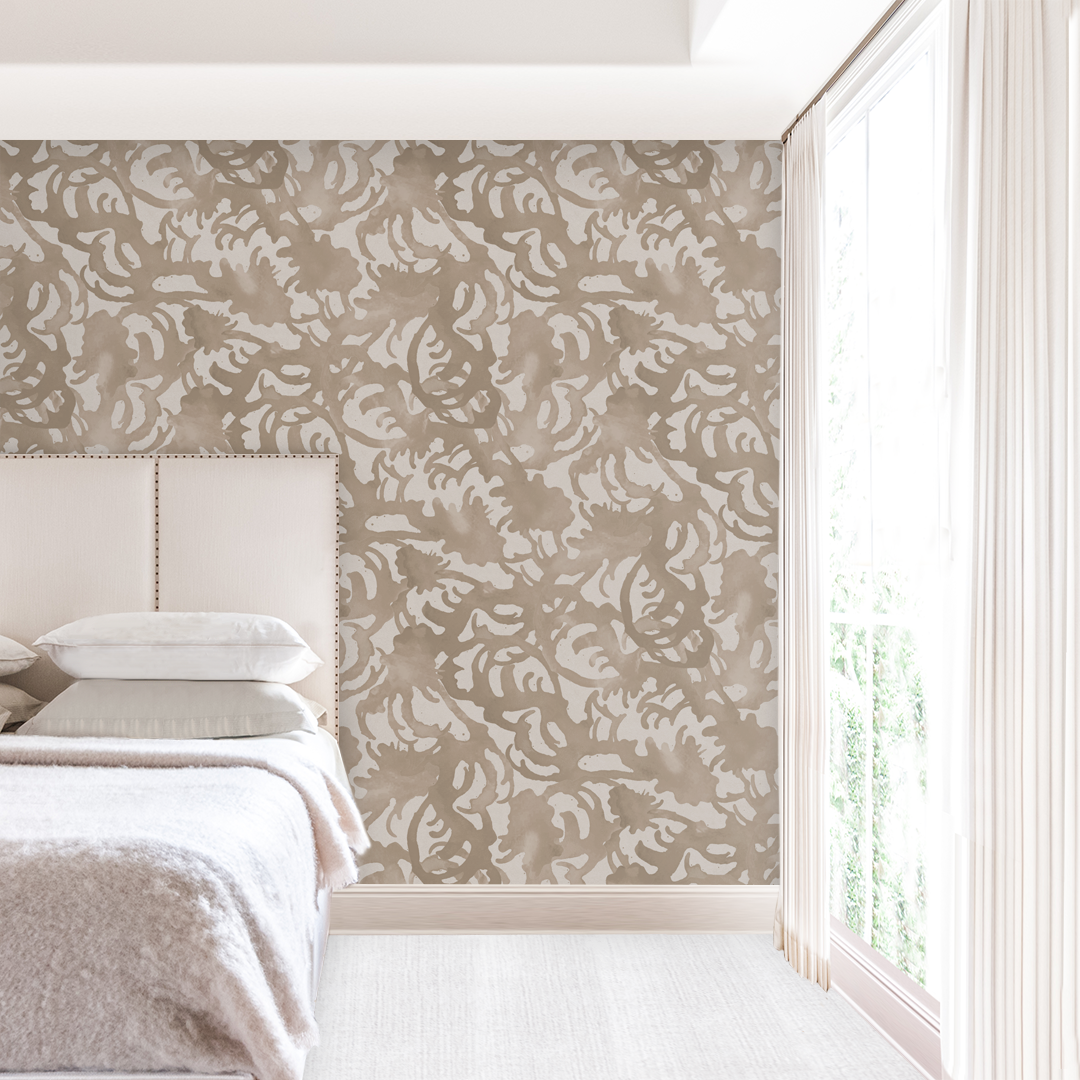
Stopping wallpaper at a dado or picture rail and painting above it visually shortens a room — the horizontal break tells the eye where the wall ends. Designers working now increasingly run pattern the full height and, in many rooms, straight over the ceiling. The argument is proportional rather than fashionable: an uninterrupted surface reads taller and calmer, and it lets a pattern behave like an environment instead of a band of decoration.
Is Stopping Wallpaper at a Dado Rail Actually Wrong?
One designer will say so on the record. Interior designer Sarah Walter Boyd, quoted in Livingetc's 2026 survey of outdated wallpaper styles, argues that painting above a picture rail rather than continuing the paper "actually acts to foreshorten the height of a room." Her conclusion is blunter than most trend commentary gets: "So, maybe taking paper only up to the dado isn't simply outdated for 2026, it should never have happened in the first place — it's just plain wrong!"
She makes a second point worth separating from the first. Imported period detail, she says, "can feel like imposter syndrome, such as adding a dado into a 1990s build." That is the real distinction. A dado rail in a genuine Georgian room is architecture. A dado rail installed into a modern box is costume — and hanging paper only up to it inherits the costume's proportions without any of its reasons.
Where the rail is original, the room already has an argument for it. Where it is not, the paper has no reason to stop.
Why Does Full-Height Pattern Read Taller?
Because a horizontal line at chest height is a measurement, and the eye takes it.
Break a wall in two and you have told someone exactly how tall the room is. Run one surface from skirting to cornice and there is nothing to measure against — the eye travels the whole distance without a stopping point and reads the volume as larger and quieter than it is.
The current move goes further. Tracy Morris treats the overhead plane as a fifth wall, using wallpapered ceilings to bring cohesion and surprise into more rooms. Courtney Smith, principal and founder of Courtney B. Smith Design, describes the appeal in terms of intention rather than boldness: wallpaper "gives us an opportunity to add pattern and texture, and creates an envelope that feels intentional."
An envelope. Not a feature.
Olivia Botrie names the shift directly: "Overall, we're less interested in wallpaper as a feature wall and more in using it to fully envelop a room and set a distinct mood." A feature wall asks to be looked at. An envelope is something you are inside of, and it works on you whether or not you are paying attention.
Charlotte Perriand wrote that "the extension of the art of dwelling is the art of living." A room you are inside of, rather than looking at, is the whole distinction she was pointing to.
What Does an Enveloping Pattern Require of the Pattern Itself?
Far more than a feature wall does.
A pattern on one wall is looked at for a moment and then ignored. A pattern on every wall and the ceiling is in your peripheral vision for hours. It has to be interesting at a glance and forgiving over an evening — which is a much harder brief, and it is where a pattern's origin starts to matter.
Alvar Aalto called building art "a synthesis of life in materialised form." Tadao Ando works from the opposite direction, arguing that architecture "should remain silent and let nature in the guise of sunlight and wind speak." Both are describing the same requirement: the surface has to hold up under changing light without demanding attention.
Nancy Lancaster, who shaped the English decorating tradition more than almost anyone, held that rooms should not be decorated so much as lived in — and David Hicks, working in the opposite register with pattern at maximum volume, insisted that "the best rooms have something to say about the people who live in them." Between those two positions is where an enveloping pattern has to sit.
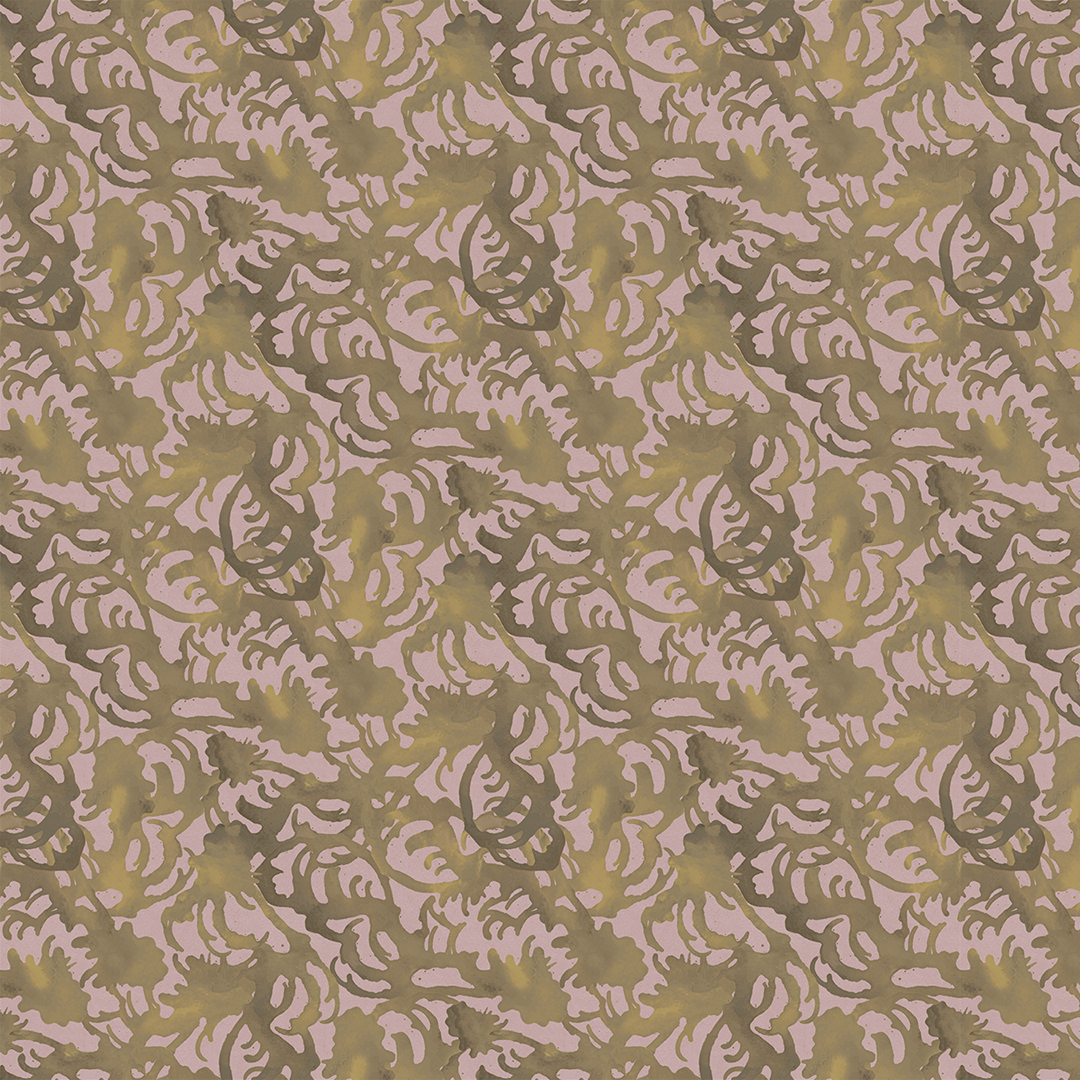
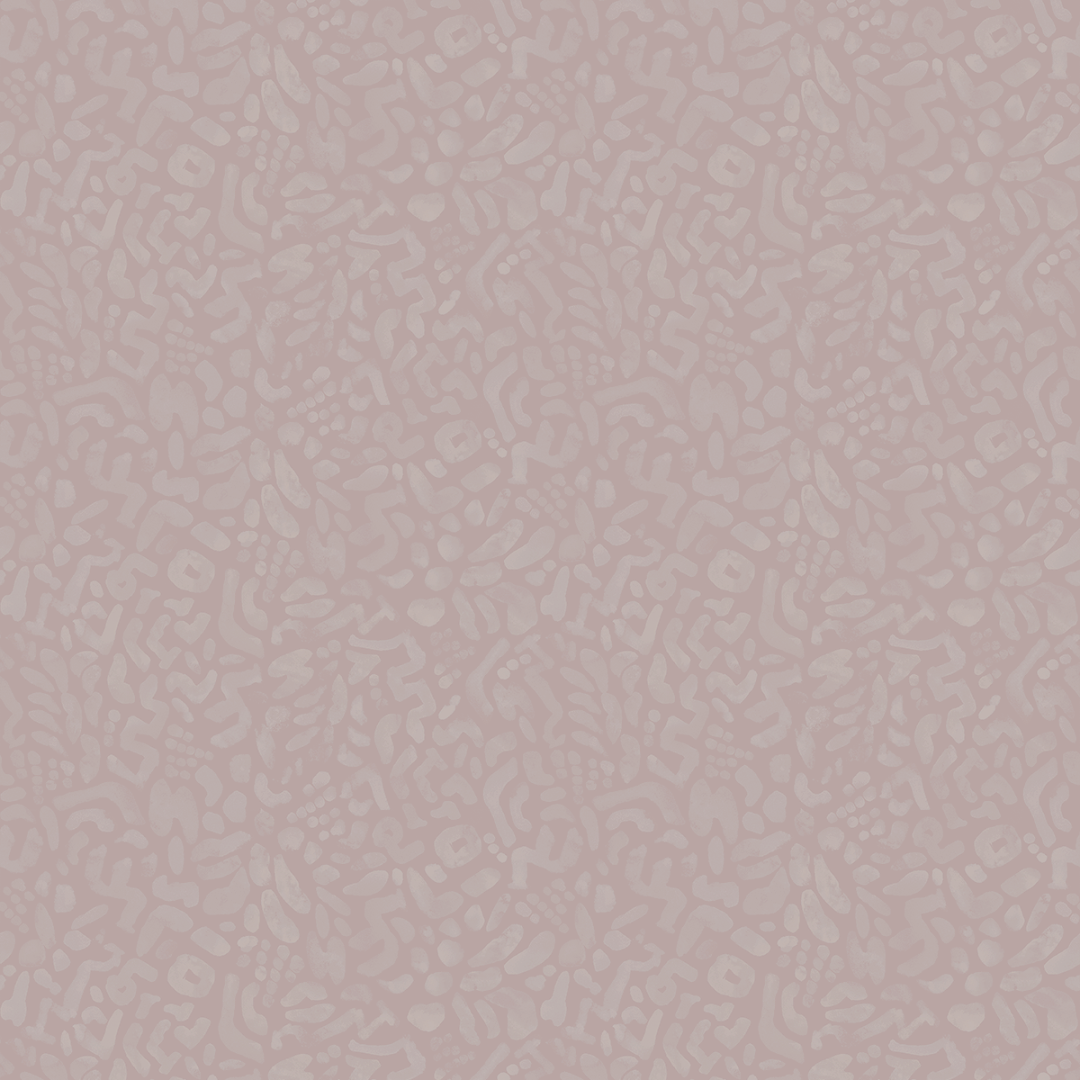
Every pattern in my own line begins as one of my paintings — an actual painted surface with a charcoal underdrawing, oil thinned with medium, layers built up over weeks. What that gives a repeat is variation that was not engineered: density that shifts because a hand slowed down, edges that go soft in one pass and hard in the next. That is what survives being looked at peripherally for three hours.
An honest distinction: the pattern originates from a hand-painted original. The wallpaper itself is a manufactured product — printed onto 20 oz Type II commercial-grade vinyl, embossed face over a laminated fabric backing, 24" wide pre-trimmed and unpasted, 52" for commercial. It is never described as hand-painted, because it is not.
How Do You Actually Specify a Full-Height Room?
Order for the whole surface, not the wall you were originally thinking about. Yardage is sold by the yard with a 30-yard minimum, print-on-demand in roughly two weeks; ceilings and returns add up faster than most people estimate, so measure before you fall for a colorway.
Order samples first. A pattern that is charming on a 24-inch swatch behaves differently across 400 square feet, and no screen will tell you which one you have. Trade accounts get 20% and up to five free samples, and custom colorways and scale are available to trade.
Start with the full pattern collection, see terms on the trade program page, or look at the original paintings the patterns come from.
FAQ
Should wallpaper go all the way to the ceiling?
In most rooms, yes. A horizontal break at dado or picture-rail height visually shortens the wall; an uninterrupted run reads taller and calmer. Designer Sarah Walter Boyd argues that painting above a picture rail actively foreshortens a room's height.
Is a dado rail with wallpaper below it outdated?
Where the rail is original architecture, it still has a reason to exist. Where it was added to a modern build, both the rail and the half-height paper tend to read as imported period costume without the proportions that justified it.
Should you wallpaper a ceiling?
It is one of the strongest moves available in a small room. Treating the ceiling as a fifth wall removes the last edge the eye can measure against, which is why designers describe the result as an envelope rather than a feature.
How much wallpaper do you need for a full-height room?
More than the wall area suggests — ceilings, returns and window reveals add quickly. Order samples first, measure the full surface, and note that yardage here is sold by the yard with a 30-yard minimum and roughly two weeks' print-on-demand lead time.
Links
-
Internal:
/collections/all-wallpaper-patterns-by-angela-simeone·/pages/trade-program·/collections/paintings-available-now - Outbound: Livingetc, "Designers Say to Skip These 6 'Outdated' Wallpaper Styles in 2026" — https://www.livingetc.com/ideas/outdated-wallpaper-styles-2026