Presence Is What a Wallcovering Has When Pattern Runs Out
In short
Presence in a wallcovering comes from three things a decorative repeat usually lacks: an origin the eye can trace, a scale that behaves like a composition rather than a tile, and a surface that changes as light moves across the room. Designers naming the 2026 shift describe wallpaper "taking on the role of art." A pattern that began as an actual painting starts that argument already won.
A designer said the useful version of this out loud earlier this year. Writing in Luxe Interiors + Design, Amy Lee McArdle of Amy Young Designs put it plainly:
"Statement wallpaper will continue to take on the role of art. Clients are drawn to murals, painterly scenes and large-scale, handcrafted designs that tell a story. The focus is less on pattern and more on presence."
Presence is a slippery word until you make it specific. Three things produce it.
Does the pattern have an origin you can trace?
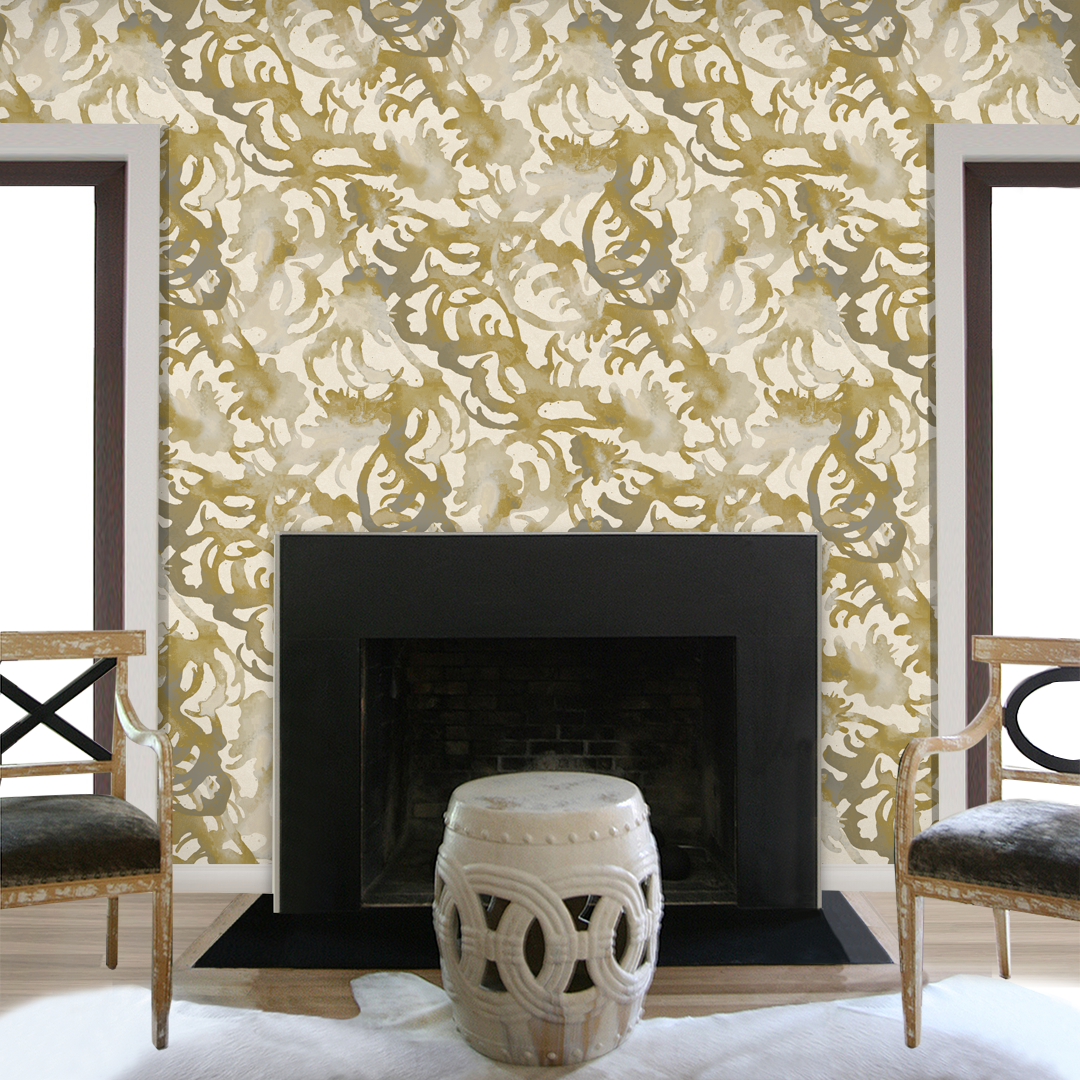
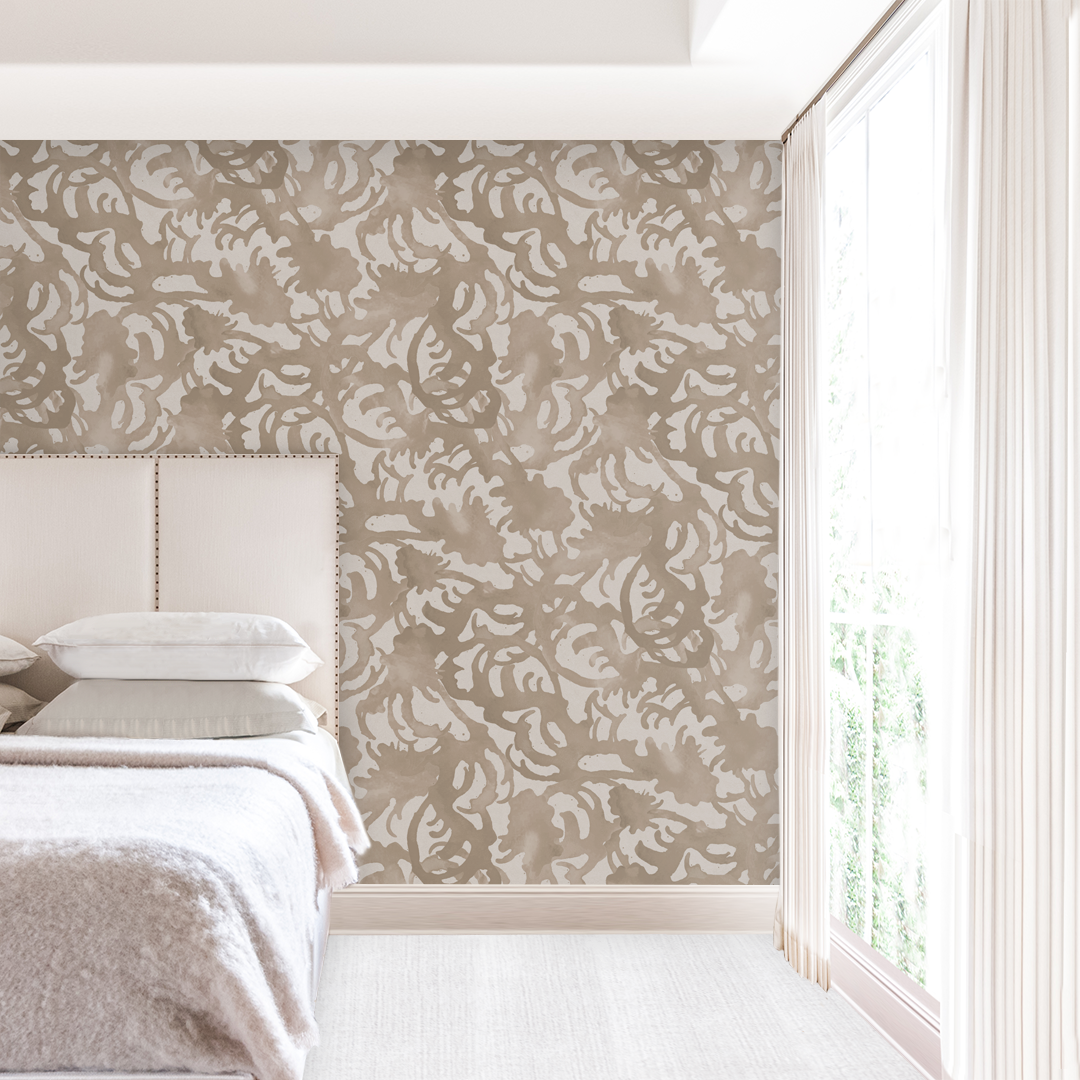
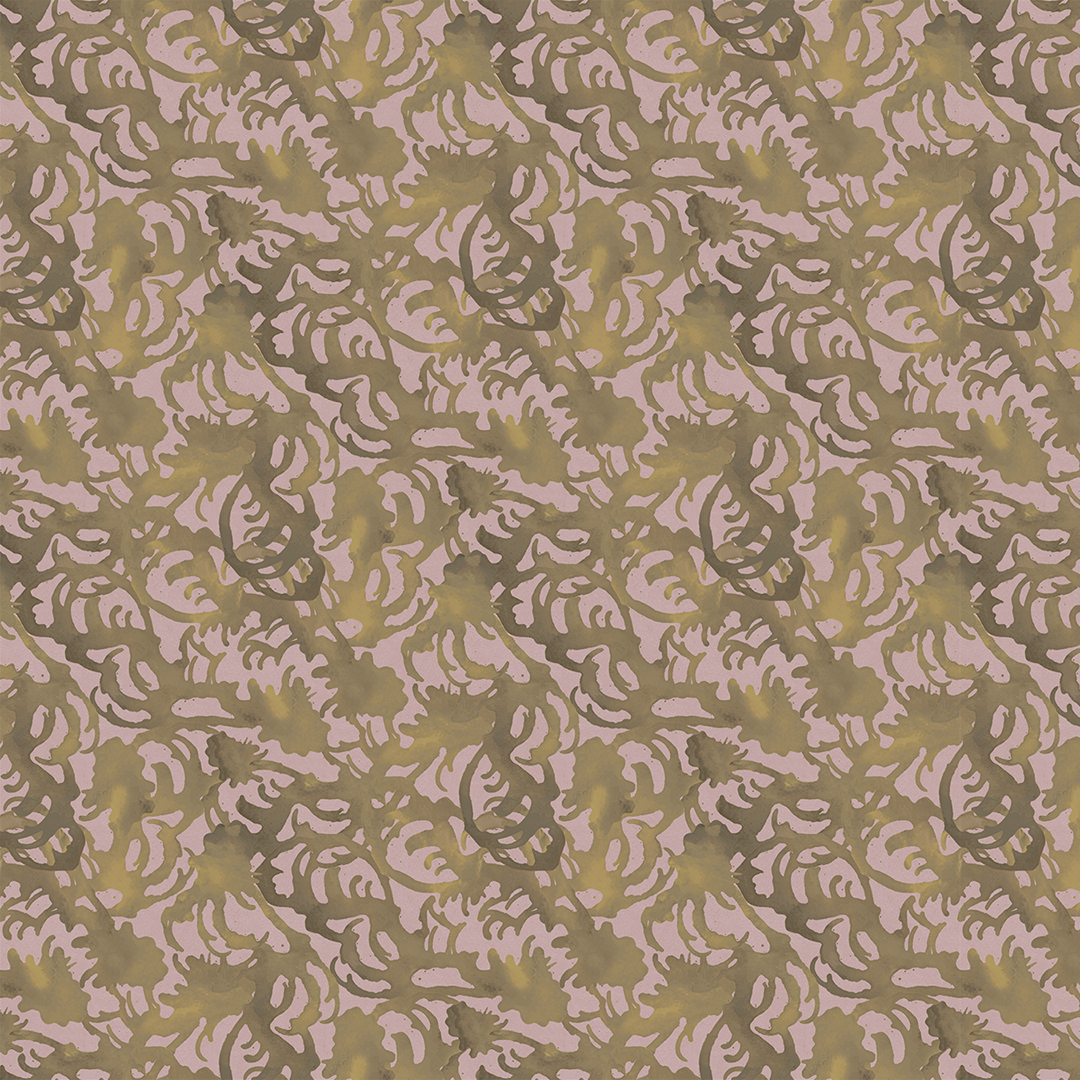
A repeat designed on a screen to look handmade and a repeat lifted out of an actual painted surface behave differently on a wall, and a trained eye reads the difference in about four seconds. Painted origin leaves things a designed repeat has to invent: uneven pigment density, an edge where a brush ran dry, a place where two colors met wet and neither won.
Every pattern in my line begins as one of my own paintings — the same oil and mixed media surfaces, photographed and drawn into a repeat. An honest distinction matters here: the wallpaper product is printed by a manufacturer onto vinyl. It is not hand-painted. What is hand-painted is the origin. That is the sellable, true version of the story, and it is a provenance claim rather than a manufacturing one.
Does the scale read as composition or as tile?
A tile announces its own grid. A composition keeps the eye traveling and never quite lets it settle on the seam. This is why the mural moment persists in the 2026 forecasts — murals solve the grid problem by refusing to have one.
Writing in Livingetc, Abbie Young, head of design at Osborne & Little, described the color half of the same move: "We're seeing a shift towards jewel colors that feel more considered, anchored by dark grounds that give wallpapers depth and warmth. There is a growing confidence in color and pattern for walls, with richer palettes being used in a way that feels calm and balanced." Depth is the operative word — a ground that recedes lets everything above it behave like a painting rather than a print.
Does the surface change with the light?
Presence has a physical component. A wall that looks identical at nine in the morning and nine at night is decoration; a wall that hands you something different across the day is doing what art does. Emily Mould, director of design at Romo Group, described the mechanism precisely in the same Livingetc survey — that a free-flowing pattern "introduces movement into interior spaces without overwhelming them," adding "a sense of understated drama."
The substrate carries part of this. My line is 20 oz Type II commercial-grade vinyl — an embossed face with a slight strié shimmer over a laminated fabric backing. That shimmer is why the wall shifts between raking morning light and lamplight instead of holding one flat value. It is also why the material stands up in commercial corridors and hospitality spaces where a flat paper would not.
What that means when you are specifying
Ask three questions of any wallcovering on the board:
- Where did this pattern come from? If the answer is a mood board, you are buying decoration. If the answer is an object that existed first, you are buying provenance.
- What happens at the seam? A composition absorbs it. A tile advertises it.
- What does it do at four o'clock? Order the sample and put it on the actual wall for a full day before you commit. This is the test almost nobody runs and the one that decides how the room feels a year in.
Specs for the trade: 24" wide rolls, pre-trimmed and unpasted, 52" for commercial. Samples are $5, yardage is $55 per yard with a 30-yard minimum, print-on-demand in about two weeks. Verified designers get 20% trade pricing and up to five free samples, and custom colorways and scale are available to trade.
Houses like Schumacher, Phillip Jeffries, and Lee Jofa built the historical beauty this category rests on. What a working painter adds to that conversation is a different starting point — a wall whose pattern was a painting before it was a product.
FAQ
What does it mean for wallpaper to have "presence"?
Presence is the combination of a traceable origin, a composition-scale pattern that absorbs its seams, and a surface that shifts as the room's light changes. Decorative wallpaper repeats; wallpaper with presence behaves like a piece of art.
Is artist-designed wallpaper hand-painted?
The pattern originates from an original hand-painted work. The wallpaper itself is printed by a manufacturer onto vinyl — it is a hand-painted origin, not a hand-painted product.
What wallpaper works in commercial and hospitality spaces?
Commercial-grade vinyl. This line is 20 oz Type II vinyl with a laminated fabric backing, available in 52" widths for commercial installation.
Do designers get trade pricing on wallpaper?
Yes — 20% trade pricing for verified designers and firms, plus up to five free samples and custom colorways or scale on request.