Brushwork on the Wall Is Now an Awarded Category
In short. Yes — the category is now formally recognised. A wallcovering collection built entirely on loose, gestural brushwork has taken a Best of Year People's Choice win and a Contract Wallcovering honour from Interior Design magazine, plus an HD Awards finalist place, all tied to NeoCon 2026. That is a trade masthead certifying painterly wallcovering as serious commercial specification rather than a decorative trend. The remaining distinction is not quality; it is origin — whether the brushwork began as a real painting somebody made for its own sake, or as a pattern developed to read as brushwork.
For a long time, gestural, painterly wallcovering sat in an odd position: obviously beautiful, frequently specified, and rarely discussed as a category with any standing of its own.
That changed this year, in the most concrete way a design category can change — an awards list.
What actually won, and from whom?
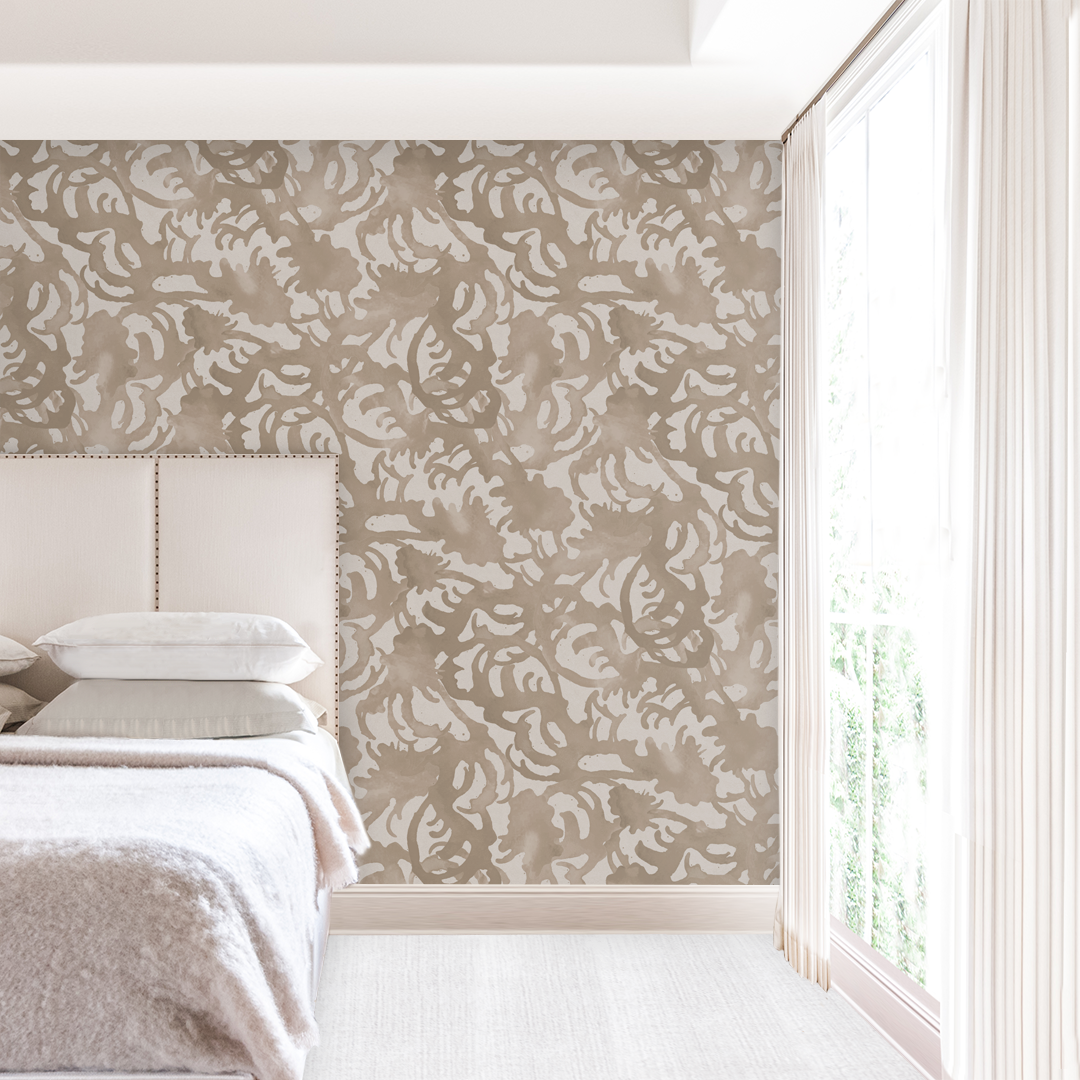
Astek's Resonance collection, hand-painted by the company's in-house design team, was named a Best of Year People's Choice Winner and a Contract Wallcovering Honoree by Interior Design magazine, and was a finalist in the HD Awards, with the recognition tied to NeoCon 2026. Astek describes the collection as capturing "the movement and spontaneity of expressive brushwork" and "the fluidity of thought."
That is worth stating plainly and without qualification: it is a serious body of work, it was made by hand, and it was recognised by the trade's own masthead in the category where commercial specifiers actually look. Anyone who has tried to keep a gesture alive across a repeat knows how difficult that is to do at scale.
Does an award validate the whole category?
More than it validates any one collection, yes.
Interior Design's Best of Year and its contract honours are judged for commercial specification — hospitality, workplace, healthcare. A win there is not a statement about taste; it is a statement that specifiers are choosing this and that it performs in projects with real budgets and real durability requirements. Pair that with NeoCon, which is where commercial interiors are actually bought, and the signal is unambiguous. Painterly wallcovering is no longer a residential indulgence with a short trend life.
Which is genuinely good news for everyone working in this territory, including a studio whose entire wallpaper line begins as oil on canvas.
So what distinction is left worth drawing?
Origin, and it is a narrower claim than it sounds.
There are two honest ways to arrive at a brushwork wallcovering. A design team can develop a pattern toward the quality of brushwork — working, often by hand, to produce marks with the right looseness and rhythm for a repeat. Or a pattern can be lifted from a painting that already existed, made by one person for its own reasons, with no wall in mind at the time.
Both can be beautiful. They carry different information. A mark made while somebody was solving a painting has decisions inside it that were not aimed at the wall — a passage overworked and recovered, a colour that changed halfway through, an edge left rough because softening it killed the area. Those are the residues of a problem being solved, not effects being produced.
Katharina Grosse sprays paint across walls, floors and whole buildings, so that architecture becomes the surface rather than the frame. Nicolas Party paints pastel murals directly onto gallery walls, knowing they will be destroyed when the show closes. Both make the same point from opposite directions: paint on a wall is not decoration standing in for art. It is art, sited.
Josef Frank, who designed pattern for a living while practising as an architect, argued that a room should feel accidental rather than composed — that the things in it should look as though they arrived over time. A pattern with a real painting behind it carries a little of that accident, because the painting was allowed to go wrong first.
What this means for specification
Ask where the pattern came from, and ask it as a neutral question rather than a loaded one.
If the answer is a design team working by hand toward a brushwork quality, that is a real craft with real industry recognition behind it now. If the answer is a specific painting by a specific person, ask to see the painting. It should exist, it should be findable, and the pattern should be recognisably out of it.
Le Corbusier held that a wall's surface is where a building's character is settled, long before anything is hung on it. That is as true in a hotel corridor as in a house — which is why the category earning its own award line matters more than it might appear.
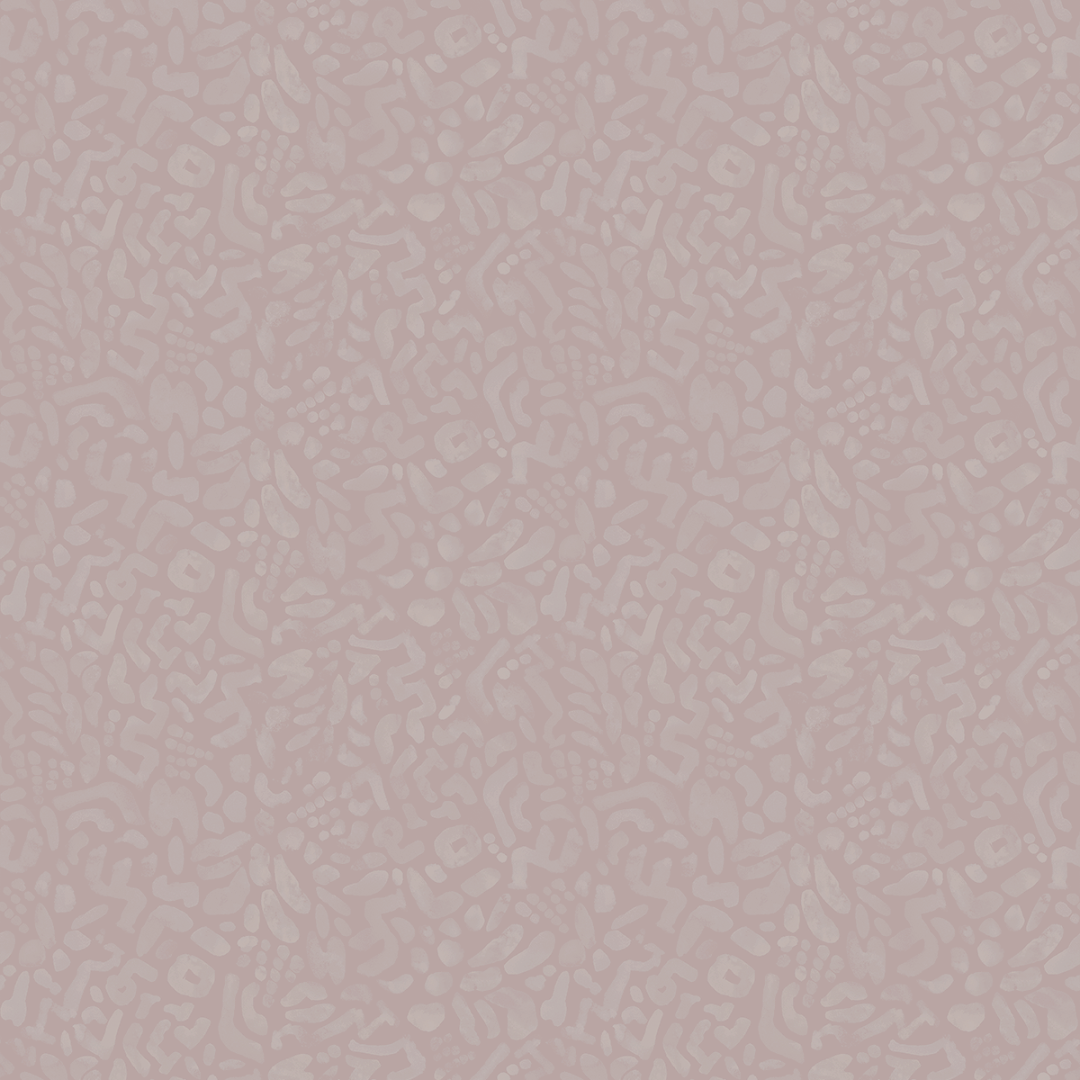
The patterns in this collection each begin as an original oil and mixed-media painting made in a Nashville studio. The product itself is printed — 20 oz Type II commercial-grade vinyl, produced by a manufacturer, with an embossed face over a laminated fabric backing; the hand is in the source painting, not in the roll. Custom colourways and scale are available to the trade through the trade program, 24" wide pre-trimmed for residential and 52" for commercial.
Schumacher, Phillip Jeffries and Lee Jofa built the histories this category stands on, and Astek's recognition this year extends the ground. There is room in it for a painter's canvases too.
Frequently asked questions
Is painterly or brushwork wallpaper still in style for 2026?
It is more than in style — it is award-recognised. A gestural brushwork collection took a Best of Year People's Choice win and a Contract Wallcovering honour from Interior Design magazine, with an HD Awards finalist place, tied to NeoCon 2026.
What is the difference between hand-painted wallpaper and artist-designed wallpaper?
Both usually describe how the pattern originated, not the roll. A pattern can be developed by a design team working by hand toward a brushwork quality, or lifted from an existing painting made by one artist. Nearly all wallcovering products are then printed by a manufacturer.
Is artist-designed wallpaper suitable for commercial projects?
Yes, when the substrate is specified for it. Commercial-grade Type II vinyl at 52" width is the standard for contract work, and painterly patterns are now formally recognised in contract wallcovering award categories.
Is this wallpaper hand-painted?
No. The pattern originates from an original hand-painted work; the wallcovering itself is printed onto 20 oz Type II vinyl by a manufacturer.