The Last Thing You Hang: Why a Room Isn't Finished Until the Art Goes Up
Why a room isn't finished until the original art goes up
Every renovation I've watched up close ends in the same place: at the walls. The kitchen takes the stone. The bath takes the slab. The millwork eats a number nobody says out loud. And then the budget finally reaches the part of the room people actually look at — and there's nothing left. So the wall gets a stand-in: a print, or a canvas chosen the way you'd choose a lampshade. The room photographs beautifully. To the person living in it, it still feels, somehow, not quite done.
I'm a painter. I make original work for collectors and for the designers who place it, and I've spent years in rooms at precisely this stage — handsome, finished on paper, and waiting. Here is what I've come to believe, and what the best decorators have said far more plainly than I can: a room is built by everyone else and finished by the art.
What designers mean when they say a room feels "collected"
There's a line the great American decorator Albert Hadley is remembered for: "A room should feel collected, not decorated." It sounds like a small distinction. It isn't. Decorated means bought as a set, all at once, to match. Collected means gathered over time, with intent, with a few things that mean something. And the single most collected object in any serious room is the art.
Billy Baldwin — the decorator's decorator — put the governing rule another way: "Be faithful to your own taste, because nothing you really like is ever out of style." David Hicks, who taught a generation what a room could be, said the test out loud: "The best rooms have something to say about the people who live in them." In almost every case, the thing doing the talking is hanging on the wall.
Architecture builds the room. Art gives it a center.
Frank Lloyd Wright called architecture "the mother art." Le Corbusier was blunter about what a space is for: "Space and light and order. Those are the things that men need just as much as they need bread or a place to sleep." Louis Kahn gave us the most quoted sentence in the discipline — "The sun never knew how great it was until it hit the side of a building."
All true. And a wall of beautiful light is still a wall. Architecture makes the volume and the proportion and the way the morning comes in; it builds the stage. Tadao Ando says he wants his buildings to "remain silent and let nature… speak." In a finished room, the painting is what answers back. The architecture asks the question. The art is the reply.
The eye finishes on the wall, not the floor
Designers know where the gaze lands. Hicks once described the effect of simply hanging three pictures over a hall table — "it said something, and people paid attention." That's the whole mechanism. You can spend a year on the joinery and the rug, and the eye will still travel up and stop on whatever is at eye level.
Nate Berkus, who has done more than anyone to make this idea mainstream, says it cleanly: "Your home should tell the story of who you are," and, of his own rooms, "There is not one thing in my home that doesn't have meaning to me." The floor and the sofa furnish a room. The wall narrates it.
Why a reproduction holds the wall but can't finish it
I want to be fair to the stand-in. A giclée or a reproduction is a smart way to hold a wall while a budget recovers; no one finishes a home in a single purchase, and there's no shame in the placeholder phase. But a reproduction is, by definition, the same image hanging in ten thousand other rooms. It fills the wall. It doesn't claim it.
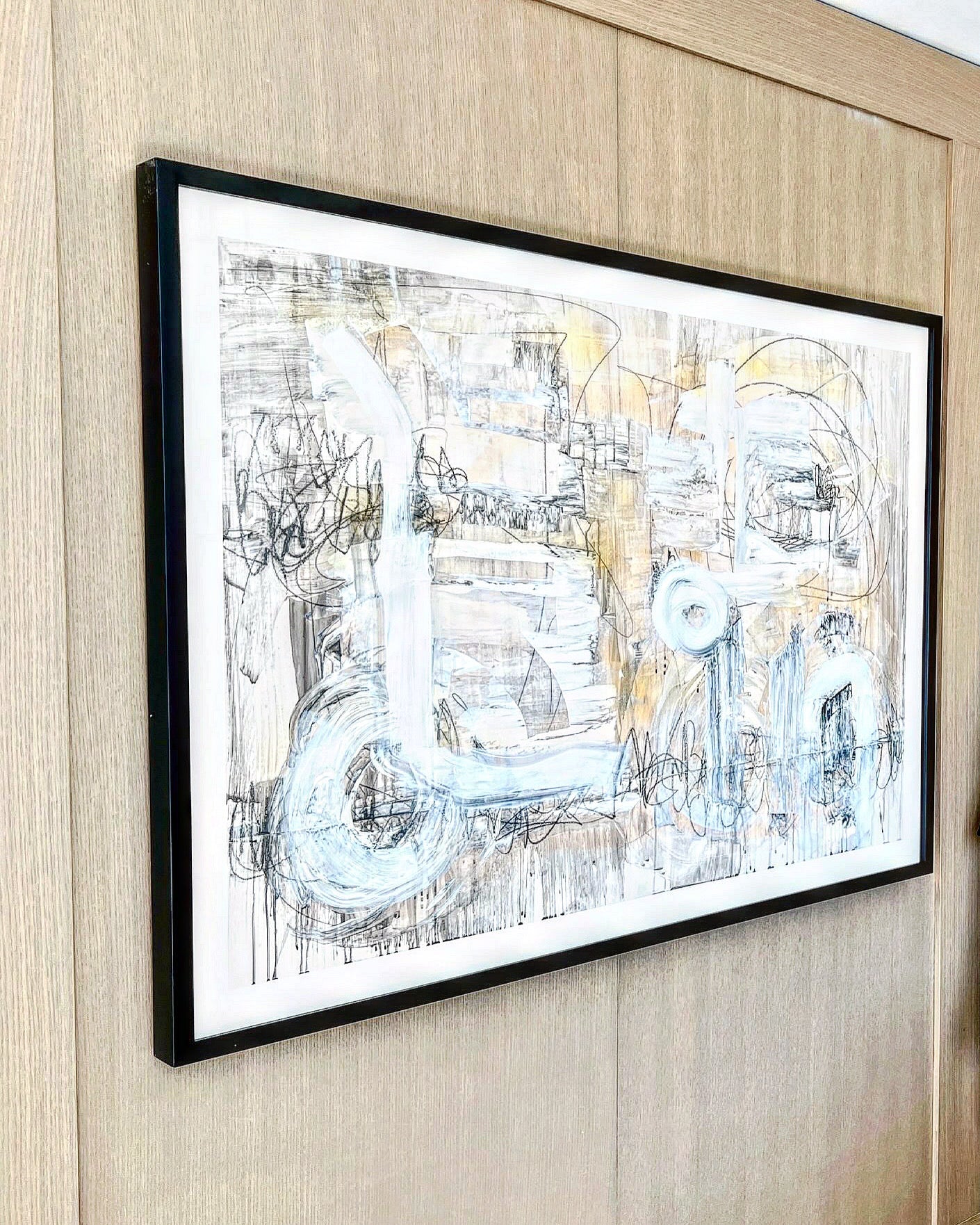
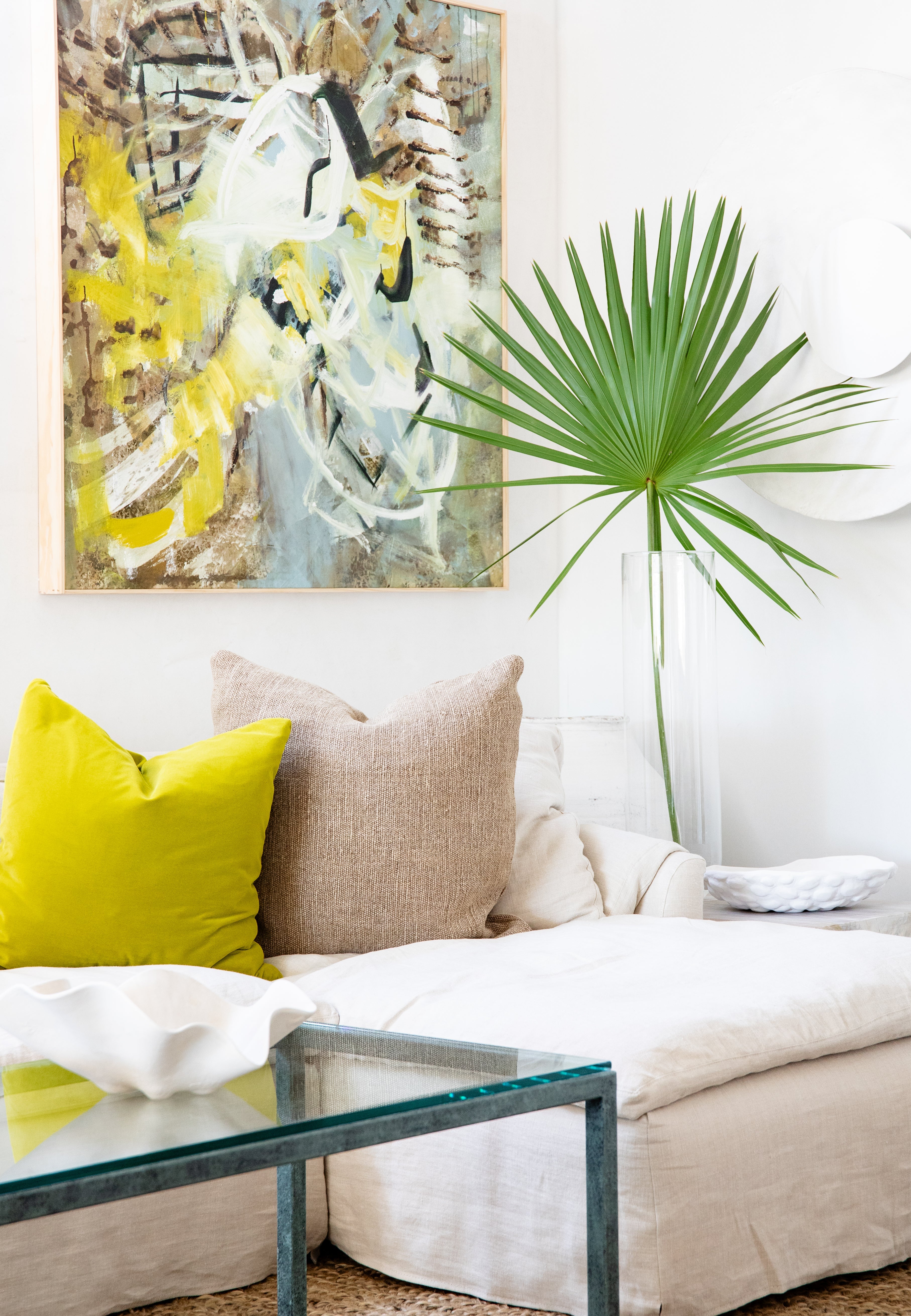
An original does the one thing a copy can't: it makes the room singular. Matisse said it had bothered him all his life that he did not paint like everybody else — and that refusal, that single human hand, is exactly what an original carries into a room and a reproduction quietly sands away. The wall stops being decorated and becomes particular. That is the moment a room is finished.
A practical note: choose the art earlier than you think
Most people treat art as the finish line — the last line item, chosen from whatever's left. The rooms that truly land do the opposite: they treat one or two pieces as fixed points and design toward them. If you're a designer reading this, you already know the projects that sing are the ones where the art wasn't an afterthought.
I make this easier than it sounds. For every commission I paint two options at once, so at the first reveal there's a real choice rather than a single take-it-or-leave-it. The work ships rolled to a framer near you, stretches fresh on arrival, and is hand-delivered ready to hang. If your project is at the walls-and-waiting stage, that's the moment the studio is built for.
Frequently asked questions
Does a room really need original art?
A room can be complete without it and still feel unfinished. Original art is what gives an interior a center and makes it specific to the people who live there — the difference between a beautifully decorated room and a particular one.
When in a renovation should you choose the art?
Earlier than most people do. Treat one or two pieces as fixed points and design toward them, rather than choosing art last from whatever budget remains.
What's the difference between a giclée reproduction and an original painting?
A giclée is a high-quality print — the same image reproduced for many walls. An original is made once, by hand; its value and its effect in a room come from that singular presence.
Do interior designers buy original art for their clients?
Yes. Most high-end residential and hospitality projects source original work, often direct from the artist on trade terms, sized and chosen for a specific wall.
How much of an interiors budget should go to art?
There's no fixed rule, but treating art as a real line item — not the leftover — is what separates rooms that feel finished from rooms that feel staged.
Angela Simeone is a Nashville-based contemporary abstract painter. She makes original abstract paintings and commissions for art collectors, interior designers, and hospitality and commercial spaces; her work has been featured in Architectural Digest. For originals, commissions, and trade inquiries, visit angelasimeone.com.
Quotes are drawn from published statements and interviews by Albert Hadley, Billy Baldwin, David Hicks, Nate Berkus, Frank Lloyd Wright, Le Corbusier, Louis Kahn, Tadao Ando, and Henri Matisse.