Original or Reproduction? What Actually Changes in a Room
What actually changes in a room
People ask me, politely, whether it really matters — whether anyone can tell the difference between a good print and an original once it's on the wall and the lamps are low. It's a fair question, and the honest answer isn't about thread count or brushwork you can photograph. It's about something quieter, which is exactly why it's easy to miss and impossible to fake.
Here's the difference, in one sentence: a reproduction can be everywhere at once, and so it is nowhere in particular. An original was made in one place, one time, by one hand — and a room can feel that, even when the person standing in it can't say why.
The copy flatters. The original commits.
A reproduction is agreeable by design. It was made to be liked by as many people as possible, which is why it ends up on so many walls and asks nothing of any of them. There's a use for that. A print can hold a wall honestly while a budget recovers; no one finishes a home in a single purchase.
But the work I care about was never trying to be agreeable. Helen Frankenthaler, who changed what paint could do, said it plainly: "There are no rules. Go against the rules or ignore the rules — that is what invention is about." Robert Henri, who taught half of American modernism, set the bar in seven words: "We are not here to do what has already been done." That refusal — the willingness to make a thing that didn't exist before — is the whole content of an original. A copy, by definition, is what already has been done.
Presence is the part you can't print
Willem de Kooning had a wry line about influence: "Every time I put my hands in my pockets I find someone else's fingers there." Every artist inherits. But what leaves the studio is still singular, because it carries the hour it was made in. Georgia O'Keeffe described the job as "making your unknown known" — a private vision made physical, once. Yayoi Kusama, who has spent a lifetime turning compulsion into work, said simply, "I followed the thread of art and somehow discovered a path that would allow me to live."
None of that survives a scan. You can reproduce the image. You cannot reproduce the fact that a person stood in front of a surface and argued with it until it agreed. That fact is what painters mean by presence, and it's the thing a room either has on its walls or doesn't.
What designers and collectors are really buying
The trade has known this for a century. The French designer Jean-Louis Deniot says the pieces a client collects "create an instant feeling of stability and continuity with the past" — stability you only get from objects with their own history, not from images printed yesterday. Coco Chanel, who understood rooms as well as clothes, called an interior "the natural projection of the soul." A soul does not project through a poster.
And the collectors who mattered most were never really buying decoration. Peggy Guggenheim, who assembled one of the great modern collections and lived inside it on the Grand Canal, refused the usual word for what she did: "I am not an art collector. I am a collector of artists." That's the tell. You don't fall in love with an edition of five thousand. You fall in love with a hand.
"But the print looks the same in photos"
It does. Photographs are democratic that way — they flatten an original and a reproduction onto the same flat plane, and on a screen they can look identical. But you don't live in a photograph. You live in the room, at all hours, walking past the thing a thousand times. Picasso's old line earns its keep here: "Art washes away from the soul the dust of everyday life." A reproduction can decorate that daily passage. An original changes it, because some part of you knows the difference between a picture of a thing and the thing itself.
Where I land
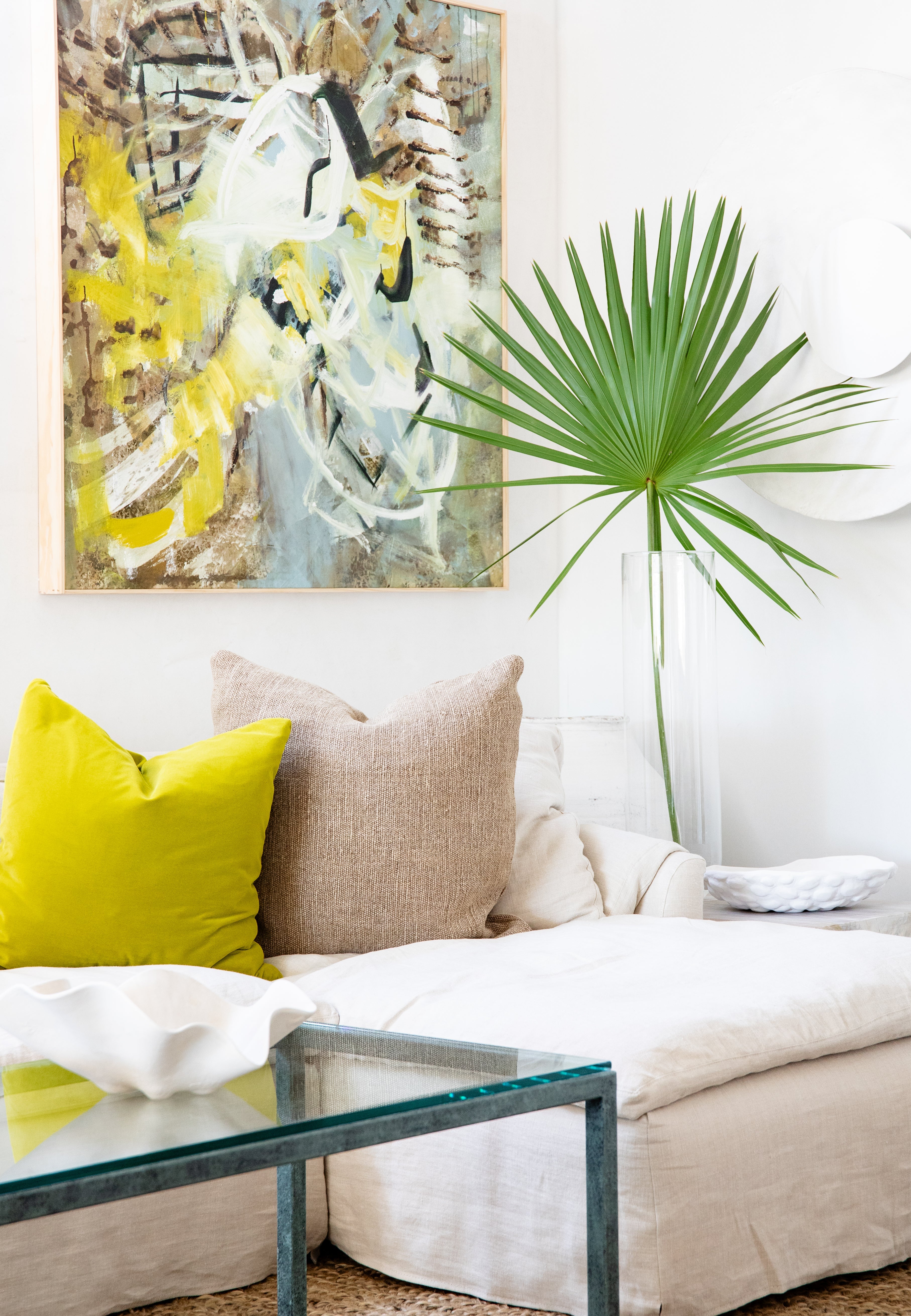
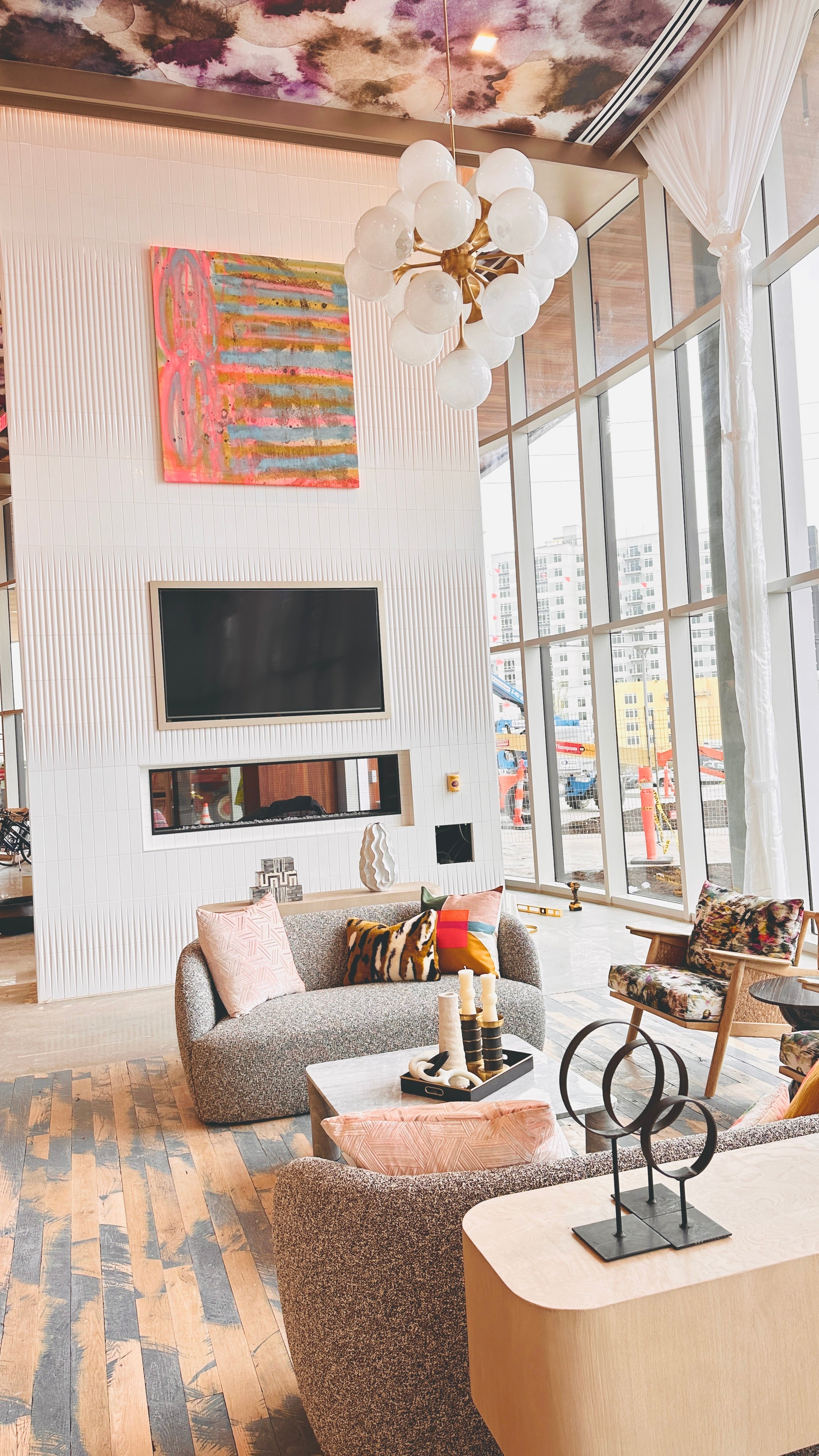
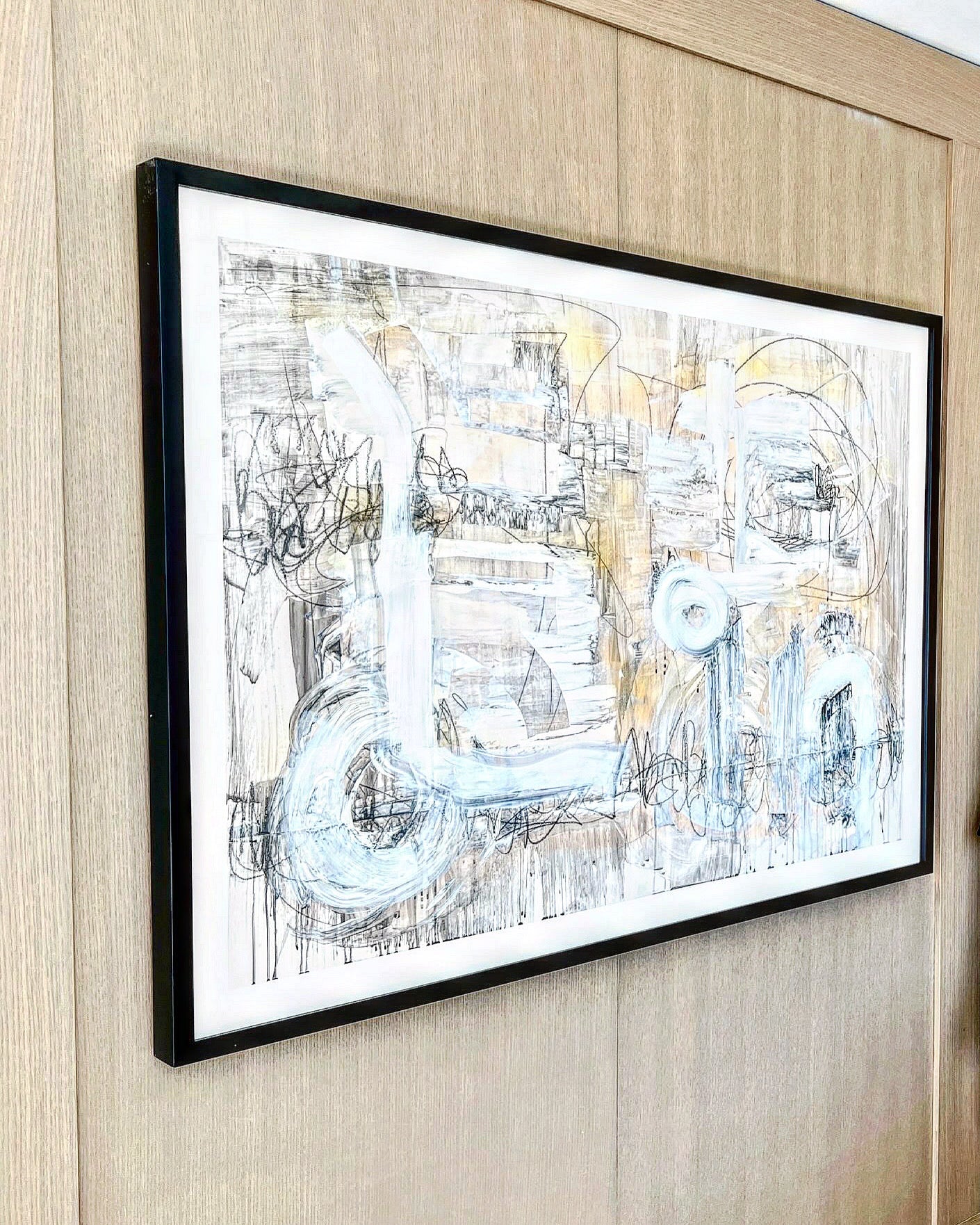
I'm not against reproductions. I'm against confusing them with the finish. A print is a placeholder — useful, honest, temporary. An original is the upgrade that makes a room singular and gives a home something it can't buy twice. When a client is ready to graduate one wall from the copy to the real thing, that's the work I make: original paintings and commissions, two options painted for every commission, delivered ready to hang.
Frequently asked questions
Is original art worth it over a print?
For furnishing a wall temporarily, a print is fine. For finishing a room and giving it something singular, an original is the difference — it carries a presence and a history a reproduction cannot.
Can you really tell an original from a reproduction in a room?
Often not by glancing, and rarely in a photo. But originals change how a room feels over time, because they're singular objects rather than copies.
Why are original paintings more expensive than prints?
A print is one of many copies of a single image; an original is made once, by hand, and exists nowhere else. You're paying for singularity and presence, not for a picture.
Do designers prefer originals or reproductions for clients?
Most high-end designers use originals as the finishing move and reserve reproductions for stand-ins, often commissioning original work direct from the artist for key walls.
What does it mean that a painting has "presence"?
Presence is the felt evidence that a person made the object once, by hand — the quality that survives in an original and is lost in a reproduction.
Angela Simeone is a Nashville-based contemporary abstract painter making original paintings and commissions for collectors, interior designers, and hospitality and commercial spaces; her work has appeared in Architectural Digest. For originals, commissions, and trade inquiries, visit angelasimeone.com.
Quotes are drawn from published statements and interviews by Helen Frankenthaler, Robert Henri, Willem de Kooning, Georgia O'Keeffe, Yayoi Kusama, Jean-Louis Deniot, Coco Chanel, Peggy Guggenheim, and Pablo Picasso.