Real Paint Under a Pattern Answers the 2026 Tactility Trend
In short
The wallpaper trend designers keep naming for 2026 is tactility — surfaces that read as touchable rather than printed. Most of the market delivers that as an effect: a print engineered to imitate weave, plaster, or brushwork. A smaller share delivers it as provenance, where the pattern originates in a physically painted surface before it is ever digitized. Both can look good on a wall. Only one carries real depth in the source file.
What are designers actually naming as the 2026 wallpaper trend?
Texture, and specifically the appearance of it. Rebecca Craig, lead designer at Sanderson and Morris & Co., puts the year's direction in one sentence: "Tactility, or the illusion of tactility, is emerging as a key future trend in wallpaper design."
That phrasing is the whole story. The industry is openly describing a trend in which the illusion counts as much as the fact.
Flora Daly, lead designer at Harlequin, describes how it's being executed: "Textural wallpapers, and designs that create a true 'fabric-on-the-wall' effect are becoming a key trend for 2026. Think wallpaper designs taken directly from textiles or lifted from embroidered fabrics, allowing us to amplify both texture and detail. The result is a lovely sense of movement and texture that brings walls to life."
And Chloe Vince, senior decorating consultant at House of Hackney, names what it's actually for: "These immersive environments help to blur the lines between art and architecture and help to create a sense of escapism, which seems to be more important than ever."
Blurring art and architecture is a high bar. It's worth asking what has to be true of a pattern for it to clear it.
Does the technique behind a pattern still matter, or is it the name on the box?
The heritage houses are betting on technique, publicly. Cole & Son's 2026 collaboration with Vivienne Westwood, debuted at London Design Week, translates Westwood's hand-drawn prints and tartans into wallcoverings using the house's archival strié method — in Cole & Son's own description, each thread is painstakingly hand-painted to mimic the warp and weft of woven silk.
Note the order of the argument. The famous name draws the attention; the hand-painting is what the house offers as proof. A luxury wallcovering brand with an enormous name attached still leads with the labor.
Where does an artist-made pattern differ?
At the source file, not the substrate.
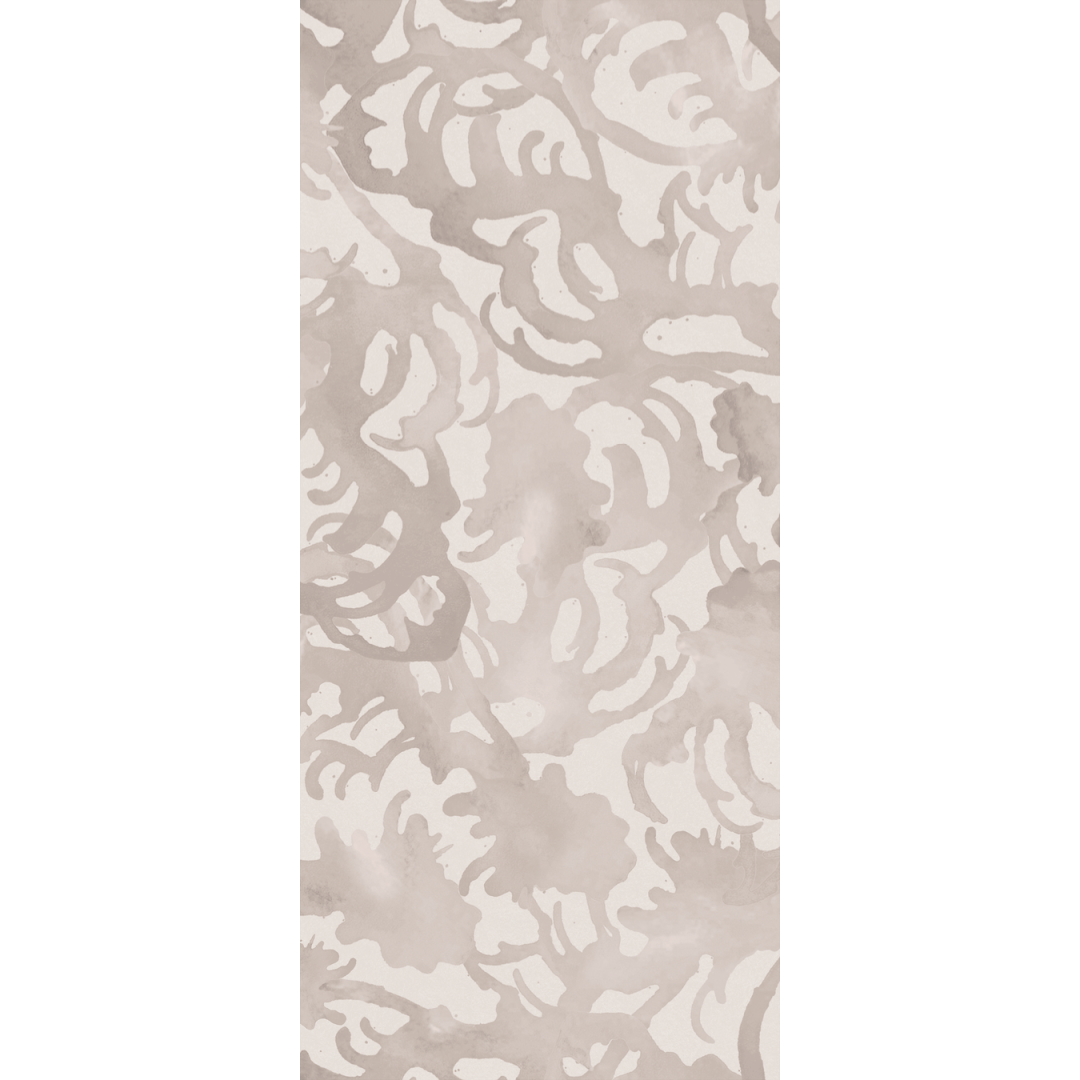
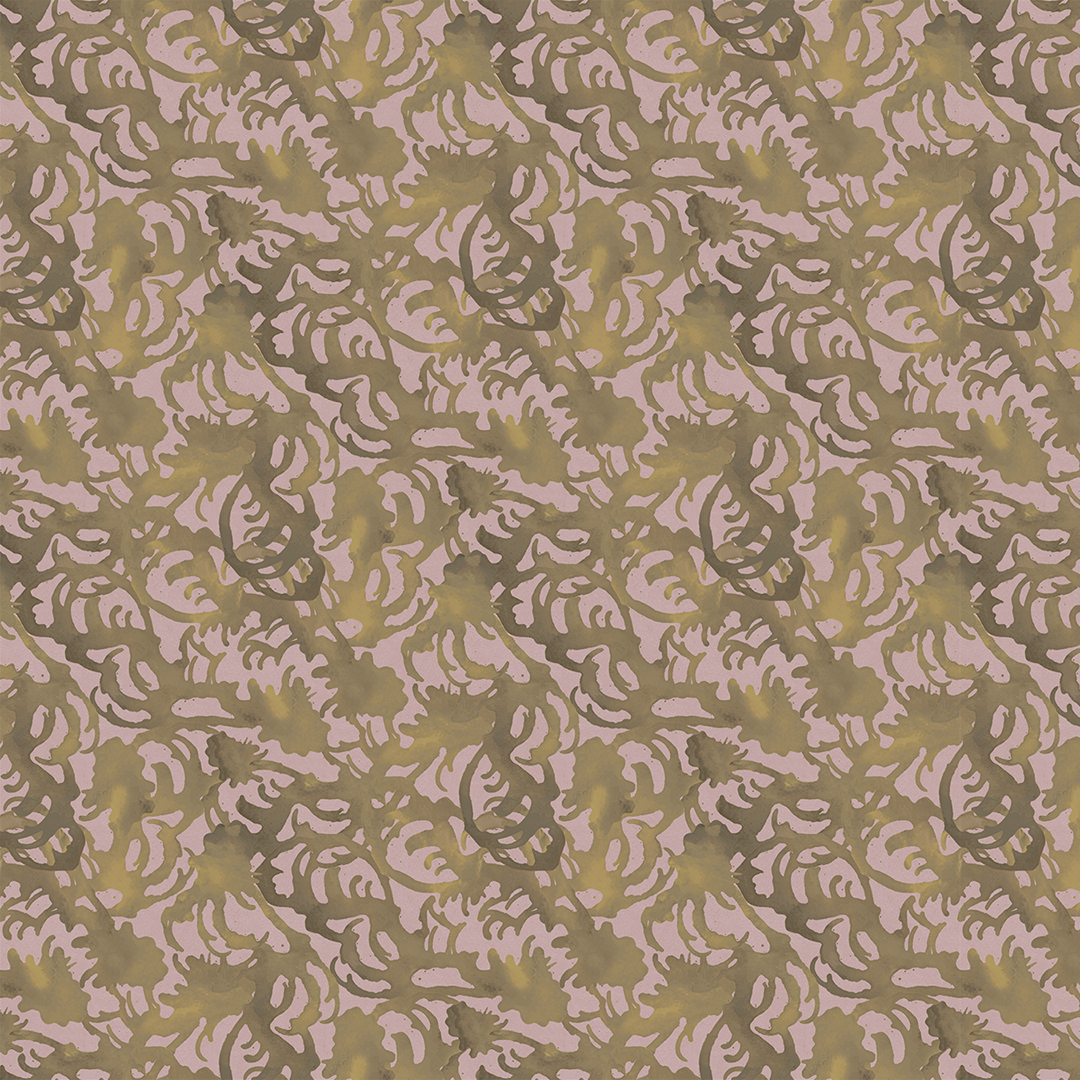
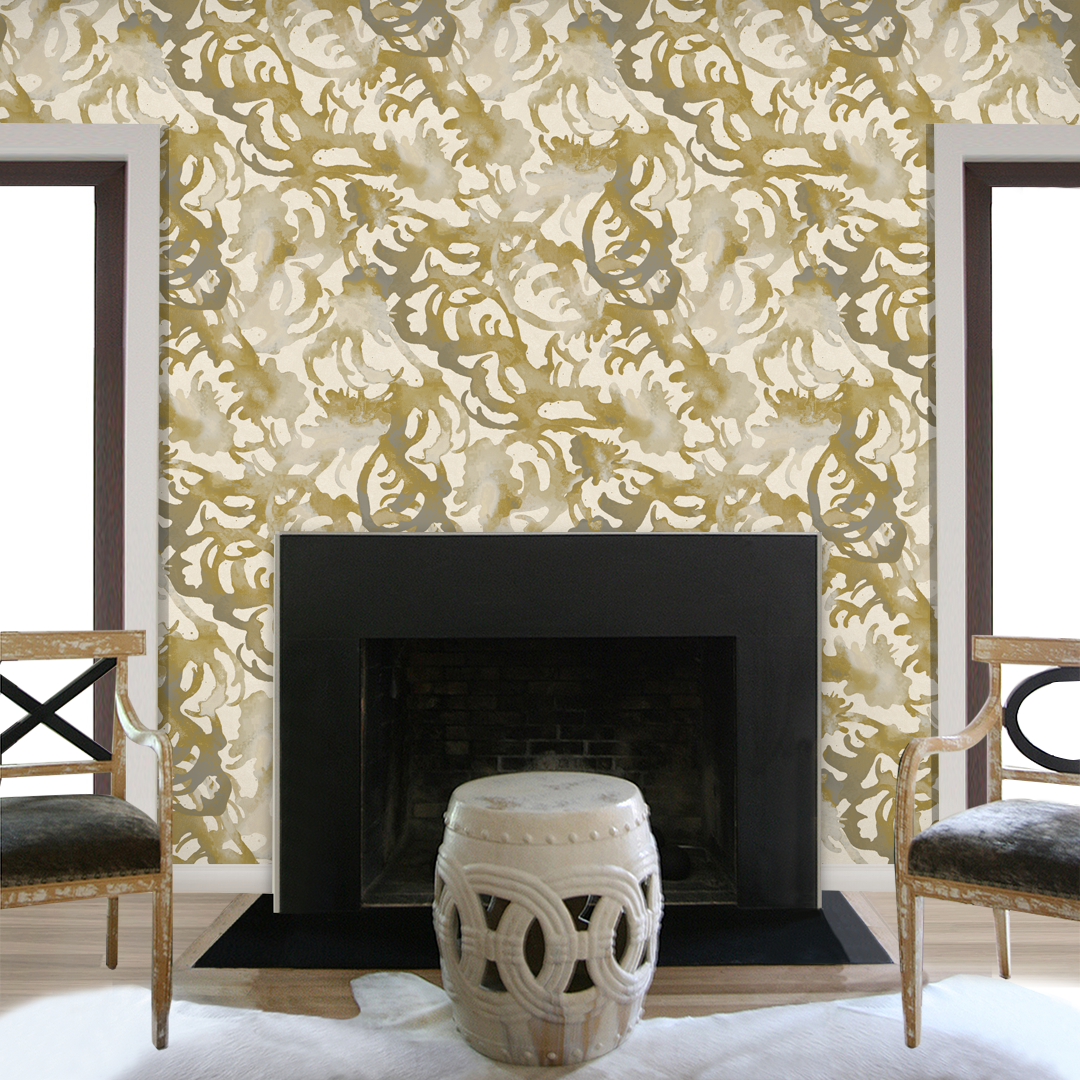
My patterns begin as original paintings — oil and mixed media on canvas, built up in layers, charcoal underdrawing, palette knife and fingertip, worked over weeks until the surface settles. A section of that finished painting becomes the repeat. The wall then carries the actual optical depth of paint that moved: mark under mark, color pulled through color, edges that were argued with rather than drawn.
To be exact about what is and isn't hand-made: the wallcovering itself is printed, not painted. It's 20 oz Type II commercial-grade vinyl — an embossed face with a slight strié shimmer over a laminated fabric backing, 24" wide pre-trimmed and unpasted, 52" for commercial, sold by the yard with a 30-yard minimum and roughly a two-week print-on-demand turnaround. The hand is in the origin of the pattern, not in the manufacturing of the roll. Anyone selling it the other way is selling something else.
That distinction is the honest version of the tactility trend. The illusion of texture is a printing achievement. Texture with a real painted origin is a provenance claim, and it is checkable — the source paintings exist, and many of them have hung in rooms.
Does light have anything to do with this?
More than color does. Right now at Lisson Gallery Los Angeles, Spencer Finch's Balboa of House and Garden (on view through August 22, 2026) installs colored filters across the gallery's skylights, physically shifting Los Angeles daylight toward the cooler tones of Amherst, Massachusetts. The artist is treating the light in a room as material.
A wall does a quieter version of the same thing all day. A surface with real depth in it catches and returns light differently at nine in the morning than at six in the evening; a flat print holds roughly the same value from both directions. That's the practical case for texture that nobody makes in trend copy, and it's why a pattern with paint underneath it tends to keep working after the newness wears off.
The published, active patterns live in the master wallpaper collection; trade terms include 20% and up to five free samples, with custom colorways and scale available to the trade.
What the makers and thinkers said about touch
- Juhani Pallasmaa, The Eyes of the Skin: "Every touching experience of architecture is multi-sensory."
- Anni Albers, on the loss of tactile literacy in industrial production — her argument that touch is a form of knowledge, not a finish. (From her writings on tactile sensibility; second distinct Albers quote used on this blog.)
- Jun'ichirō Tanizaki, In Praise of Shadows (1933) — on surfaces that only reveal themselves in low, moving light. (Third distinct Tanizaki reference.)
- Eileen Gray: "A house is not a machine to live in. It is the shell of man."
- Henri Focillon, In Praise of Hands: "The hand is not the mind's docile slave."
FAQ
What is the biggest wallpaper trend for 2026? Texture — or, as designers are candidly phrasing it, tactility and the illusion of tactility. Fabric-effect papers, embroidery-derived patterns, murals, and heritage designs reissued in contemporary colorways lead the year.
Is artist-designed wallpaper actually hand-painted? The pattern's source is: it begins as an original hand-painted work on canvas. The wallcovering itself is digitally printed onto vinyl by a manufacturer. Both facts are worth stating plainly — the hand is in the origin, not in the roll.
Does textured wallpaper work in commercial spaces? Yes. Commercial-grade 20 oz Type II vinyl is specified for exactly this — durable enough for hospitality and contract interiors, available in 52" widths, with custom colorways and scale to trade.
How do I judge whether a pattern has a real source? Ask what it came from. A pattern derived from a real painting can be traced to a specific finished work; a pattern engineered to imitate a painted surface can only be traced to a brief.