A Considered Pattern Can Slow a Room Down, Not Just Decorate It

In short: London wallpaper maker Nicholas Hughes builds his design philosophy around a Greek distinction — chronos, clock time, versus kairos, the quality of attention that makes real looking possible. A wallpaper pattern isn't just a printed surface. Done well, it changes the pace at which someone actually sees a room. That's the same logic behind every pattern I design: it starts as a painting, not a repeat.
Angela Simeone is a Nashville-based artist and wallpaper designer whose patterns begin as her own hand-painted originals before being set into repeat and printed on commercial-grade vinyl.
Can wallpaper actually change how someone looks at a room?
The World of Interiors' September 2026 issue profiles Nicholas Hughes, a London wallpaper maker whose entire approach turns on the ancient Greek distinction between chronos and kairos — clock time versus the qualitative, attentive kind of time that makes "real" looking possible. His argument is that a considered pattern doesn't just sit on a wall, it can shift the pace at which a person in the room actually notices anything at all. That's a real claim from a working maker, not marketing language dressed up as philosophy.
Is that different from a mass-printed pattern?
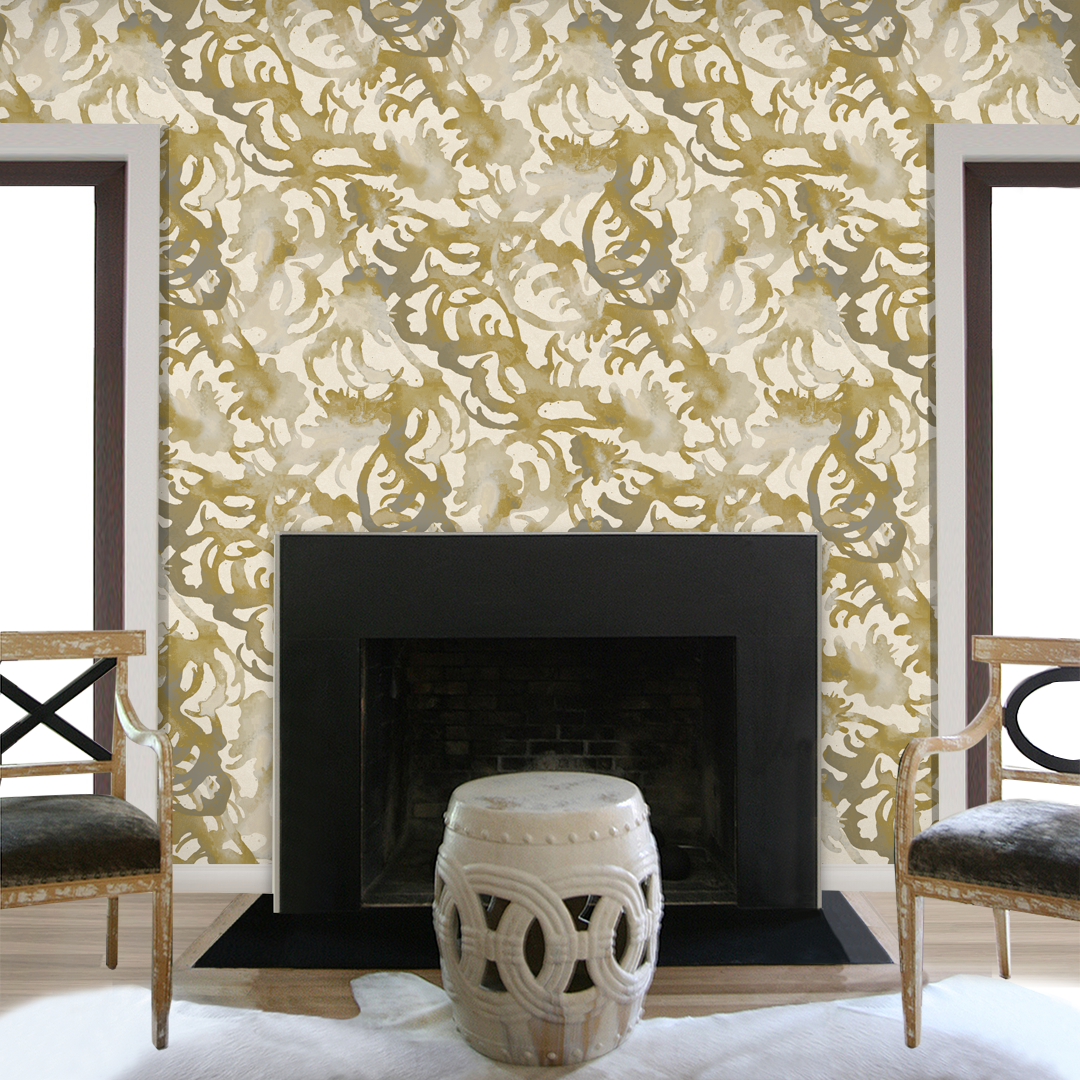
Yes, and the difference is where the pattern starts. A repeat engineered purely for print, from a mood board or a trend report, is built to move fast — to read instantly and get out of the way. A pattern that begins as a real, hand-painted surface carries something slower into the repeat: the same irregular, gestural mark-making that made the original painting worth looking at twice. Every one of my wallpaper patterns starts this way. There's a painting first. The pattern comes after.
Does a hand-made origin actually show up once it's printed?
It does, in the small imperfections a purely digital pattern doesn't have — the places where a brushstroke thins out, overlaps, or breaks the repeat's rhythm just slightly. Those are the details that reward a second look, the same "kairos" quality Hughes is describing. You don't need to know the backstory to feel it. You just look longer than you expected to.
How should I think about pattern scale and pacing in my own room?
Start with how you actually move through the space. A powder room where you're standing still for a minute rewards a pattern with real depth up close — something that holds up under that slower kind of looking. A large, open wall you pass by more than you stand in front of can carry a bigger, more graphic scale. Either way, the goal is the same: a wall that gives you something back the longer you're actually in the room with it.
Frequently asked
What makes a wallpaper "artist-designed"?
The pattern originates from a real painting made by the designer, not a print created directly for repeat.
Is Angela's wallpaper hand-painted on the wall itself?
No — the pattern is designed from an original painting, then digitally printed on commercial-grade vinyl.
Is it durable enough for high-traffic rooms?
Yes, it's 20 oz Type II commercial-grade vinyl, made to hold up in real use.
Can I get a sample before committing to a full room?
Yes, samples are available on every pattern at angelasimeone.com.
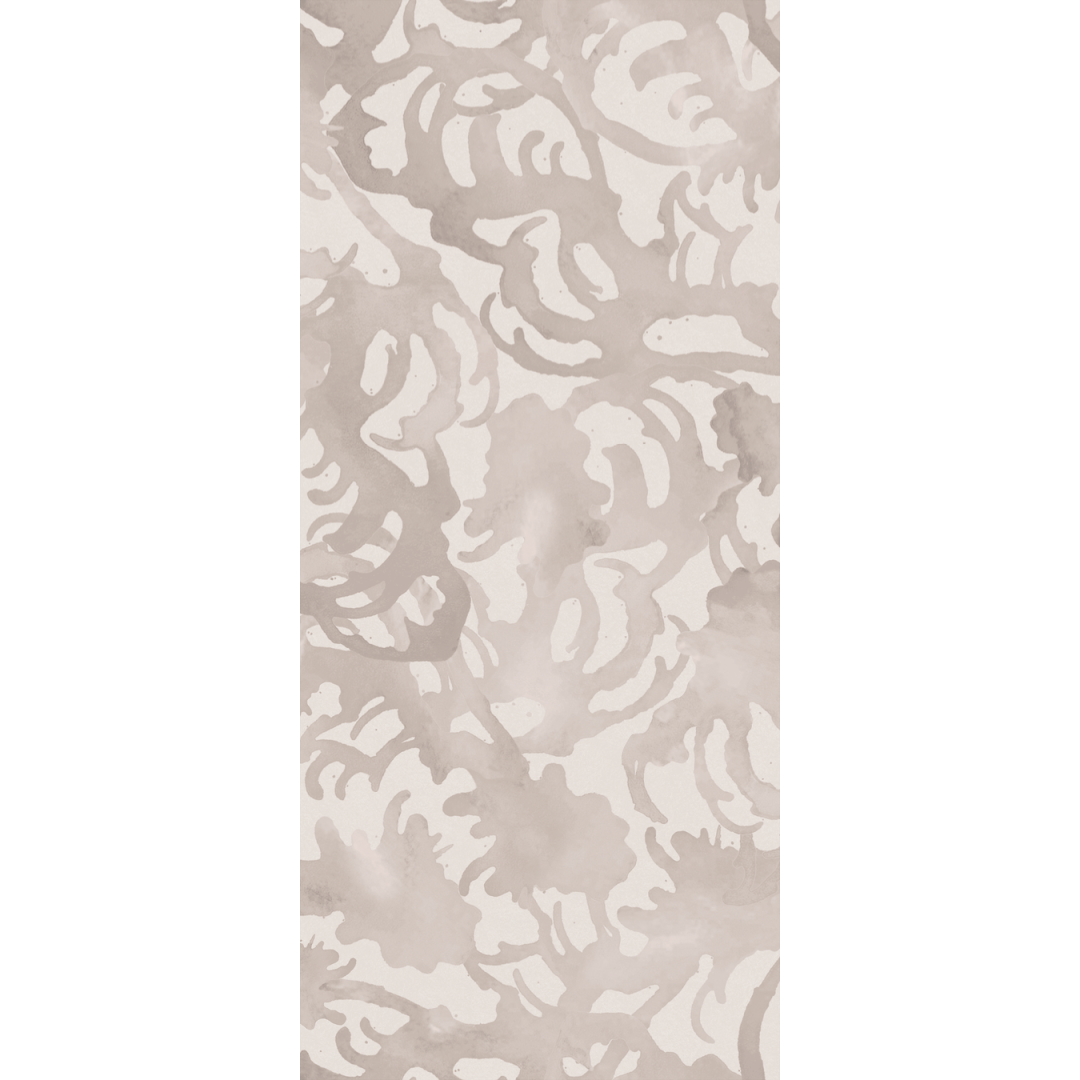
See all wallpaper patterns · Flourish Greige
Sources: The World of Interiors, September 2026 "body issue," profile of Nicholas Hughes; Homo Faber artisan profile, accessed 2026-08-05.