Handmade Became a Sourcing Question the Year AI Arrived in Interiors
In short: "Handmade" used to be a texture. In 2026 it is a question designers ask before specifying: where did this pattern actually come from, and can you show me? The useful test is not whether a wallcovering looks hand-drawn — printing can imitate that — but whether something physical was made first, by a named person, on a date, before it was ever printed.
For most of the last decade, "handmade" in a wallcovering meant a look: visible brush texture, an irregular repeat, a little wobble in the line. Anyone could print that. Plenty did.
Something shifted this year. Designers stopped asking whether a pattern looks hand-drawn and started asking where it came from — and expecting a real answer.
Why is this happening now?
Because the alternative got easy overnight, and everyone in the trade knows it.
Writing in Homes & Gardens' fall 2026 trend report, the designer Ellie Christopher names the cause directly: "With the rise of AI in the interiors world, I think we'll see a strong push toward craftsmanship and handmade pieces, with people placing even more value on the human touch and details that feel truly one of a kind."
Read that as a market prediction rather than a sentiment and it becomes a sourcing instruction. When a plausible pattern can be generated in seconds, the thing with value is no longer the appearance of a hand. It is a hand that can be located.
What actually separates a made pattern from a made-to-look-made one?
Whether something physical existed first.
That is a checkable fact, not a matter of taste. Either there is an original painting, a plaster panel, a hand-mixed pigment, a dated piece of work by a named person — or the pattern begins and ends as a file.
Yolande Milan Batteau, founder of the New York surface-design studio Callidus Guild, describes the making side of that to Business of Home in terms nobody generates from a prompt: "You have to read books, try out formulas and experiment. My studio functions very much like a laboratory, and we're always trying new things." Of her collections she says simply: "Each piece feels more like a painting than a wallpaper." And of the studio's core line: "The core collection is the distillation of 30 years of work."
Thirty years is the part that cannot be shortcut. It is also the part a swatch book has never had a way to print.
Does this mean printed wallpaper is disqualified?
No — and any argument that says so is selling something.
Nearly all commercial wallcovering is printed, including the ones with the most convincing hands behind them. Printing is a manufacturing step, not a moral category. The question is what gets printed, and whether the thing being reproduced ever existed as an object.
That distinction is worth being precise about in a spec conversation. A pattern drawn from an original painting is not "hand-painted wallpaper." The painting was made by hand. The wallcovering is printed onto vinyl by a manufacturer. Both statements are true, and a designer who says them in that order will never be caught out by a client.
How does a designer verify origin?
Four questions, all answerable in one email:
- Is there an original work this pattern came from? Ask to see it.
- Who made it, and when? A name and a date, not a studio mood.
- Was the pattern derived from that work, or drawn to resemble it? These are different lineages.
- Can the maker talk about the original? Someone who made a thing can describe the decisions in it.
A house that cannot answer these has not necessarily done anything wrong. It has simply told you the pattern's origin is not part of what it is selling.
Where the studio's own patterns come from
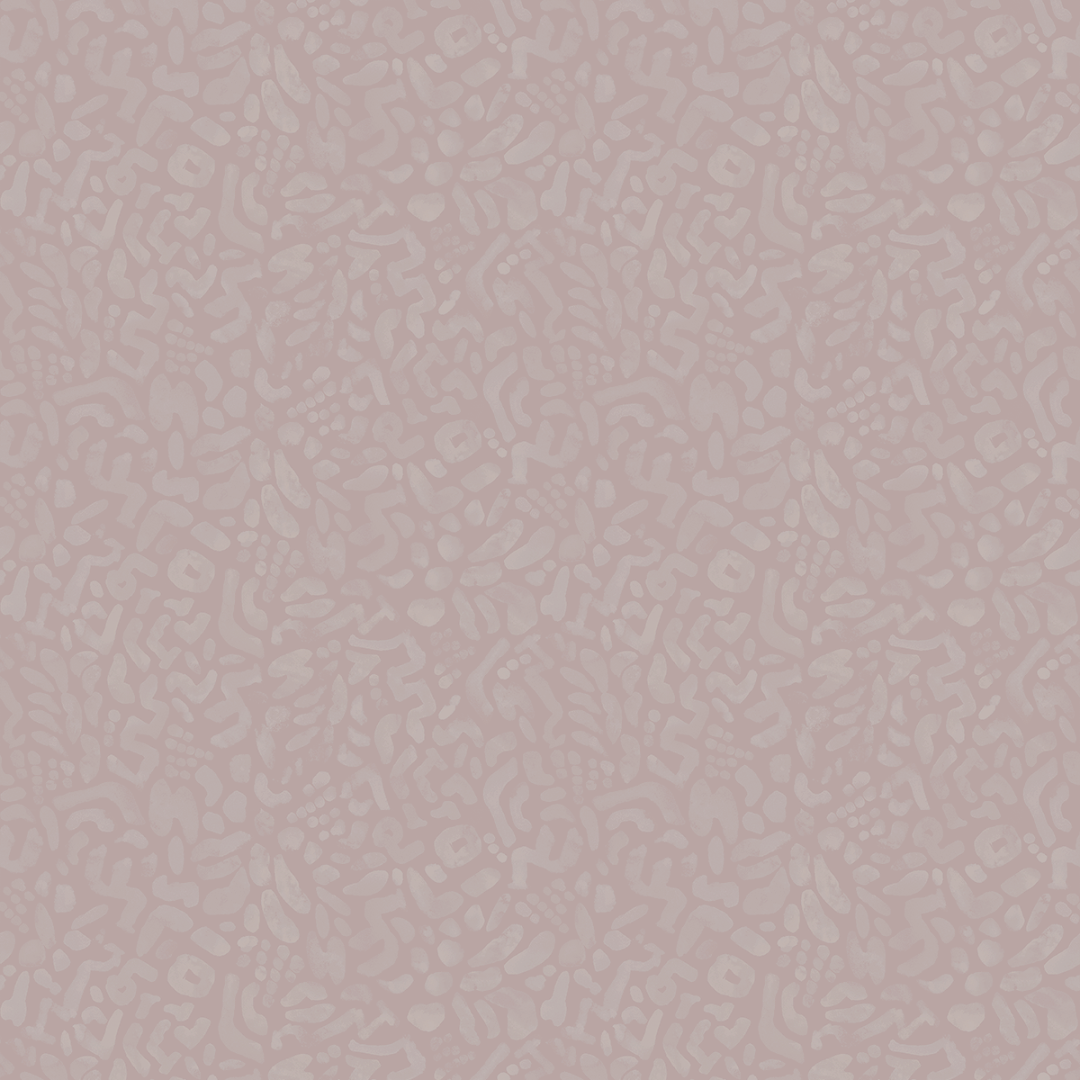
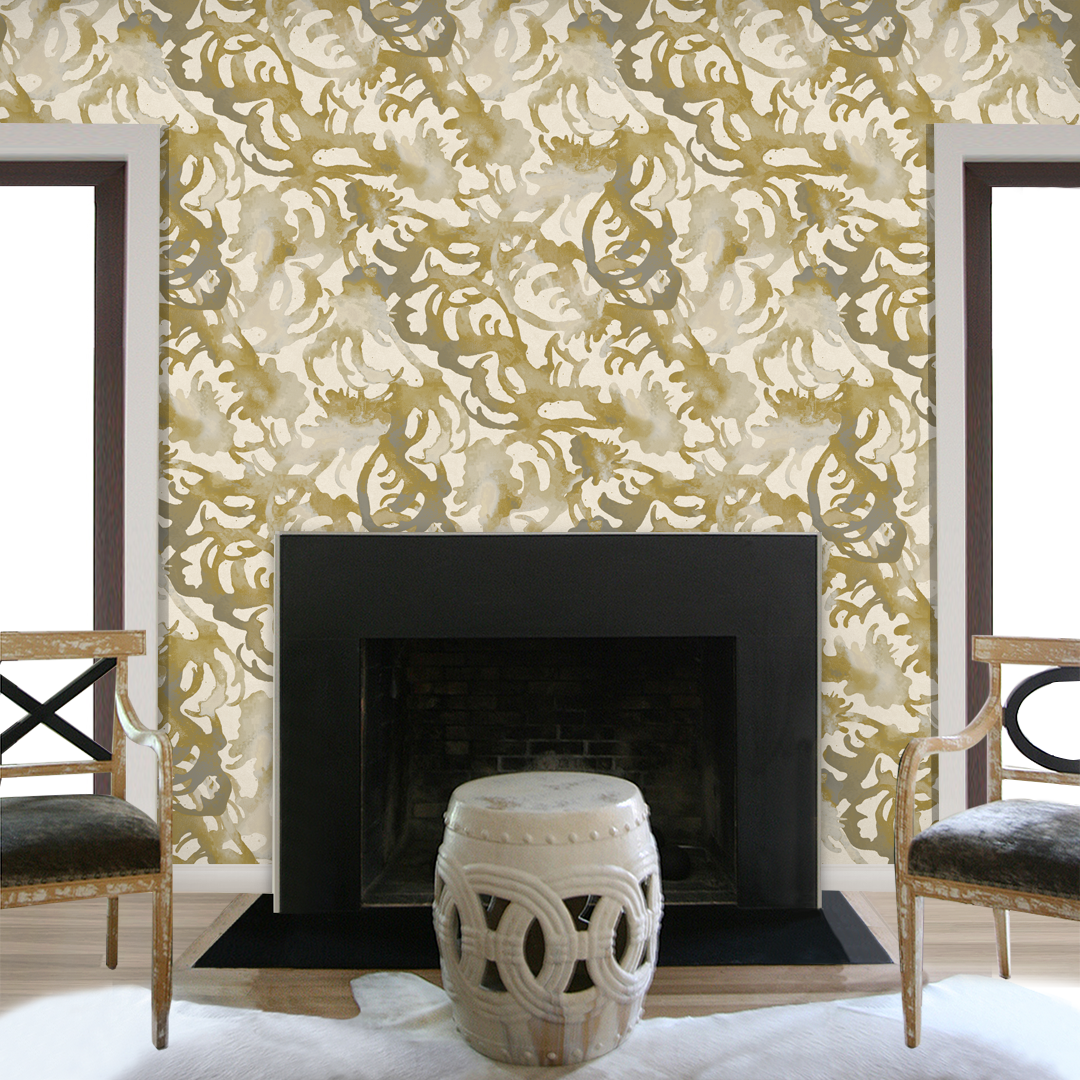
Every pattern in this line begins as mark-making or a snapshot from one of Angela's own paintings — a specific canvas, made in a Nashville studio, on a date, in oil and mixed media. The wall reads singular because the source was.
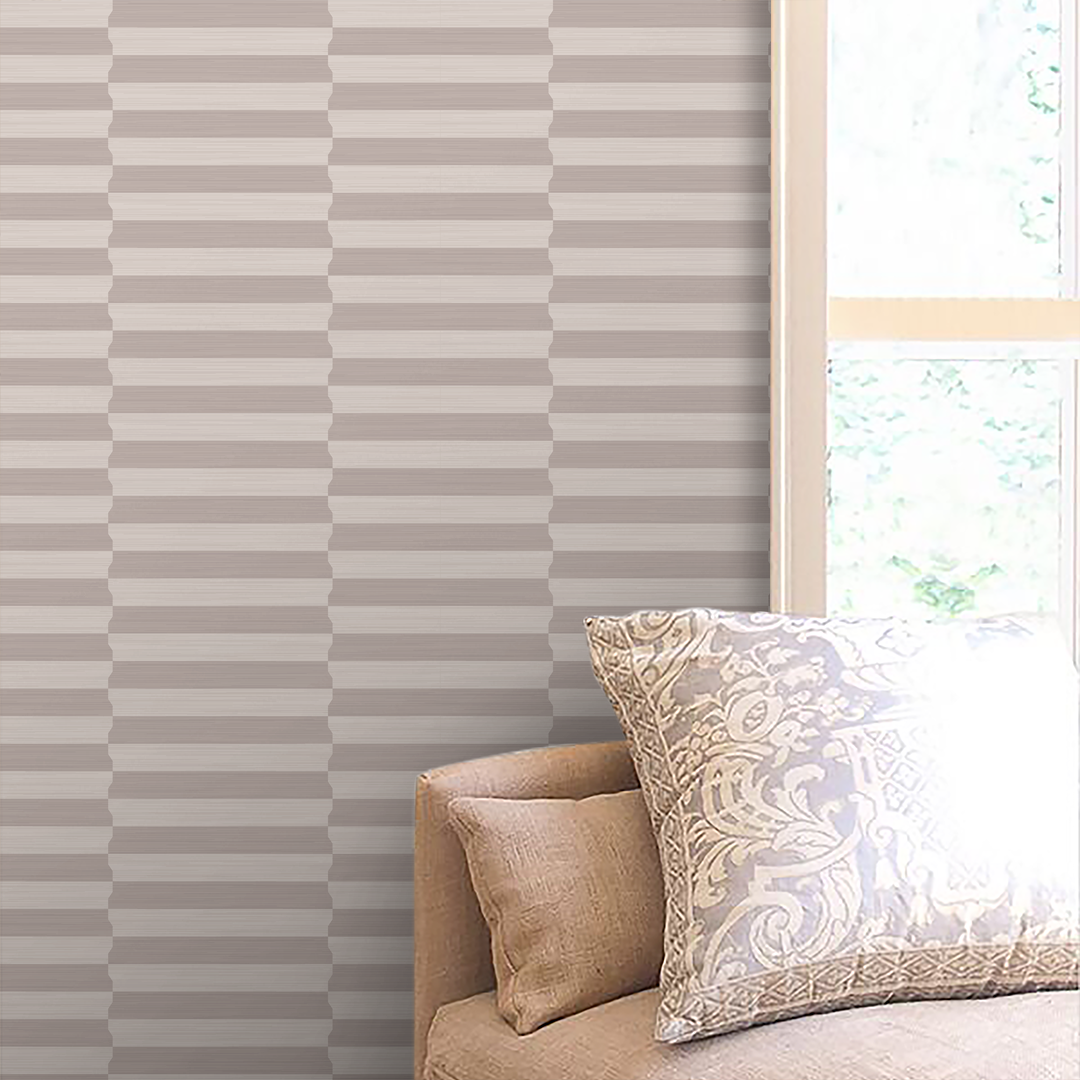
Chic Stripe Winter White keeps the order of a stripe and the movement of a brushstroke. Flourish Warm White with Tan Liquid Silk reads as woven texture across a room and as brushwork up close. Atelier Blue Haze Medium keeps the in-progress feel of the studio it came from. Each is printed onto 20 oz Type II vinyl in 24-inch rolls — a durable, wipeable commercial substrate, specified because designers asked for it.
The origin is the part that is not reproducible. The printing is the part that makes it a wall.
Angela Simeone is a contemporary painter in Nashville whose wallpaper patterns are drawn from her own original paintings, sold direct and to trade. More on the practice.
Frequently asked questions
What does "artist-designed wallpaper" actually mean?
That the pattern originates in an original artwork made by a named artist, rather than being drawn in-house or generated to resemble one. The useful follow-up is always: can you show me the original?
Is artist-designed wallpaper hand-painted?
The source painting is. The wallcovering is printed by a manufacturer onto vinyl. Saying it that way is both accurate and stronger than the shorthand.
Is AI-generated pattern a problem for designers?
Not inherently — but it has made provenance worth asking about. When an appealing pattern can be produced instantly, a documented origin becomes the thing that distinguishes one wall from another.
Is vinyl wallcovering suitable for high-traffic and commercial spaces?
Yes. 20 oz Type II vinyl is a commercial-grade substrate — durable and wipeable, which is why it is specified for hospitality and contract work as well as residential.
Sources
- Homes & Gardens, The 7 Most Sophisticated Fall Decorating Trends for 2026 (25 Aug 2026)
- Business of Home, Meet the Makers (Caroline Biggs)