A Wallpaper Made to Look Old, and the Difference Between Patina and Costume
In short: Age is the loudest thing in wallpaper right now — York Wallcoverings named Patina its 2026 Color of the Year, and 2026's most-discussed launch is built explicitly on aged materials. The distinction that matters is not old versus new. It is whether the ageing happened to something real before it was printed, or was drawn on afterward.
Why does so much 2026 wallpaper want to look old?
Because rooms are being asked to feel settled rather than new. York Wallcoverings made the mood official by naming its 2026 Color of the Year Patina — a colour named for a process rather than a hue, which is unusual and telling. What is being sold is not a shade. It is time.
Is a pattern engineered to look aged actually delivering heritage?
Sometimes. It depends entirely on what was ageing. This year's clearest example is Cadence, Athena Calderone's collection with Calico Wallpaper, drawn from the patina of aged materials and specifically from the translucent surfaces of natural hides. The method is the point: a French decorative painter's hand-rendered artwork was layered with high-resolution scans of real textures, then released in six colourways from alabaster and porcelain through to oxblood and an espresso-toned tobacco.
Calderone's own framing is the useful sentence: "Design, for me, is at its most powerful when it acknowledges history while nodding to the future." Acknowledging is not imitating. A hide that genuinely aged, scanned, is a record. A digital wear-layer applied to a flat repeat is a costume.
How do you tell the difference on a wall?
At distance you cannot, and that is the trap. Ten feet away most aged effects hold. The test happens at ten inches, and a wall is a surface people stand next to. Real irregularity does not recur; generated irregularity is produced on a grid, so it repeats at a predictable interval and the eye eventually catches the loop. Ask two questions of any sample: what physical thing produced this variation, and how far apart does the pattern repeat. An honest supplier answers both.
Where does this studio's wallpaper sit?
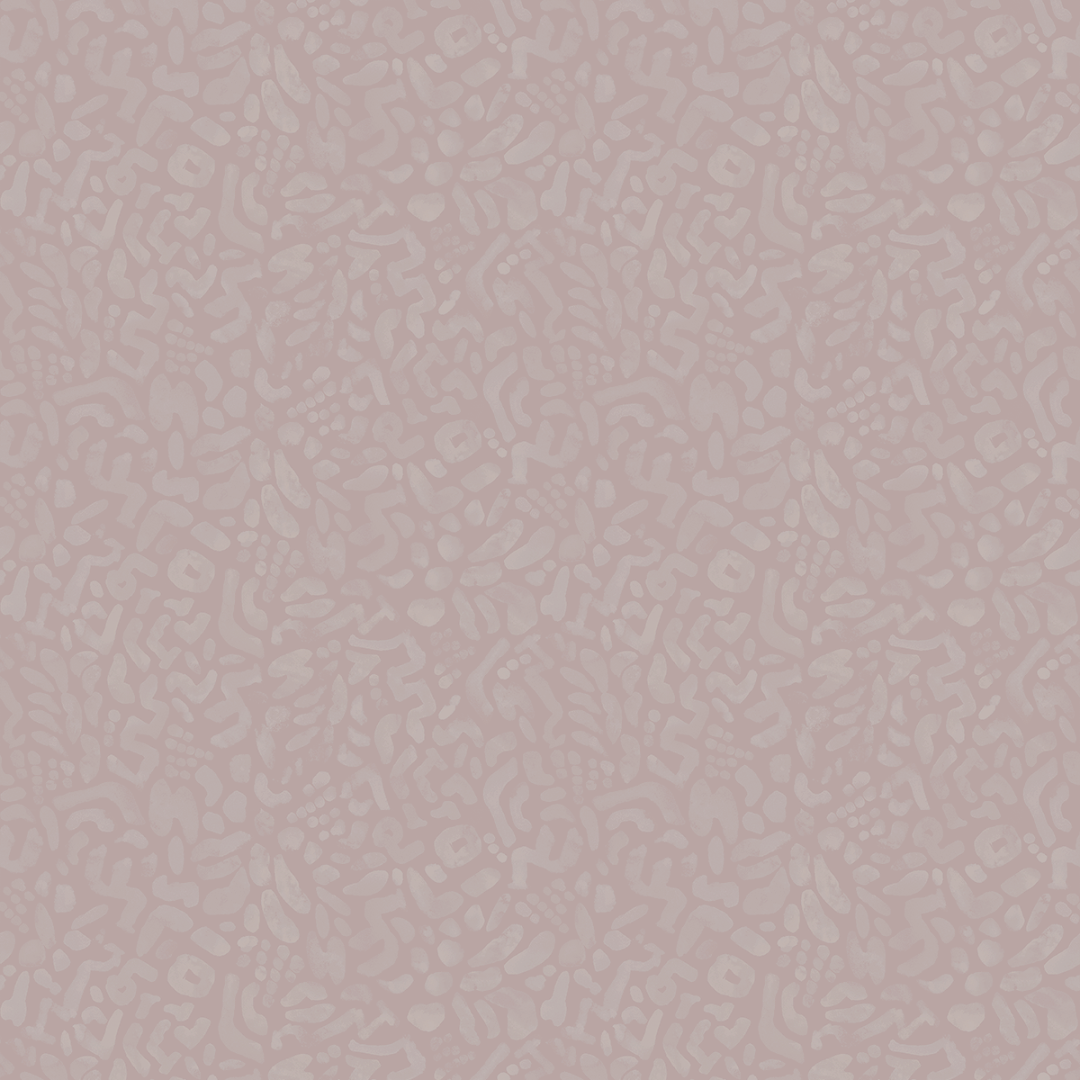
On the origin side, by construction. Each pattern begins as one of my original paintings — mark-making, layering, the colour decisions made in oil and mixed media on canvas — and the pattern is drawn from that finished work. The wallpaper itself is printed, not painted; what it carries is a record of decisions that were made by hand, under changing light, on a real surface.
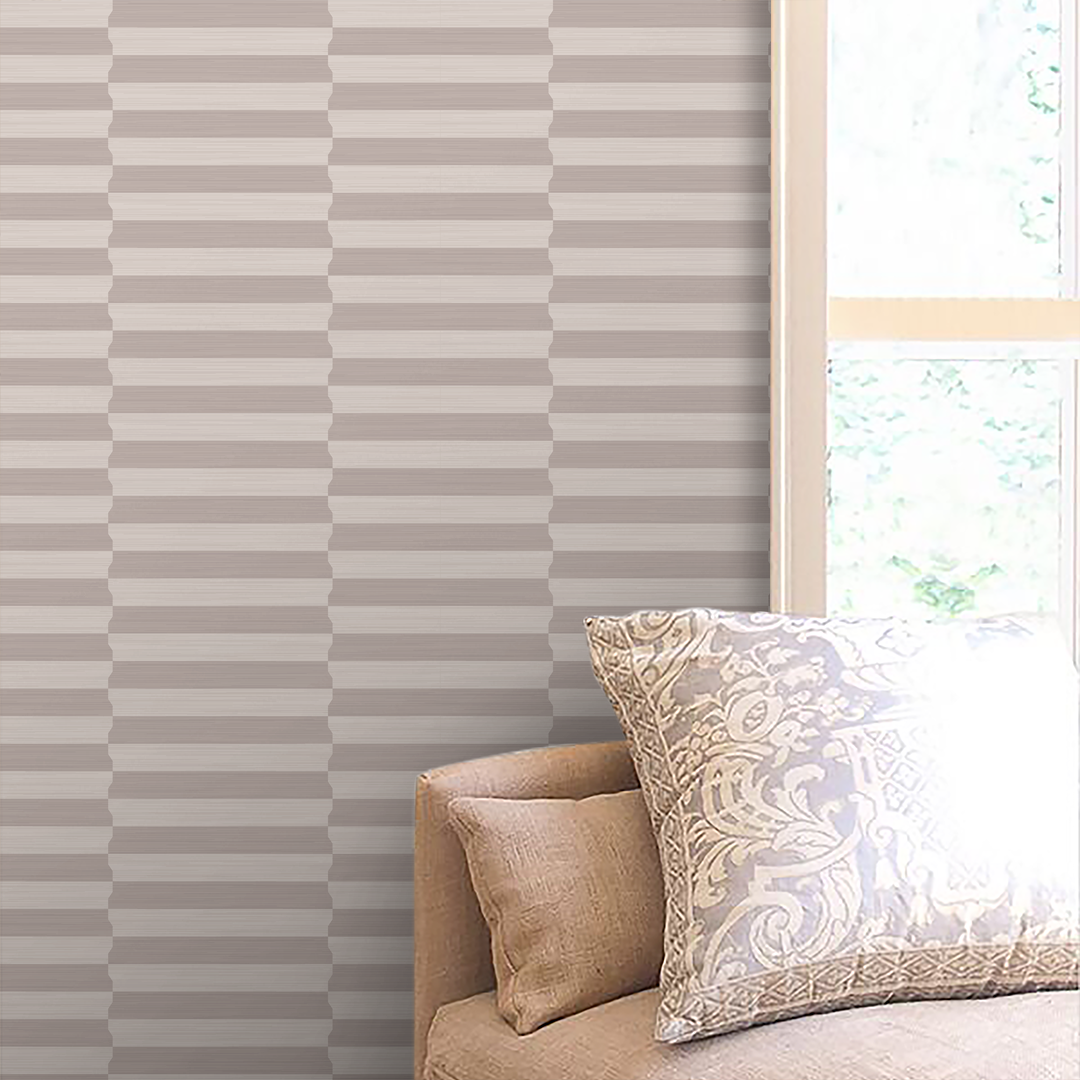
The substrate is 20 oz Type II commercial-grade vinyl: an embossed face with a slight strié-shimmer over a laminated fabric backing, 24" wide, pre-trimmed and unpasted, 52" for commercial specification. Sold by the yard with a 30-yard minimum, print-on-demand at roughly two weeks, samples $5. Trade gets 20% and up to five free samples, with custom colourways and scale available. Browse the master collection, or see the trade programme — and the original paintings the patterns come from are one-of-one.
Schumacher, Phillip Jeffries and Lee Jofa built the historical beauty this category rests on. What a working painter adds to that conversation is a different origin story, not a better one.
Frequently asked questions
Is aged-look wallpaper going to date quickly?
The look will move on; the question is what you are left with. A pattern whose variation came from a real object holds up as an object regardless of trend, because the interest is structural rather than stylistic.
What is “patina” in a wallpaper context?
The surface character a material acquires over time — tonal drift, uneven translucency, wear that follows use rather than a rule. York Wallcoverings named it their 2026 Color of the Year, which signals a mood more than a colour.
Is your wallpaper hand-painted?
No. The pattern originates in an original hand-painted work; the wallpaper product is printed by a manufacturer onto vinyl. That distinction matters and the studio states it plainly.
Can I get a custom colourway?
Yes, for trade — custom colourways and scale adjustments are available, along with 20% trade pricing and up to five free samples.