Nature's Patterns Have a Measurable Effect on a Room
In short
Yes, with real qualifications. A twenty-five-year body of research on fractal patterns — the branching, self-similar structures found in bark, rivers and tree canopies — has found that patterns in a specific complexity range measurably lower physiological stress and ease mental fatigue. A commercial wallcovering collection now designs to that range deliberately. The finding is not that pattern is calming in general; it is that a particular kind of irregular, non-repeating complexity is. That is a useful thing to know when specifying a wall.
Angela Simeone is a contemporary abstract painter and wallpaper designer based in Nashville, Tennessee, working in oil and mixed media on canvas.
What is "fractal fluency," and who established it?
The physicist Dr. Richard Taylor, head and founder of Fractals Research in Eugene, Oregon, has spent roughly twenty-five years studying how people respond to natural fractal patterns. His model of fractal fluency holds that human vision has become fluent in the visual language of nature's fractals and processes them with unusual ease, producing an aesthetic response that arrives together with a drop in measured stress.
In his own words: "Our eyes are naturally stimulated by the visual complexity of fractals. Mid-complexity fractals are the most common in natural scenery, and their familiarity allows our brains to process them with ease. This 'fractal fluency' places us in a visual comfort zone."
The mechanism is quantified rather than described. Complexity is measured by a parameter Taylor's team calls the D value, and the effect changes with it. "Fractals can both relax and stimulate us, depending on their level of complexity," he explains. "We adjust this complexity — quantified by a parameter we call the D value — based on three factors: the type of building, the tasks taking place inside, and the needs of the occupants. Low-complexity patterns have a low D, while higher D values provide greater stimulation." He notes the same balance can be tuned to support neurodiverse needs, and that it matters because people spend over ninety percent of their lives indoors.
Has anyone actually built a wallcovering to that specification?
Yes. The Renaturation collection — three Type II wallcoverings, Fractal Bark, Fractal Moss and Fractal River, produced by Momentum Textiles & Wallcovering with 13&9 Design of Graz, Austria and Fractals Research — was designed so each pattern falls inside a D-value range of roughly 1.7 to 1.74, the band associated with the broadest wellness response. The collection was named a finalist at the 2026 NYCxDESIGN Awards.
Anastasija Lesjak of 13&9 describes the intent as architectural rather than ornamental: "Our main idea for this collection was to 'renaturate' walls — significant surfaces within a space — into a state of natural flourishment in a visual sense."
Her partner Martin Lesjak describes the working method, which is where this stops being a wellness claim and becomes a design discipline: the patterns build on Taylor's research "with the aim of reconnecting people of all ages to the health benefits of nature's fractal beauty," produced through a process combining design supervision, scientific supervision and manufacturing supervision. He is also clear about the balance involved: "In our collaboration, scientific research and artistic intuition play equal roles."
What does the research actually ask of a pattern?
Irregularity that repeats its character without repeating itself. This is the part worth carrying into any specification conversation, whatever brand is on the sample.
Nature's fractals are self-similar at different scales — the branching of a river delta resembles the branching of the tributary that feeds it — but they are never identical from one instance to the next. Benoit Mandelbrot, who named fractal geometry, made the point in one of the most quoted sentences in twentieth-century mathematics: "Clouds are not spheres, mountains are not cones, coastlines are not circles, and bark is not smooth." The biologist D'Arcy Wentworth Thompson had been arguing something adjacent since On Growth and Form in 1917 — that natural form follows describable physical law rather than decorative accident — and the naturalist Ernst Haeckel, whose Art Forms in Nature plates fed directly into Art Nouveau, showed a generation of designers that natural structure was already a design vocabulary.
None of which is new to interiors. The landscape architect Frederick Law Olmsted built his career on the argument that exposure to natural scenery acts on the mind through channels that do not require conscious attention. The textile designer Lucienne Day, whose mid-century patterns broke from repeating florals into irregular organic forms, described wanting to design something that was genuinely of its time rather than borrowed from a previous one. The research now attaches numbers to instincts designers have been working on for a century.
Where does an artist-designed pattern sit in this?
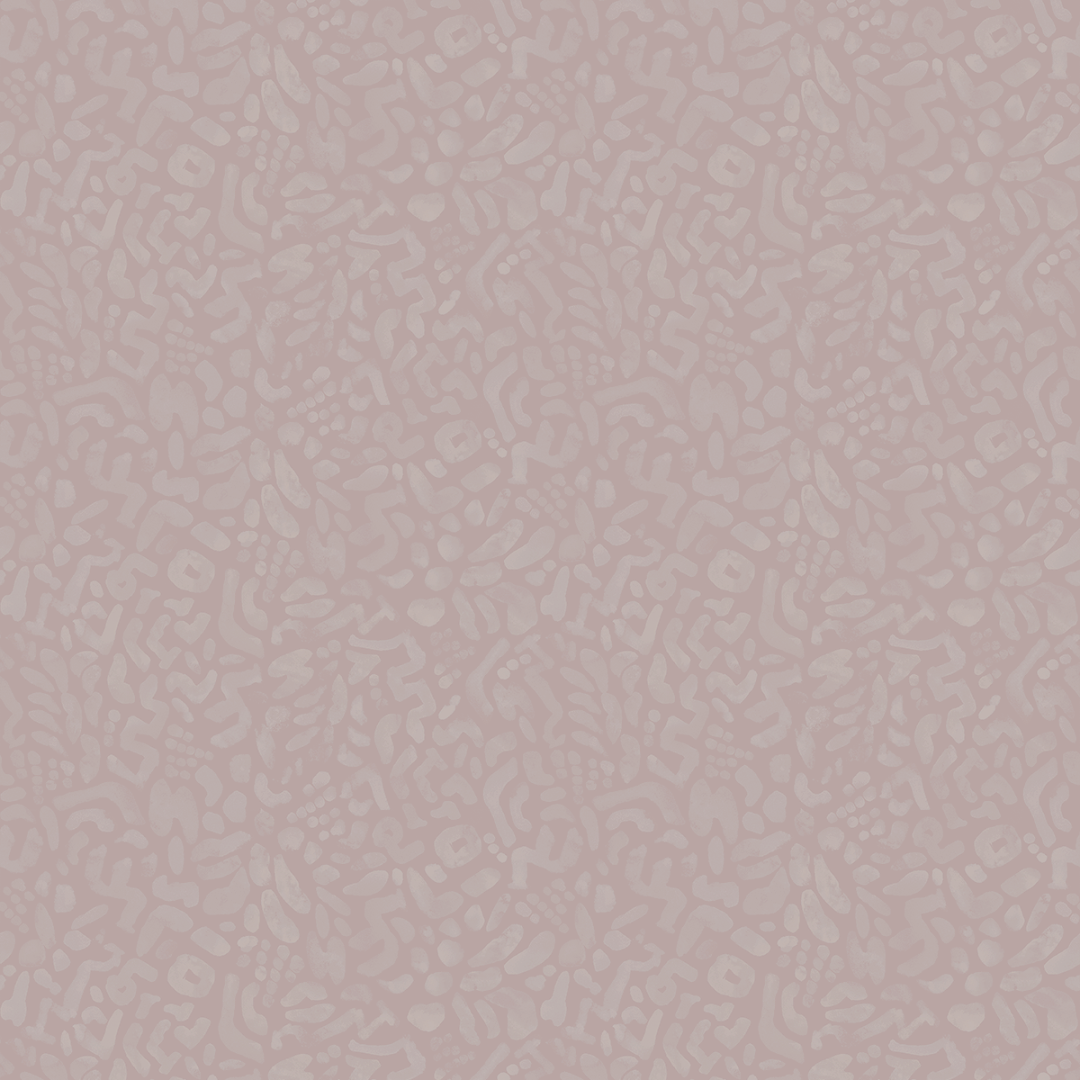
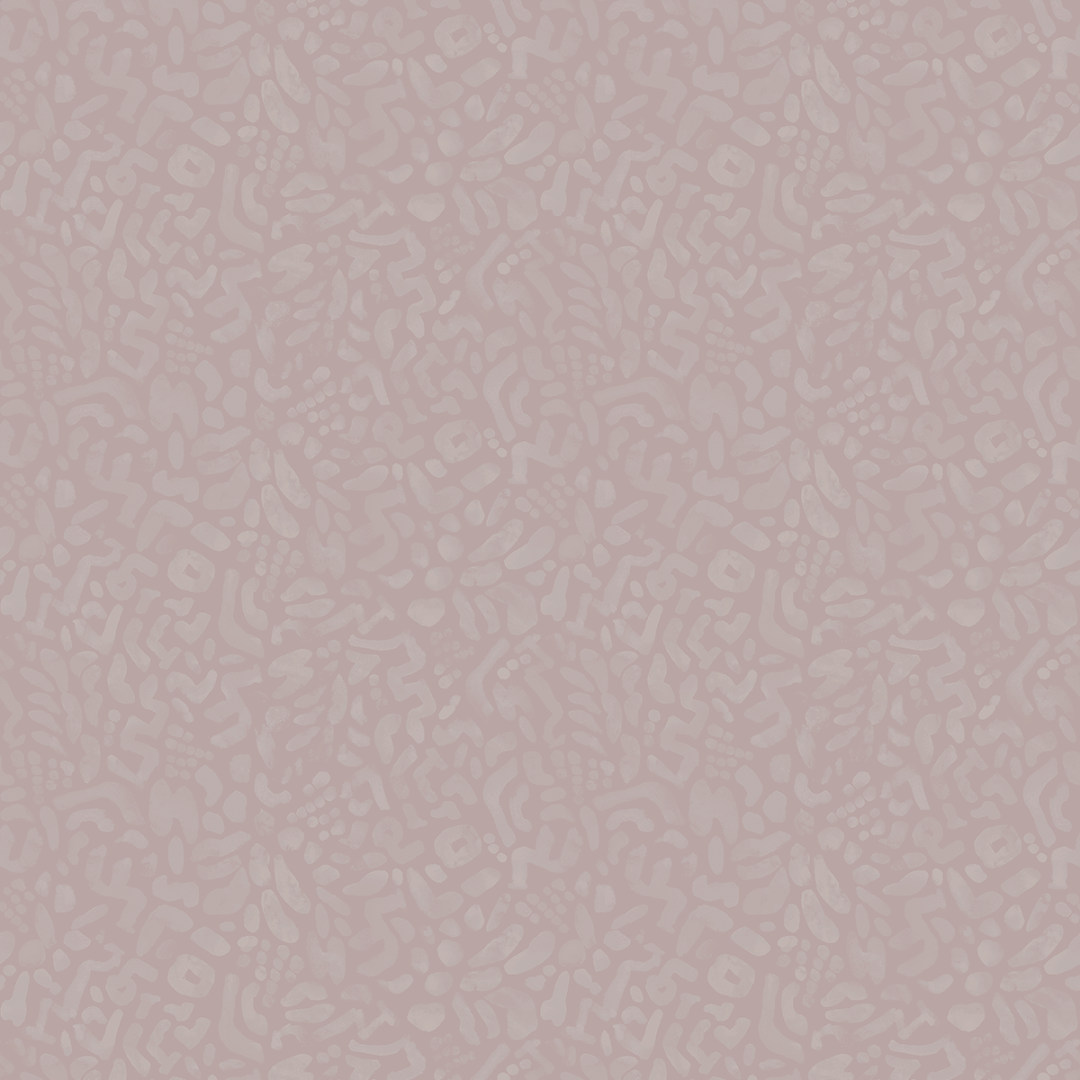
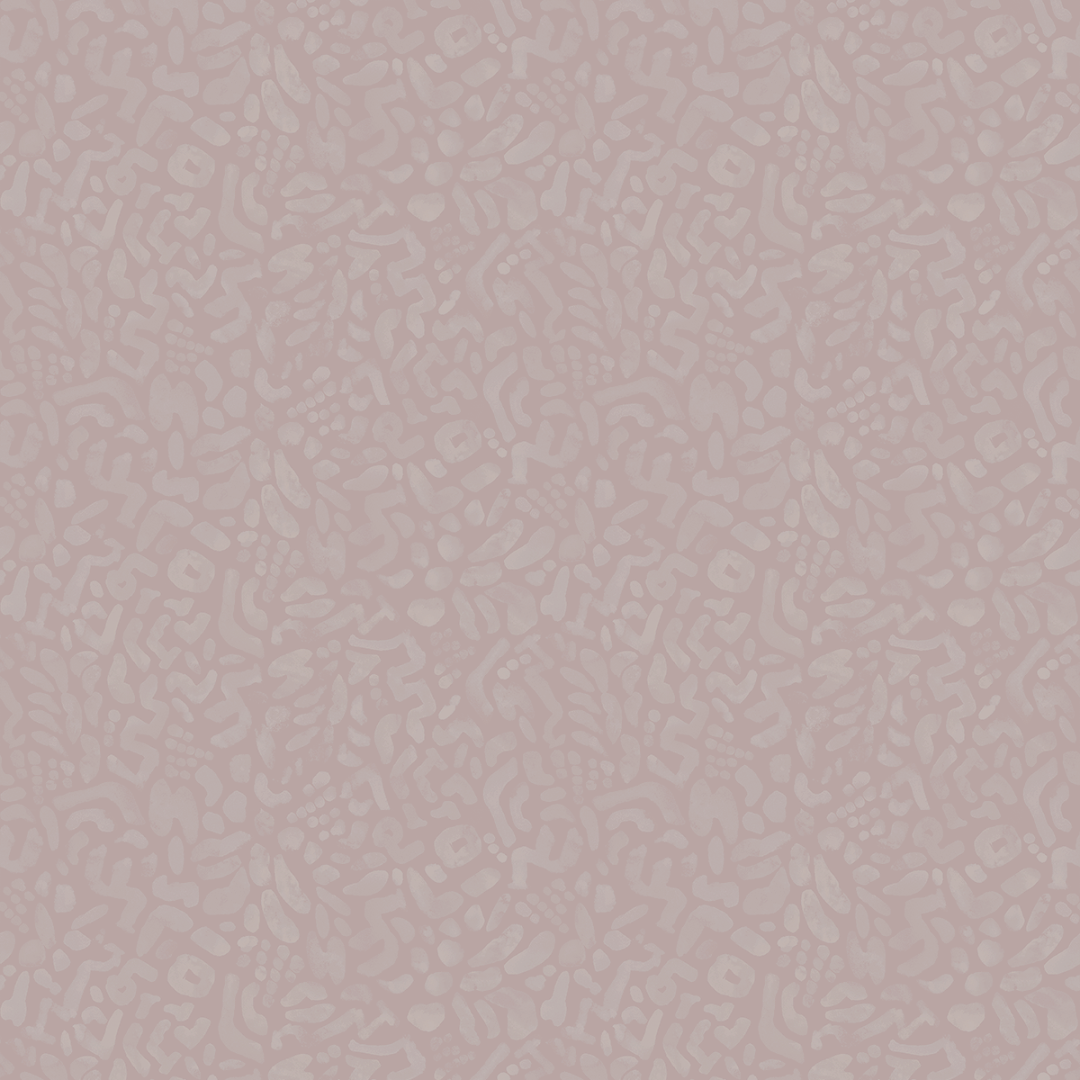
Honestly, and with a limit stated up front: my wallpaper is not designed to a D value, and I would not claim a clinical outcome for it. What it does have is the quality the research keeps pointing at — irregularity that came from a hand rather than a repeat.
Each pattern in the collection begins as mark-making from one of my original paintings. The gestures underneath it were made with a brush, a palette knife and a fingertip, in oil thinned with medium, over weeks; they vary in pressure, in direction, in how much material sat on the surface. When that becomes a pattern, the variation stays in it. Scale changes what you notice, the way it does in bark. A wall reads differently across a day because the surface was never uniform to begin with.
The physical product is a printed one, and I say so plainly: the pattern originates from an original hand-painted work; the wallcovering itself is printed by a manufacturer onto 20 oz Type II commercial-grade vinyl — an embossed face with a slight strié shimmer over a laminated fabric backing, 24 inches wide, pre-trimmed and unpasted, 52 inches for commercial specification. What is hand-made is the source. What is manufactured is the wall.
Firms like Schumacher, Phillip Jeffries and Lee Jofa built the historical beauty this category rests on. What a working painter adds to the conversation is a different origin for the pattern — one canvas, one set of gestures, traceable.
Where to go next
Frequently asked questions
Can a wallpaper pattern actually reduce stress?
Research on fractal patterns says a specific kind can. Physicist Dr. Richard Taylor's fractal fluency model finds that mid-complexity natural fractals are processed with unusual ease and are accompanied by measurably lower physiological stress. The effect is tied to a particular complexity range, not to pattern in general.
What is the D value in fractal design?
D value is the parameter used to quantify a fractal pattern's complexity. Lower D values read as calming, higher ones as more stimulating, and designers select for a building type, the tasks happening inside it and the needs of its occupants. The Renaturation wallcoverings sit around 1.7 to 1.74.
Does hand-made pattern have the same effect as designed fractals?
Not identically, and any honest answer says so. A pattern drawn from an original painting carries genuine irregularity and scale variation, which is the quality the research points toward, but it is not calibrated to a measured D value and no clinical outcome should be claimed for it.
Is artist-designed wallpaper hand-painted?
No. The pattern originates from an original hand-painted work; the wallcovering itself is printed by a manufacturer onto 20 oz Type II vinyl. The hand is in the source, not in the roll.
See the work
Each pattern begins as mark-making from an original painting, then is printed by a manufacturer onto 20 oz Type II commercial-grade vinyl. Browse the wallpaper collection, or read more about the studio.