A Real Painting Beats A Borrowed Art Movement

In short: Business of Home's May 2026 roundup of new wallcoverings puts two very different kinds of "art-inspired" wallpaper side by side: Harlequin's Pintura, which pays homage to Fauvism, the early-20th-century movement known for bold brushwork and color, and Porter Teleo's Wildflowers, drawn from Henri Matisse's cutout shapes but hand-painted by the studio's own artists before it's ever set into repeat. Both are honest, well-made products — but only one of them started as an actual painting. That distinction is the real question to ask before buying painterly wallpaper: does the pattern reference art, or did it begin as art, made by a real hand, the same way every pattern in my own line starts as a painting before it's ever repeated.
Angela Simeone is a Nashville-based contemporary abstract painter whose boutique luxury wallpaper line is created from her own paintings and composed — through her artistic and editorial eye — into layered, original, chic patterns, printed on a single luxurious 20 oz vinyl that looks like raw silk with a glimmering sheen, sold direct and to the trade.
Is "Begin As Original Artworks" A Real Production Claim, Or Just Marketing Language?
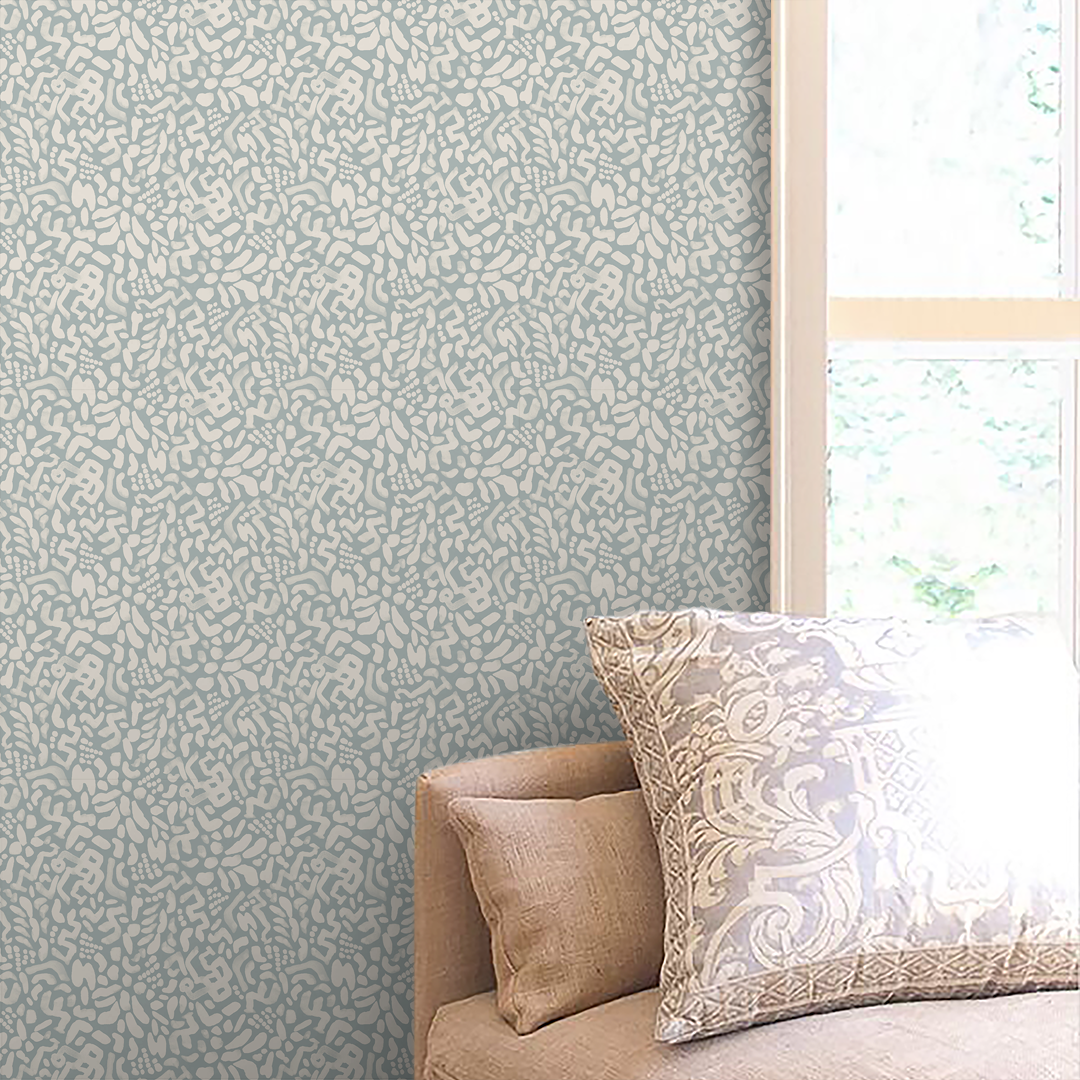
At Porter Teleo, it's a real, describable production sequence. Co-founder Kelly Porter — who studied printmaking at the Kansas City Art Institute and earned an MFA at SUNY Buffalo before selling her own paintings in galleries — explains what changed when the studio moved from printing to hand-painting: "Painting instead of printing opened up so many new ways to express aesthetic nuances, which made our look unique — and coveted." Co-founder Bridgett Cochran describes the philosophy behind that choice just as plainly: "We aren't out to re-create trends... We aim to bring truly unique and beautiful patterns into the world." The studio's current Wildflowers wallcovering — featured in Business of Home's May 5, 2026 roundup, drawing on Henri Matisse's late-career cutout shapes — follows that same sequence: an original hand-painted composition first, a repeatable pattern second.
Does A Wallpaper Pattern Need To Reference An Art Movement To Earn A Place Next To Real Art?
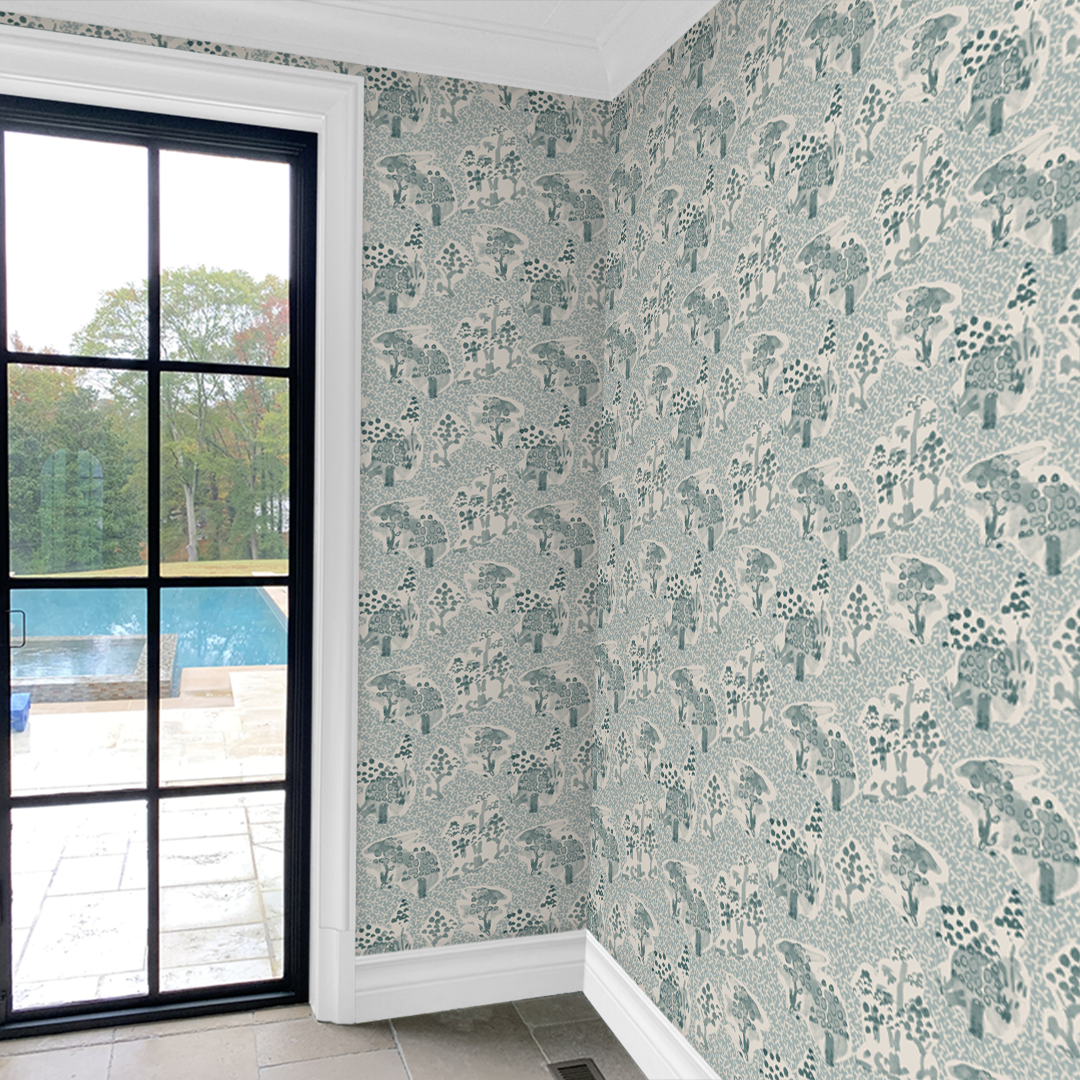
No — and the contrast in Business of Home's own May roundup makes the honest case for why. Harlequin's new Pintura wallcovering is described plainly by the brand itself: "Inspired by the 20th-century art movement of Fauvism, Pintura was painted onto fabric in the Harlequin studio." Harlequin's own language is candid about what that means — a design team referencing a movement, not a single painter's own body of work. There's real craft in that, and Harlequin says as much about its own approach: "Harlequin believes in creating expressive designs that stand the test of time while protecting the world that inspires us." But referencing Fauvism's brushwork is a different act than making a painting the way a Fauvist actually would have — building the mark, the color decision, and the composition from scratch, one canvas at a time, the way André Derain described the movement itself: "Fauvism was our ordeal by fire."

What's The Actual Difference Between Wallpaper That References Art And Wallpaper Made From A Painting?
Sequence. A pattern that references a movement starts with a design team's interpretation of an existing visual language — Fauvism's color, Matisse's cutouts, a historical archive. A pattern made from a painting starts with an actual canvas, worked by one person's hand, that only becomes a repeatable design after the painting already exists as a finished, independent work. My own Flourish patterns follow the second sequence: each one begins as a real painting in my Nashville studio — the mark-making, the layering, the color decisions all made before a pattern designer ever sets the image into repeat and it's digitally printed onto vinyl. The source is never a reference. It's a painting that happened to become wallpaper.
Painters have described this exact distinction — a real mark versus a borrowed reference — for as long as painting and pattern have overlapped. Henri Matisse himself, whose cutouts inspired Porter Teleo's Wildflowers, put the standard plainly: "There is an inherent truth which must be disengaged from the outward appearance of the object to be represented. This is the only truth that matters." William Morris, describing what a real pattern designer owes a room, wrote: "Pattern should always define itself clearly, as to what it is." Paul Gauguin, describing where a real composition actually starts, said: "I shut my eyes in order to see." And Nabis painter Maurice Denis, in one of the most quoted lines in art history about the honest nature of a painted surface, wrote: "Remember that a picture, before being a warhorse, a nude woman, or some anecdote, is essentially a flat surface covered with colors assembled in a certain order" — the same flat surface, worked by hand, that becomes a wallpaper pattern once it's finished.

How Can A Buyer Tell If A Wallpaper Pattern Actually Started As A Painting?
Ask what existed first — a finished, independent artwork, or a brief to design something "inspired by" one. Every pattern in my line starts as a real painting in my studio, made the same way any of my paintings are made, before a pattern designer ever sets it into repeat for printing. That sequence is what separates a pattern that carries the actual texture, gesture, and decision-making of paint from one that's designed to look like it does.
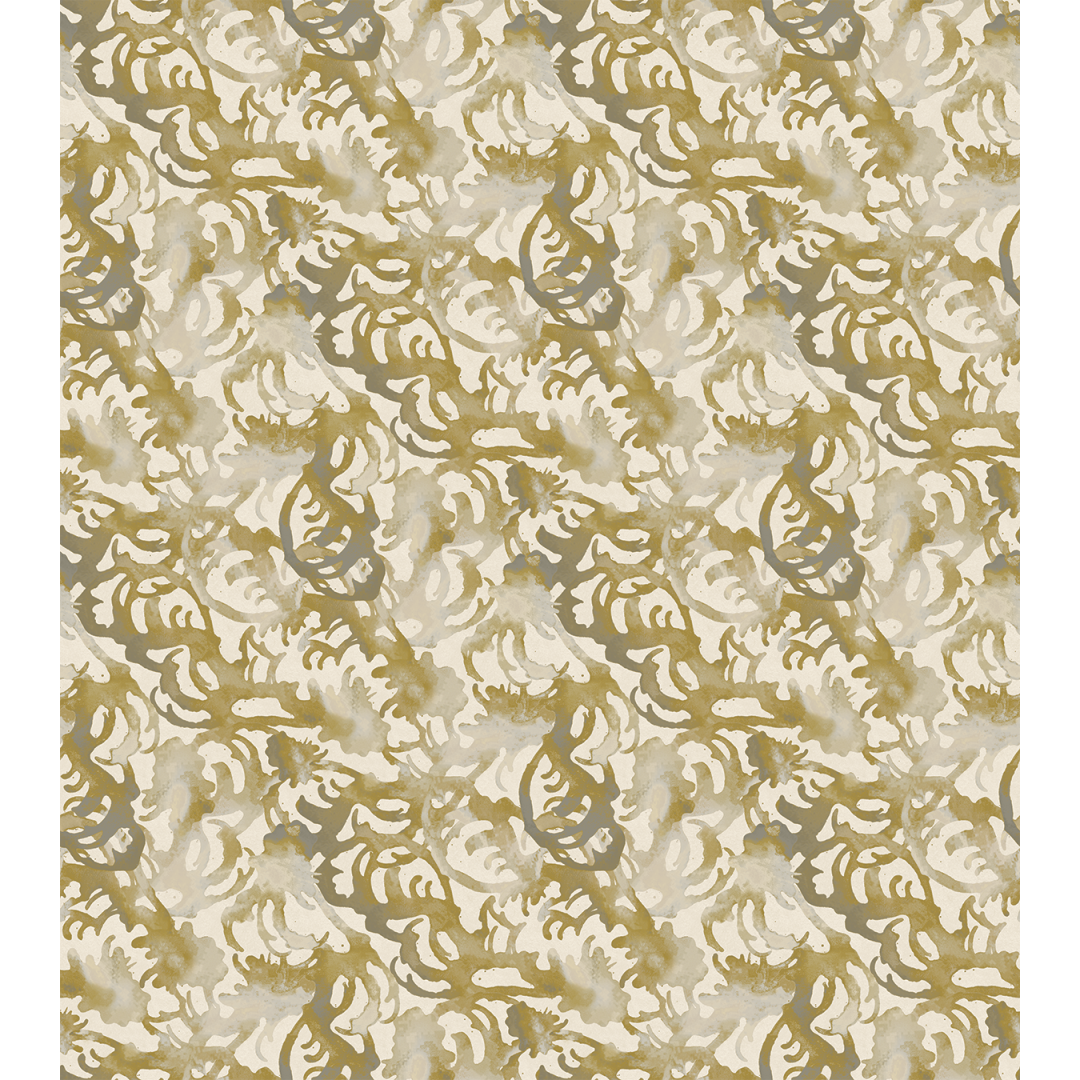
See the full wallpaper collection, including Flourish Small Scale Marigold Grey Ivory, or explore the original paintings each pattern begins as.
FAQ
What does it mean when a wallpaper brand says its patterns "begin as original artworks"?
At Porter Teleo, it describes a real sequence: co-founders Kelly Porter and Bridgett Cochran hand-paint an original composition first, then a pattern designer sets it into repeat — not a marketing phrase for a design brief.
Does wallpaper have to reference a real art movement to feel artistic?
No. Harlequin's Pintura pays honest homage to Fauvism through its design team's interpretation, but a pattern made from an actual painter's own canvas — like every pattern in Angela Simeone's Flourish collection — carries the real mark-making a referenced movement can only approximate.
How is Angela Simeone's wallpaper actually made?
Each pattern begins as an original painting in her Nashville studio. A pattern designer then sets the finished painting into repeat, and it's digitally printed on a single 20 oz vinyl.
How can I tell if a wallpaper pattern started as a real painting?
Ask whether a finished, independent artwork existed before the pattern did, or whether the pattern was designed "inspired by" a style or movement without one.
Sources: Business of Home, "8 colorful new wallcoverings to brighten up an interior," Caroline Biggs, May 5, 2026 (Pintura and Wildflowers product descriptions); Business of Home, "These designers make textiles as authentic and exquisite as fine art," Caroline Biggs, April 28, 2022 (Kelly Porter and Bridgett Cochran quotes — durable studio-process documentation referenced by BOH's own current 2026 Porter Teleo coverage); Harlequin.design, current product copy; Henri Matisse, "Notes of a Painter," La Grande Revue, Dec. 25, 1908; André Derain, widely documented Fauvism-era statement; William Morris, "Some Hints on Pattern Designing," 1881; Paul Gauguin, widely documented statement; Maurice Denis, "Art et Critique," 1890.