A Painter's First Wallpaper Is Still A Painting

In short: Artist-designed wallpaper made by a working painter's own hand — not licensed or sketched to a brief — promises a buyer something a career pattern designer's work structurally can't: a pattern with an actual painting behind it, not just a look borrowed from one. Christopher Farr Cloth's new Olaf Hajek Collection tests exactly this question, marking the first time the German artist's own paintings have entered wallcovering. My own Toile pattern, in Medium Sky Blue, runs on the identical premise — every pattern in the collection begins as a real painting I made myself, later digitized and printed.
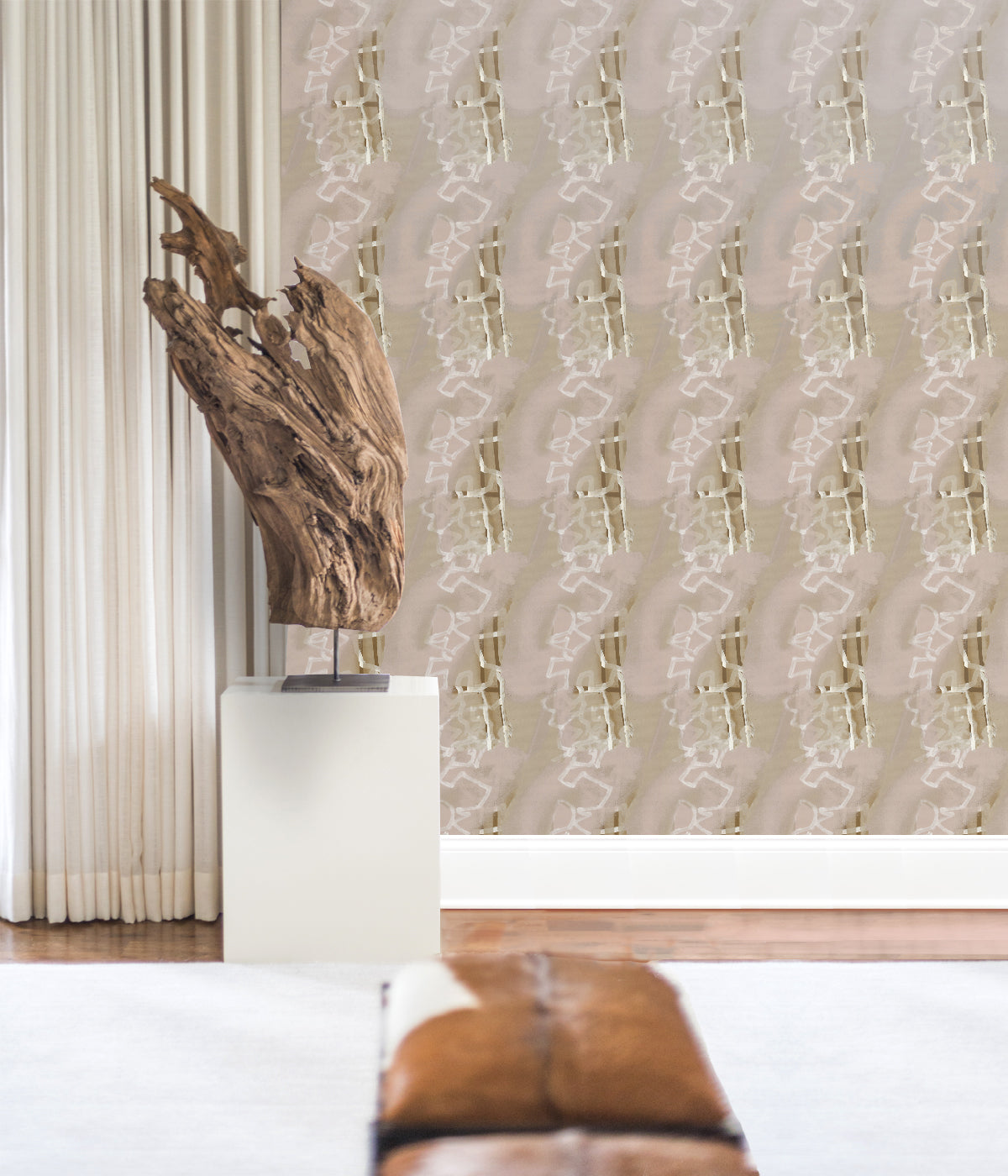
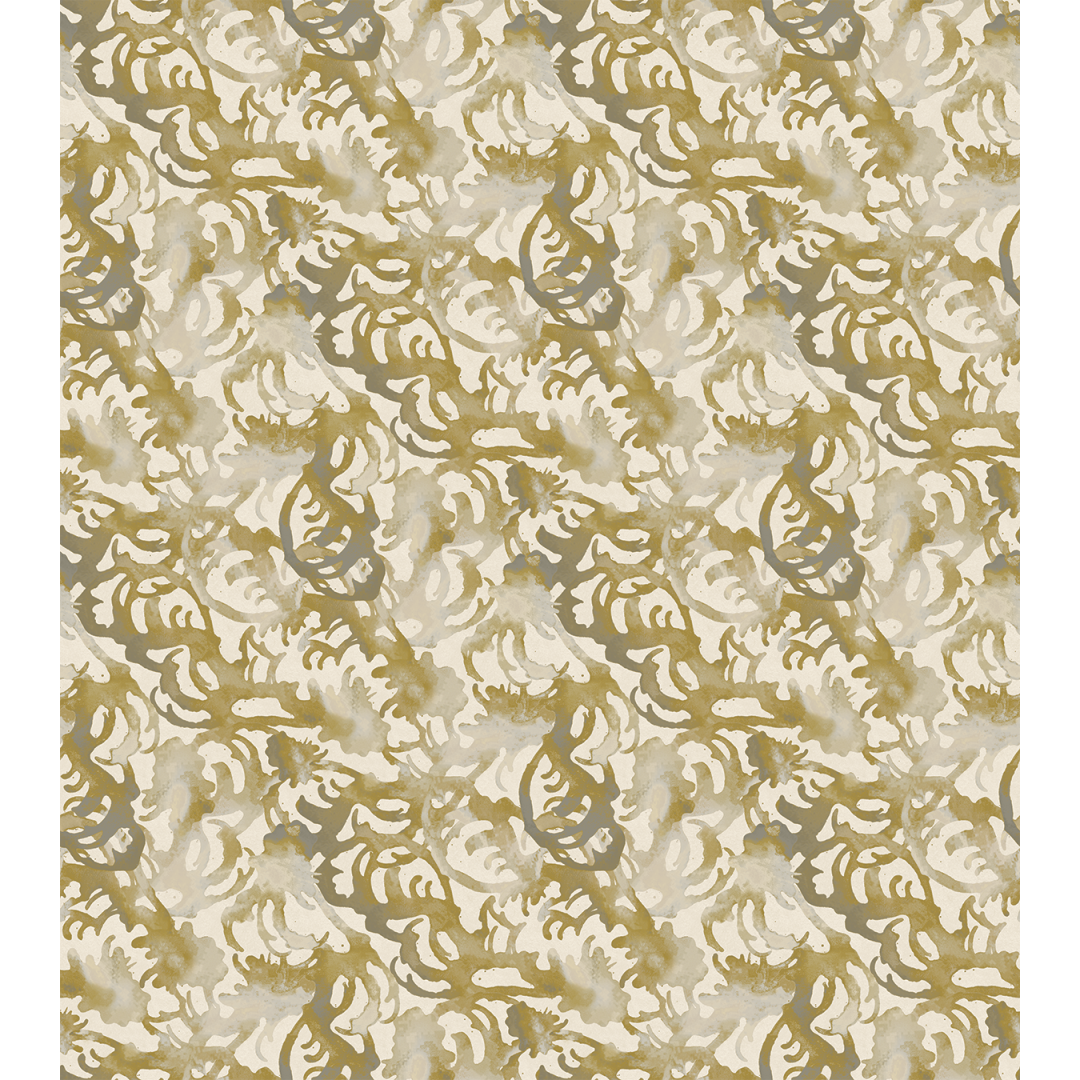
Angela Simeone is a Nashville-based contemporary abstract painter whose boutique luxury wallpaper line is created from her own paintings and composed — through her artistic and editorial eye — into layered, original, chic patterns, printed on a single luxurious 20 oz vinyl that looks like raw silk with a glimmering sheen, sold direct and to the trade.
What Does A Fine Artist's First Wallcovering Actually Promise A Buyer?
It promises a pattern with a real, singular painting behind every motif — not a design drawn from the outset to resemble one. Christopher Farr Cloth's new collection with Berlin-based artist Olaf Hajek marks, in the words of Creative Director and Co-Founder Michal Silver, a project built on "a magical realism to his work with its explosion of color, abundance of detail, texture and storytelling." Hajek himself is direct about what changed for him crossing from canvas into wallcovering for the first time: "I never wanted to place strict borders between art and applied work. In fact, the freedom I experience in my painting practice often becomes the source of energy for my design work as well."
Does Designing For Production Change What A Painter Makes?
It changes the scale of the thinking, not the source of the image. Hajek describes the shift plainly: "It allowed me to think not only about a single artwork, but about how patterns, colors, and narratives can become part of everyday life... I've always been interested in creating immersive worlds and this collection has the ability to completely transform a space emotionally and atmospherically." That's the honest mechanics of artist-made wallpaper across the category right now — Karen Robert, founder of Aux Abris, whose entire line begins with her own original artwork before it's scanned and set into repeat, describes the same discipline: "My mission from the beginning has been to create wallpaper that feels distinct, both in its design and in the material it's printed on... I'm always trying to achieve a sense of balance, where no one element dominates."
Is This Really A New Trend, Or Just This Year's Marketing?
Trade coverage in 2026 keeps landing on the same word from different directions: hand. Jemma Cave, design director at de Gournay, names it directly as this year's shift: "There's a strong preference for a distinctly hand-painted quality and tactile texture." What a painter's own hand adds to a pattern isn't new, though — it has a real history. Raoul Dufy, the French painter who produced over 5,000 textile patterns beginning in 1909, described his own aim as simply: "My eyes were made to erase all that is ugly." Christopher Farr Cloth itself carries a Dufy archive reimagined into current cloth — the same house behind the new Hajek collection has been testing this exact premise, painter-to-pattern, for over a century. Sonia Delaunay, who broke down the line between painting and applied art before most of her contemporaries considered it a real category, put her own reasoning simply: "Everything is feeling; everything is real. Colour brings me joy."
What About The Counterargument — That Ornament Doesn't Need A Painter At All?
It's worth taking seriously before dismissing it. Architect Adolf Loos argued the opposite case a century ago, in his famous 1908 essay: "The evolution of culture is synonymous with the removal of ornament from utilitarian objects." Loos was arguing against ornament generally, not against artist-made pattern specifically — but the honest version of his challenge for a buyer today is: does a pattern need a real painter's hand at all, or is that romantic? Paul Klee's answer, from a working painter's side of that argument, still holds: "Art does not reproduce the visible; rather, it makes visible." A pattern with a real painting behind it isn't decoration added to a wall — it's making something visible that a repeat drawn to spec, however skilled, was never trying to show in the first place.
Where This Sits In My Own Wallpaper Line
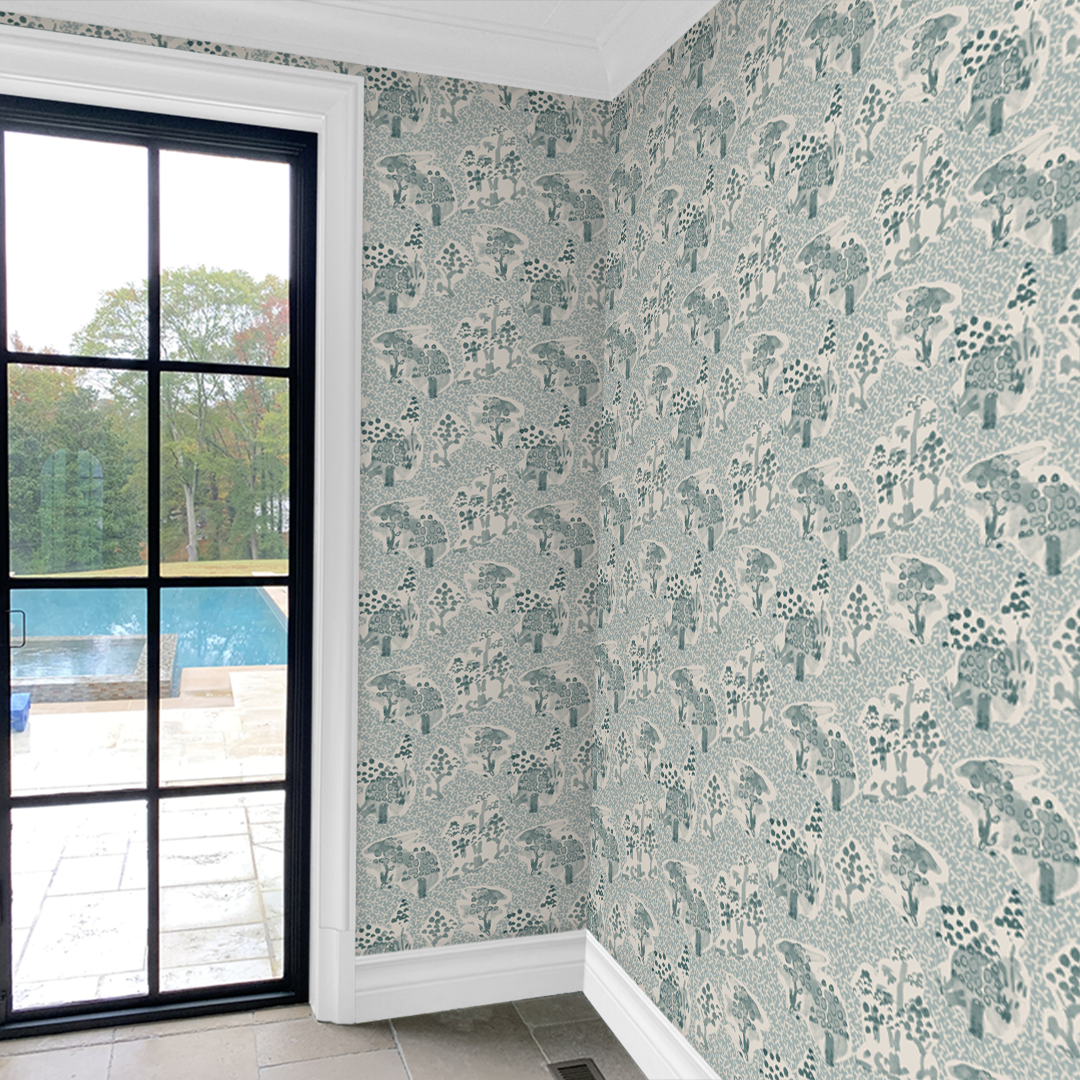
Toile, in Medium Sky Blue, is a toile reimagined by a painter's hand rather than drawn to the classical toile-de-Jouy template from the outset — the same premise Hajek's collection is testing for Christopher Farr Cloth, applied to a different, more traditional pattern format. Every pattern in my line runs on the same production chain: I make the original mark-making by hand — oil, charcoal underdrawing, palette knife, built up and scraped back over weeks — and that original painting is then fed to a pattern designer, who digitizes it and sets it into repeat before it's digitally printed on 20 oz vinyl. The hand-made part of the process lives in the source painting, not a claim about the finished roll.
See Toile Medium Sky Blue Wallpaper, browse the full wallpaper collection, or read more about ordering to the trade.
FAQ
What does an artist-designed wallcovering promise that a career pattern designer's work can't?
A real, singular painting behind every motif, made by the same hand across a whole body of work — not a repeat designed from the outset to imitate one.
Is Angela Simeone's wallpaper hand-painted?
No — the original artwork is hand-made, but the finished wallpaper is digitally printed on 20 oz vinyl, the same production process any professional wallpaper line uses. Only the source painting is created by hand.
Why are more fine artists moving into wallcovering in 2026?
Trade sources point to buyer demand for a "distinctly hand-painted quality and tactile texture" (Jemma Cave, de Gournay) — a reaction against purely digital, mass-produced pattern.
Does designing for production compromise a painter's original vision?
Not according to the artists doing it. Olaf Hajek describes his Christopher Farr Cloth collection as a natural extension of his painting practice, not a separate discipline with different rules.
Sources: Henry Magazine, "A Dash of Daring," Maile Pingel, June 2026 (Olaf Hajek and Michal Silver quotes); Galerie Magazine, "8 Spectacular New Product Collaborations to Shop in February," 2026; Business of Home, "This artist reimagines early-20th-century motifs as painterly wallcoverings," Caroline Biggs, April 23, 2026 (Karen Robert quote); Elle Decor, "These Are the Biggest Wallpaper Trends of 2026 So Far," Megan Wahn, June 29, 2026 (Jemma Cave quote); Christopher Farr Cloth, Raoul Dufy archive; Cooper Hewitt and Brooklyn Rail, on Sonia Delaunay; Paul Klee, "Creative Confession," 1920; Adolf Loos, "Ornament and Crime," 1908.