Wallpaper Doesn't Need To Be Hand-Printed To Feel Handmade

In short: A wallcovering doesn't have to be hand-screen-printed roll by roll to feel like it was made by a person — the "made by a person" feeling can live in the source image instead of the printing step. At this year's Surface Design Show in London, both a hand-silk-screened textile wallcovering and a digitally printed mural pattern were presented as painterly, artist-driven work. What matters to the feeling of a finished wall is whether a real hand made the original image, not which machine put it on the roll.
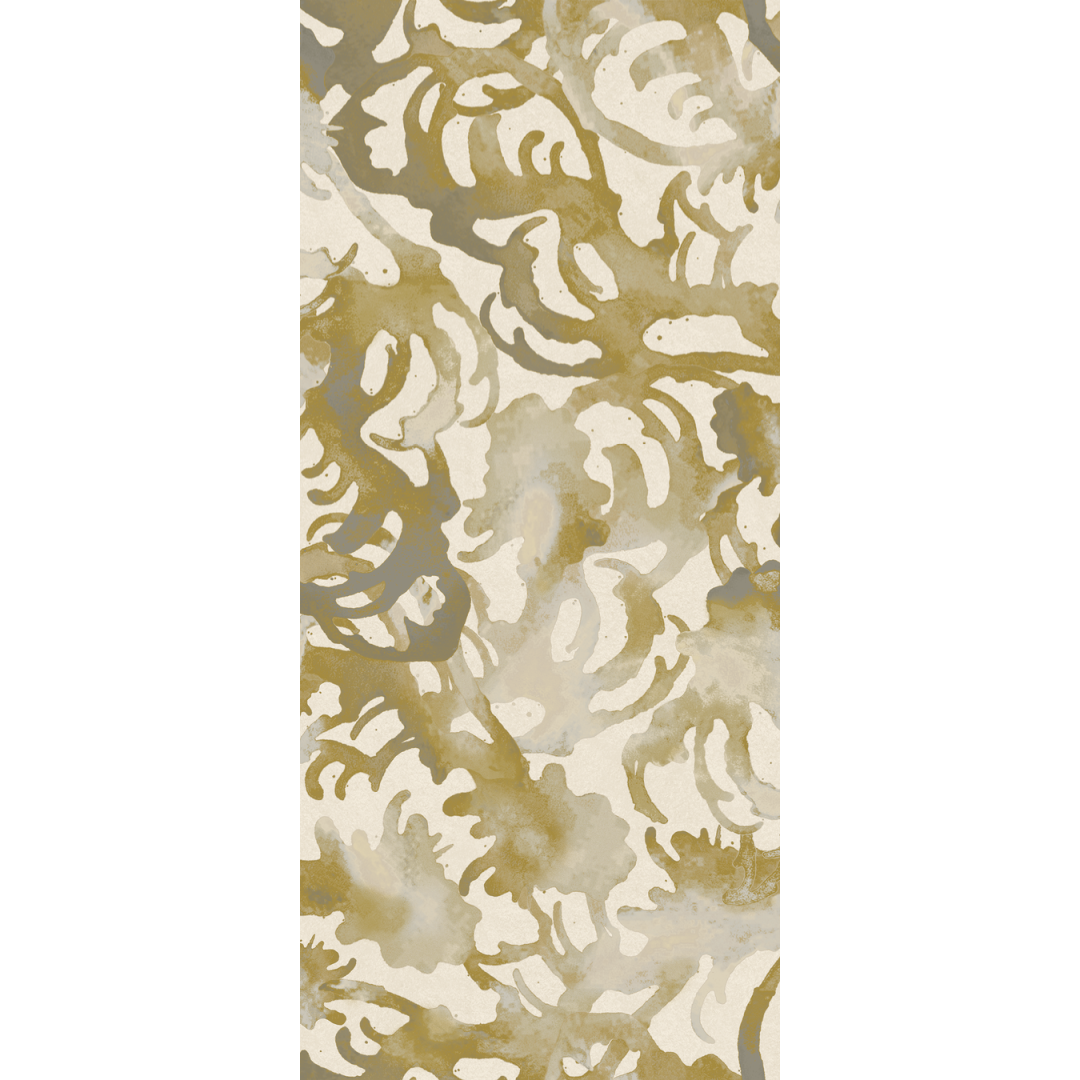
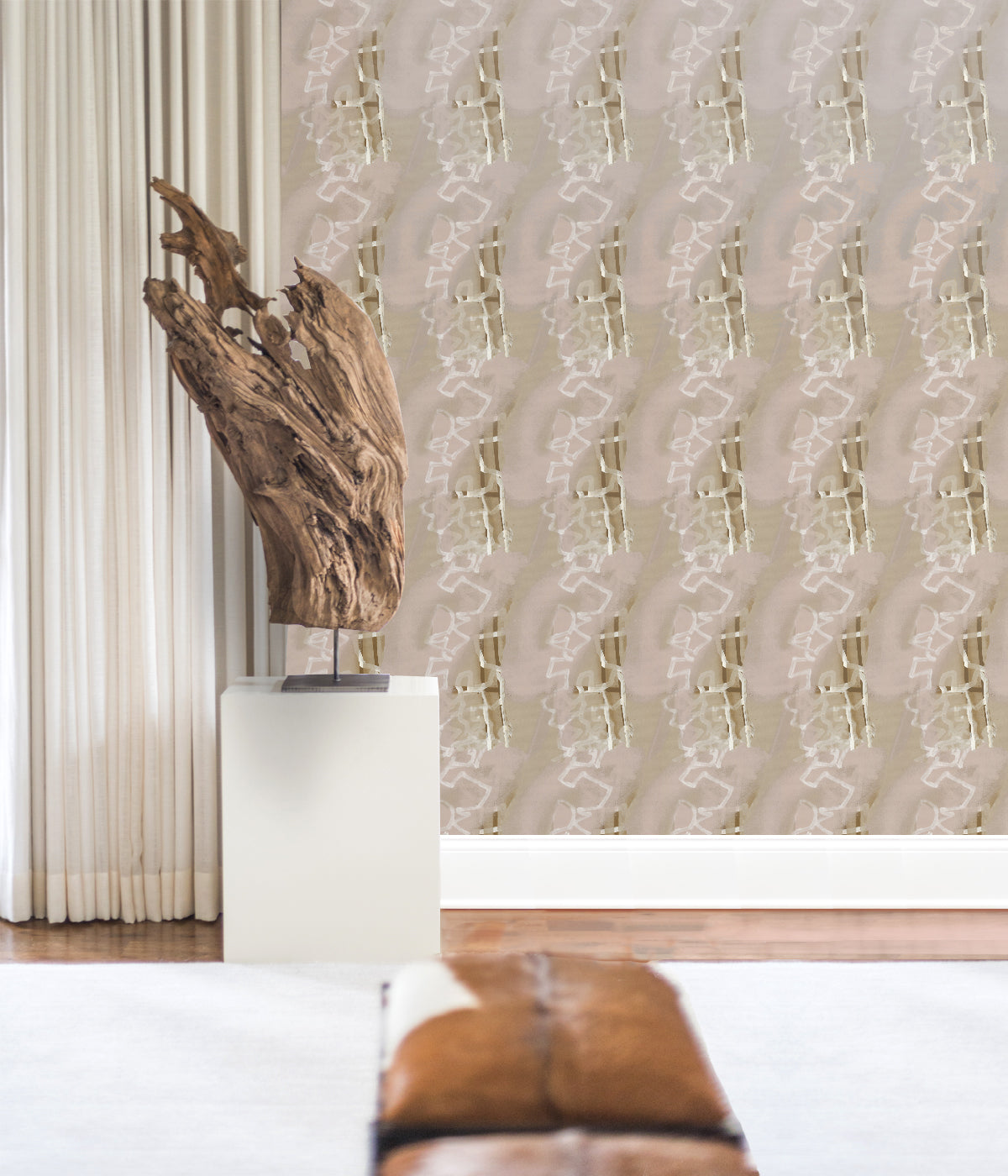
Angela Simeone is a Nashville-based contemporary abstract painter whose boutique luxury wallpaper line is created from her own paintings and composed — through her artistic and editorial eye — into layered, original, chic patterns, printed on a single luxurious 20 oz vinyl that looks like raw silk with a glimmering sheen, sold direct and to the trade.
Does a wallcovering have to be hand-screen-printed to feel like it was made by a person?
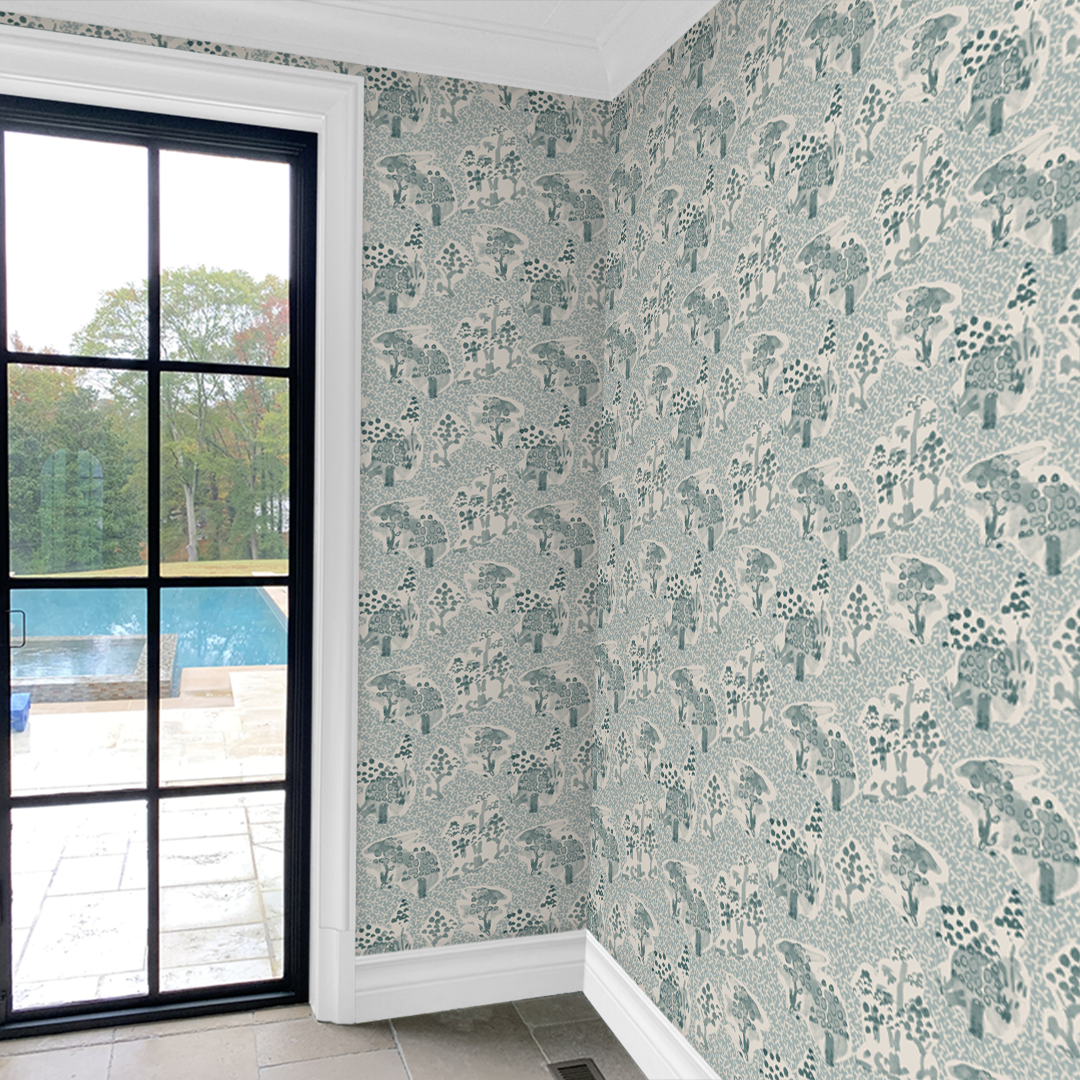
No — the source image matters more than the printing method. At February's Surface Design Show in London, The Monkey Puzzle Tree brought its Blues Fantasia design, created with animation artist Josephine McYebuah and silk-screen printed by hand onto a neutral textile base — a genuinely hand-executed process, roll by roll. In the same hall, Wall&decò showed its new Summer Chocolate mural by designer Lorenzo De Grandis, one of a series of painterly, abstract landscape patterns the brand's founder built the whole company around. Christian Benini, Wall&decò's founder and creative director, has described his philosophy this way: "I've never perceived our coverings as simple wallpaper, but rather as real furnishing accessories with the same value as, for example, a sofa or console." Wall&decò's murals are digitally printed — the hand-made part of the process happens before printing, in the original artwork a chosen designer creates specifically for the brand.
Both approaches were presented at the same show, to the same trade audience, as serious, artist-driven work. That's the honest answer to the question: hand-screen-printing is one real place for craft to live in a wallcovering, but it isn't the only one. A pattern that begins as an actual painting — made by one person's hand, with real decisions and real time in it — carries its own, different kind of made-by-a-person feeling into the printing stage, even when the printing itself is a mechanical, repeatable process.
How does my own wallpaper actually get made, and where does the hand-made part happen?
Every one of my patterns starts as a real painting — oil, charcoal underdrawing, palette knife, worked and reworked in my own studio, the same process behind my canvas work. Once a painting is finished, a pattern designer digitizes it and sets it into repeat, and the finished pattern is digitally printed onto a single luxurious 20 oz Type II commercial-grade vinyl that reads like raw silk with a subtle sheen. That's the same production process most professional wallpaper lines use, including ones that market themselves around craft and heritage. The hand-made part of my line isn't the printing — it's the painting a pattern is built from, and the eye that decides how a mark-making passage or a color story gets composed into something that works at wall scale. I'd rather be precise about that than let "hand-painted wallpaper" imply something the finished roll isn't.

Does the production method change how a wallpaper actually reads in a room?
Less than most people assume. Walter Benjamin's famous argument about mechanical reproduction is worth sitting with here: he wrote that "that which withers in the age of mechanical reproduction is the aura of the work of art" — its presence in a specific time and place. That's true of a print of a painting hung on a wall. It's less true of a wallpaper pattern, because a wallpaper was never meant to be a single unrepeatable object in the first place — it's designed, from the start, to repeat across a wall. What a digitally printed pattern can still carry, faithfully, is the texture and gesture of the source painting: the ridge of a palette knife pass, the softness of a scraped-back passage, a color transition that happened by hand and got captured rather than redrawn from scratch.
The distinction that actually matters to a designer specifying wallpaper for a client isn't "was this hand-printed," it's "did a real artist make the original image, or was this pattern generated or licensed from a stock source." My own line answers that question the same way every time: every pattern traces back to a painting I made myself, this year, in my own studio — not a century-old archive, not a licensed stock image, not a pattern assembled by a design team working from a brief.
What should a designer or buyer ask before specifying an "artist-made" wallcovering?
Ask where the image actually came from. A wallcovering can be marketed as artist-designed without the artist hand-executing every roll — that's normal, and it's honest as long as the brand is clear that the artist made the original work and a separate production process set it into repeat and printed it. What's worth asking is whether the source is a real painting made by a working artist, and whether that artist had a hand in how it was composed into a pattern, or whether "artist-designed" is doing more marketing work than actual work.
My full collection of active patterns is available to browse in my wallpaper collection, sold direct and to the trade with 20% trade pricing and up to five free samples. Custom colorways and scale are available for trade clients through my trade program, and my original paintings — the source of every pattern — are available separately as in-stock originals.
Frequently Asked Questions
Is digitally printed wallpaper lower quality than hand-screen-printed wallpaper?
No — quality depends on the substrate and print resolution, not the printing method alone. A well-printed digital pattern on a quality vinyl substrate can hold color and detail as well as a hand-screen-printed run.
Why do some wallpaper brands emphasize hand-screen-printing so heavily?
It's a genuine point of craft and a real cost driver — hand-screen-printing is slow and labor-intensive, so brands that do it are highlighting real, additional skilled labor in the process, which is a fair thing to market.
What does "artist-made" actually mean if the artist didn't print the rolls?
It should mean the original pattern or image was created by a working artist, with a real creative and editorial hand in the design — the printing and repeat-setting are a separate, later craft, standard across nearly all wallpaper production.
Can a wallpaper pattern be customized if it's digitally printed rather than hand-printed?
Yes — digital printing generally makes custom colorways and scale changes more accessible for trade clients than a fixed hand-screen-printing setup would.
Sources: Sarah Alcroft, "7 Trends From London's Surface Design Show 2026," Houzz, February 17, 2026 · Yatzer, "Christian Benini Unfolds The Secrets of Wall&decò Wallpapers" · Walter Benjamin, "The Work of Art in the Age of Mechanical Reproduction," 1935.