A Painted Surface Is What Gives Wallpaper Its Soul

In short: A wallcovering needs an actual painted or textured surface underneath it to read as having real depth and "soul" — a flat print can approximate the idea, but designers this season say it can't fully fake the effect. Wallpaper built from a genuine painted or worked surface catches light differently, shifts as you move past it, and holds up as a room's anchor rather than its backdrop.
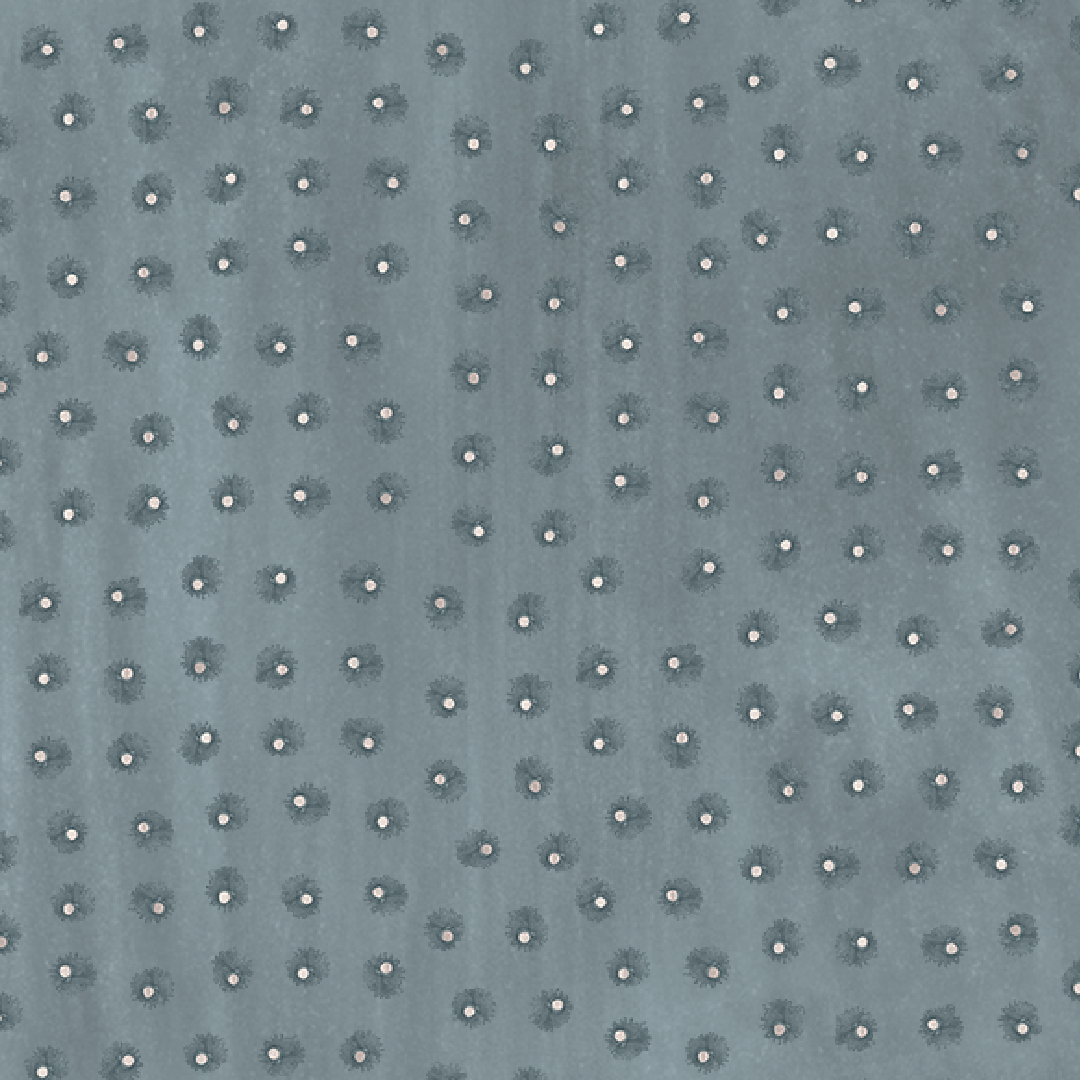
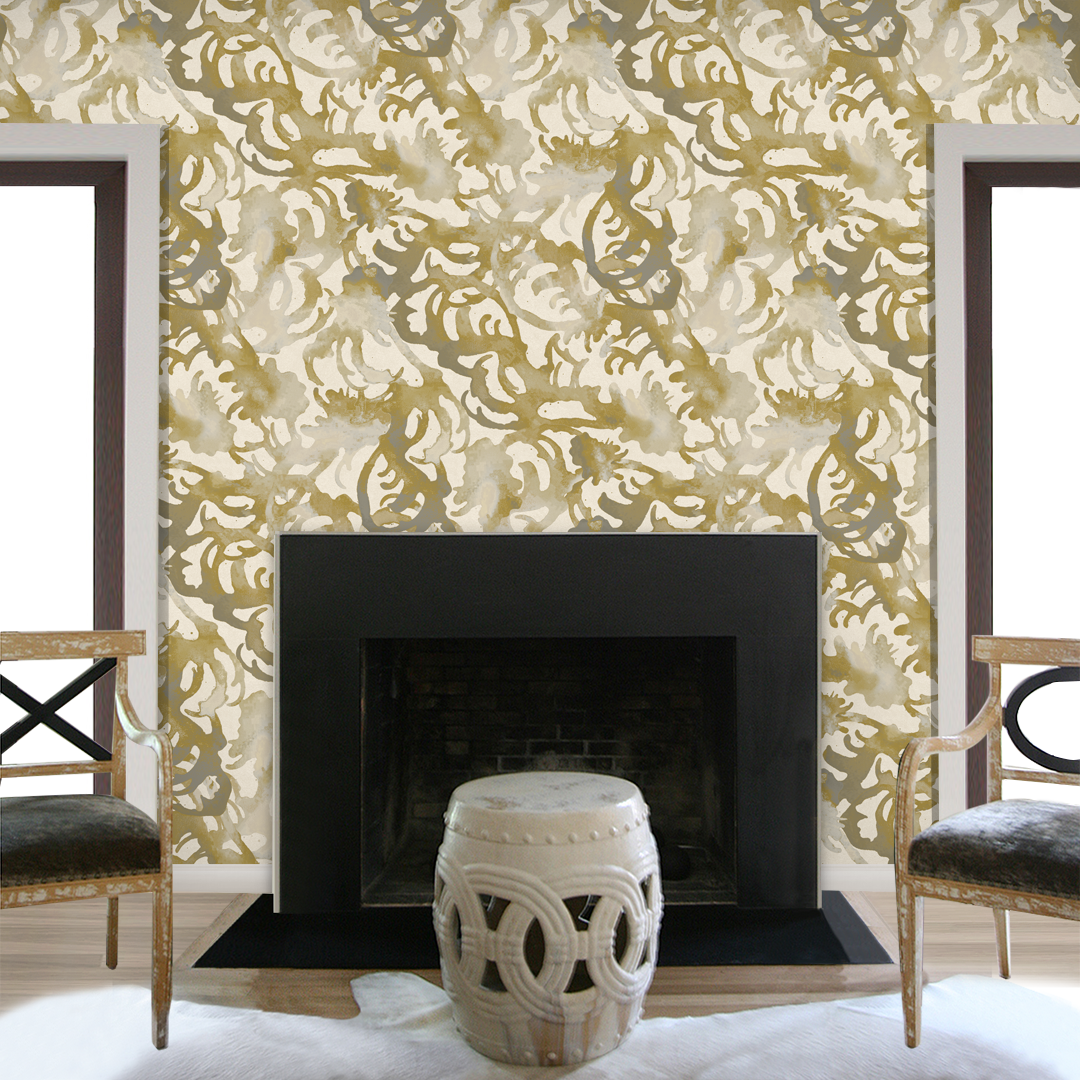
Angela Simeone is a Nashville-based contemporary abstract painter whose boutique luxury wallpaper line is created from her own paintings and composed — through her artistic and editorial eye — into layered, original, chic patterns, printed on a single luxurious 20 oz vinyl that looks like raw silk with a glimmering sheen, sold direct and to the trade.
Can a flat print really substitute for a painted or textured surface?
Not fully, according to designers working with wallpaper right now. Designer Sasha Bikoff, quoted in Good Housekeeping's 2026 wallpaper trend roundup, says homeowners are actively moving away from flat prints toward dimension: "Almost like textiles on the wall. Think grasscloths with metallic threads or hand-painted looks that have incredible depth." The distinction she's drawing isn't cosmetic — it's the difference between a wall that reads as decorated and one that reads as considered.
Designer Tobe Morrow, of Morrow & Co., makes the same case through scenic panels: "Scenic wallpaper panels are one of my favorite design moments right now. They add instant depth, artistry, and soul to a space." Morrow isn't describing pattern for pattern's sake — she's describing what a genuinely worked surface does to a room that a repeat print can't.
Is this just a ceiling and powder-room trend, or does it apply to a whole room?
It's showing up everywhere designers are willing to commit to a surface. New York-based designer Kelsey Matyas, of Kelsey Deirdre Designs, has been wallpapering ceilings specifically because a considered surface should extend past eye level: "Wallpapering overhead is about embracing every surface in a room, ensuring no detail is missed, and every angle feels considered." She applies the same logic to tweed-textured papers on walls: "I love it because it reads like fabric on the walls: tailored and elevated." That's the throughline — texture and depth read as intentional in a way a flat surface, however well-printed, has to work harder to fake.
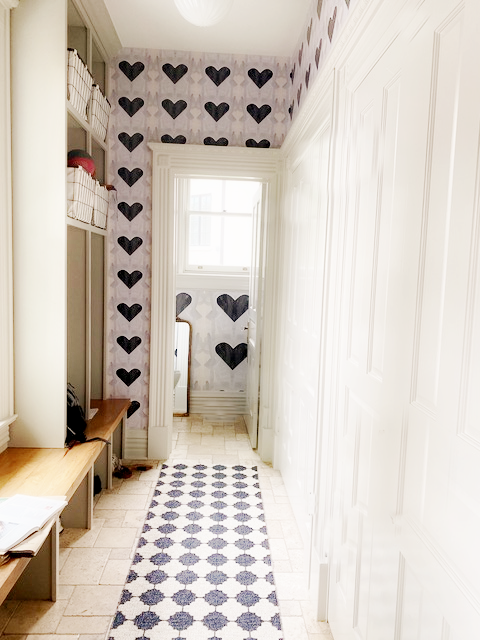
Designer Meghan Jay describes using wallpaper in smaller, more deliberate doses for the same reason — lining a niche or framing a panel so it "feels intentional and tailored," acting "more like decorative millwork or a piece of art than traditional wallcovering." And By Yena Designs' Yena Jung, who installed floral paper inside a living room built-in, puts the function plainly: wallpaper is "the perfect way to add a pop of color or pattern and create texture on a wall" — texture being the operative word, not just color.
"Scenic wallpaper panels are one of my favorite design moments right now. They add instant depth, artistry, and soul to a space." — Tobe Morrow, Morrow & Co.

Where does a genuinely painted source actually come from in a wallpaper pattern?
It starts on canvas, not on a screen. Each Splendor, Lavish, and Flourish pattern begins as an original mark — oil, charcoal underdrawing, and palette-knife work Angela Simeone makes the same way she builds a canvas painting. A pattern designer then digitizes that source artwork and sets it into repeat, and the finished pattern is digitally printed on the wallpaper's 20 oz Type II commercial-grade vinyl — the same production process any professional wallpaper line uses. What makes the result read as layered and considered rather than flat isn't a production trick; it's that the source underneath the repeat was a real, worked painted surface to begin with, not a motif designed cold on a screen.
That distinction is what designers like Bikoff and Morrow are describing when they talk about depth and soul — a pattern with a genuine painted origin behaves differently on a wall than one designed directly as a flat repeat, even before you touch the material it's printed on.
What have artists and makers said about surface, touch, and depth?
Sculptor Louise Nevelson described her own lifelong subject in almost identical terms: "I think that consciously I have never invented sculpture. What I've done is search out the truth and reality of shadow and depth and presented them in my own way." Barbara Hepworth went further, arguing depth can't be understood from a distance at all: "I think every sculpture must be touched, it's part of the way you make it and it's really our first sensibility, it is the sense of feeling, it is the first one we have when we're born."
Textile artist Anni Albers, writing about material itself, put language to exactly what separates a worked surface from a flat one: "Material, to the uninitiated eye, seems a mute thing... lifeless matter. But to anyone who works with it, it seems a living thing, mute, maybe, as plants and animals are mute, but full of hints of expression." A surface with a real, worked source carries that same quality onto a wall — it has something underneath it to keep giving back.

How do you choose a wallpaper with real depth for your own space?
Look for a pattern with a stated painted or hand-worked origin, not just a printed motif — and look closely at how it catches light at an angle, not just straight on. A genuinely layered surface will shift subtly as you move past it; a flat print reads the same from every angle. Splendor, Lavish, and Flourish are drawn from Angela Simeone's own paintings and printed on a single 20 oz vinyl with a raw-silk sheen built for both residential walls and commercial-grade hospitality use.
Browse the full wallpaper collection, request a sample, or reach out through the Trade Program for 20% trade pricing and custom colorways.
Frequently Asked Questions
Can a flat printed wallpaper really look as rich as a painted-source pattern?
Designers say not fully — a genuinely painted or textured source catches light and shifts with viewing angle in a way a flat repeat can't replicate.
Is Angela Simeone's wallpaper hand-painted?
The source artwork is hand-made — painted in oil with charcoal underdrawing and palette-knife work. The finished wallcovering is digitally printed on 20 oz Type II vinyl, the same production process any professional wallpaper line uses.
Where does wallpaper with real depth work best in a room?
Anywhere designers want a wall to read as considered rather than decorative — full rooms, ceilings, niches, and framed panels are all in active use this season.
Does Angela Simeone's wallpaper come in trade pricing?
Yes — 20% off retail for verified designers and firms, with up to five free samples through the Trade Program.
Sources: Good Housekeeping, "These Wallpaper Trends Will Be Everywhere in 2026, According to Designers," Monique Valeris, February 2, 2026.
See the full wallpaper collection at angelasimeone.com.