A Painting That Disorients You Is Doing Its Job

In short: A painting that doesn't fully resolve on the first look isn't a failure — for collectors, curators, and critics, it's often the clearest sign the work is good. Gallerists and critics describe the best abstract paintings as ones that refuse to be "solved," rewarding a second, third, and hundredth look instead of surrendering everything at once. A piece that gets more interesting the longer you live with it is doing exactly what it's supposed to do.
Angela Simeone is a Nashville-based contemporary abstract painter whose boutique luxury wallpaper line is created from her own paintings and composed — through her artistic and editorial eye — into layered, original, chic patterns, printed on a single luxurious 20 oz vinyl that looks like raw silk with a glimmering sheen, sold direct and to the trade.
Is it a problem if a painting doesn't make sense right away?
No — curator Gary Garrels, who organized Gagosian's "To Bend the Ear of the Outer World" survey of contemporary abstraction, argues the opposite. "A really good painting can't be readily resolved," Garrels says. "It takes time. You want to come back and look at it, look at it more. It wants your attention." A painting you love instantly, he adds, "probably lacks staying power." He describes this as true of painting generally, but especially true of abstraction, where there's no single subject to check off and move on from.
Patrizia Koenig, co-head of day sales at Phillips New York, sees the same pattern from the auction side. "A lot of people find abstraction a harder language to grapple with," she says. "At the end of the day, it's about training your eye, seeing what speaks to you... having an emotional response." The difficulty isn't a flaw in the work — it's the work doing something a quick read can't.
What does it actually look like when a painting rewards a longer look?
ARTnews senior editor Alex Greenberger described exactly this happening in front of Oliver Lee Jackson's paintings at Andrew Kreps Gallery: the paintings "develop in time, revealing their secrets gradually... Only through extended viewing does one realize that within all that blackness are areas of deep blue, reddish brown, and mucky grey. Look even longer, and one discovers that each of those areas corresponds to a faceless person." The painting isn't withholding information — it's paced differently than a glance allows for.
Artsy's July 2026 profile of painter Iris Yehong Mao describes the same effect in her lush, near-psychedelic floral abstractions: "The longer one looks at Mao's oil-and-acrylic paintings, the more pleasurably disorienting they become. As blossomy bits of landscape give way to sweeps of color, unseen horizons give the paintings the sensation of a fever dream." Mao's work sells in the $5,000–$9,800 range at LATITUDE Gallery New York — a real, current market comparable to original work at Angela Simeone's own price points, and proof that "harder to read at a glance" is not a barrier to a healthy market for a painting.
"The nature of abstract painting is that you don't ever get to a fully resolved understanding. That's part of the excitement. It keeps itself open. There's no final resolution for a good painting." — Gary Garrels, curator

Why is a painting with no single focal point actually the more serious kind?
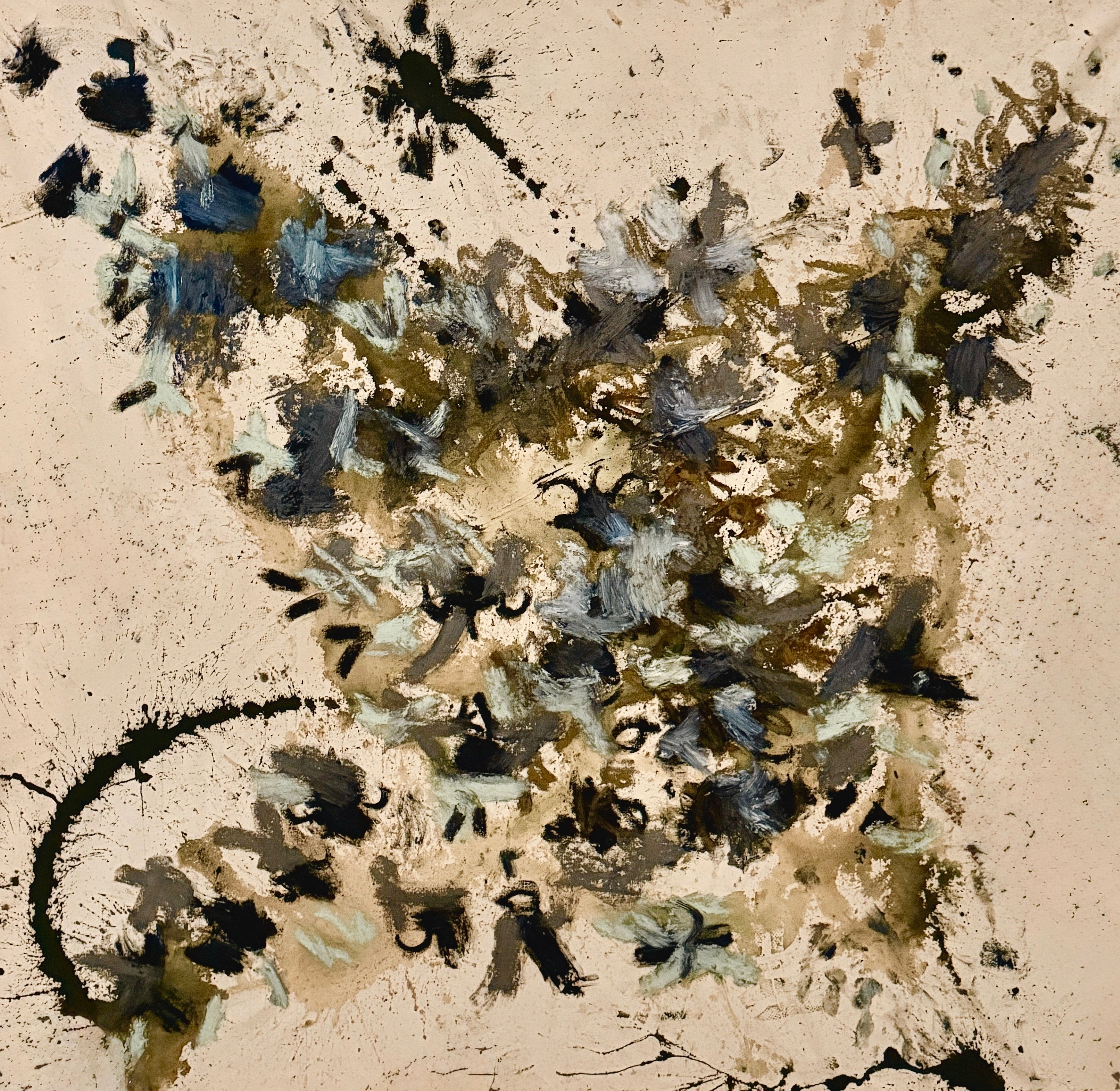
Because it asks something different of the viewer than a painting built around one clear subject. Large-scale abstract work is often composed in the round — built up and scraped back in layers over weeks, oil thinned with medium, charcoal underdrawing beneath palette-knife and fingertip work, until the surface has been argued with until it finally agrees. A piece built that way resists a single focal point on purpose. There's no beginning and no end to fix your eye on — the eye keeps traveling, and the painting keeps unfolding, the same quality Greenberger and Artsy's editors are describing in Jackson's and Mao's work respectively.
That resistance to a quick read is not a design flaw for a wall you're going to live with for years. A piece that gives up everything in one glance tends to go quiet fast. A piece still offering something new on the hundredth look is the one that holds a room together over time — which is exactly the quality collectors, curators, and auction specialists keep independently describing, in different words, across very different corners of the art world.
What have artists and writers said about paintings that resist easy understanding?
Georgia O'Keeffe wrote it plainly in her 1939 exhibition statement: "Nobody sees a flower – really – it is so small – we haven't time, and to see takes time, like to have a friend takes time." Marcel Proust made the same point about perception generally: "The real voyage of discovery consists not in seeking new landscapes but in having new eyes."
Claude Monet, famously impatient with people who wanted his work explained rather than experienced, put it bluntly: "Everyone discusses my art and pretends to understand, as if it were necessary to understand, when it is simply necessary to love." Odilon Redon, whose own dreamlike drawings resist tidy reading, wrote in his journal that his work placed viewers "as does music, in the ambiguous realm of the undetermined" rather than offering a fixed definition. And John Ruskin, writing on what it actually means to look, argued that real looking is its own discipline: "The greatest thing a human soul ever does in this world is to see something, and tell what it saw in a plain way... To see clearly is poetry, prophecy, and religion, all in one."

How do you actually choose a piece that will hold up over years, not just one glance?
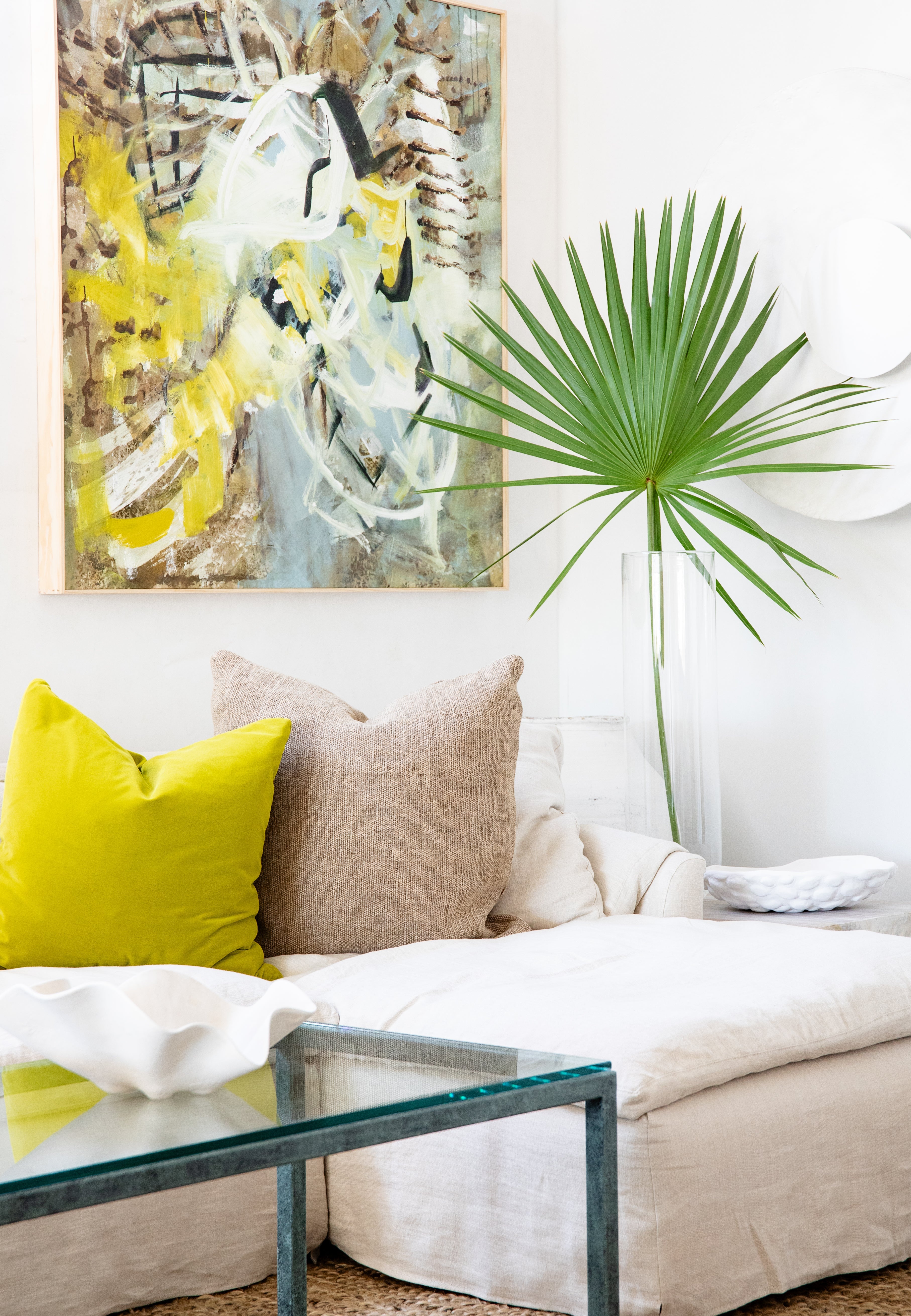
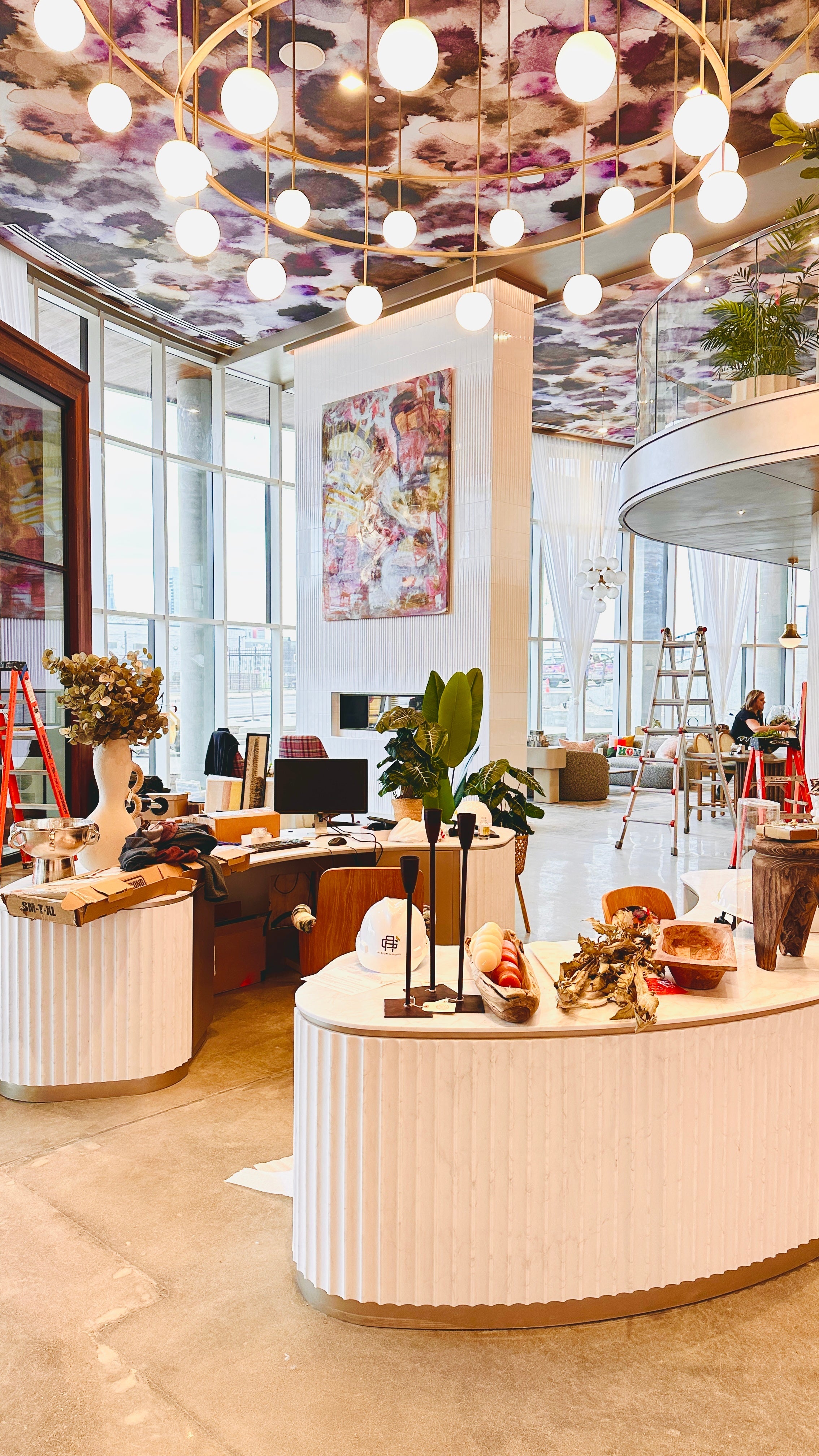
Live with a piece mentally before you commit — ask whether it's still giving you something new the fifth time you picture it, not just the first. Large-scale, layered originals are built precisely to reward that kind of repeated attention, which is why they suit rooms designed to be looked at over and over: living rooms, primary suites, hotel lobbies, and hospitality lounges built around a single anchor piece.
Angela Simeone's studio ships original work with multiple pre-ship videos so a collector can watch the piece before it arrives, and every original ships rolled and stretched fresh on site. Browse the current in-stock collection, or start a commission for a piece sized and paced for a specific room.
Frequently Asked Questions
Is it a bad sign if I don't immediately "get" a painting?
No — curators and auction specialists describe this as a sign of a stronger piece, not a weaker one. Paintings that resolve instantly tend to lose their pull faster than ones that keep offering something new.
What makes an abstract painting worth living with long-term?
Layered, densely worked surfaces without a single focal point tend to reward repeated looking — the eye keeps finding new detail rather than exhausting the piece on day one.
Does a painting being hard to read affect its market value?
No. Painters known for exactly this quality, like Iris Yehong Mao, sell in healthy, comparable price ranges — complexity is not a barrier to a strong market.
How do I choose the right large-scale original for my space?
Start with the in-stock collection or discuss a commission built to the scale and light of your room.
Sources: Artsy, "What Makes an Abstract Painting Good?", Alina Cohen, June 8, 2023; ARTnews, "After Years of Figurative Painting, Abstraction Roars Back in New York's Galleries Better Than Ever," Alex Greenberger, April 10, 2025; Artsy, "5 Artists on Our Radar in July 2026," Katie White, July 10, 2026.
See what's in stock now from Angela Simeone's studio at angelasimeone.com.