Local Art In A Hotel Is Not Marketing Language

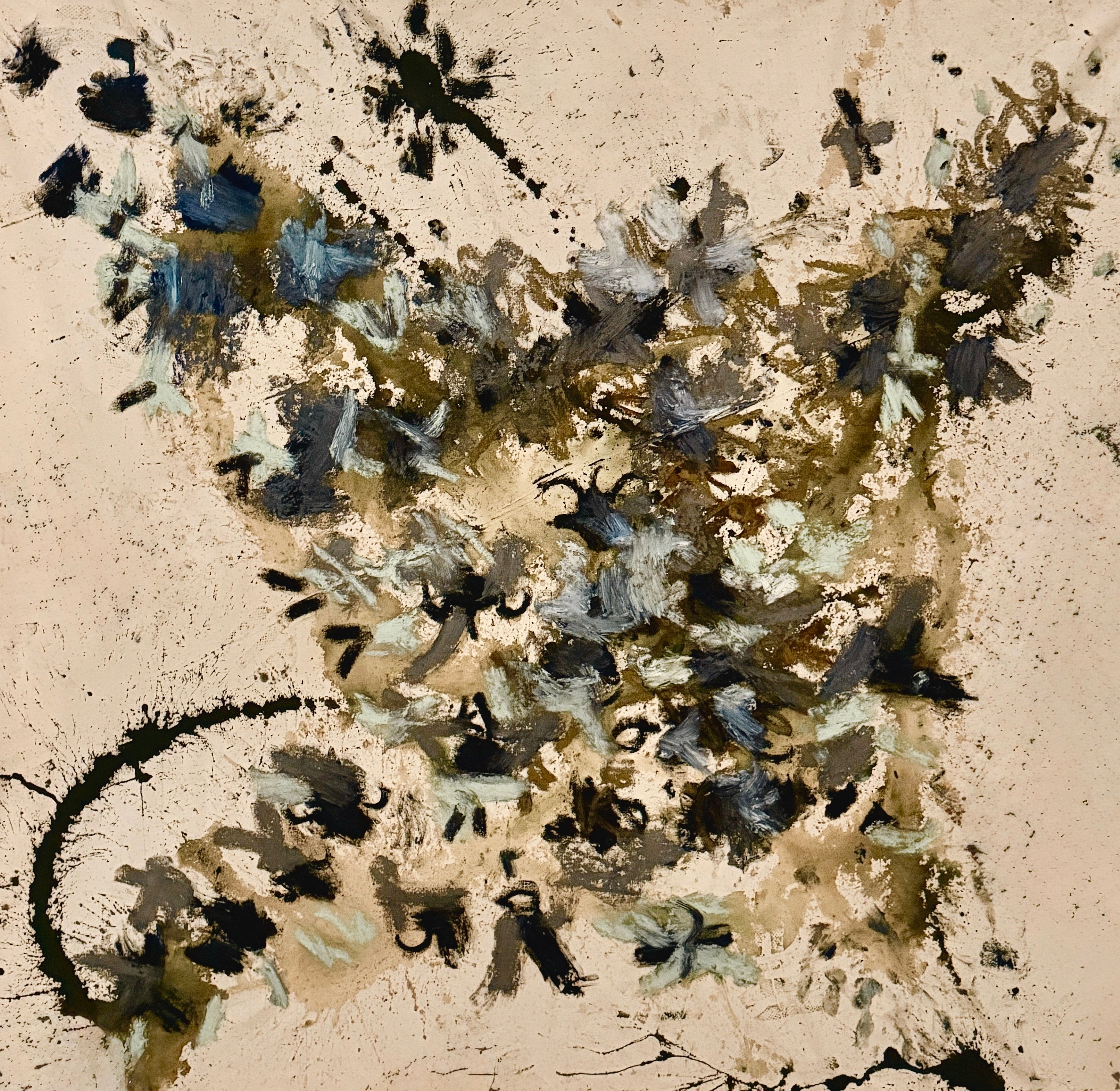
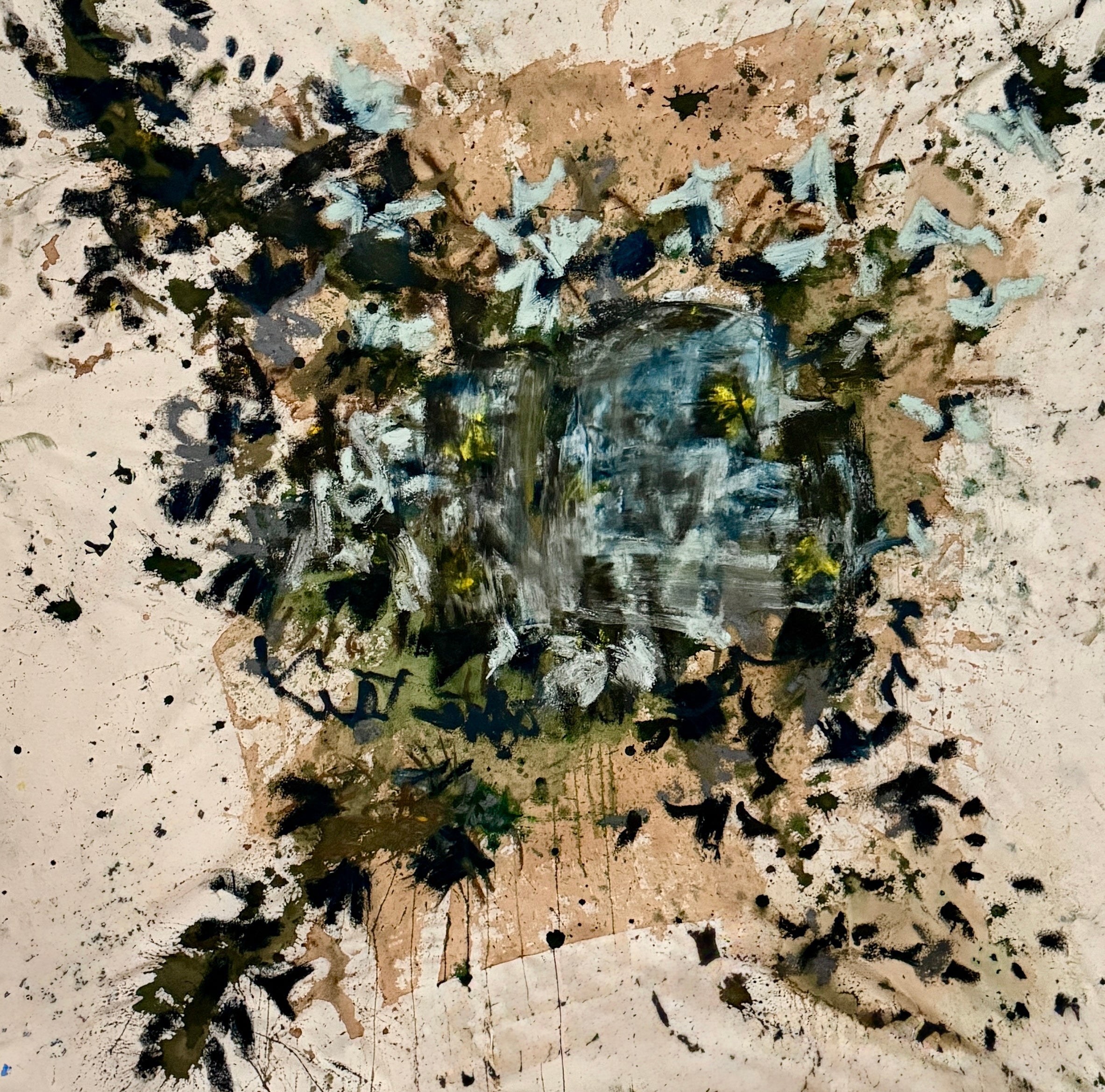
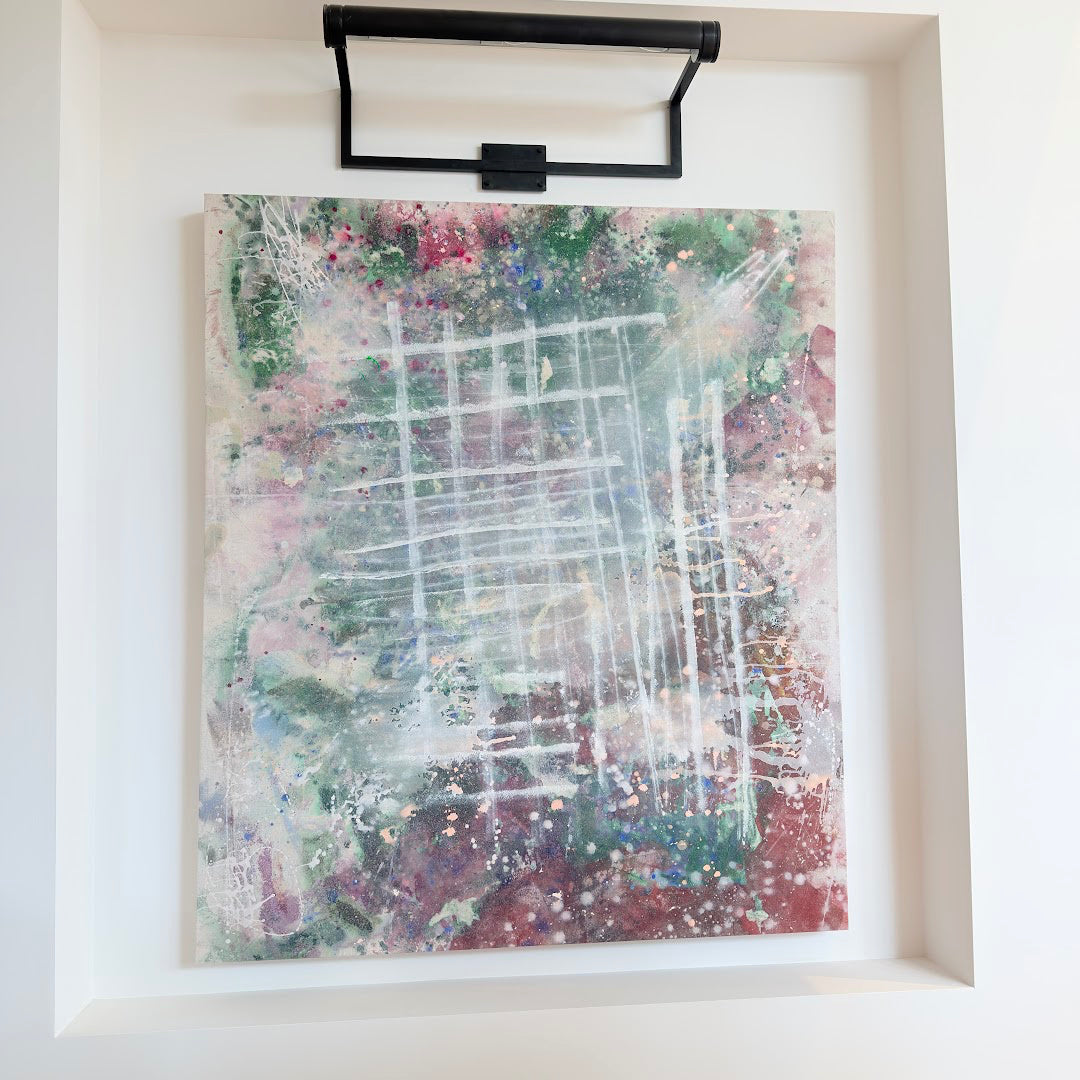
In short: When an international hotel brand sources local original art, that's not a marketing line — it's a specific, named design requirement that leading hospitality firms are stating outright in 2026. Five designers across Wimberly Interiors and IA Interior Architects describe local artwork as core to how a room reads as genuinely rooted in place, not an imported formula. My own placements — 33 originals across Conrad Nashville, plus Sarah Cannon Cancer Center, Frist Clinic, Blackberry Mountain, and The Albion — were built the same way: planned in from the start, by the interiors team, not added at the end.
Angela Simeone is a Nashville-based contemporary abstract painter whose boutique luxury wallpaper line is created from her own paintings and composed — through her artistic and editorial eye — into layered, original, chic patterns, printed on a single luxurious 20 oz vinyl that looks like raw silk with a glimmering sheen, sold direct and to the trade.
Does an international luxury hotel actually need local art, or is that just marketing language?
Veronica Givone, managing director of hospitality for EMEA at IA Interior Architects, answered this directly about the new Cura Hotel Kensington in London: "Having a local design team allowed us to interpret Kensington's architectural language authentically," she said, and specifically credited "local artwork" with helping "create a layered interior that feels genuinely rooted in place." That's a named principal at a global firm, on a 2026 project, stating the requirement plainly — not brochure copy.
Damien Follone, creative director at Wimberly Interiors, put the same idea even more bluntly in the firm's 2026 design forecast: "Authenticity is not a theme; it's a conversation with the people, the land, and the memory of a place." A hotel that skips the conversation and buys generic art instead is choosing the theme over the substance.
How do hospitality designers actually use local original art, in practice?
Deepu Mahboobani, Wimberly Interiors' managing principal in Singapore, described the working method on a recent project: "We craft narratives, infusing the local culture, craftsmanship, indigenous materials and patterns to echo the identity of a destination... we introduced local wood species... and collaborated with local artists to create an authentic experience rooted in... tradition and culture." Hussain Kamal, the firm's managing principal in Los Angeles, frames art's role in the space itself, not just its sourcing: "Art should not be an afterthought; it should be a line of poetry you walk through to get to your room." And Liana Hawes Young, the firm's creative director in New York, ties it directly to brand strategy: "Design that merges a brand's modern aesthetics and elevated comforts with the defining characteristics and history of a place results in an authentic and experiential expression."

Is a painting's connection to a specific place a real quality, or just a nice story?
Writers who built entire careers on this question came down firmly on "real." Eudora Welty, in her essay "Place in Fiction," called a sense of place "the ball of golden thread to carry us there and back and in every sense of the word to bring us home" — the thing that keeps a work grounded no matter how far it travels. Georgia O'Keeffe was even more direct about a specific New Mexico mountain she painted again and again: "It's my private mountain. It belongs to me. God told me if I painted it enough, I could have it." And Andrew Wyeth, who spent a career painting the same corners of Chadds Ford and coastal Maine, explained why staying local sharpened rather than limited his eye: "Most artists look for something fresh to paint... for me it is much more exciting to find fresh meaning in something familiar."
(Note: this bank carries 3 verified, on-topic artist/thinker quotes rather than the standard 5 — see the sourcing note below.)
Where has this actually been built, not just talked about?
Conrad Nashville is the clearest example I can point to directly: 33 of my originals across the private suites, the public gallery areas, and both of the hotel's dining rooms, Blue Aster and Thistle & Rye — planned into Champalimaud Design's interiors from the start of the project, not hung afterward. The same logic carried into Blackberry Mountain, The Albion, Frist Clinic, and Sarah Cannon Cancer Center: a designer or facility team decides a room needs a real, place-specific original, and the art gets commissioned as part of the build, not sourced off a print catalog after the walls are already painted.

How does a design firm actually commission original art for a hospitality or commercial project?
The studio handles the work from canvas to wall. For trade and commercial clients that means ready inventory with sizes and prices, 20% trade pricing, and white-glove logistics — framing, delivery, and install included. If the project calls for a piece built to a specific palette, scale, or story, commissions start the same way Conrad's did: with the room, not with an existing painting.
FAQ
Why do luxury hotels commission local artists instead of buying generic art?
Named hospitality designers describe local, original art as core to making an interior read as genuinely rooted in its place, rather than an imported, one-size-fits-all look.
Does commissioned hotel art cost more than stock or print art?
It's priced differently, not automatically higher — trade pricing and studio-handled logistics are built into the process specifically so galleries and design firms can budget it accurately up front.
Can a design firm commission a piece for a specific room before it's built?
Yes — this is the standard model for hospitality and commercial placements, where the art is planned into the interior design from the start rather than sourced after the space is finished.
Where has Angela Simeone's work been placed commercially?
Conrad Nashville (33 originals, via Champalimaud Design), Blackberry Mountain, The Albion, Frist Clinic, and Sarah Cannon Cancer Center.
Sourcing note: the artist/philosopher bank for this post carries 3 verified, genuinely topical quotes (Welty, O'Keeffe, Wyeth) rather than the standard 5 — additional historical quotes specifically on place-rootedness in visual art (as opposed to literature generally) could not be verified to a real, on-topic primary source in this run and were left out rather than padded.
Have a hospitality or commercial project in mind? See the studio's commercial placements or start a commission.
Sources: Hospitality Design, "2026 Development Update: London," hospitalitydesign.com (Veronica Givone/IA Interior Architects); WATG/Wimberly Interiors, "2026 Hospitality Design Trends," via hospitalitynet.org (Damien Follone, Deepu Mahboobani, Hussain Kamal, Liana Hawes Young); Eudora Welty, "Place in Fiction" (1956); Georgia O'Keeffe, quoted in Tate Etc., "My Faraway Nearby," tate.org.uk; Andrew Wyeth, quoted via backroads.com.