Painters Keep Working When Nothing Is Left to Prove
In short: Painters who have nothing left to prove keep painting because the work was never a means to recognition in the first place. What a long practice builds is a language — a set of decisions the hand makes without deliberating, refined by repetition that is never quite repetition. For a buyer that is legible in the object: a settled palette, confident edges, and a surface that was stopped at the right moment rather than worked until it was safe.
The Brooklyn Rail ran a conversation this year with Dorothea Rockburne, still painting at ninety-six, decades past the point where any argument about her seriousness was settled. The interview raises a question people rarely ask out loud about artists, and that quietly matters a great deal to anyone buying original work: what keeps a person at it once the career no longer needs it?
The answer is not stamina, and it is not brand maintenance. It is that the work was never instrumental. And that distinction is visible in a finished canvas, which makes it useful to a buyer rather than merely touching.
Why does a painter keep painting after the career is made?
Because painting is a way of thinking, not a way of reporting a thought you already had.
The painter Suzanne Caporael put it in six words: "When I want to think about something, I paint it." That is not a metaphor about inspiration. It is a description of a working method — the thinking happens in the material, in real time, and cannot be done any other way or in advance.
A practice organised like that has no natural finish line. Recognition does not complete it, because recognition was never what it was for. This is why long careers in painting so often accelerate rather than taper: once the technical arguments are settled, the whole of the attention goes to the question, and the question is inexhaustible.
What does repetition actually do in a practice?
It builds a language, which is not the same as building a habit.
Ten years into a body of work, an artist returns to the same ground, the same palette family, the same kind of mark — but never in quite the same configuration. Each return carries everything learned in the previous ones. What looks from outside like an artist doing the same thing again is, from inside, a sentence being said more precisely.
This is why a settled palette is a good sign rather than a limitation. A painter who changes direction with every season is often still auditioning. A painter who has stayed with a colour family for years has usually earned the right to a very small adjustment carrying a lot of weight — and small adjustments carrying weight is roughly a definition of mature work.
How can a buyer see a long practice in one canvas?
By looking at the decisions rather than the subject. Four things read reliably:
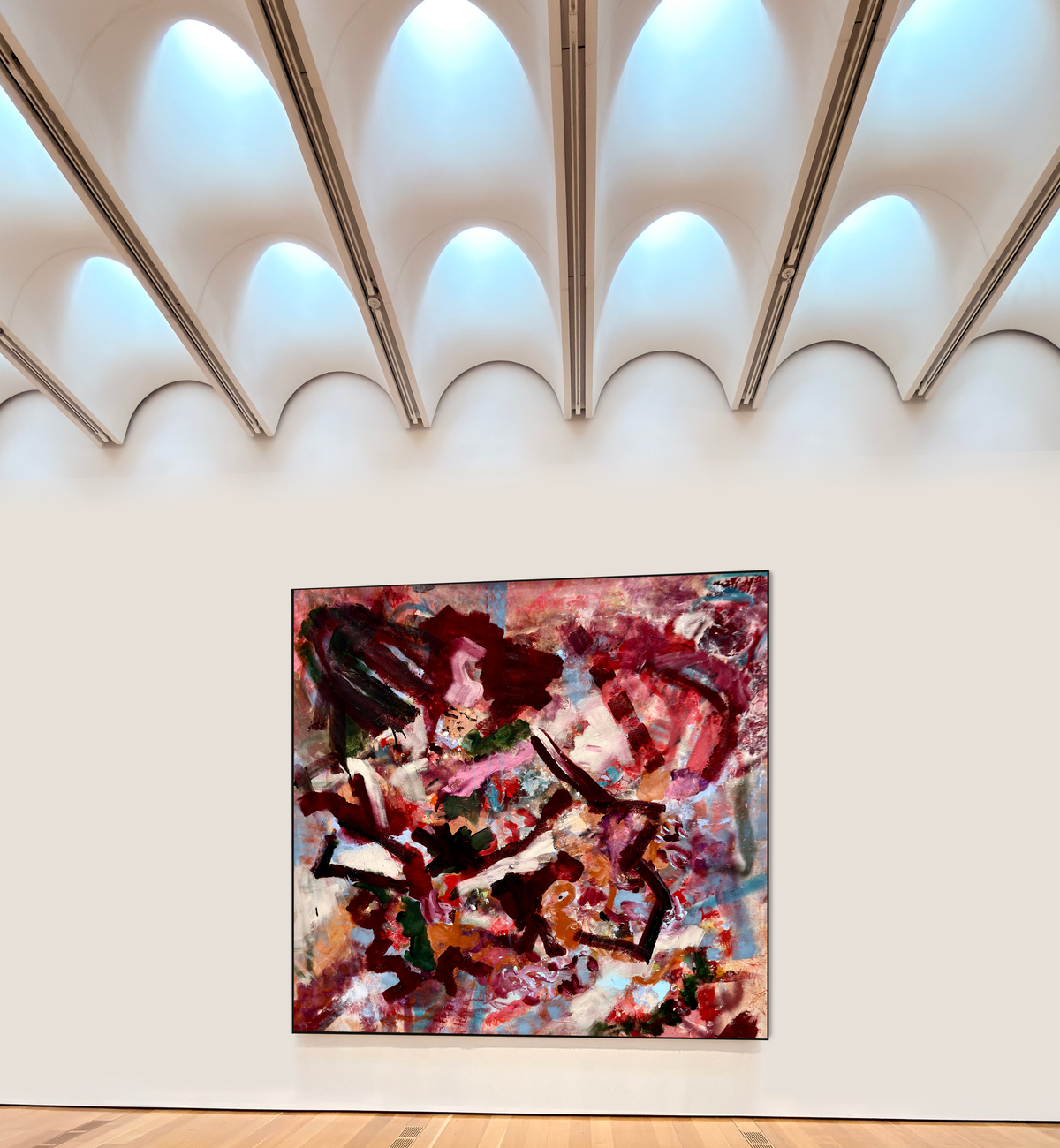
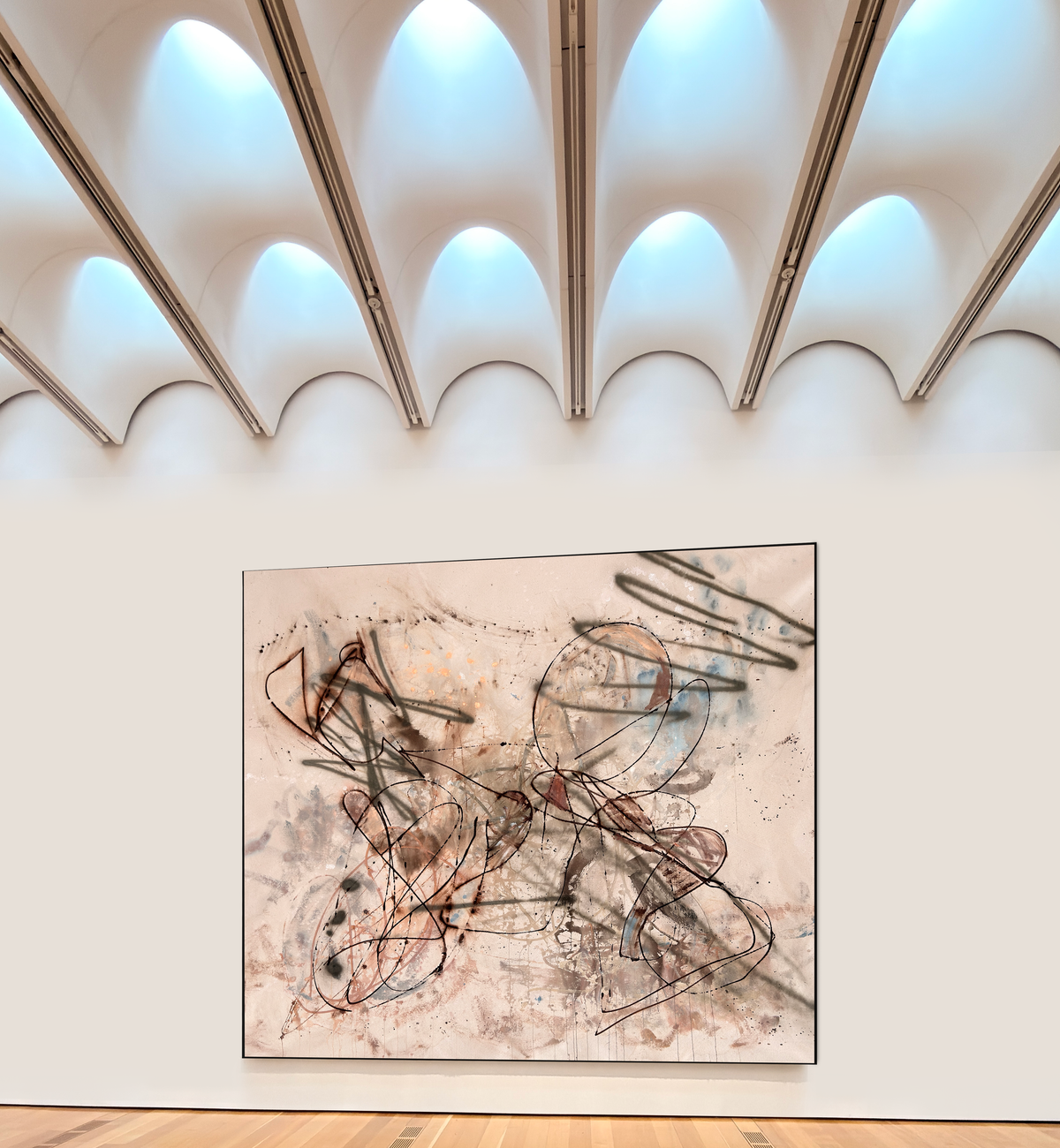
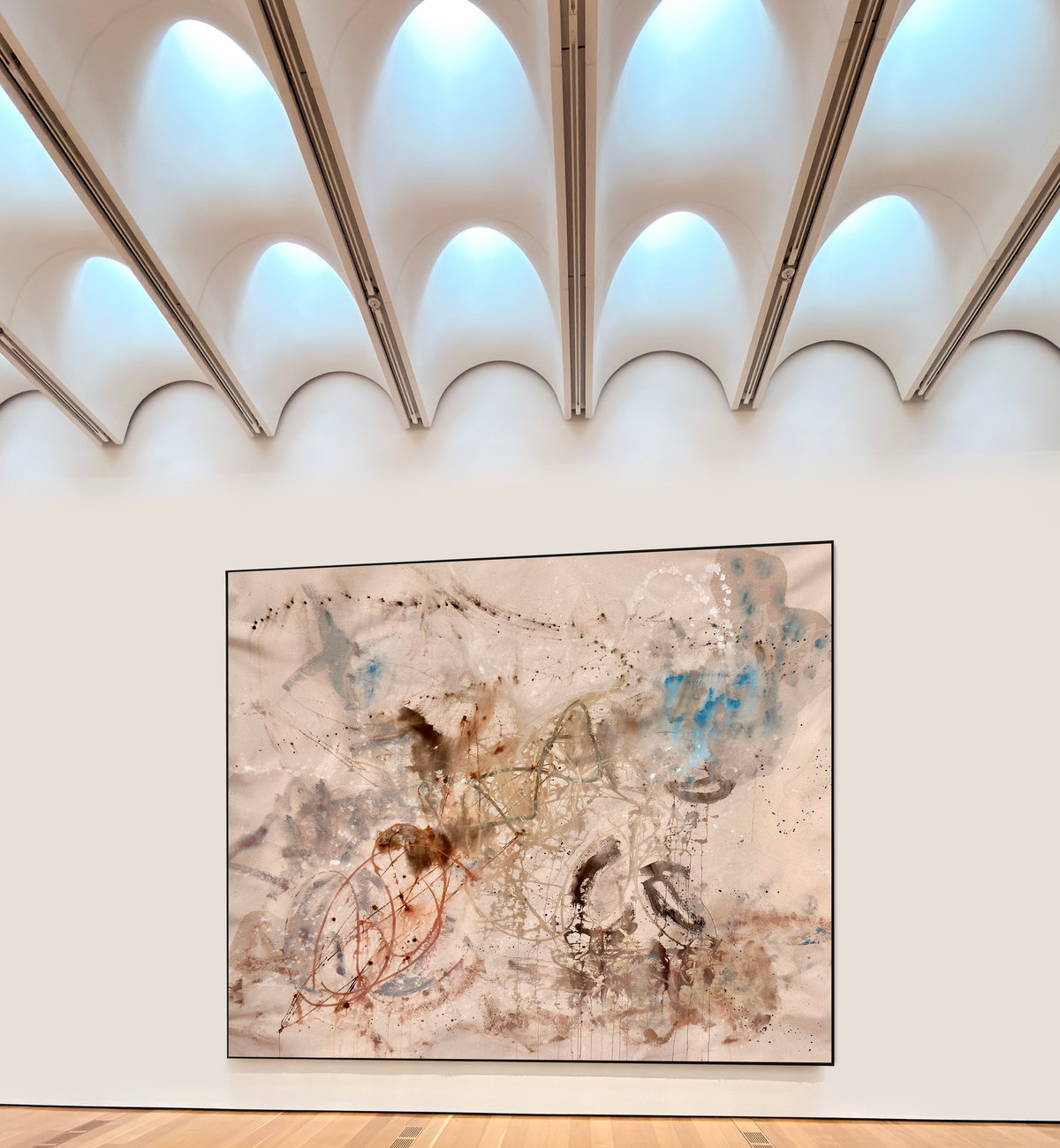
- Where the artist stopped. An over-worked surface is the most common tell of an unsettled practice — everything resolved, every disagreement smoothed out, nothing left breathing. A confident surface stops at the point where it is still slightly unresolved and holds there.
- Edges. Where two passages meet, is the transition decided or negotiated? Long practice shows up as edges that were chosen quickly and left alone.
- Ground. Whether the underlayers are allowed to stay visible. Letting a walnut-stained ground come up through a thin place is a decision only made by someone confident the ground is worth seeing.
- Coherence with the rest of the body of work. One painting is an event; twelve paintings in a series are an argument. If you can see the series, you can see whether the artist is developing or drifting.
Does the work underneath still register once it is covered?
This is the fair objection to everything above, and it deserves a straight answer.
David Kordansky Gallery opens Maia Cruz Palileo: The World Tangled in You in New York today — her first New York solo with the gallery — and the show's own description of the paintings is that the oil builds like sediment, each layer persisting beneath the next. Which raises the obvious question: if a layer is buried, is a viewer receiving it, or is all that accumulated labour simply invisible the moment the top coat goes on?
It registers, but indirectly, and the mechanism is worth knowing because it is what you are paying for.
Buried layers change the surface even where they are not visible. They alter its height, so light rakes across it differently. They alter its absorbency, so the next passage sits rather than sinks. They leave edges — the small ridges where an earlier decision stopped — that catch a shadow years later under a lamp. And in the places the artist chose to leave thin, the earlier work comes straight through: a walnut-stained ground surfacing under a pale passage is a decision from week one still doing work in week nine.
None of that reproduces in a photograph, which is the honest reason a flat product image of a heavily worked painting looks disappointing. The depth is real; the camera is what loses it.
Does a settled palette mean the artist has stopped experimenting?
Usually the reverse. Constraint is what makes experiment legible.
When the colour story is fixed, every remaining variable — surface, scale, density, where the light lands, how much of the ground survives — becomes visible as a decision rather than lost inside a general change of direction. Series-based work exists for exactly this reason: thirteen paintings asking one question thirteen ways will teach you more about a painter than thirteen unrelated pictures ever could.
What a working studio gives a buyer that a hot streak cannot
A hot streak gives you momentum. A working studio gives you continuity, and continuity is what you are actually relying on after the purchase — a maker who is still reachable, still producing, still building the body of work your piece belongs to.
Practically, that continuity shows up as things you can use. Commissioned work here begins with a conversation and, unusually, with two full options painted simultaneously, so a decision is made in front of finished paintings rather than in front of a description. Every finished piece — inventory and commission alike — is filmed in real, moving light before it ships. The studio handles the work from canvas to wall.
Over twenty years of that produces the thing this whole post is about: a body of work coherent enough that a single canvas can be read against it.
What to look for on a studio visit or a pre-ship video
Ask what the artist is working on now, and listen for whether the answer is a subject or a question. Subjects change with the market. Questions persist, and a question that has persisted for years is the single most reliable indicator that the work is not being made for you — which, counter-intuitively, is exactly why it will still be worth looking at in twenty years.
The artist Tacita Dean described what all of this is finally in service of: "The best relationship that exists in art is that relationship between the silence of the viewer and what they're looking at and where they go in their heads." That relationship is the deliverable. Everything above is just how you tell, in advance, whether a painting is likely to give it to you.
Work ready to ship, work built to a room, the practice, and what clients have said about working this way.
Related reading
- About Angela Simeone
- Original paintings available now
- Commission an original painting
- What designers and collectors say
Frequently asked questions
How do I evaluate an artist before buying an original painting?
Look at the body of work, not a single image. Ask how long the practice has run, whether there is a coherent series, what materials are actually in the surface, and where the work has been placed. Then look at one canvas closely: where the artist stopped, how the edges were made, and whether the underlayers are allowed to show.
Is a settled palette a sign an artist has stopped developing?
Usually the opposite. A fixed colour story makes every other decision legible, which is why series-based work is often the clearest evidence of a developing practice rather than a static one.
Why do artists keep working long after they are established?
Because for many painters the work is the thinking, not a report of it. A practice built that way has no finish line, since recognition was never what it was for.
What should I ask on a studio visit?
Ask what the artist is working on now and whether the answer is a subject or a question. Questions that have persisted for years are the strongest signal that the work is being made on its own terms.
Do the layers underneath a painting still matter once they are covered?
Yes, indirectly. Buried layers change the surface height, so light rakes across it differently; they change absorbency, so later passages sit rather than sink; and they leave small edges that catch a shadow for decades. Where the artist left a passage thin, the earlier work comes straight through. A photograph loses almost all of it.
See the work
Browse the original paintings currently available, each one of one. Original paintings available now.
Sources
- The Brooklyn Rail, In Conversation archive (Dorothea Rockburne interview, 2026)
- David Kordansky Gallery, "Maia Cruz Palileo: The World Tangled in You" (10 September – 24 October 2026)
- Suzanne Caporael, Richard Gray Gallery exhibition record