When a System Makes the Decisions, Is a Painting Still Personal?

In short: Hauser & Wirth Los Angeles is currently showing Keith Tyson, an artist who trained as an engineer and built a three-decade practice on generative systems — rules, mathematics, chance — deciding what a painting becomes. It's a real, serious answer to where a painting's authority can come from. It's also the opposite of how I work. Neither approach is more honest than the other. They're just different places to put your trust: in a system, or in your own hand in the moment.
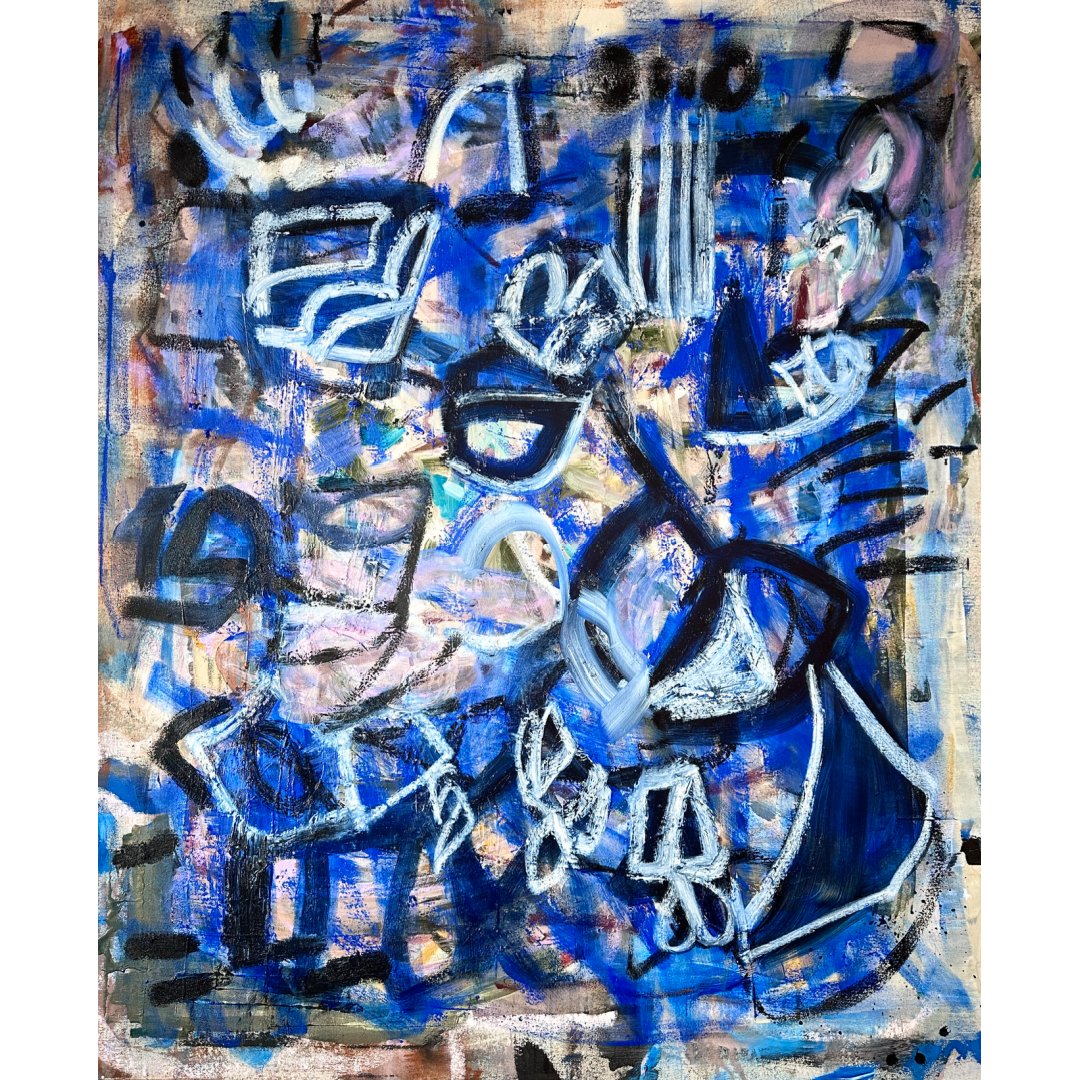
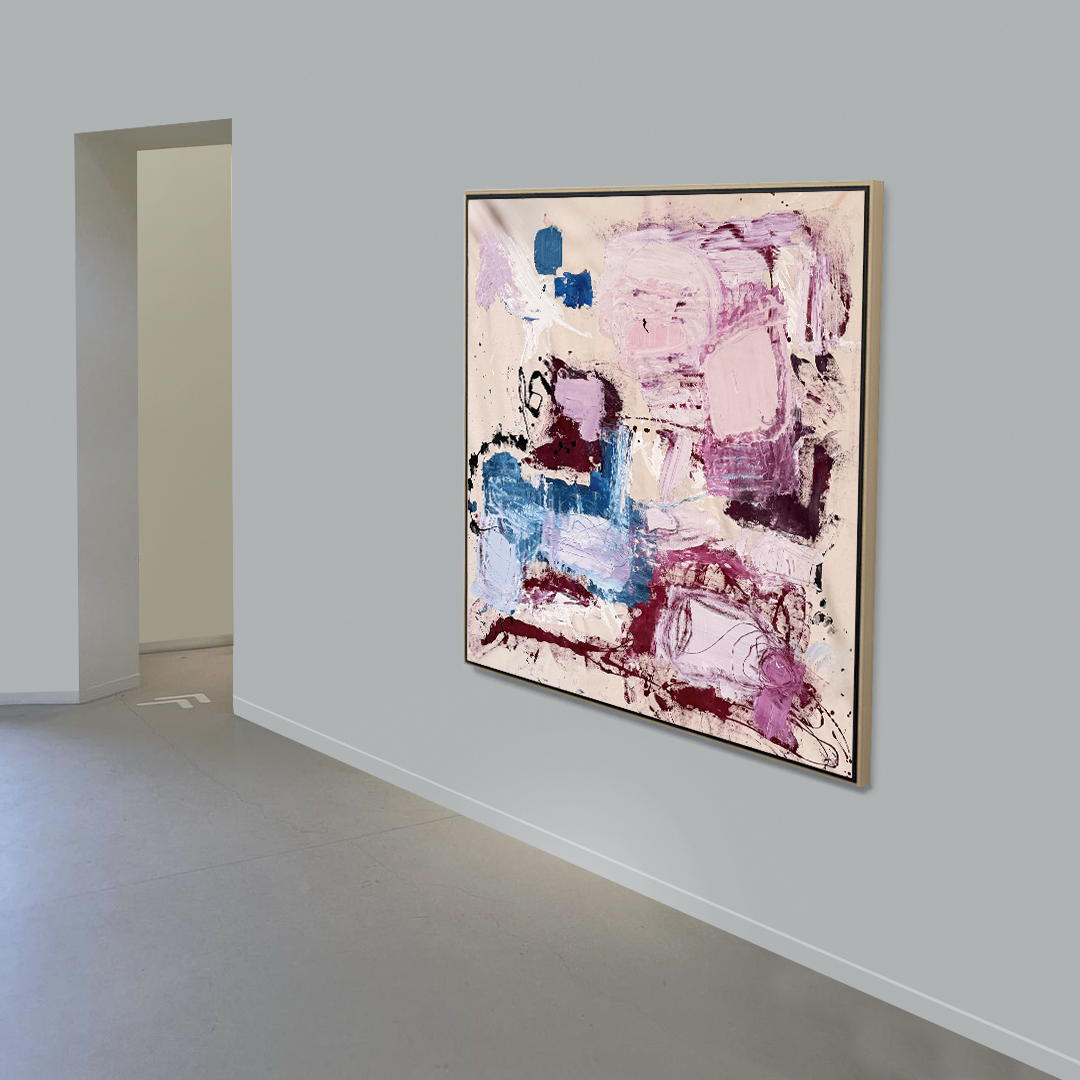
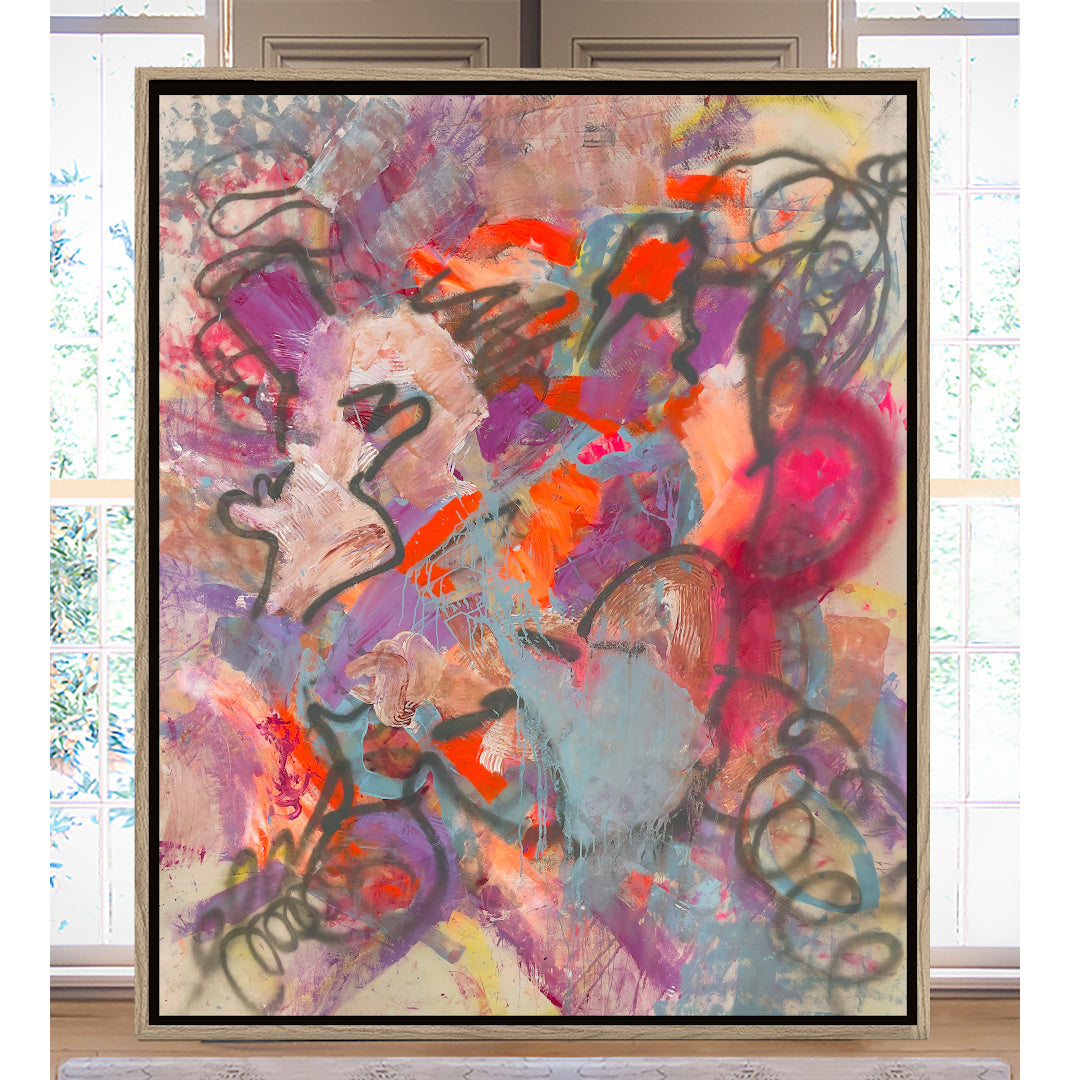
Angela Simeone is a Nashville-based abstract painter working in oil and mixed media, in the gestural, color-forward lineage of Frankenthaler, Mitchell, and de Kooning — every decision made in the moment, with no system standing between her hand and the canvas.
Can a painting built on rules and systems still be personal?
Keith Tyson's current show at Hauser & Wirth Los Angeles, "The Generative Universe," runs May 28 through August 16, 2026 — his first LA exhibition since 2009. Tyson trained as an engineer before turning to painting, and his three-decade practice leans on generative systems: rules shaped by the artist, but also by mathematics, technology, and nature, deciding what happens next on the canvas. It's a real question worth sitting with: if you hand real decisions to a system, does the outcome still count as personal expression, or has something essential been traded away?
What's the alternative to a systems-based practice?
Mine, for one. I don't plan a painting before I start it. There's no rule set, no formula, no chance-based procedure standing between my hand and what happens on the canvas. Every mark is a decision made in that exact moment, responding to the mark before it. I don't know what a piece will look like when I begin, and I don't find out until it's finished. That's not a lesser or more "authentic" approach than Tyson's — it's a different bet about where a painting's real authority comes from.
Does using a system trade away what makes a painting feel human?
I don't think it has to. A system is still a set of choices an artist made — which rules, which constraints, which structures to build a decades-long career around. Tyson chose his systems the same way I choose to work without one. The difference is where the decision-making happens: upstream, in the design of the system, or in real time, brushstroke by brushstroke. Both require a working artist's whole attention. Neither is automated in the sense that would actually remove the human hand.
How should a buyer think about this when choosing a piece?
Know which kind of decision-making you're actually drawn to. Some collectors want the visible evidence of a system — a logic they can trace across a body of work. Others want what I make: a surface where you can feel a real hand improvising in real time, layer over layer, with no formula to fall back on. Neither is the "smarter" choice. It's a question of what kind of presence you want living on your wall.
Frequently asked
What is generative or systems-based painting?
Work built from rules, structures, or processes the artist sets up in advance — mathematics, chance procedures, or fixed constraints — rather than moment-to-moment intuition.
Is Angela's process systems-based?
No. Every mark is an in-the-moment decision, with no pre-set rules or planning before a piece begins.
Does that make one approach more valuable than the other?
No — they're different, equally serious answers to the same question about where a painting's authority comes from.
Where can I see Angela's current work?
In-stock originals are available now at angelasimeone.com.
See original paintings available now · Fuschia Brown Orange Blue
Sources: Hauser & Wirth Los Angeles, "Keith Tyson: The Generative Universe," May 28–August 16, 2026, accessed 2026-08-05.