A Painting's Future Value Is Unknowable, but Its Trajectory Isn't

In short: No one can tell you today whether a specific painting will be worth more in twenty years — anyone who claims otherwise is guessing. But a buyer isn't actually powerless here. What you can check, right now, is an artist's trajectory: a real, visible record of press, placements, and years spent building a body of work. That's not a promise of appreciation. It's the only honest substitute for one.
Angela Simeone is a Nashville-based abstract painter with a twenty-plus-year studio practice, oil and mixed-media originals placed in Architectural Digest, Luxe, and Forbes, and ongoing hospitality commissions including 33 originals at the Conrad Nashville through Champalimaud.
Is there any real way to know if a painting will go up in value?
A collector asked almost this exact question recently: whether there's a genuine way to tell, before buying, if a piece is likely to appreciate — or if a painting's future worth is simply unknowable until decades after the fact. The honest answer is closer to the second half of that question than most people selling art want to admit. Nobody can point to a canvas and tell you what it's worth in 2046. Anyone in a gallery who implies otherwise is selling confidence, not information.
What you can actually assess is different, and it's available to you right now, not in hindsight.
What does a real trajectory look like, in practice?
It looks like a paper trail. Press coverage that predates any single sale — Architectural Digest, Luxe Interiors + Design, Forbes, Domino, House Beautiful. Institutional and hospitality placements that a gallery didn't broker — the Conrad Nashville's 33 originals, Peabody Union, Blackberry Mountain, work inside the Frist Clinic and Sarah Cannon Cancer Center. A body of work that's been building in one recognizable visual language, not artist-hopping between trends, for more than twenty years.
None of that guarantees a number. What it gives you is something to actually check, instead of a name you're trusting on faith because a gallery vouched for it.
Why does trajectory matter more than a single sale price?
A single high sale can be an outlier — one collector, one moment, one auction room that got competitive. A trajectory is harder to fake. It's built one placement, one feature, one year at a time, and it's checkable by anyone willing to look. When I talk to a designer or a first-time collector about a piece, I'd rather point to twenty years of a visible practice than promise them a return I have no way of guaranteeing.
Does this mean buying art is a financial decision?
Not primarily, and I'd be lying if I framed it that way. Most of the collectors and designers I work with are buying because a piece does something to a room, or to them, that nothing else in the space does. But "I can't predict the future" and "I have nothing real to check" are two different problems. A visible trajectory solves the second one, even when the first stays permanently unsolved.
Frequently asked
Can any painting actually be guaranteed to increase in value?
No. Treat anyone who guarantees future appreciation on a specific piece with real skepticism.
What should I look at instead of a value guarantee?
Press history, placements, and length of a coherent practice — a record you can verify yourself, not a projection.
Does buying directly from an artist change what I can verify?
It can make it easier. There's no gallery layer between you and the actual record — you can ask the artist directly and see the placements named.
Is Angela's work currently available to see this trajectory for yourself?
Yes — in-stock originals are listed with full pricing and history at angelasimeone.com.
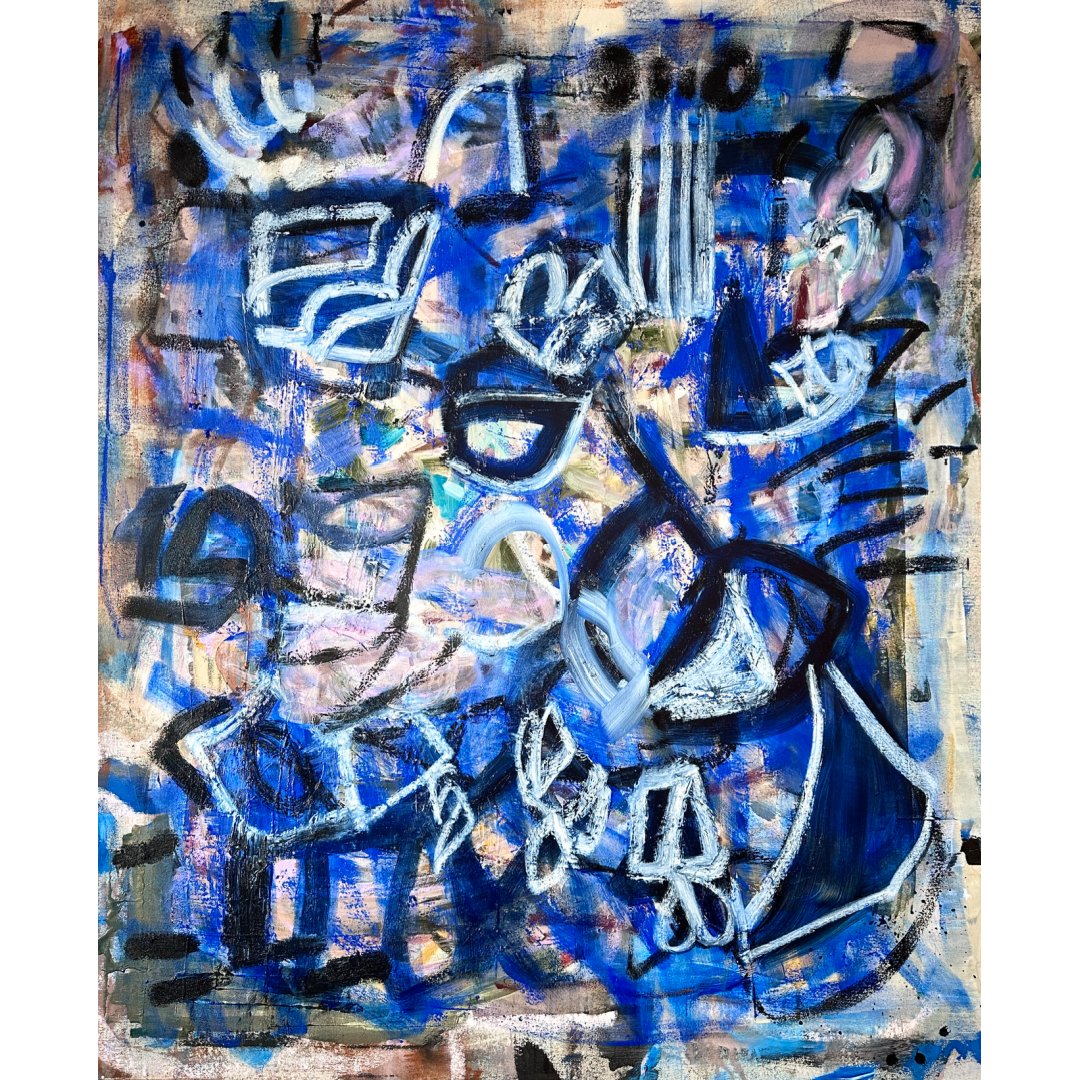
If you want to see where a piece like this might live, the Royal Blue White Lilac original is in stock now, along with the rest of the current collection.
See original paintings available now · Royal Blue White Lilac
Sources: Quora, "How can you tell if a piece of art will likely go up in value over time," accessed 2026-08-05.