Many Paintings by One Artist Can Hold a Room Together
In short
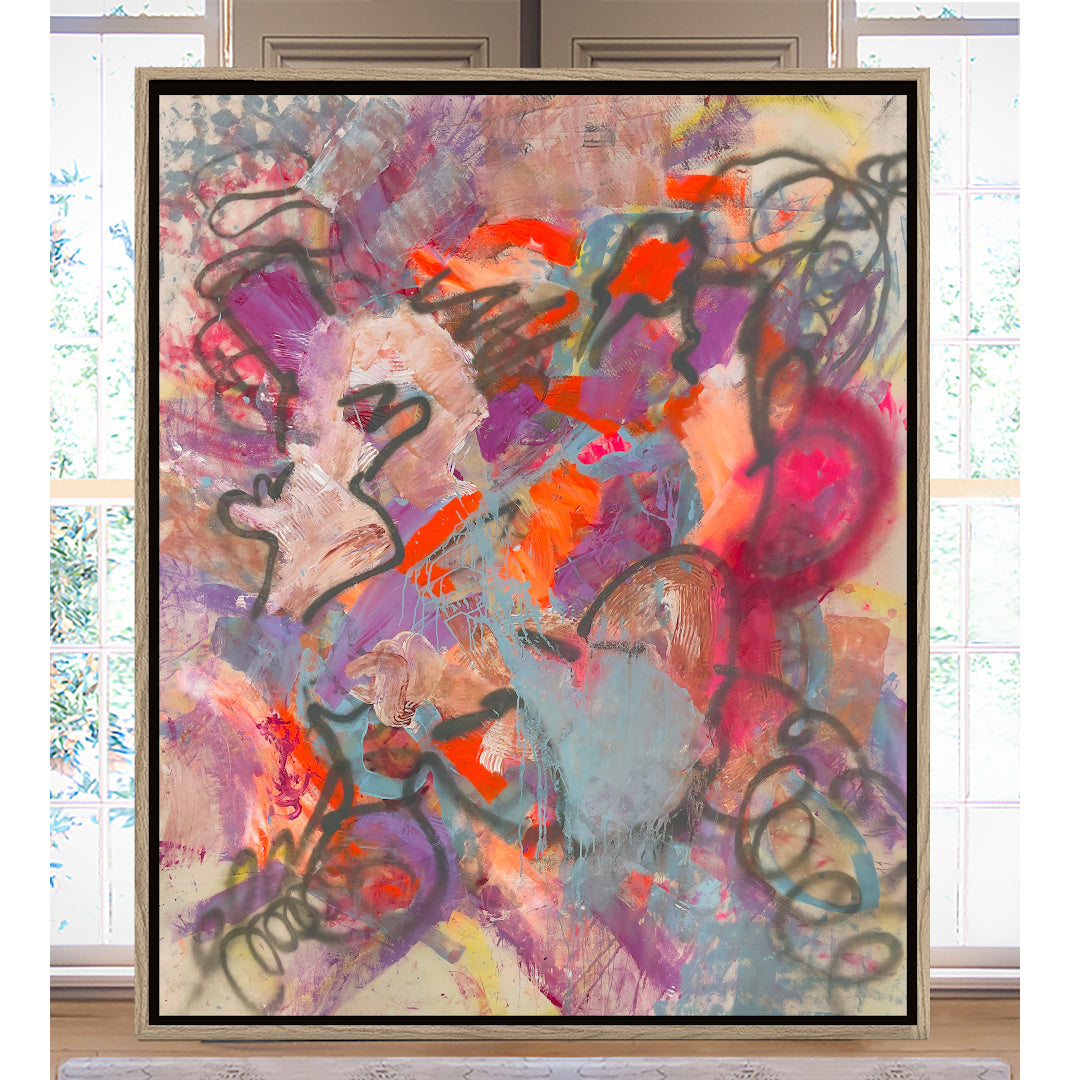
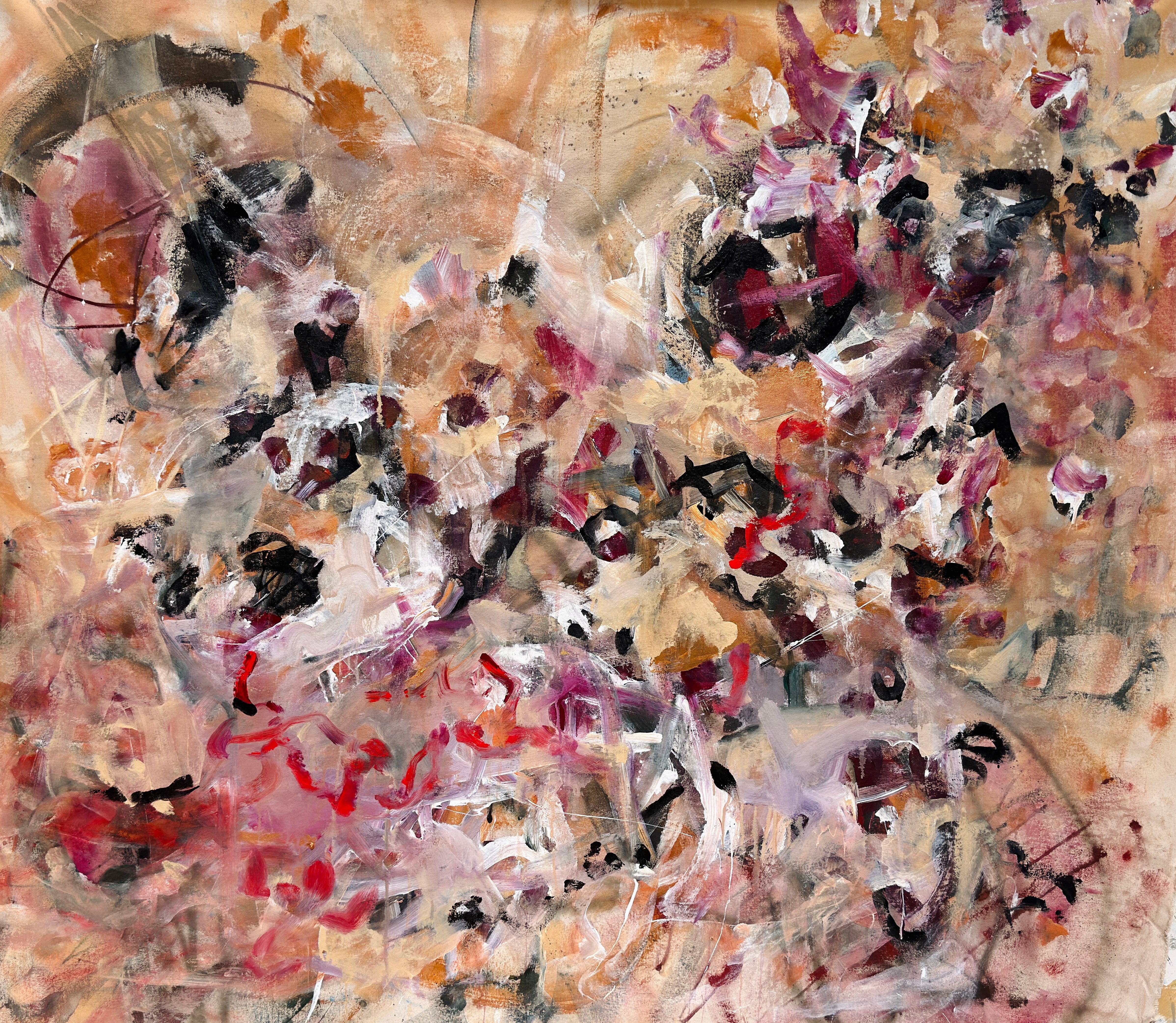
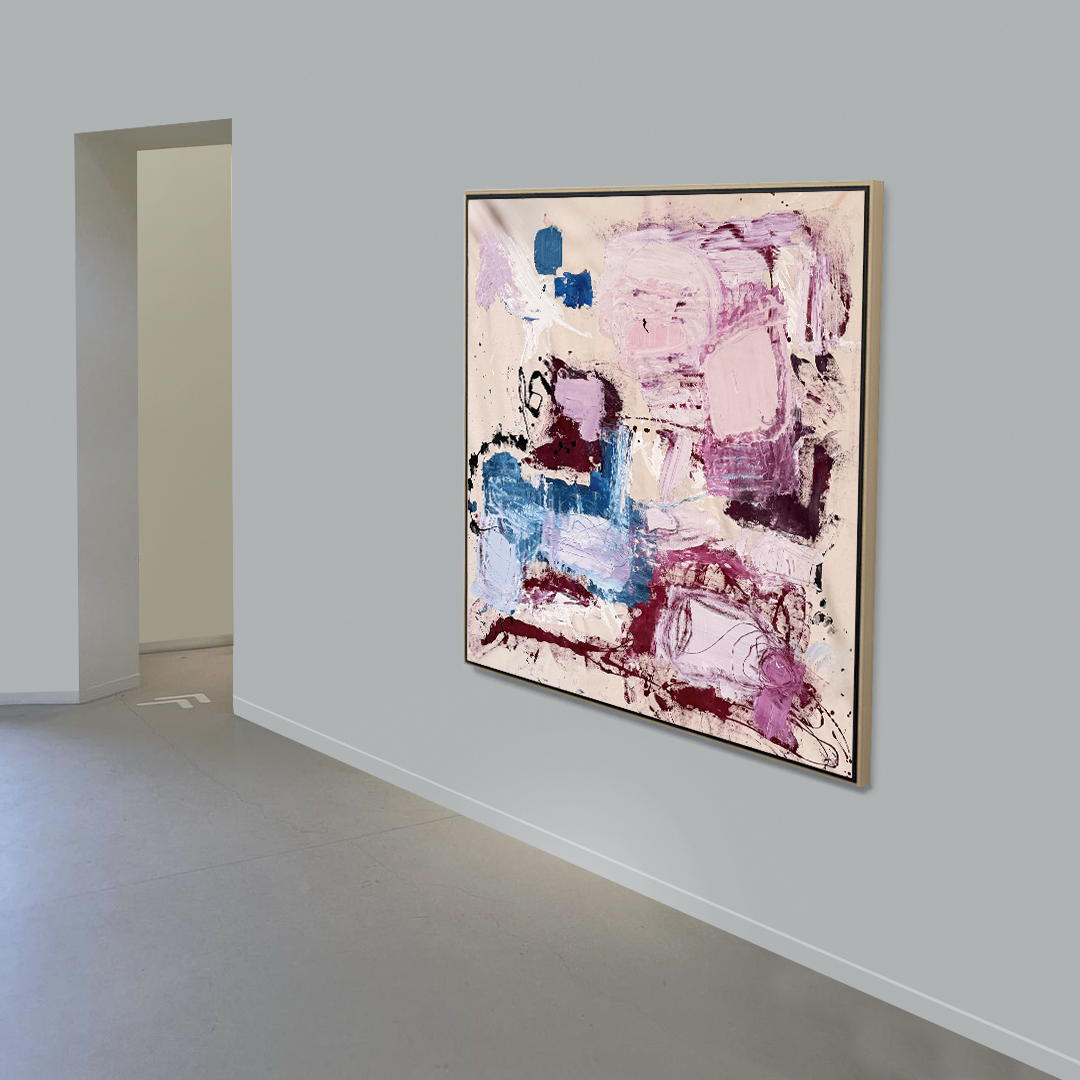
Multiple works by a single artist rarely read as excess. They read as intention. One hand across a room — or a whole property — gives a space a consistent grammar of color, scale, and gesture that a mixed group of unrelated pieces has to work much harder to fake. The line is crossed by repetition, not by quantity: several paintings that vary in scale, palette weight, and format hold a room together, where several near-identical ones flatten it.
Is more than one painting by the same artist too much for one room?
Not on its own. What tires a room is sameness, and sameness is a function of variation, not count. Two canvases from the same hand that differ in size, orientation, and color weight give an eye somewhere to travel. Two that repeat the same composition at the same scale close the room down.
I've watched this play out at real scale. At the Conrad Nashville I'm the most-placed artist in the building — 33 originals across the private suites, the public and gallery areas, and both dining rooms. Interiors were by Champalimaud Design; art placement and curation were handled by Tammy Parmentier, who selected and commissioned the work directly. Nobody walking that property counts paintings. What they register is that the building sounds like one thing.
Inside that number, the distribution matters more than the total: Thistle & Rye, the third-floor bar, carries seven. Blue Aster, the Mediterranean dining room, carries three. Suites carry singles. The same hand, at different volumes, in rooms with different jobs.
What does a single artist actually give a property that a mixed collection can't?
Continuity of decision-making. Every painting I make comes out of the same set of habits — oil thinned with medium, charcoal underdrawing, palette knife and fingertip, surfaces built up over weeks until they settle. Those habits travel. A guest moving from a bar to a dining room to a suite reads a through-line without being told there is one.
Christina Boschetti and Barette Widell of Widell + Boschetti, who have commissioned work from me across several residential and commercial projects, put the mechanism plainly: "Art creates an indelible atmosphere and is why we place it with most of our projects." Atmosphere is cumulative. It is much easier to build with one voice repeating itself in different registers than with eight voices agreeing to be quiet.
Roger Higgins of R. Higgins Interiors describes the effect from the other end — after the fact, in a finished house: "This art transformed the room. Can't imagine the house without it." That's the test worth applying to a multi-piece placement. Not "is this too many," but "would removing one of them leave a hole."
Where is the actual limit?
Three practical checks, in the order I'd apply them.
Vary the format before you vary the artist. A large horizontal, a tall vertical, and a small square by the same hand will hold a wall better than three mid-size rectangles by three different painters. Format does more work than authorship.
Give each piece its own light. A painting placed where it fights another for the same window is the piece that will start to feel redundant. Distance and light separate works more effectively than a change of signature does.
Let the palette shift weight, not identity. Aubergine in one room, the same family pushed lighter in the next. Related, not matched. This is what I mean when I say the work is calibrated for the rooms each piece goes into.
Does this only work for hotels?
No — the arithmetic just gets smaller. Peabody Union carries five originals. Restaurants run from two to seven. A residence might carry two, and the logic is identical: a diptych, or a living-room piece with a smaller companion in the hall, gives a home the same continuity a property gets from thirty.
Designers sourcing this way usually start with a conversation about the room rather than a browse through inventory — which is why the commission process matters more than catalog depth, and why the trade program exists for firms placing more than one piece. What's in stock today is on the available originals page; everything is one-of-one.
What the painters and philosophers said first
Five voices worth sitting with on this, none of them selling anything:
- Gerhard Richter: "Art is the highest form of hope."
- Josef Albers: "In visual perception a color is almost never seen as it really is." — the whole case for hanging related works together: each one changes the reading of the next.
- Robert Motherwell: "Every intelligent painter carries the whole culture of modern painting in his head."
- Louise Nevelson: "I think all great innovations are built on rejections."
- Gaston Bachelard, The Poetics of Space (1958): "A house shelters daydreaming."
FAQ
How many paintings by the same artist is too many for one room? There's no fixed number. A room turns repetitive when the works stop varying in scale, orientation, and color weight — not when the count passes some threshold. Two near-identical pieces read as more excessive than five varied ones.
Do hotels and restaurants really commission that much work from one artist? Yes. The Conrad Nashville holds 33 of my originals across suites, public areas, and both dining rooms; Peabody Union holds five. Placement was directed by the project's interior designer and art consultant, not assembled from unrelated sources.
Can a designer commission several pieces at once for the same project? Yes — that's the most common trade request. Sizes, orientations, and a shared color story get agreed up front, and the pieces are developed as a group so they relate without matching.
Is a group of paintings by one artist harder to resell or rehang later? Original work stays original. Because each piece is one-of-one and built to relate rather than match, individual works separate cleanly into other rooms later — which is exactly what happens when a client redesigns around a piece years afterward.