What a Painter's Own Late-Career Choices Can Teach a First-Time Buyer
In short: An artist's own choice about which recurring motifs to return to, late in a career, is a legitimate act of self-curation — and it's worth paying attention to well before that artist is famous enough for a museum to do it for them. A recurring motif in a working artist's practice is usually a considered choice, not a lack of range.
A deliberate goodbye
Georg Baselitz's current exhibition, gathered from a show he conceived himself before his death earlier this year, brings together the recurring motifs that defined his six-decade practice — pulled together, in his own words, on his own terms. That's a rare thing to witness: an artist choosing, deliberately, which parts of a life's work belong together.
Most collectors will never get to see that kind of curated, artist-directed retrospective. But the underlying idea — that a recurring motif is a choice, revisited on purpose — is visible in a working artist's practice long before any museum gets involved.
Recurring motifs aren't a rut
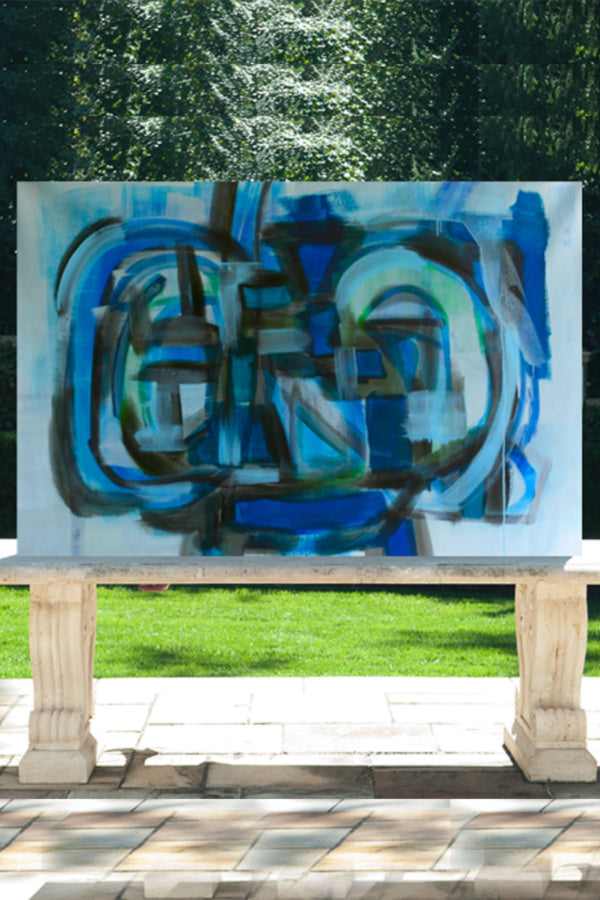
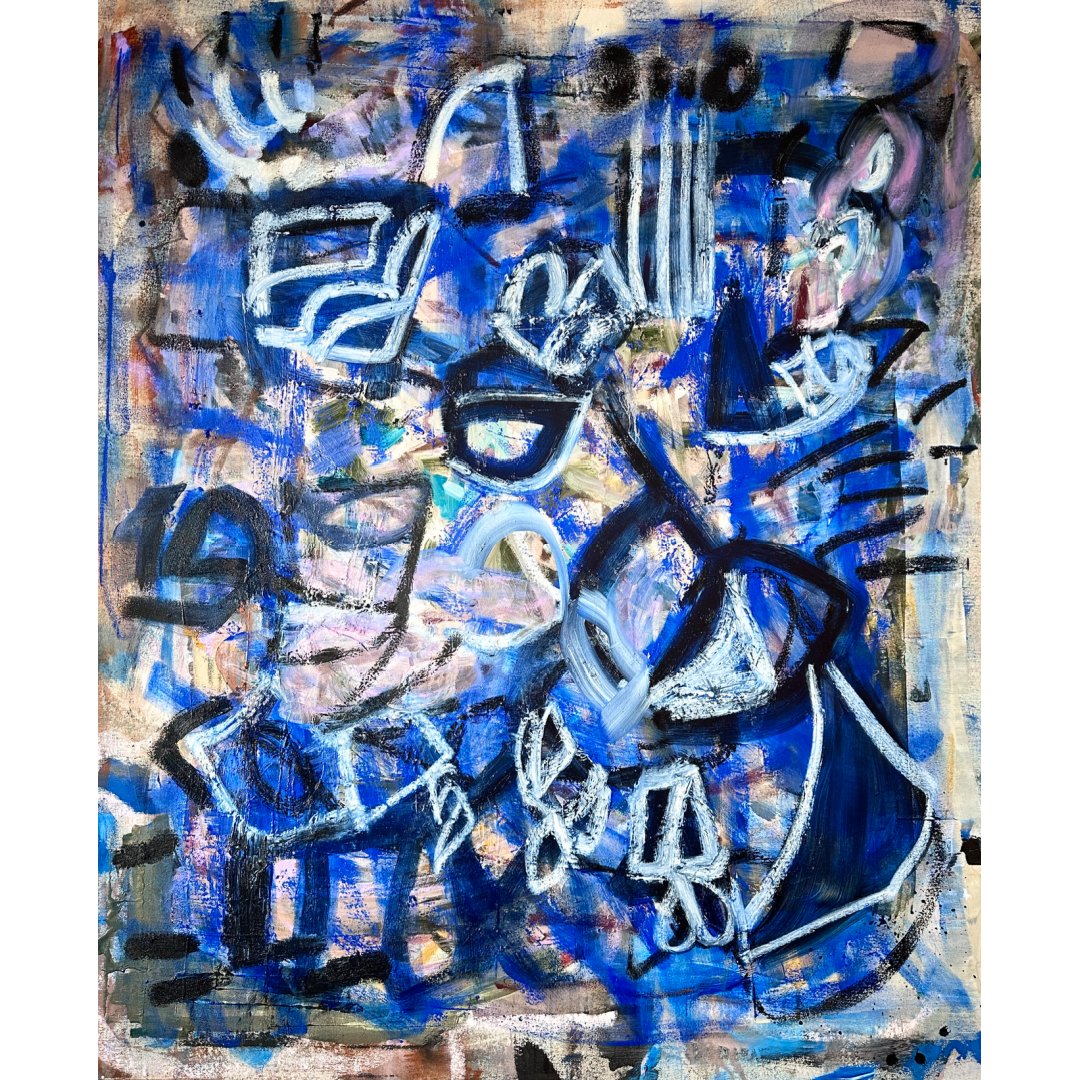
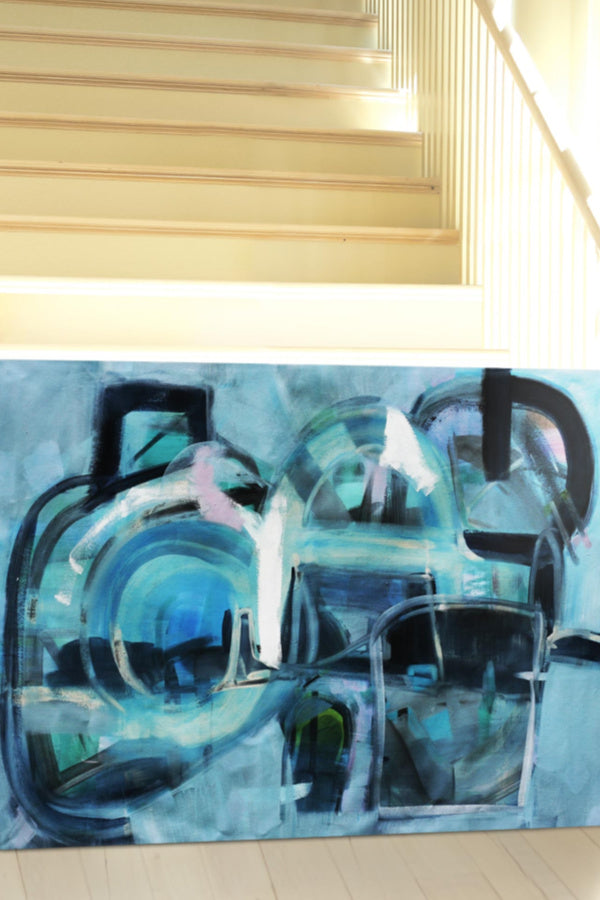
I return to certain motifs across bodies of work — organic, floral-adjacent gestures show up across paintings that are otherwise quite different from each other in palette and scale. That's not a lack of new ideas. It's closer to what Baselitz did deliberately at the end of his career: treating a motif as something worth coming back to and pushing further, rather than abandoning it the moment it's been explored once.
Agnes Martin put it plainly about her own practice: "My paintings have neither object nor space nor line nor anything — no forms. They are light, lightness, about merging, about formlessness," a description of a body of work built by returning, again and again, to the same restrained vocabulary rather than reinventing it every time.
What this means for a first-time buyer
If you notice an artist returning to the same motif, shape, or gesture across several available pieces, that's not evidence of a thin practice. It's often the opposite: a sign the artist has found something worth developing in depth, the same instinct that let a painter like Baselitz spend a career, and then a final show, in conversation with his own recurring themes. You don't need an artist to be famous, or gone, for that kind of deliberate return to mean something.
Frequently asked
Is it a red flag if an artist's paintings look similar to each other?
Not necessarily. A consistent visual language across pieces usually signals a developed practice, not a lack of range — look for meaningful variation in execution within that consistency.
How do I tell the difference between depth and repetition?
Look closely at technique, palette, and scale across pieces sharing a motif. Real depth shows up as variation within the theme, not identical repetition.
Original paintings that explore a recurring floral-abstract motif are available now. View available originals.
Sources: White Cube's exhibition notes for Georg Baselitz's current posthumous show; Agnes Martin, Writings, 1992.