Do Galleries Decide What's Good, or Just What Sells?
In short: When galleries choose which artists to represent, the real filters are fit and salability within an existing roster, not artistic merit measured in isolation. That means a gallery passing on a working painter is a business decision, not a verdict on the work. A serious practice can be built entirely outside that system, with credibility coming from checkable placements and press instead of a gallery's imprimatur.
I don't have gallery representation, by choice, and it's a question worth answering honestly rather than sidestepping: does that mean anything about the work itself?
What galleries are actually filtering for
A gallery's decision to represent an artist is closer to a hiring decision than a jury of quality. They're asking whether an artist's output fits the story the gallery already tells its collectors, whether the price point makes sense for their client list, and whether there's enough of a track record to reduce their own risk. None of that is really about whether the paintings are good. It's about whether the gallery can sell them to the specific collectors who already trust that gallery.
That's a useful thing to understand as a buyer, because it means the inverse is also true: an artist without a gallery hasn't failed some quality test. They've simply built credibility somewhere else.
What credibility looks like without a gallery
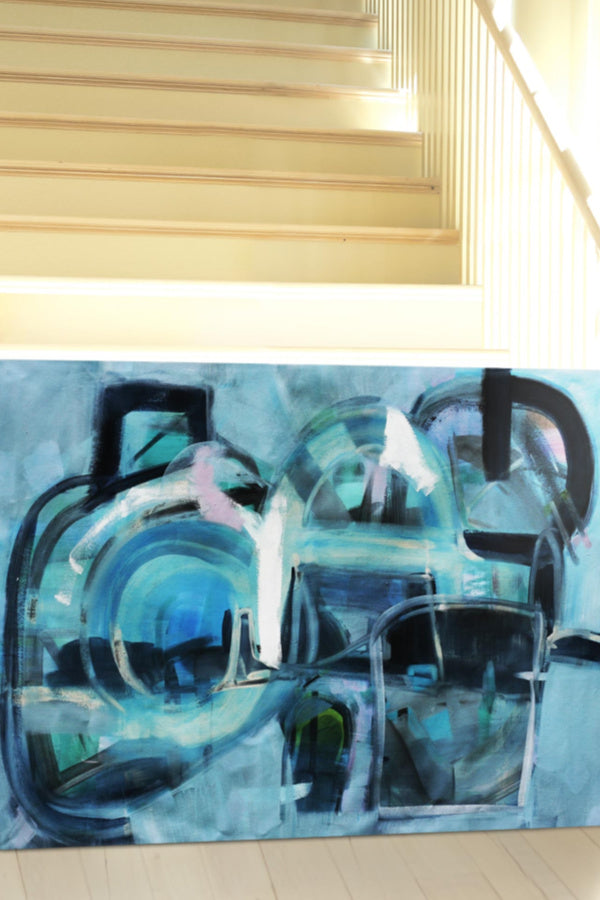
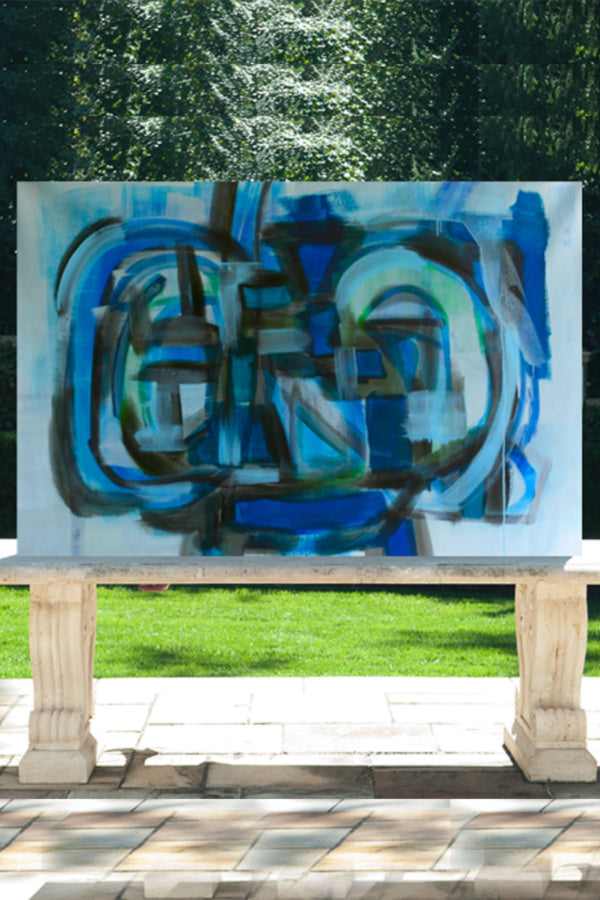
My own practice runs entirely direct-to-collector, and the credibility has to come from things a buyer can actually verify. Thirty-three of my originals are installed across the private suites, public areas, and both dining rooms at the Conrad Nashville, in interiors designed by Champalimaud Design and placed by art consultant Tammy Parmentier. Five more are in the Peabody Union. A piece I painted for the Bilt Rewards founder's New York residence, commissioned through the design firm Asthetique, ran in Architectural Digest India. And I was named among Nashville's women artists to know by Nashville Lifestyles.
None of that required a gallery to vouch for me first. It required the work being good enough, consistently enough, that designers and collectors kept coming back.
Why this matters if you're the one buying
If you're standing in front of an original by a working artist you've never heard of, with no gallery behind the name, the instinct is to treat that absence as a red flag. It usually isn't. A more useful question is whether the artist has a real, checkable track record: press you can look up, placements you can see in person or verify online, and a body of work consistent enough to show it wasn't a lucky one-off. That's the actual signal. A gallery's yes or no is a separate business decision, made for reasons that have very little to do with whether you should hang the painting in your own home.
Frequently asked
Does a lack of gallery representation mean an artist isn't serious?
No. It usually means the artist has built their career through direct relationships, commercial placements, or press instead of gallery representation, which is a legitimate alternate path.
What should I check instead of gallery representation?
Look for a real body of work, verifiable press or placements, and documentation of individual pieces — the same due diligence a gallery would have done for you.
Can I still buy with confidence from an artist without a gallery?
Yes. Buying direct from a working artist's own studio often means more documentation of the specific piece, not less.
Original paintings are available now directly from the studio, each with its own documentation. View available originals or start a commission.
Sources: reader discussion on gallery representation criteria (Quora); Conrad Nashville placement details and Architectural Digest India feature per the studio's own press record.