Naming a Painting After Its Material Changes What You See
In short
A title made from real material or a real place tells a collector where the work came from rather than what to feel about it. It functions as provenance, not instruction. Titles built from palette words ("Blue Composition No. 4") describe the surface a viewer can already see; titles built from a substance or a location add information nothing in the picture supplies — and that information tends to survive long after a first impression fades.
Does a painting's title actually change what you see?
Yes, and more than most people expect. A title arrives before the eye has finished working, and it sets the terms of the looking. Told a field of dark green is called Forest, you look for trees. Told the same field was stained with walnuts boiled in the painter's own yard, you look at the stain — at how the color sits in the weave rather than on top of it.
Neither reading is wrong. One of them, though, sends you toward what physically happened.
Julian Schnabel's current Pace Gallery exhibition, Italy Through Its Trees (540 West 25th Street, on view through August 14, 2026), is named after a real place and a real, specific tree — the Italian stone pine he saw daily while filming in Italy. In remarks incorporated into Pace's own statement on the show, Schnabel notes that the paintings "are pictures of something, but not really of trees." The title carries the source without collapsing the work into an illustration of it. That's the whole trick.
Why name a series after a material instead of a mood?
Because the material is checkable and the mood isn't.
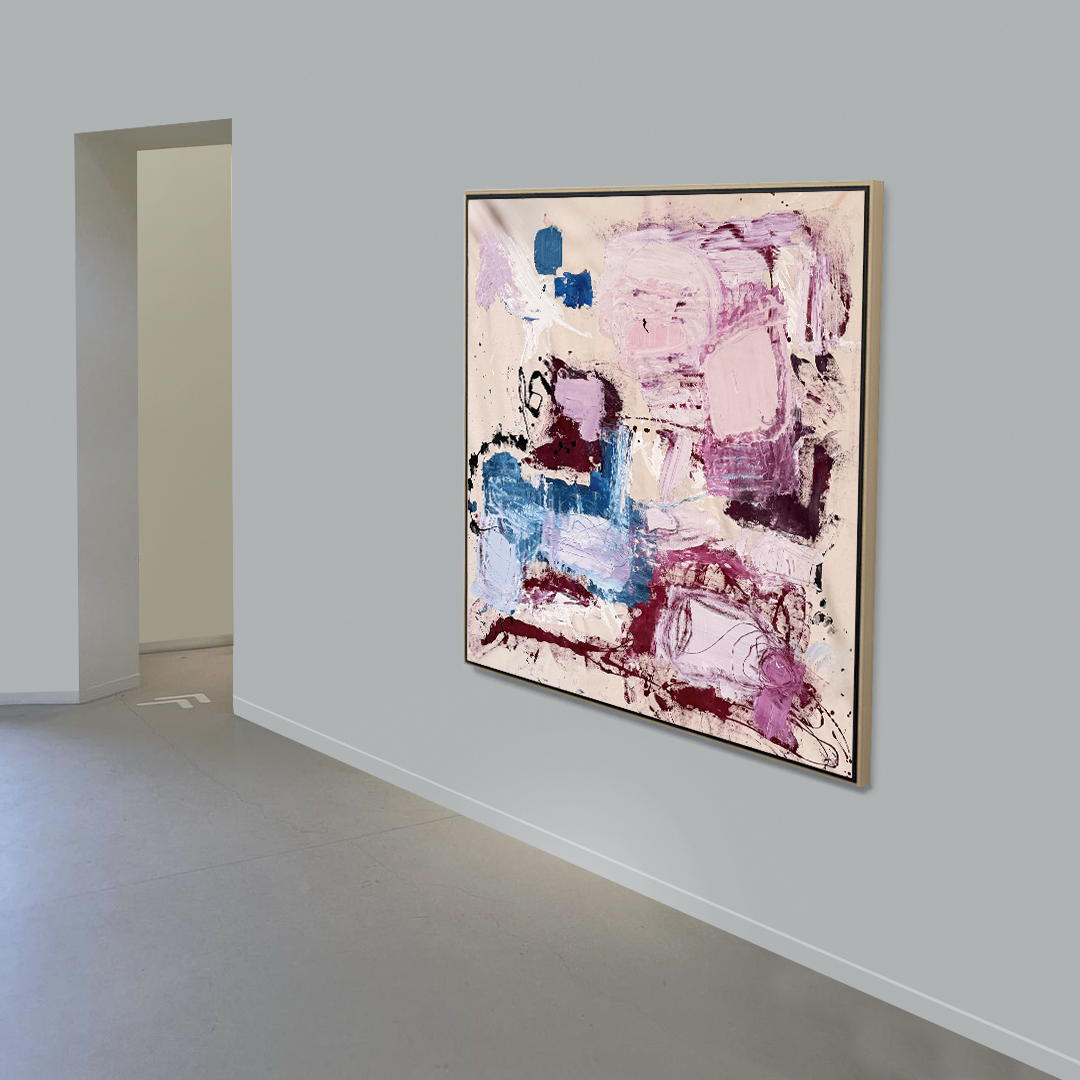
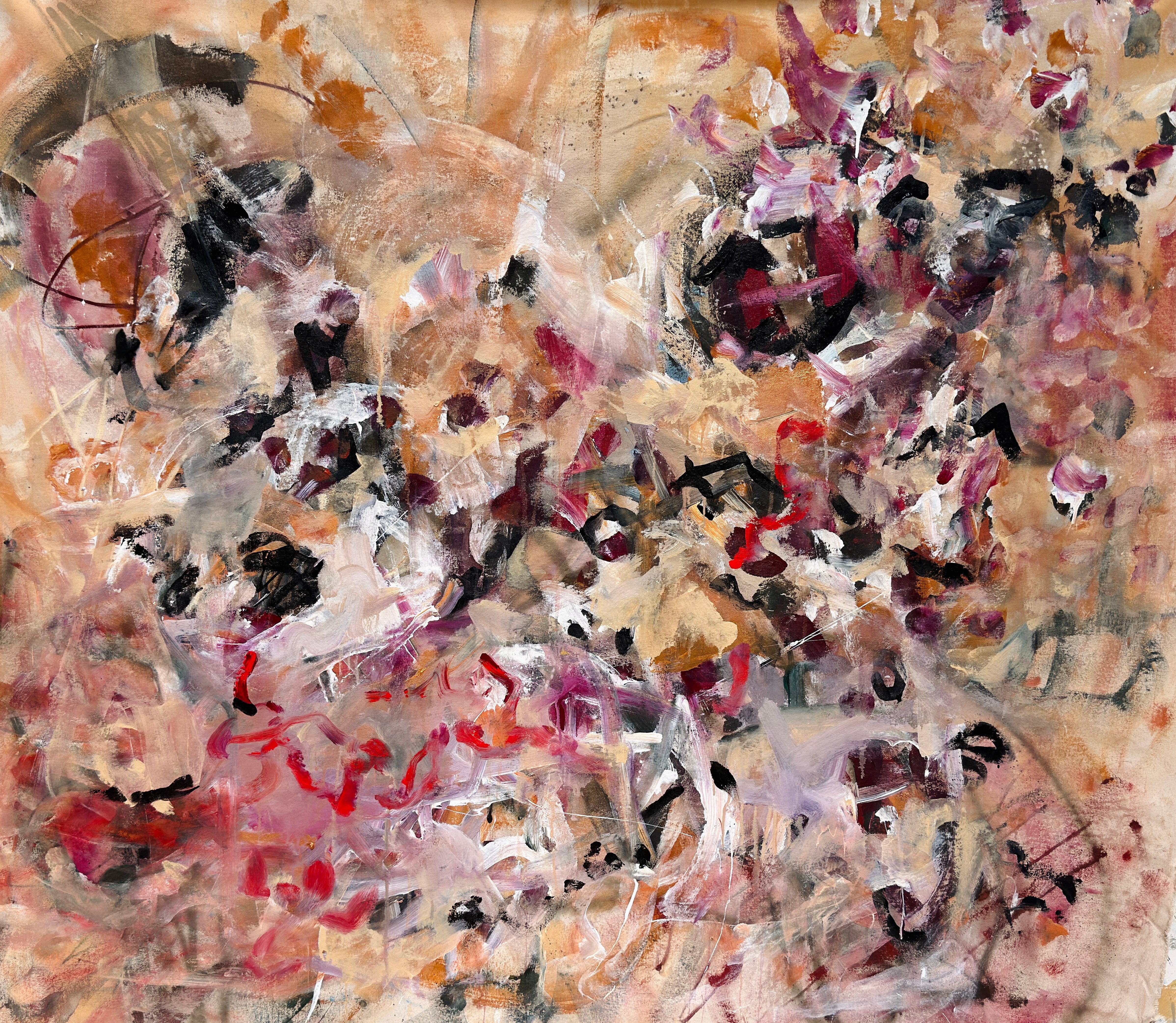
My Astral Thicket series began with Robert Frost's "The Road Not Taken" — a poem I've written into each of my three sons' graduation dedications. The series is built from the ground up: walnuts harvested and boiled from my own yard become the base stain, layered with crushed and ground oil and wax pigments, then lifted with pops of dusty pastel. Each painting reads as a forest disappearing and a night sky twinkling at once.
The name isn't decoration on top of that. It's a pointer back into it. A collector who knows about the walnuts looks at the brown differently — not as a chosen color but as a residue of a real afternoon, a real tree, a real pot on a real stove.
When does a title actually arrive?
Rarely at the easel. A painting usually holds several working names before one sticks, and the one that sticks often surfaces months later — sometimes after the piece has already gone to a collector. That timing is worth knowing, because it tells you what a title is and isn't. It isn't the plan. It's the last thing the work asks for, once it has stopped changing.
The practical version, for anyone buying an original: a title that names a substance or a place will keep giving you information ten years in. A title that names a feeling will have to compete with your own.
What the painters said about names and things
- Marcel Duchamp treated the title as "an invisible color" — a component of the work rather than a caption attached to it. (Widely reported from his interviews; attribution is well-established but not tied to a single published page.)
- William Carlos Williams: "No ideas but in things."
- Gertrude Stein: "A rose is a rose is a rose."
- Lee Krasner: "I like a canvas to breathe and be alive."
- Richard Serra: "I consider space to be a material."
Five different disciplines, one shared instinct — that naming from the concrete beats naming from the abstract, and that the thing itself outlasts the description of it.
Does any of this matter when you're choosing a painting?
It matters at the second look, not the first. The first look is instinct, and instinct is the right instrument for it — you either want to live with the surface or you don't. The title starts working later, when a guest asks about the piece and you find yourself explaining walnuts instead of adjectives. That's a better conversation, and it's the one that makes a painting feel like it belongs to you rather than to a category.
If a specific palette and a specific room are already in your head, that's a commission conversation, not a browse. And if you want the longer version of how the studio works before that, start here.
FAQ
Do abstract paintings need titles at all? No, but they benefit from them. An untitled work asks the viewer to supply everything; a title drawn from real material or place gives them one true fact to build on without dictating a reading.
How do artists come up with painting titles? Often late. A piece carries working names while it's being made, and the name that lasts usually surfaces after the painting has settled — sometimes months later, occasionally after it has already sold.
Does a title affect a painting's value? Not directly. What it affects is legibility — a title tied to a real material, place, or series makes a work easier to place within an artist's body of work, which is how provenance gets built over time.
What does "Astral Thicket" refer to? A series stained with walnuts harvested and boiled in the artist's own Nashville yard, layered with crushed and ground oil and wax pigments and lifted with dusty pastel, begun from Robert Frost's "The Road Not Taken."