10 Quotes About the Artist's Hand Every Collector Should Know
In short
Collectors in 2026 are gravitating toward work that shows how it was made — visible brushwork, layered surfaces, the imperfections that record a real decision. Designers and curators are naming the shift directly, and painters have been describing it for a century. These ten quotes explain what "the artist's hand" actually means, why it reads differently from a print or a generated image, and what to look for on a canvas.
Ask a collector why they chose an original over a print and you will usually get an answer about feeling before you get one about craft. Ask a designer the same question this year and the answer has sharpened. The reason has a name now: the hand.
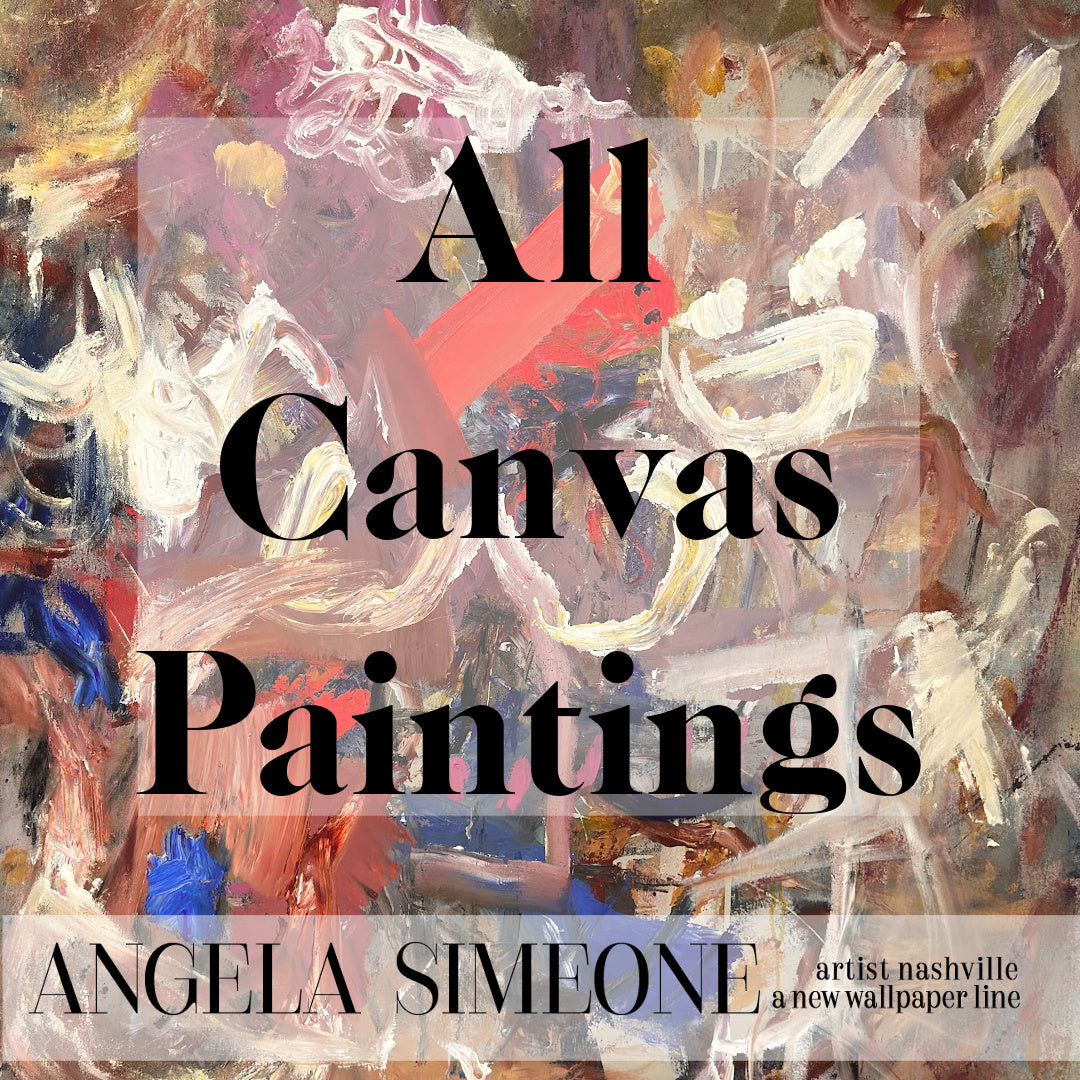
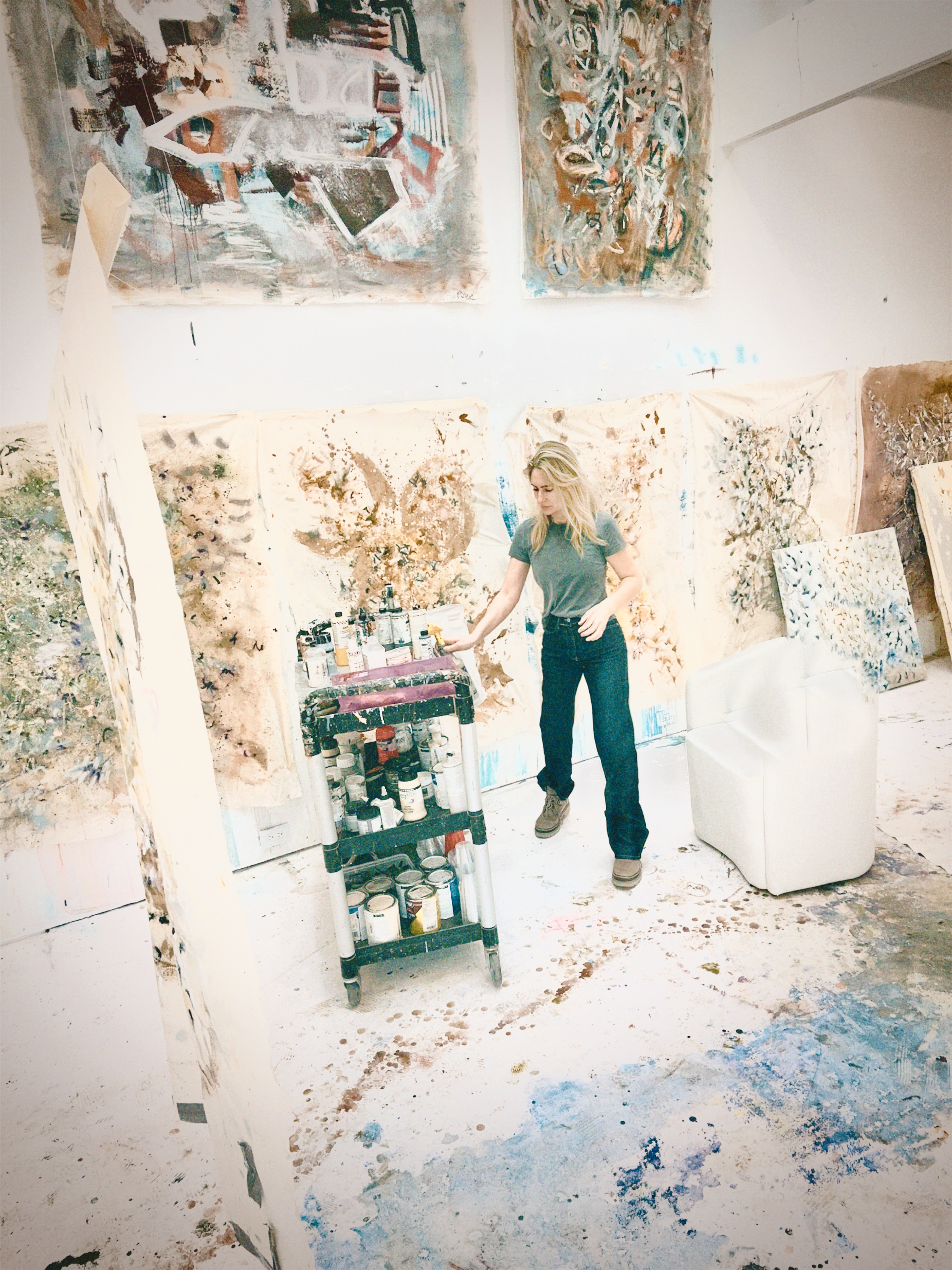
I paint in oil and mixed media on canvas, in layers built up and worked back over weeks. What ends up on the wall carries the record of that — a charcoal underdrawing showing through, a color that lost an argument and stayed anyway, a passage where the palette knife went one way and the fingertip went another. None of that is decorative. It is evidence, and evidence is what a viewer is actually responding to when a surface holds them longer than they meant to stand there.
Here are ten voices — five working today, five from the history of the practice — on what the hand puts into a painting that nothing else can.
What are designers and curators saying about the artist's hand right now?
1. Chloe Willis, associate director, Sibyl Colefax & John Fowler
"I am drawn to objects that bear the marks of their making… these imperfections and traces of process that create the strongest sense of connection for me."
Willis was speaking to SheerLuxe in June 2026 about the art trends shaping interiors. She frames it as a reaction, not a preference — after a decade of digital flatness, the marks are the connection. Coming from a decorating house founded in 1933, that carries some weight: this is not a novelty position.
2. Erin Remington, Saatchi Art, "The 2026 Art Trends"
"As AI-generated imagery proliferates, collectors are gravitating toward work that foregrounds the artist's hand. There's a want for something that AI can't replicate."
Saatchi Art's curators put this second on their list of five shifts for the year, alongside a note that art lovers "want proof of time spent and skill honed by the artist." Proof is the operative word. A layered surface is a receipt.
3. Angelica Semmelbauer, art advisor and curator, A View All Their Own, Hollis Taggart
The exhibition celebrates each artist's "distinct visual language," and how a visual vocabulary gets "built through sustained experimentation."
Semmelbauer's show — twenty contemporary women artists across generations, on view in New York through August 15, 2026 — is organized around process rather than style. The premise is useful for a newer collector: a painter's hand is legible, but it becomes legible over years of experiment, not in a single gesture.
4. Katie Kirby, Katie Kirby Interiors
"Not only was the painting singular — adding a complexity and beauty to my design, which was my goal — but I also gained a friend in Angela."
Kirby commissioned several paintings for the Atlanta Showhouse, where she was a featured designer. Singular is the word to sit with. A designer specifying for a showhouse has access to every catalog in the country; what she could not get from a catalog was one surface that exists once.
5. Shannon Ponciano, House of Ponce Design
"She creates something bespoke — one of a kind that evokes an emotion that makes you stop in admiration."
The stop is the measurable part. A print can be beautiful across a room. A built-up surface tends to hold someone at three feet, which is where the hand actually lives.
What have painters and philosophers said about the hand?
6. Barbara Hepworth
"I rarely draw what I see. I draw what I feel in my body."
Hepworth is describing the thing that makes large-scale work possible. When the brush moves from the shoulder rather than the wrist, the mark is a body-scale decision, and it reads that way on the canvas whether or not a viewer can name why.
7. Maurice Merleau-Ponty, Eye and Mind (1961)
"The painter 'takes his body with him,' says Valéry. Indeed we cannot imagine how a mind could paint."
The cleanest philosophical statement of the case. Painting is not a mind issuing instructions to a hand; it is a body thinking. That is precisely the operation a generated image skips.
8. Robert Henri, The Art Spirit (1923)
"The brush stroke at the moment of execution carries inevitably the exact state of being of the artist at that exact moment into the work."
Henri is making a claim about time, not skill. Each stroke is dated. A surface with forty sessions in it holds forty states of being, which is why it keeps offering something new to a person living with it.
9. Willem de Kooning
"Flesh was the reason oil paint was invented."
Blunt and physical, and it explains why oil in particular still carries this argument. The material was developed to do what a body does — hold light, hold weight, stay slightly unresolved.
10. Richard Sennett, The Craftsman (2008)
"Making is thinking."
Sennett's whole book argues that skill in the hand is a form of intelligence, not a delivery system for one. For a collector, that reframes what a price is attached to: not decoration produced by a technique, but a record of thinking that happened in material.
What should a collector actually look for on a canvas?
Four things, all visible from three feet:
- Layers that disagree. A color showing through from underneath means the painting changed its mind and kept the evidence. Uniform, resolved color usually means it never did.
- Varied mark scale. Palette knife, brush, fingertip and charcoal leave different edges. A surface with only one edge type was likely made quickly or reproduced.
- Texture that catches raking light. Stand to one side. Real built-up paint throws small shadows; a printed surface stays flat from every angle.
- Asymmetry that holds. Imperfection that reads as decision rather than accident is the hardest thing to fake and the easiest thing to feel.
Why this matters more in 2026 than it did in 2016
The reason is not nostalgia. It is scarcity of a specific kind. Images are now effectively free, infinite, and instantly convincing — which has stripped value out of the look of a thing and moved it into the provenance of a thing. A painting made by hand, over weeks, by a person you can talk to, is the version of an image that still costs something to produce. My own studio leans on that directly: the work is original only, the studio sends multiple pre-ship videos of the actual piece in real light, and there is a person on the other end of the email.
Physical art created by the human hand pulls a person into the present moment. That was true when I wrote it into my artist statement, and the market has spent the last two years catching up to it.
FAQ
What does "the artist's hand" mean in a painting?
The visible evidence of how the work was made — brushwork, layering, texture, and the small imperfections that record real decisions. It is the difference between a surface that was built and a surface that was output.
Can you see the artist's hand in an abstract painting?
Often more clearly than in representational work, because there is no subject competing for attention. Layers, mark scale, and texture are the whole event.
Does visible brushwork make a painting more valuable?
It is not a price formula, but it is a large part of why collectors choose an original over a reproduction — it is the quality a print and a generated image cannot carry.
How can I tell an original painting from a high-quality print?
Look at it from an angle. Built-up paint throws small shadows in raking light and a print stays flat. Layered color also shows through from underneath in ways a print reproduces as a single flat pass.