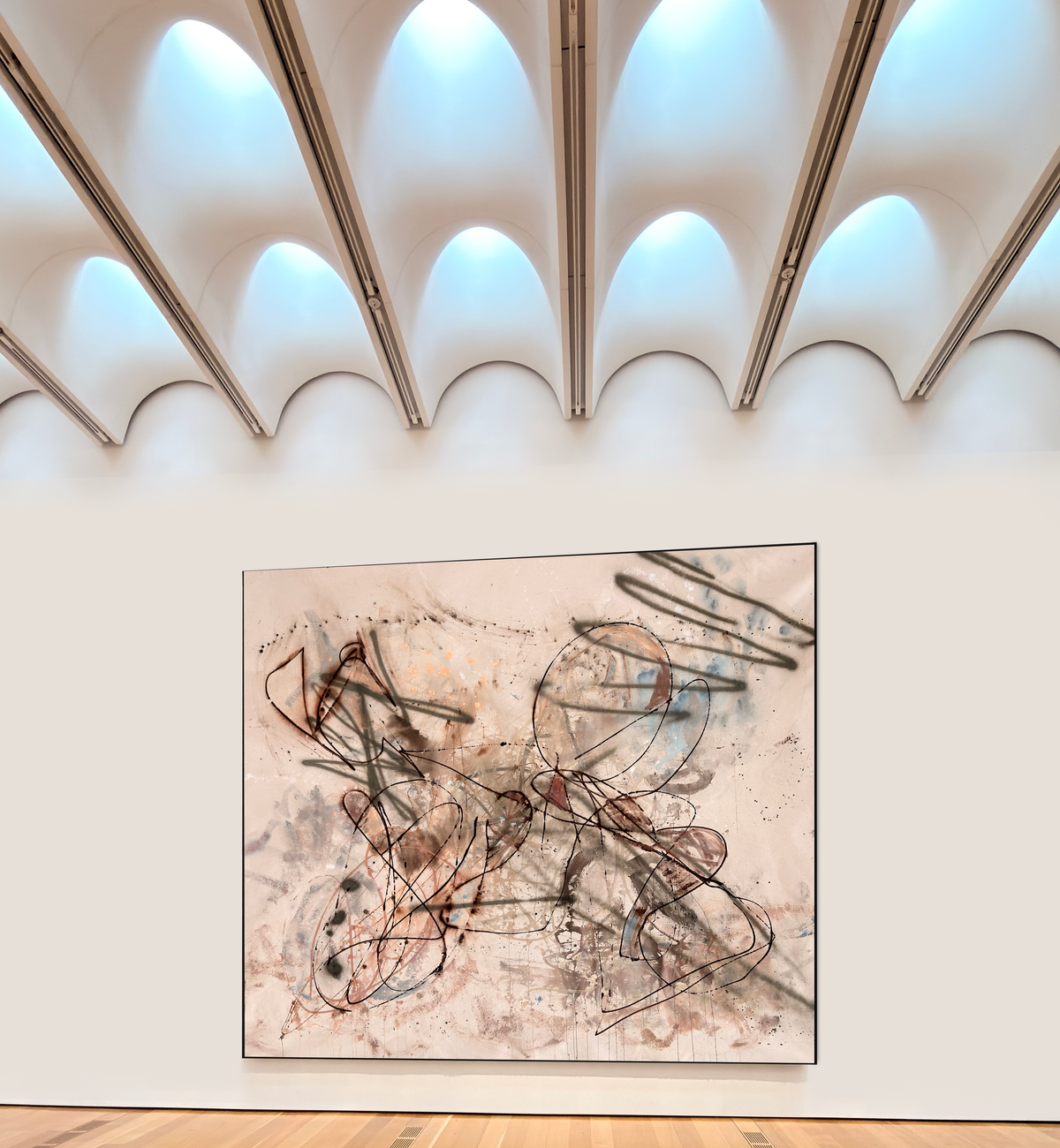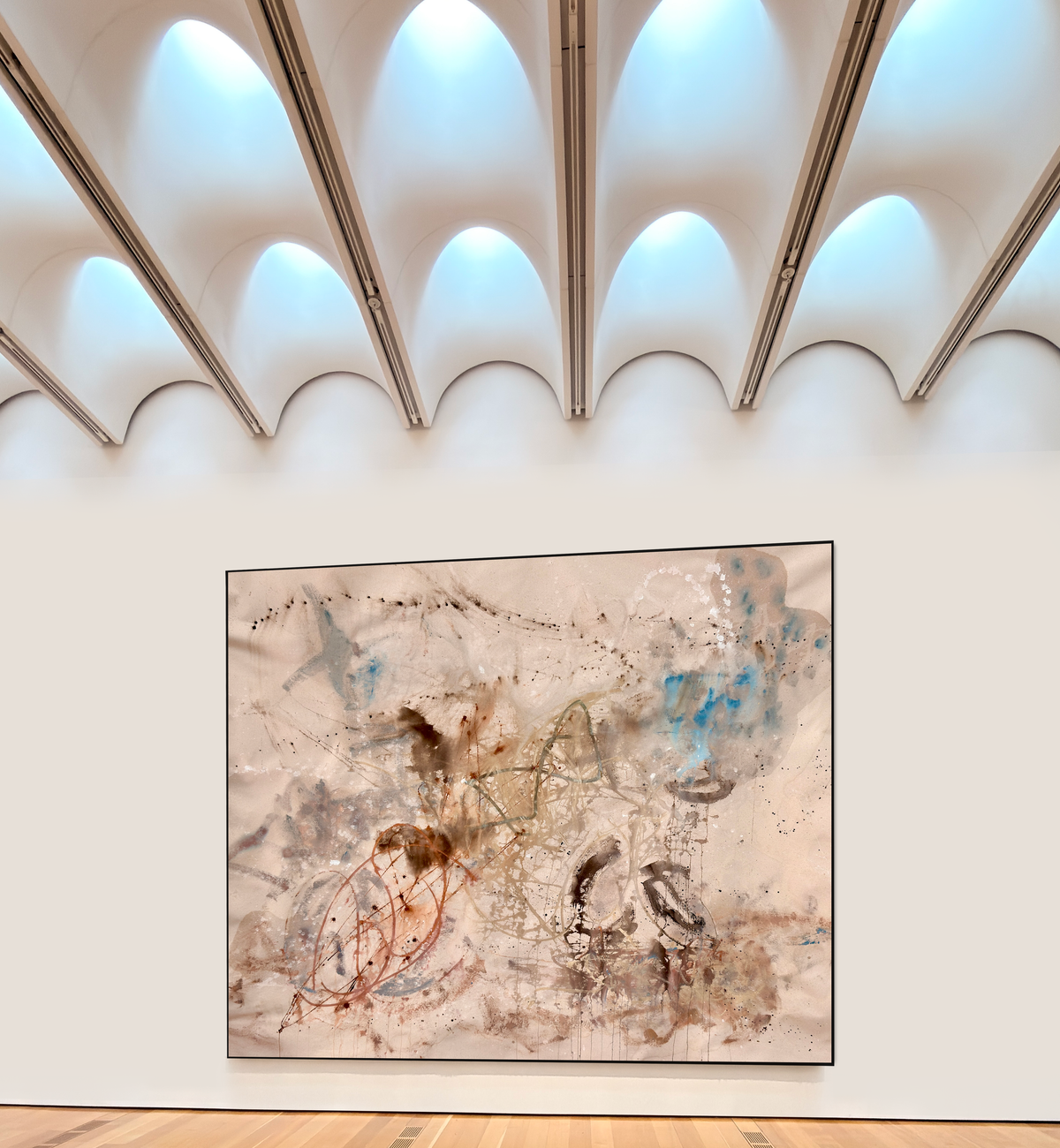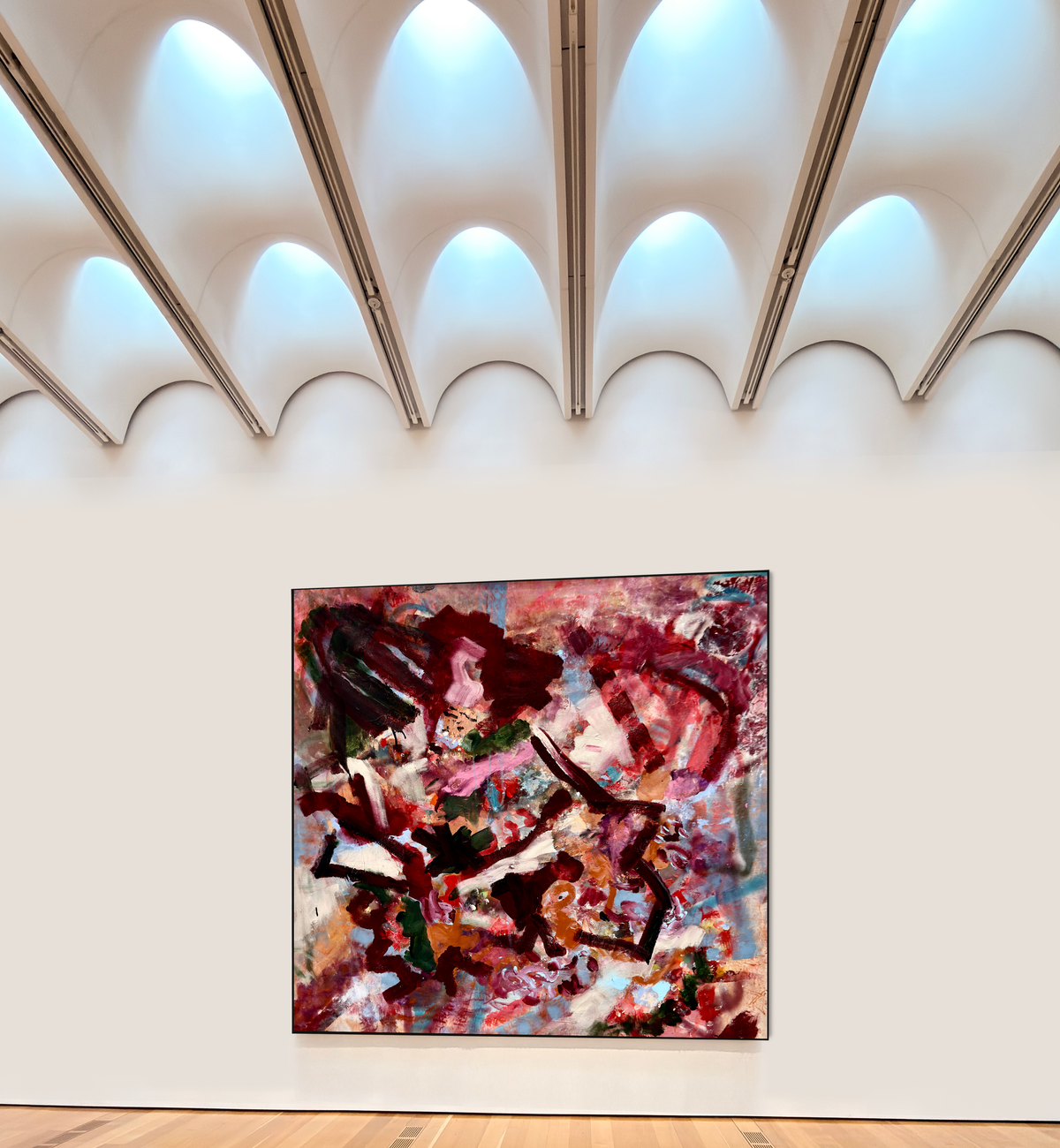
Looks or Meaning: Which One Should Decide a Painting Purchase?
In short
Buy for looks and the painting answers one question — whether it works on that wall, in that light, with that sofa. Buy for meaning and it answers a question you have not asked yet. Rooms get redecorated; the reason you chose something is the part that survives. The strongest purchases satisfy both, and when only one is available, meaning is the one that stays useful after the furniture changes.
Should a painting be chosen for the room or for yourself?
Both, and in that order — the room narrows the field, and you decide inside it. Scale, light and sightlines are real constraints, and ignoring them produces a piece that never settles. But a room-first purchase has a short shelf life, because rooms are the most revisable thing in a house. The sofa goes. The wall colour goes. If the only reason a painting is on that wall is that it agreed with a fabric, the painting leaves when the fabric does.
Art advisors put this plainly. Chandos Dodson Epley, founder of C2 Art Advisory in Houston, who came to advising from interior design: "At the end of the day, you need to buy what you love, what you are attracted to, what reflects who you are because you will look at it every day." The operative clause is the last one. A painting is the object in a room with the longest exposure time — you will spend more hours with it than with any chair.
What does "meaning" actually mean when you are buying abstract work?
Less than people fear, and something more specific than a story. Meaning here is not a hidden message you need decoded. It is the quality of holding up — whether the thing keeps giving you something on the two-hundredth look. Emily McElwreath, of McElwreath Art Advisory in New York, frames the purchase as the start of something rather than the end: "People are not only starting a collection, but they're also starting an educational journey that will last for the rest of their lives."
She also separates the money question from the choice cleanly: "Take monetary appreciation out of the way and you're still choosing a piece of art because you love it." That test is useful in a showroom. Subtract resale, subtract the room, subtract what anyone will say about it — is there still a reason? If yes, that reason is the meaning, and it does not require an explanation to count.
How can anyone tell whether a painting will hold up over time?
By giving it more time than feels reasonable before deciding. The philosopher Richard Wollheim built an entire method out of this. In the preface to Painting as an Art (1987) he describes what he learned in front of pictures: "it often took the first hour or so in front of a painting for stray associations or motivated misperceptions to settle down, and it was only then, with the same amount of time or more to spend looking at it, that the picture could be relied upon to disclose itself as it was."
An hour is more than anyone spends in a gallery. The point is not the hour — it is that the first impression is mostly noise, and the thing worth buying is what remains after the noise clears. Wollheim called the practice "coaxing a picture into life." At the studio the same test runs in a slower, easier form: a painting goes home for a week, in the real light, and the answer arrives on its own.
Why does the reason for a purchase outlast the purchase?
Because a work does not stay sealed inside the moment it was made or bought. Hans-Georg Gadamer put it in the strongest available terms: "The reality of the work of art and its expressive power cannot be restricted to its original historical horizon, in which the beholder was actually the contemporary of the creator." Whatever a painting meant on the day it was finished, it is not confined to that.
His term for the result is contemporaneity: "when a particular work of art presents itself to me, it achieves full presence, however remote its origin may be." Practically, that is the difference between a picture bought to match and a picture bought to keep. The matched one is pinned to a scheme that will change. The kept one re-presents itself in each new arrangement, because its claim was never on the sofa in the first place.
Does a bold abstract painting clash with a traditional or historic home?
Rarely — and the hesitation is usually about era, not about taste. The common worry is that a saturated gestural canvas will read as an argument with the mouldings. In practice a contemporary painting in a period room does the opposite: it gives the eye a clear place to land in a space that is otherwise consistent all the way through, and it keeps the room from reading as a reproduction of itself.
Audra Kiewiet de Jonge, founder of Art/artefact in Richmond, describes the result when the art and the interior are decided together rather than in sequence: "the results elevate beyond the decorative — it is imbued with meaning, sophistication, and long-term value." The mechanic is contrast with common ground. A palette drawn from the room's own woods, plaster and textiles will hold against nineteenth-century joinery no matter how loose the mark-making is, because the colour agrees even where the century does not.
What should you ask about the artist before you commit?
Whether they will still be making work in ten years. It sounds like an odd question and it is the most useful one available to a first-time buyer. Kiewiet de Jonge makes it her first test: "My priority is always to understand the artist's relationship to being an artist. I want to feel confident that they need to make art as a part of their individual identity and are deeply committed to their craft."
A working studio with two decades behind it answers that without anyone having to take a view. Angela Simeone has painted in oil and mixed media in Nashville for over twenty years, with work in the Conrad Nashville, Peabody Union, Blackberry Mountain and Albion in the Gulch, and coverage in Architectural Digest, Luxe, Forbes, Domino and House Beautiful. None of that decides whether you love a painting. All of it means that the reason you loved it will still be traceable in a decade.
Frequently asked questions
Should I buy a painting that does not match my room?
If the colours share a family with something already in the room — a wood, a stone, a textile — a painting rarely needs to match anything else. Matching is the weakest form of agreement and the first one to expire.
How long should I look at a painting before buying it?
Longer than feels necessary. Wollheim's own practice ran to an hour or more; a week at home in real light is the practical version, and most studios selling direct will arrange it.
Can contemporary abstract art work in an older home?
Yes, and the contrast is usually the point. A period room that is consistent in every direction benefits from one element that is not, provided the palette shares ground with the existing materials.
Does buying for love mean ignoring value?
No. Advisors describe them as compatible rather than opposed — love decides the shortlist, diligence decides the purchase. The test is whether a reason survives when resale is subtracted from the equation.
See the work
Browse the original paintings currently available, each one of one. Original paintings available now.