How a Designer Can Verify a Painting Is Genuinely Handmade
In short
Yes — four things are checkable, and none of them require expertise. Ask for the work in progress, not the finished shot. Look for evidence of sequence on the surface. Ask what the material actually is and where it came from. And confirm the maker is reachable after the sale. A seller who can answer all four is telling the truth; a seller who can only answer the fourth is selling a word.
Why is "it looks handmade" no longer enough?
Because the look is now the cheapest part to produce, and the trade knows it. Design Miami's 2026 edition, directed by Curatorial Director Charlene Prempeh, is themed Unveiling — an invitation to rediscover functional art by revealing the hidden stories, processes and craftsmanship beneath the surface, with one of its four curatorial pathways built explicitly around Process as Aesthetic and the galleries that foreground visible manual skill. When a major fair organises itself around showing the process rather than the finish, the finish has stopped being sufficient evidence on its own.
For a designer this is a procurement problem, not a taste problem. A piece going into a client's room carries the designer's judgement with it. "It looks handmade" is an impression. Four things below are records.
Check one — ask for the work in progress, not the hero shot
A finished photograph is the easiest thing in the world to produce. What is difficult to fake is the same object, in stages, over time. This studio sends multiple pre-ship videos of every finished work, inventory and commission alike, and a commission produces a documented sequence by design: the colour story agreed, then two full-scale directions painted simultaneously, then a first reveal, then two rounds of revision. That sequence exists whether or not anyone asks to see it, which is exactly what makes it a check.
Peter Korn, who ran the Center for Furniture Craftsmanship and wrote Why We Make Things and Why It Matters, names why process is the honest tier: "In the workshop, wishing won't make it so. The craftsman is forced to come to terms with the physical properties of materials, the mechanical properties of tools, and the real capacity and limits of his own dexterity, discipline and imagination." A process record is a record of those limits being met.
Check two — read the surface for sequence
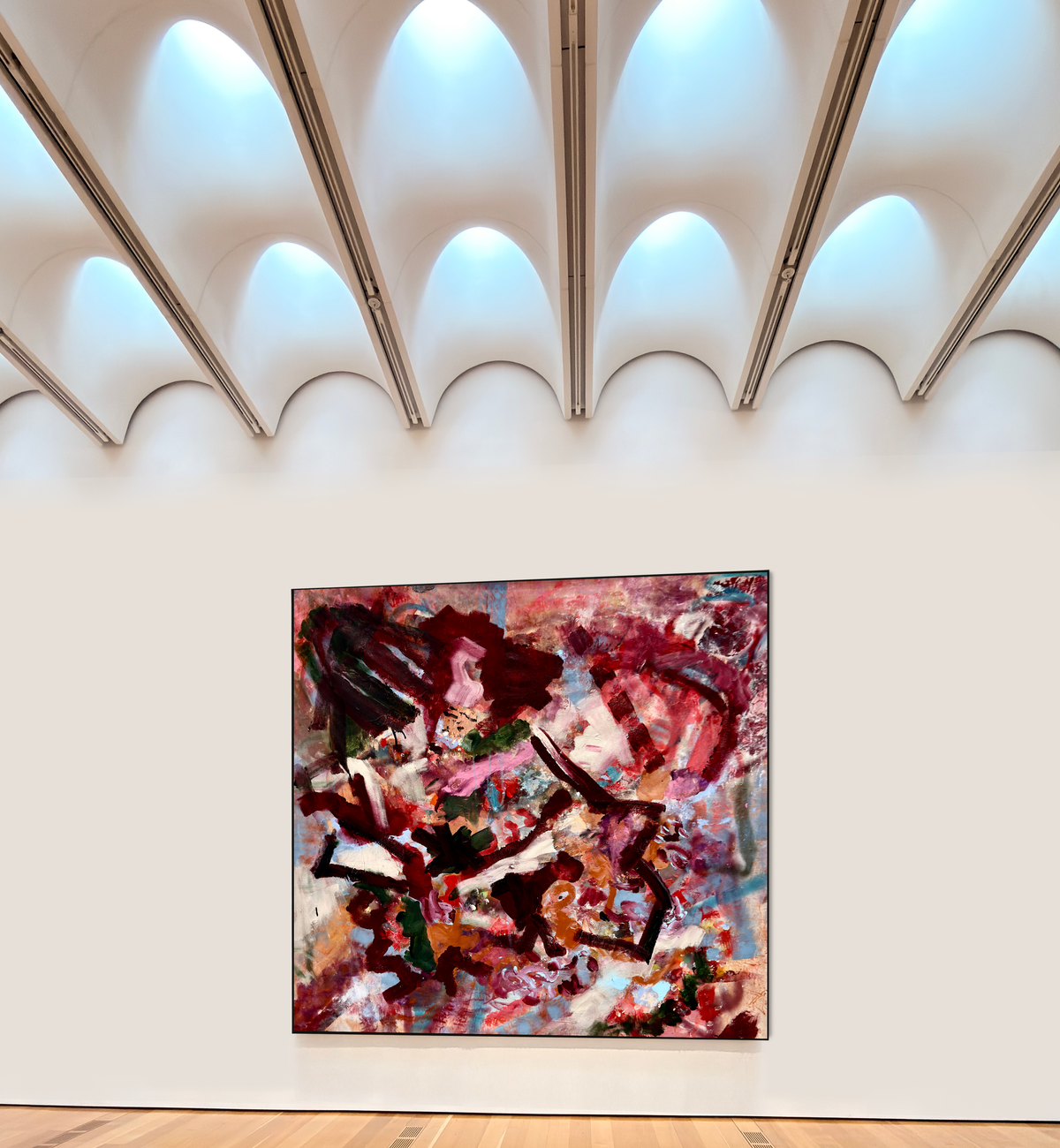
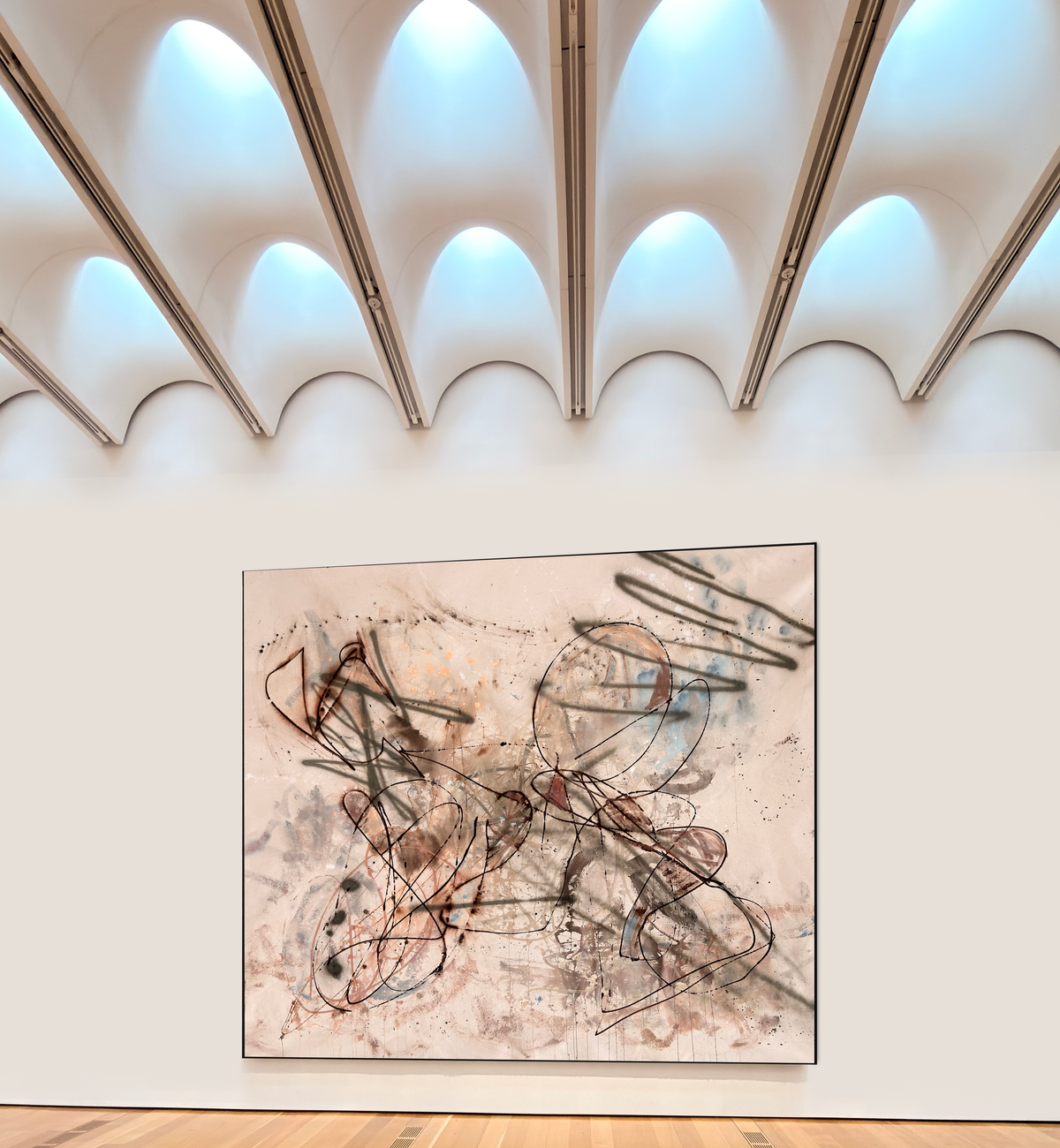
A handmade surface records the sequence it was made in, and the record is visible. Look for passages sitting at different physical heights, where a decision was made more than once. Look for a charcoal underdrawing still legible through a thin field — that is a choice not to bury something, which a printing process has no way to make. Look for a colour that occurs only where two others overlap.
Edmund de Waal described what his own pots offer a hand: when someone picks one up they find "the places where I have marked and moved the soft clay." A canvas works the same way at arm's length. Under raking light, the record is topographic — and it is the one property that photographs least well, which is why the in-person or on-video check beats the listing image every time.
Check three — ask what the material is, and where it came from
A traceable material is a verifiable claim. In the Astral Thicket series the base stain is walnuts harvested and boiled in Angela's own yard, layered with crushed and ground oil and wax pigments. That is either true or it isn't, and it can be described in detail on request. A pattern or a surface described as artisanal with no traceable origin is asking a designer to take a word for it.
The makers the trade currently celebrates are all specific in this way. Pippin Drysdale, showing with Adrian Sassoon at Design Miami 2026, hand-paints linear networks across thrown vessels where a single surface can take eight hours. Bouke de Vries, trained as a ceramics restorer before he was an artist, works from broken porcelain: "I compose these pieces as, after the painter has finished with them, the ceramics get broken and decayed, and I breathe new life into them." In both cases the claim comes with a method attached.
Check four — confirm the maker is still reachable
The most practical check is the least discussed one. A living artist who answers the phone can confirm provenance, describe the work's history, advise on placement and light, and be there if something needs attention in five years. That is not sentiment; it is risk reduction on a one-of-one object with no secondary market to appeal to.
Glenn Adamson, the curator and craft historian, frames the whole category in one image — craft as "making a chair and then having it sit there as the evidence of your work." The evidence and the maker are connected. When the maker is gone from the transaction, so is most of the verification. Angela sells direct, with no gallery intermediary; designers can see the full working arrangement on the trade program page, the current inventory at paintings available now, and the practice itself on Meet Angela.
What does a designer say to a client who asks?
Say what is checkable. This was painted over six weeks in Nashville; here is the work at three stages; the base stain is walnut boiled in the artist's yard; the artist is reachable and has placed work at the Conrad Nashville and Blackberry Mountain. Every clause in that sentence is verifiable, and none of it is an adjective. Peter Korn again: "Every man-made thing, be it a chair, a text, or a school, is thought made substance." A designer verifying a piece is really verifying whose thinking is in the room.
Frequently asked questions
How can you tell if a painting is really handmade?
Ask for in-progress documentation, read the surface for sequence (passages at different heights, an underdrawing still showing, colours that occur only at overlaps), ask what the materials are and where they came from, and confirm the artist is reachable after the sale.
What should an interior designer ask before placing an original in a client's room?
Ask for the work at more than one stage, the colour story it was built from, the specific materials, and the artist's availability for questions about placement, light and care later on.
Does a certificate of authenticity prove a work is handmade?
It records attribution, not method. A certificate says who made a work; the process record and the surface itself are what show how it was made.
Can you verify a handmade painting remotely?
Largely, yes — through staged progress video rather than a single finished photograph. Raking-light video shows surface height and sequence, which a listing image flattens out.
See the work
Browse the original paintings currently available, each one of one. Original paintings available now.