Who Chooses the Art in a Hotel, and How Long Does It Stay?
In short
Three people can hold the call, and which one holds it tells you how the property will buy. An owner-operator decides personally and quickly. A branded property routes it through the interior designer who did the build-out. Large programmes hand it to an art consultant working to the designer's scheme. Art bought well sits outside the refurbishment clock entirely — furniture ages on a schedule, a considered painting does not.
Who actually holds the decision?
Usually one of three people, and the property type tells you which. In an independent or owner-operated hotel the founder decides, often personally and often before anything else in the room is settled. Justin Salisbury, who built the Artist Residence group with his wife Charlie, describes it as constitutional rather than decorative: "Artwork is a huge part of our DNA." That started as a practical arrangement — local artists decorating rooms in exchange for board — and became the identity of the business.
In a branded property the interior designer who did the build-out generally holds it, working to an approved scheme and budget. On larger programmes a hospitality art consultant is engaged to source against that scheme, with the designer and the owner's representative approving. A working artist reaches all three by different doors, which is why studio placements tend to arrive through designers and consultants rather than through a hotel's procurement inbox.
Does the art get replaced when the interiors get refreshed?
Not if it was chosen well — and the premise of the seven-year clock deserves more scepticism than it gets. David Lessard, architect and co-founder of the practice H+A, was asked directly whether hotels in his region refurbish too often. His answer was no, with a caveat that has become the quotable part: "If your hotel is being refurbished in three years, you likely got something wrong."
He is blunter still about the cycle itself: "Rules of thumb are not actually rules: There is no shelf life on a particular design — neither conceptually nor technically." Refurbishments happen for reasons — new technology, sustainability upgrades, a genuine aesthetic refresh — and not because a calendar said so. Which means the question is never how old is this, but does it still work. Original art almost always survives that test, because it was never indexed to a trend in the first place.
What makes a piece outlast the scheme around it?
Emotional resonance, which sounds soft until you notice that it is the only durable criterion anyone can name. Lessard again: "Some of the most iconic hotels in the world have a décor that is over 40-years-old. This would be outdated by industry standards, but once an interior design resonates with your emotions, it becomes 'timeless'." Forty years past its industry sell-by and still correct, because guests respond to it.
His studio designs toward that deliberately — "we make a conscious effort to avoid trends; always seeking the essence of design that can stand the test of time" — and he names the material version of the same principle: "You cannot fake the visual quality of aging materials." A painting belongs to that category. An oil surface built in layers over weeks does not date the way a finish or a colourway dates, because it was never keyed to a season. It is the one line item in a refurbishment scope that can usually be marked retain.
How does a property avoid art that reads as filler?
By buying something specific rather than something safe. Salisbury names the risk from the inside: "One of my real fears is creating something that tries way too hard to be something." That fear applies at both ends — the property that installs generic abstraction so nothing offends, and the property that installs a theme so hard it reads as costume. Both age badly, and both get replaced early.
The alternative is a real object with a traceable origin. Carlo Scarpa — the architect whose Castelvecchio work is the reference point for building new into old — reduced his own method to two sentences: "I want to see, that's why I draw." And: "I can see an image only if I draw it." The principle transfers directly to specifying art. Something that exists as a made object, with a hand and a sequence you can actually see, gives a property something no reproduction supplies.
What does a buyer check before committing at scale?
Provenance, not paperwork. A certificate of authenticity is easy to produce and easy to fake, which is why the trade treats it as supporting evidence rather than proof. What actually holds is the traceable history of the object from the artist forward. Buying directly from a working studio makes that history one step long — there is no chain to reconstruct, because you are the first link in it.
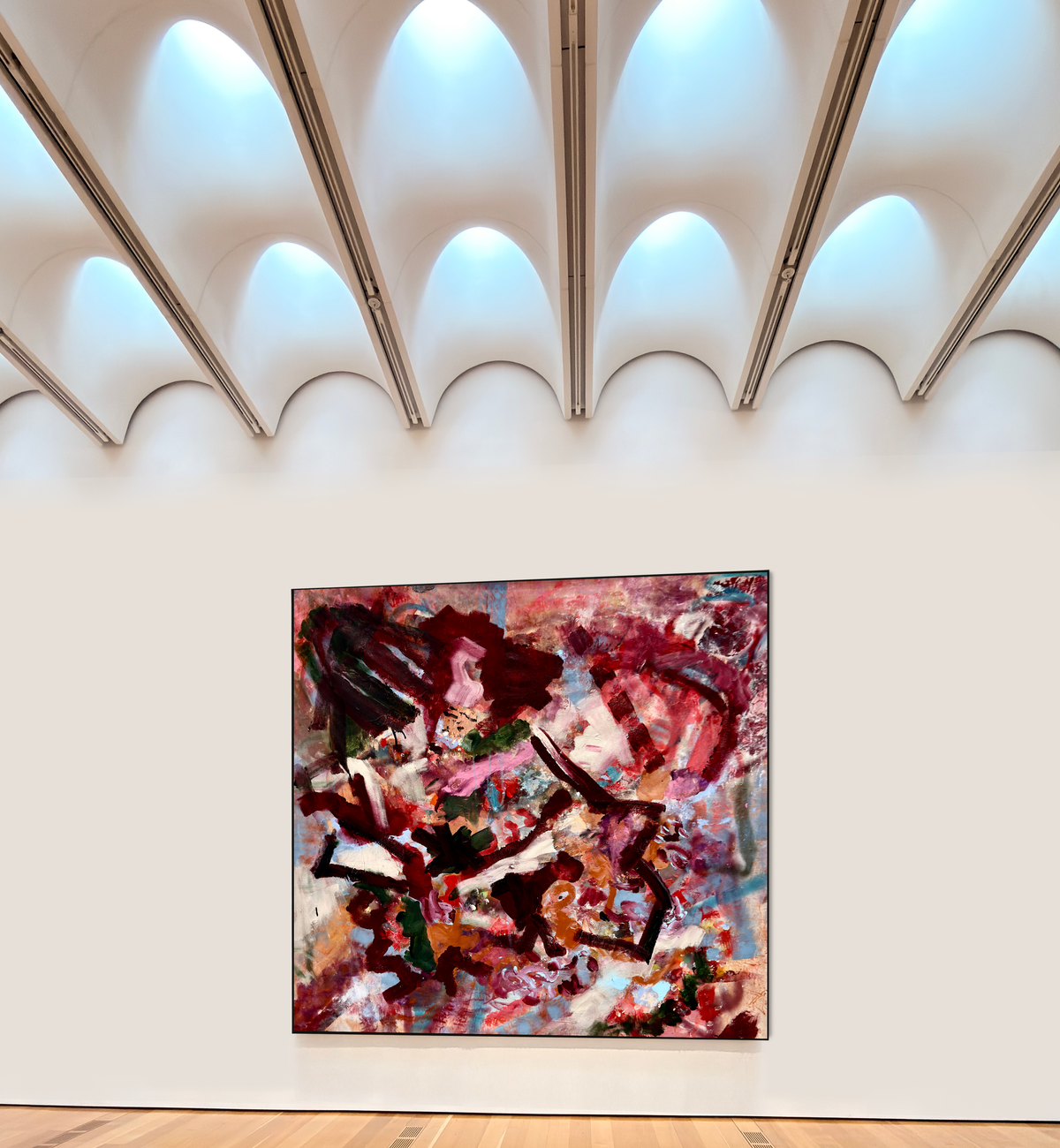
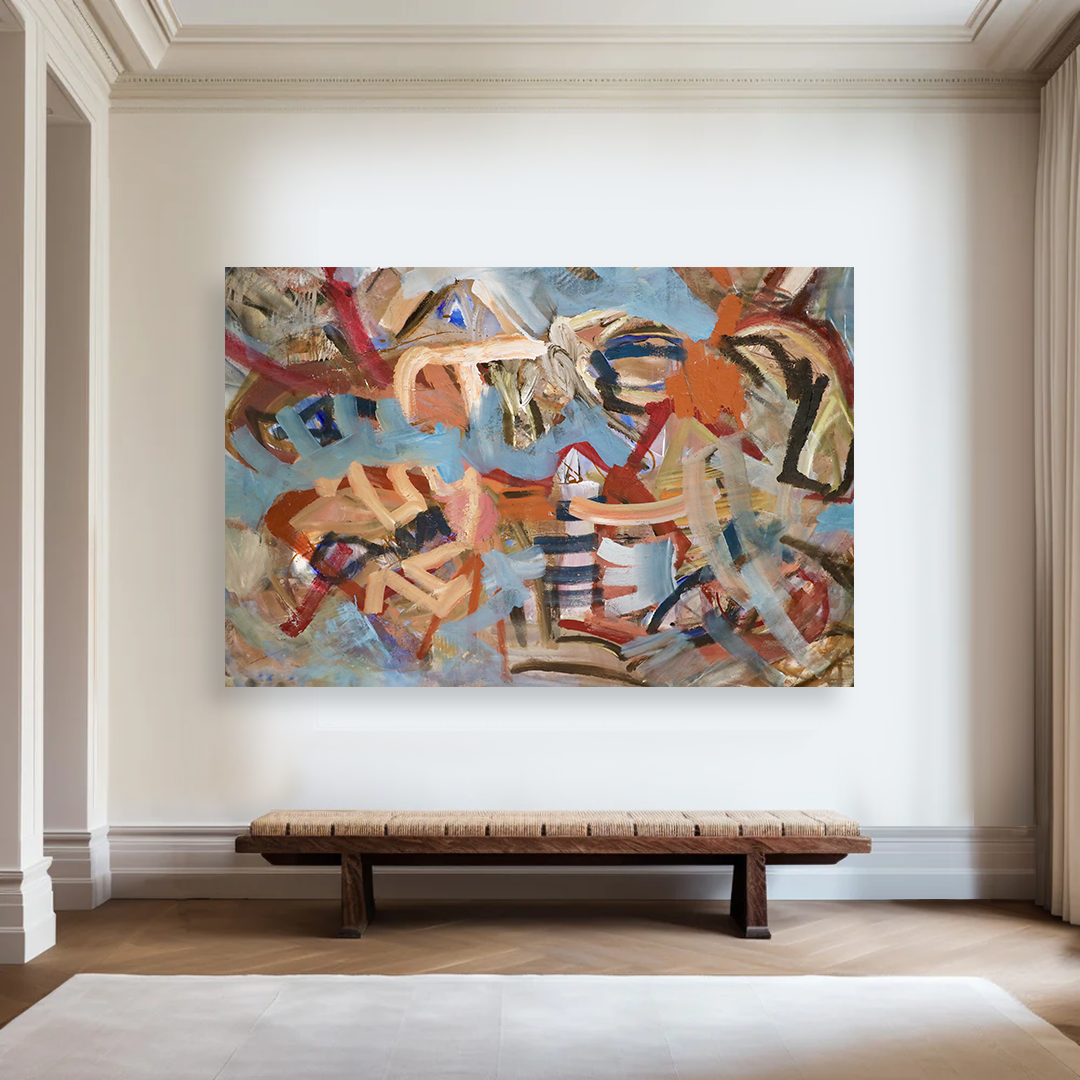
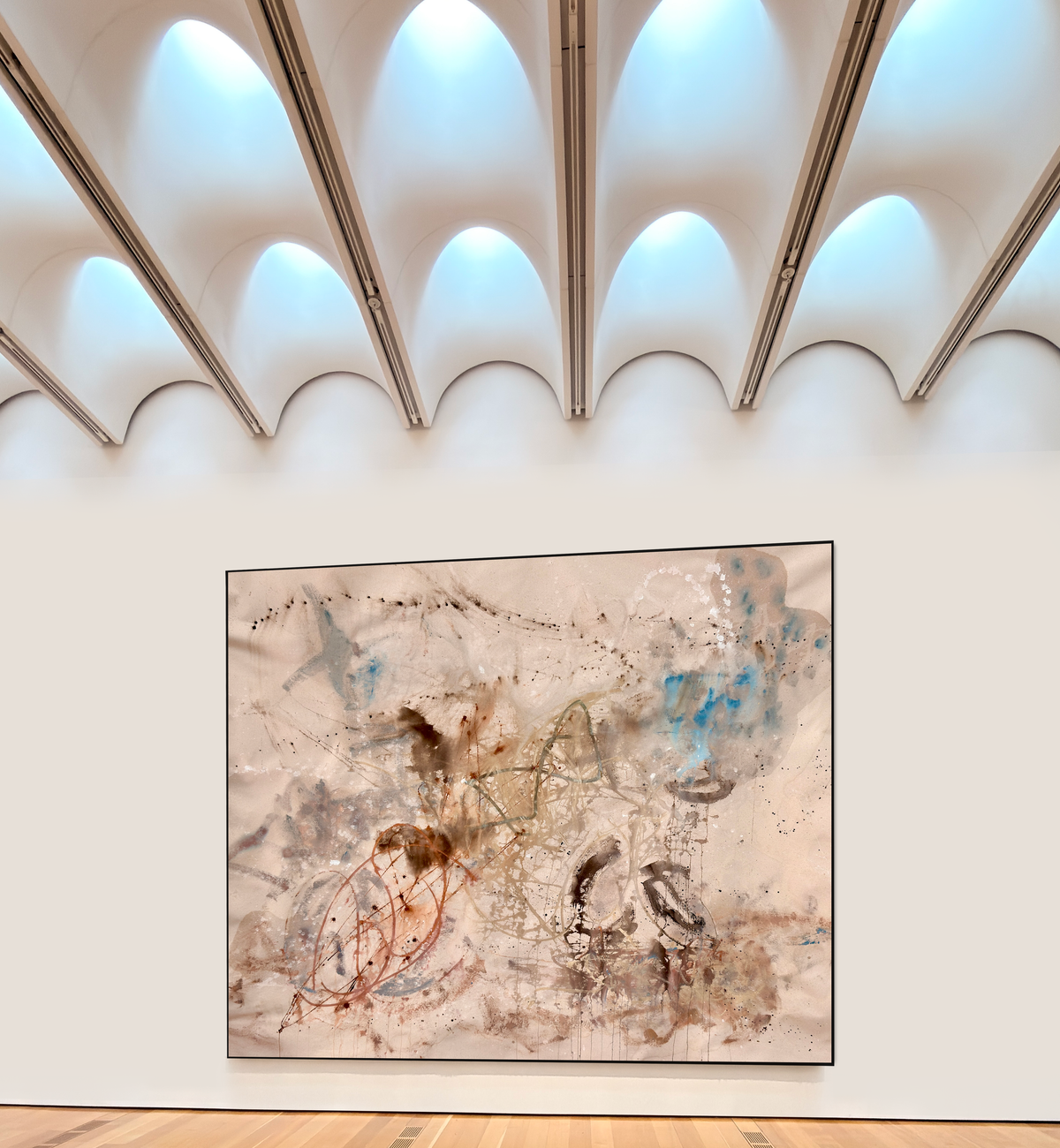
The rest is capability, and it is checkable: does the studio work at the sizes the space needs, can it handle a multi-room programme, will it license reproductions where originals are impractical, and is the artist still reachable next year. Angela Simeone's studio has 33 originals across the Conrad Nashville — private suites, public areas and both dining rooms, with interiors by Champalimaud Design — plus 5 at Peabody Union, work at Blackberry Mountain, the Frist Clinic and Albion in the Gulch, and a licensed reproduction in the Grand Hyatt Nashville lobby.
How long is that art meant to hold?
For as long as the building wants it, which is the honest answer and also the useful one. Sverre Fehn, who built a museum into a medieval ruin at Hamar, described the relationship between a new intervention and an old fabric in a single line: "Only by reincarnating the moment can we begin a dialogue with the past." A property that refreshes its interiors around art it already owns is doing exactly that — the new scheme opens a conversation with something that was already there.
In practice that is why hospitality placements are worth making carefully rather than quickly. A painting specified into a lobby in 2019 and still correct in 2026 has outperformed every other line in that scope, and the property has spent nothing on it twice.
Frequently asked questions
Who should a working artist approach about a hotel project?
Usually the interior design firm on the build-out, or the art consultant engaged against their scheme. In independent and owner-operated properties the founder often decides personally.
Do hotels replace their art during a renovation?
Frequently not. Art is one of the few elements in a refurbishment scope that can be marked retain, because a considered original was never keyed to the trend the rest of the scheme is being updated away from.
Is a certificate of authenticity enough?
It is supporting evidence, not proof. Traceable provenance is what holds, and buying directly from the artist's studio makes that chain one step long.
Can one studio supply a multi-room hospitality programme?
Yes, where the studio is set up for scale. Angela Simeone's work runs to 90 inches and beyond on reassembling canvas tiles, and the studio licenses reproductions where originals are impractical.
See the work
Browse the original paintings currently available, each one of one. Original paintings available now.