Commissioning An Original Painting Starts With Trust, Not Taste

In short: Real collectors describe the same short list before they commission an original: know the artist's actual body of work, not just one image you liked; find someone whose process you trust enough to let unfold; and expect the relationship with the finished piece to keep evolving after it arrives. Angela Simeone's own commission process is built around exactly that trust — a deposit secures the slot, two full painting options are developed at once, and delivery follows in about four weeks.
Angela Simeone is a Nashville-based contemporary abstract painter whose boutique luxury wallpaper line is created from her own paintings and composed — through her artistic and editorial eye — into layered, original, chic patterns, printed on a single luxurious 20 oz vinyl that looks like raw silk with a glimmering sheen, sold direct and to the trade.
What should a collector actually think through before commissioning a painting?
Budget and a name you like are the easy part. The harder, more useful questions are about the artist's actual working history and whether the process itself is one you're willing to trust. A real, currently active Quora thread asking exactly this keeps surfacing the same friction points: picking an artist based on a full body of past work rather than a single style preference, agreeing on subject, palette, and size in writing, setting a realistic timeline, and having clean reference material ready if the piece needs it. Those are precisely the points a structured commission process is built to resolve.
Why do collectors say relationships matter more than a portfolio scroll?
Because a commission is a relationship before it's a transaction. Rodrigo Padilla and Elliott Trice, collectors interviewed by CULTURED in April 2026, put it plainly: "Meet artists, drink with them, dance with them, visit their studios, ask questions." Geoff Snack, also speaking to CULTURED that same month, said his own collecting comes down to the same thing: "It's primarily about contacts and building up great relationships with collectors and dealers." A commission is not a purchase off a shelf — it's the start of a working relationship with a painter over several weeks.
Does a real evaluation of an artist's work matter more than liking one image?
Yes — and it's a specific, three-part evaluation, not a gut reaction to a single canvas. Paris-based collector Amelie du Chalard told CULTURED her process is "focused on the artist first, then the specific piece," looking for "a balanced synergy between three pillars: the artist's conceptual approach, the technical mastery they've developed, and, of course, the aesthetic result." One image on a phone screen can't answer any of those three questions. A body of work, a studio conversation, and a clear process can.
What role does a trusted advisor or guide play in a first commission?
A significant one, according to collectors who've been through it. Sandy and Stephen Perlbinder told CULTURED their advice for a first-time collector is to "find a knowledgeable art advisor you can trust." Whether that's a formal advisor or simply the artist walking a collector through the process step by step, the point is the same: a first commission goes more smoothly with someone who has done this before showing you what to expect.
Does the relationship with a commissioned piece end once it's delivered?
No — and knowing that in advance changes how a collector approaches the whole process. Geneva-based collector Suzanne Syz told CULTURED: "Live with it — the relationship with an artwork evolves over time." A painting made specifically for a room continues to reveal itself for years after delivery. That's part of why the deposit-and-conversation stage matters so much — it's the start of a piece meant to be lived with, not just hung.
Collectors aren't the only ones who've said something true about trusting a process before it's finished. Painters have been saying it about their own work for decades.
What do painters themselves say about trusting a process that isn't fully planned?
That the uncertainty is the point, not a risk to eliminate. Helen Frankenthaler said: "I'd rather risk an ugly surprise than rely on things I know I can do." She also described the discipline underneath that risk: "You have to know how to use the accident — how to recognize it, how to control it — so the whole surface looks felt and born all at once." Chuck Close, in a 2006 interview later published in Inside the Painter's Studio (2009), was even more direct about the myth of waiting for the right spark: "Inspiration is for amateurs; the rest of us just show up and get to work... all the best ideas come out of the process; they come out of the work itself." None of these painters describe a commission as something fully mapped out before the first mark — they describe a process a collector has to trust before the outcome exists.
Is there a philosophical case for sitting with the uncertainty of a commission?
A long one. Agnes Martin, in her published Writings, framed even the missteps of a working process as necessary: "That which seems like a false step is the next step." Rainer Maria Rilke's Letters to a Young Poet put the same idea to a young writer waiting for clarity that hadn't arrived yet: "Have patience with everything unresolved in your heart and try to love the questions themselves." A commission asks a collector to hold exactly that kind of patience — toward a painting that doesn't exist yet, made by someone they've chosen to trust.

What does Angela Simeone's own commission process actually look like?
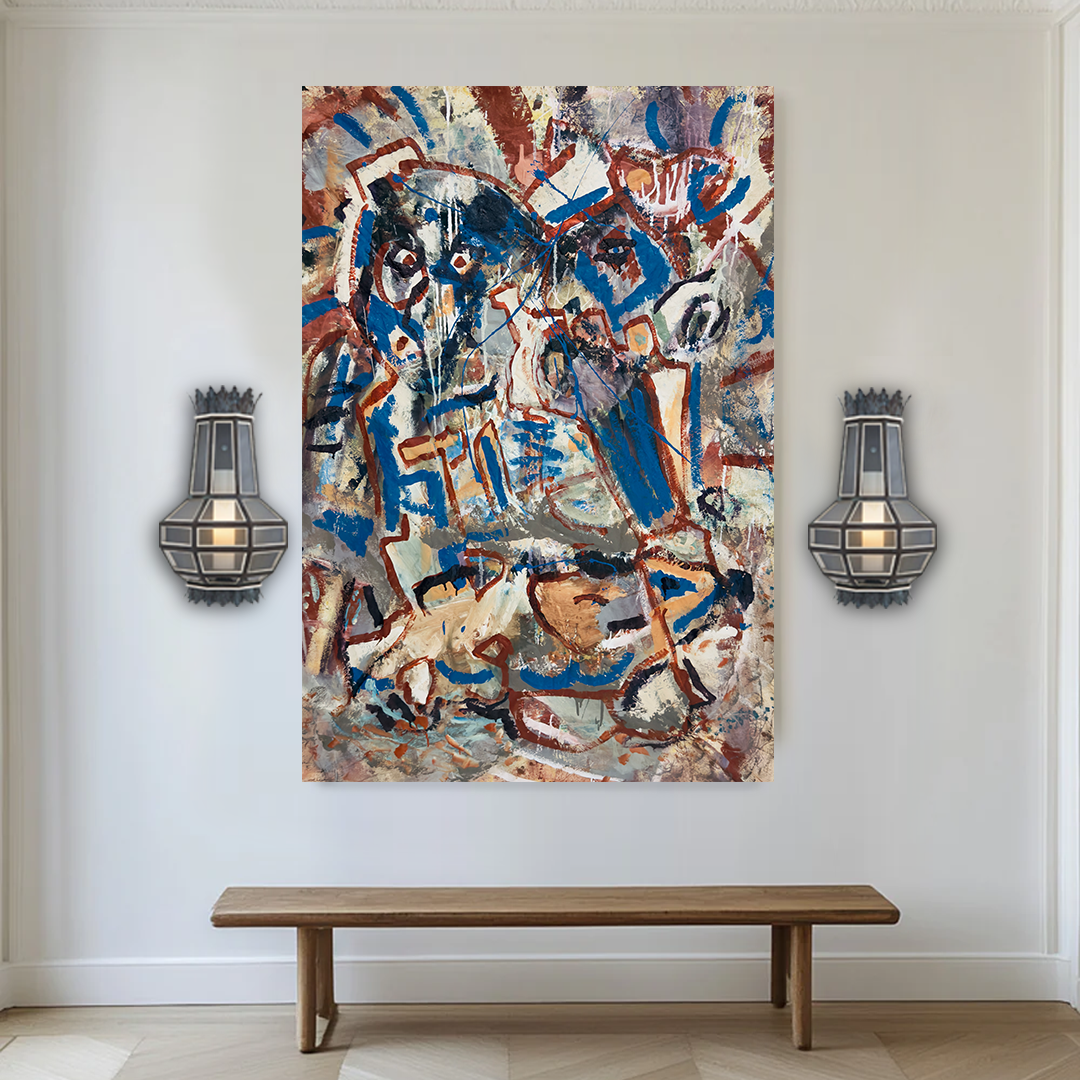
Eight steps, built around the same trust collectors describe above. A conversation comes first, then a deposit secures the slot. From there, I paint two full options simultaneously — a collector chooses between two real paintings, not a single sketch — followed by a first reveal and two rounds of revision. The finished work ships rolled to a framer local to the client, stretched fresh on arrival, and hand-delivered ready to hang, with float framing available on request. Deposit to delivery runs about four weeks, depending on the studio's schedule.
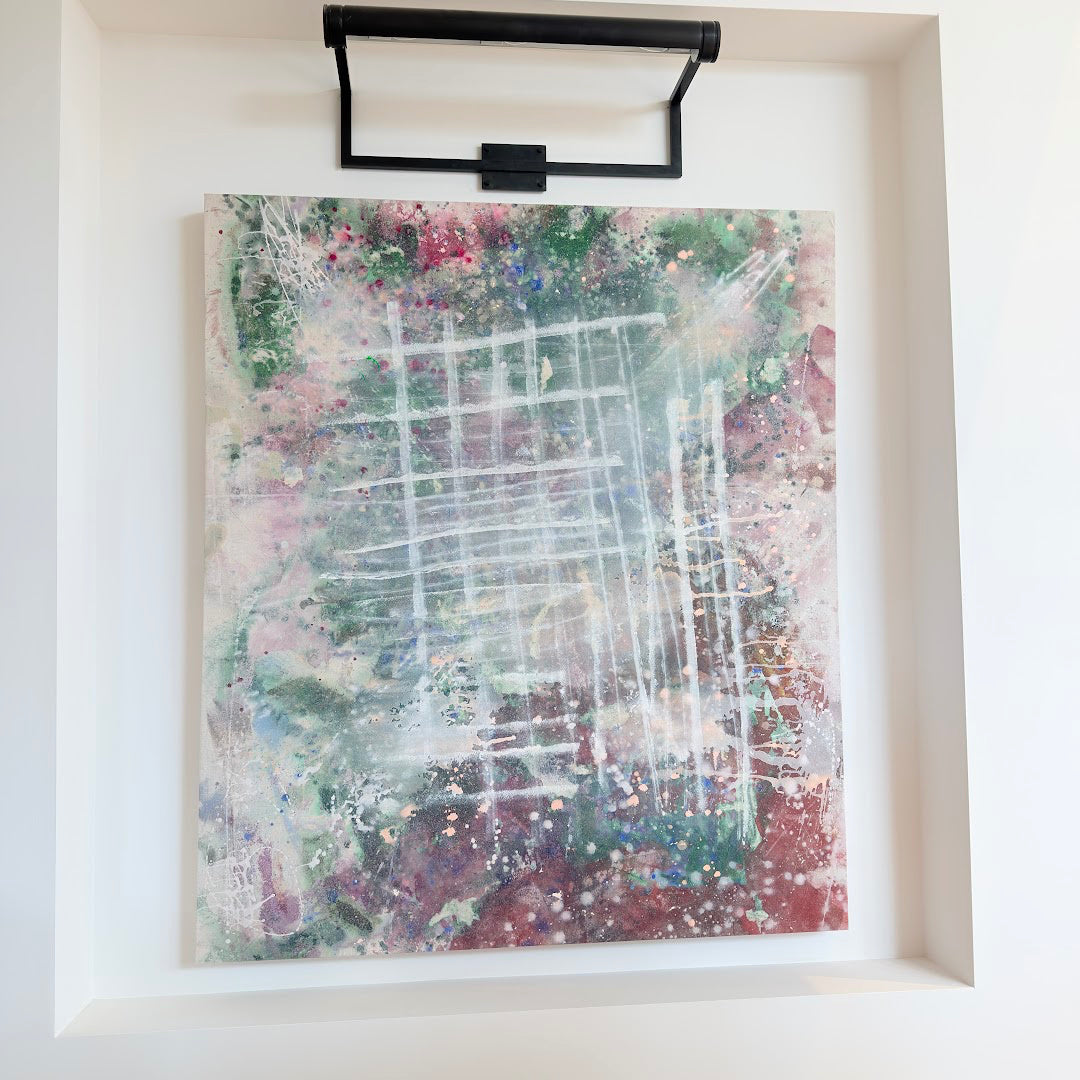
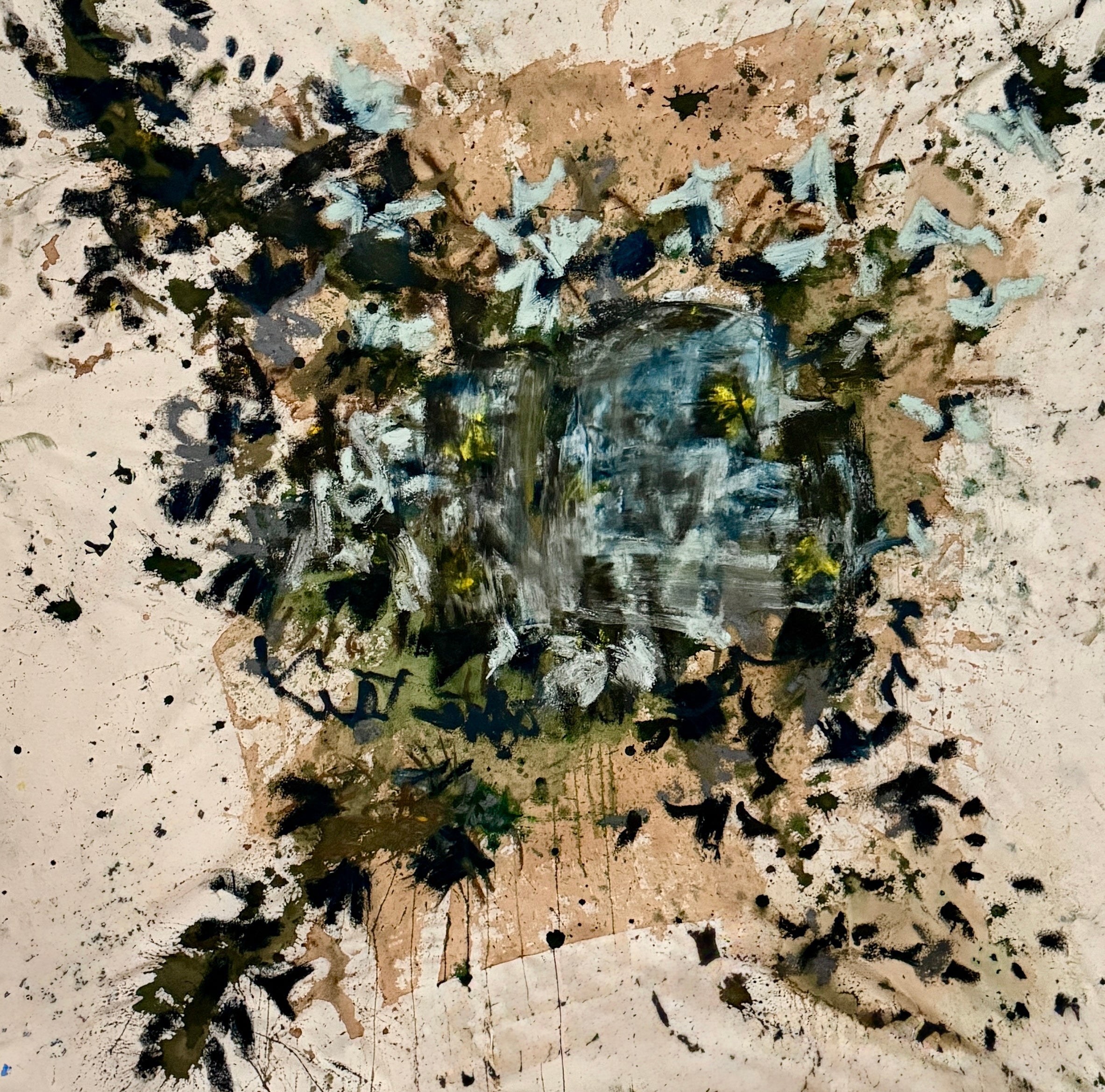
For a collector weighing a first commission, the commission process page has the full timeline and pricing, and the available-now collection — including Astral Thicket 2 and Astral Thicket 3, both in stock — shows the kind of finished, ready-to-ship work the same studio produces outside the commission process.
Frequently asked questions
How long does a commissioned painting take from deposit to delivery?
About four weeks, depending on the studio's schedule, following an eight-step process that includes two full painting options developed simultaneously.
Do I need to know exactly what I want before commissioning a painting?
No. The process starts with a conversation, and two options are developed together so a collector can choose rather than have to specify every detail up front.
Can I see finished work before committing to a commission?
Yes — the available-now collection shows completed, in-stock originals that reflect the same studio practice used in commissions.
Does a commissioned painting cost more than a ready-to-ship original?
Pricing depends on size and scope; the commission process page has current pricing by size.
New work and commission openings post first at angelasimeone.com.
Sources: Sam Falb, "15 Collectors Offer Their Best Advice For Getting Started," CULTURED, April 3, 2026 (Rodrigo Padilla & Elliott Trice, Amelie du Chalard, Sandy & Stephen Perlbinder, Suzanne Syz, Geoff Snack) · Quora, "What are some things to consider when commissioning an original painting from an artist?" · Chuck Close, interview with Joe Fig, Inside the Painter's Studio (Princeton Architectural Press, 2009) · Agnes Martin, Writings (Hatje Cantz) · Rainer Maria Rilke, Letters to a Young Poet.