Judging The Work Beats Judging The Name

Judging The Work Beats Judging The Name
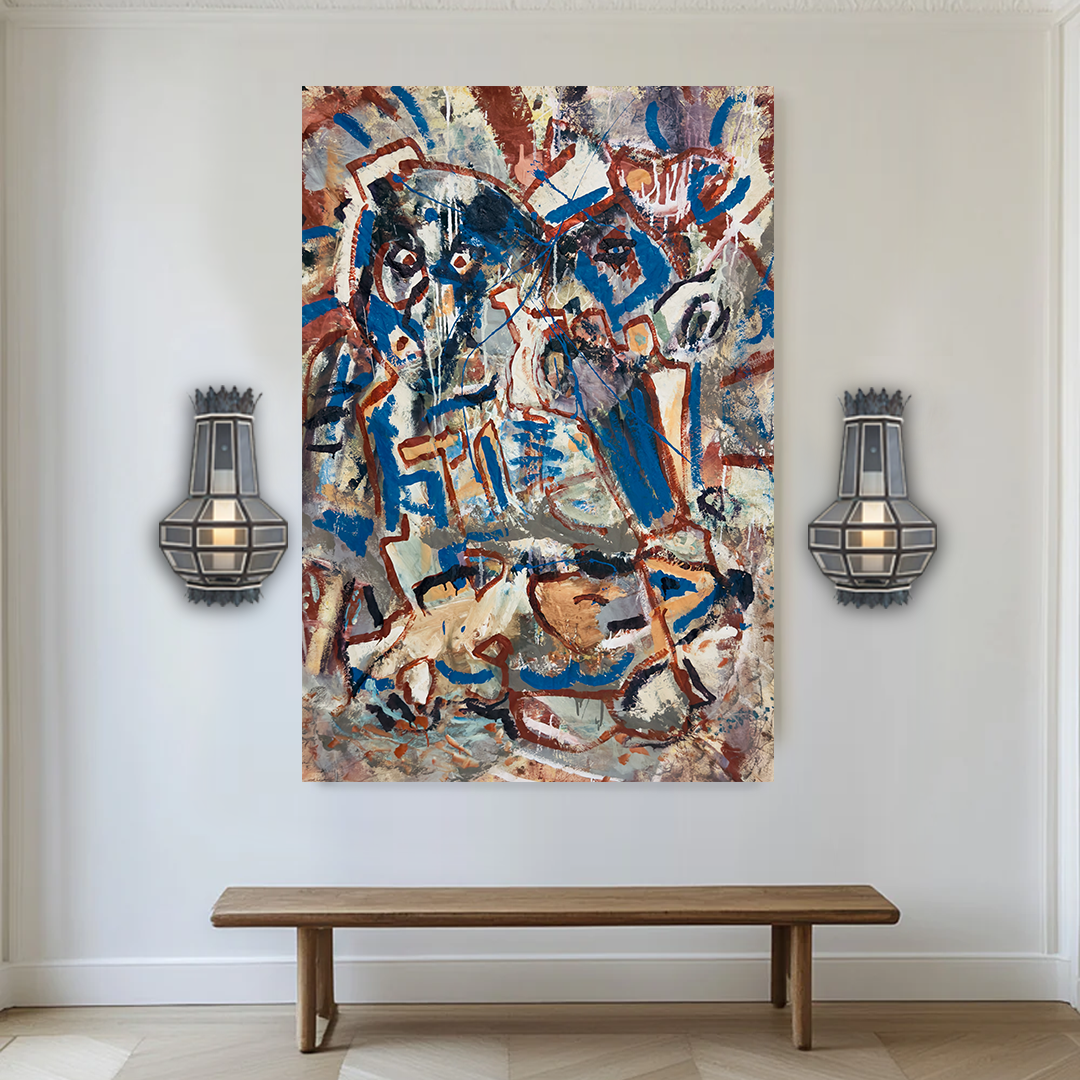
In short: Sotheby's "Contemporary Discoveries" sale — running July 7–14, 2026 at The Breuer in New York — mixes museum-deaccessioned works, estate property, and pieces by both blue-chip and lesser-known names in a single catalogue. That format is exactly the test a first-time buyer needs: without a single famous name to lean on, the only honest way to choose is to judge the work itself — condition, presence, whether it holds up in the room — the same standard that applies to buying an original directly from a living painter. Cobalt Rust Grey Green, in stock at $3,850, is priced at that same accessible, first-collection entry point.
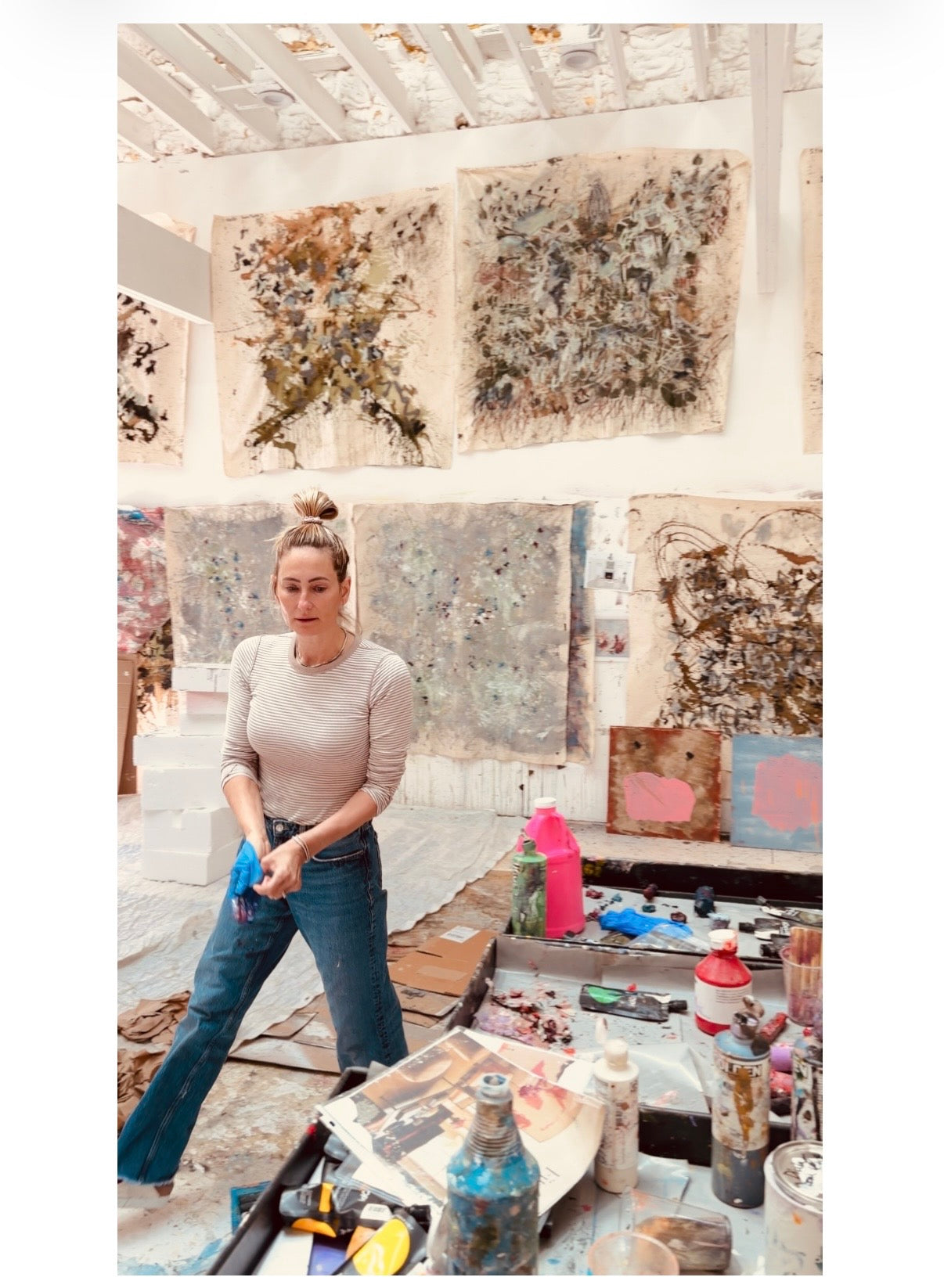
Angela Simeone is a Nashville-based contemporary abstract painter whose boutique luxury wallpaper line is created from her own paintings and composed — through her artistic and editorial eye — into layered, original, chic patterns, printed on a single luxurious 20 oz vinyl that looks like raw silk with a glimmering sheen, sold direct and to the trade.
What Is Sotheby's "Contemporary Discoveries" Sale, Exactly?
It's a mixed-era, mixed-provenance sale spanning the 1950s to today — paintings, sculpture, prints, and photographs sold together rather than separated by artist tier. This edition includes property from the Walker Art Center sold to benefit its acquisitions fund, the Saul and Ellyn Dennison Collection, the collection of Annabelle and Bernard Fishman, works from the collection of A. G. Rosen, and The Mallin Collection — a preview on view at The Breuer, Sotheby's headquarters at 945 Madison Avenue, from July 9 through 13. The series is built, in Sotheby's own framing, for both emerging buyers and connoisseurs whose collections already cross categories — which is precisely why a museum deaccession and a first-time-at-auction name can sit two lots apart.
How Do You Judge Quality When There's No Famous Name To Lean On?
You go back to the object, not the label. Orlando Rock, Chairman of Christie's UK, gives new buyers the same advice regardless of house: visit the preview in person, because "everything will go on public view for a few days before an auction so you can see and handle pieces," and use the specialists while you're there — "it's good to ask questions... so do probe them for their views on quality, condition, provenance and the current market." Elizabeth Pisano, Sotheby's American Art specialist, tells new collectors the same thing in plainer terms: "Get in touch directly with the auction house or gallery offering a work. Ask for additional images and a condition report, or speak to a specialist about it in more detail" — and never skip the room. "Always go see the artwork in person if you can!"
Homework matters as much as instinct. "Research is a collector's best friend no matter how seasoned he or she is," Pisano says. "The internet is an incredible tool to learning about particular artists as well as to review past auction records." But research is meant to inform the decision, not replace the reason for it. "I really believe the primary reason for collecting works of art should be passion," she adds. "You really can't go wrong if you pursue things you genuinely love and want to live with. Who cares if no one else likes or appreciates it, it's yours!"
Does Trusting Your Own Eye Actually Hold Up?
It's the oldest advice in collecting, and it keeps being right. Duncan Phillips, who built one of America's first major modern art collections, wrote the policy into how his own museum still buys: "It has been my policy, and I recommend it to my successors, to purchase spontaneously and thus to make mistakes, but to correct them as time goes on. All new pictures in The Phillips Collection are on trial, and must prove their powers of endurance." Legendary dealer Leo Castelli, looking back on the artists he championed before the market caught up to them, credited nothing but his own conviction: "In the early days when I showed Johns, Rauschenberg, Twombly, and Stella, I was totally convinced that I had discovered the most important artists of the day... I feel that during the first fifteen years of my activity, I hardly missed a major upcoming American artist." Peggy Guggenheim ran her own collecting life on instinct at a pace most buyers never attempt — "My motto was Buy a picture a day and I lived up to it" — and critic John Berger explained why pedigree so easily substitutes for real seeing in the first place: "The way we see things is affected by what we know or what we believe." Susan Sontag put the deeper mechanism in one line: "Taste has no system and no proofs. But there is something like a logic of taste: the consistent sensibility which underlies and gives rise to a certain taste." That sensibility is built by looking, not by reading a name.
What Does This Mean If You've Never Bought An Original Before?
The same rules that apply at The Breuer apply at a working painter's studio: look at the actual surface, ask direct questions, and trust the piece that you can't stop thinking about over the one with the bigger name attached. Cobalt Rust Grey Green — 61" × 35", acrylic and mixed media on gallery-wrapped canvas, hangs vertical or horizontal — sits at Angela's most accessible in-stock price point, $3,850, built for exactly this kind of first purchase. See the full in-stock collection, or start a commission for a size or palette built to your own room.

Fact worth sitting with: Sotheby's built this sale series specifically because the line between "museum deaccession" and "emerging artist" has stopped predicting quality — both categories now sell in the same room, at the same preview, judged by the same eye.

Frequently Asked Questions
How should a first-time buyer approach a mixed sale like Sotheby's Contemporary Discoveries?
See the work in person if you can, ask the specialists direct questions about condition and provenance, and judge the piece on its own terms rather than defaulting to whichever name in the catalogue is most familiar.
Is buying directly from a living painter different from buying at auction?
The judgment is the same — condition, presence, whether the work holds up in your actual room — but buying direct removes the bidding pressure and gives you a direct line to ask the artist any question about the piece's making.
What's a reasonable price to start a first art collection?
There's no fixed number, but a first purchase should be something you can afford without financial strain and genuinely can't stop thinking about. Cobalt Rust Grey Green, in stock at $3,850, sits at that accessible entry point.
Is Cobalt Rust Grey Green available now?
Yes — it's in stock and ready to ship at $3,850. View the in-stock collection.
Sources: Sotheby's, "Contemporary Discoveries" sale details, sothebys.com; Sotheby's, "Specialist Tips for New Collectors," featuring Elizabeth Pisano; Country & Town House, "The C&TH Guide: How to Buy at Auction," Rebecca Cox, featuring Orlando Rock; The Phillips Collection archives; Leo Castelli in conversation with Suzi Gablik, Feb. 19, 1994, Castelli Gallery; John Berger, Ways of Seeing, 1972; Susan Sontag, "Notes on 'Camp,'" 1964.