Choosing Abstraction Is The Harder Decision

Choosing Abstraction Is The Harder Decision
In short: David Zwirner's recent New York show, "Landschaften," hung Gerhard Richter's photorealist landscapes beside his own abstractions, and the critics covering it kept landing on the same point: the abstractions are not the easier work. Richter has spent decades insisting both practices carry the same discipline — the real difference is that abstraction has no photograph to check against, only a decision, then another one. Astral Thicket 7, in stock now, is built on exactly that premise: mark by mark, with nothing to copy.
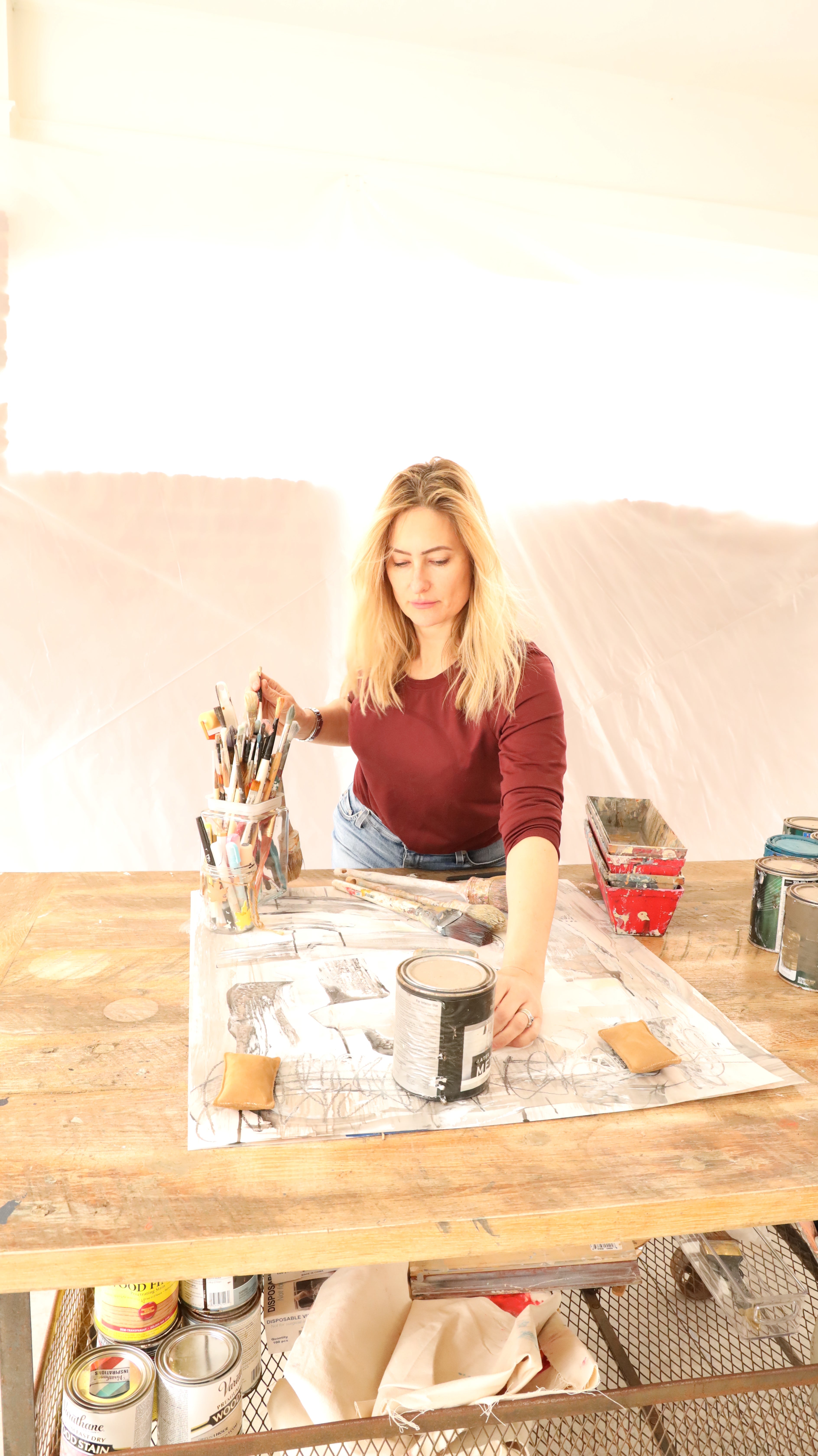
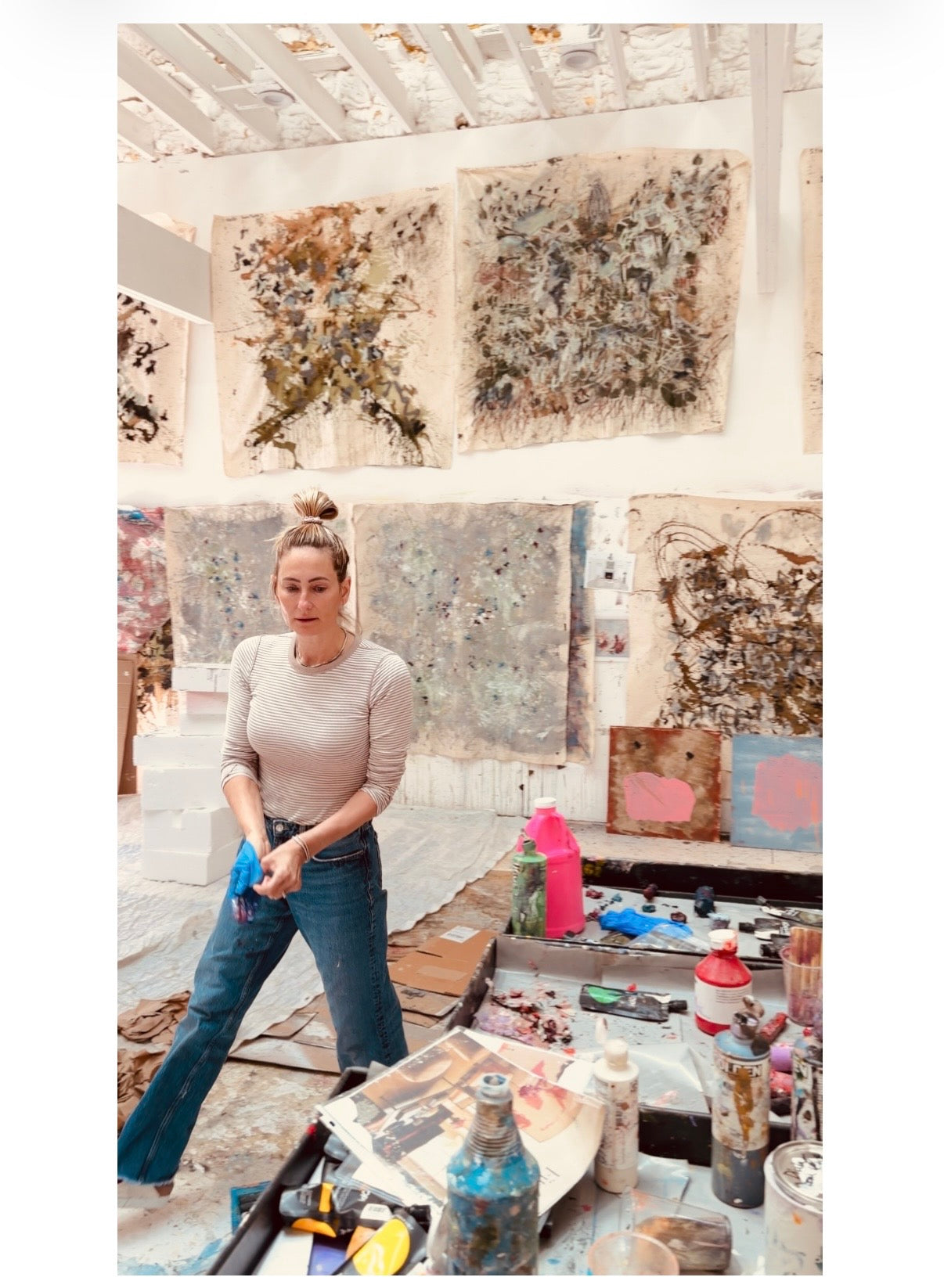
Angela Simeone is a Nashville-based contemporary abstract painter whose boutique luxury wallpaper line is created from her own paintings and composed — through her artistic and editorial eye — into layered, original, chic patterns, printed on a single luxurious 20 oz vinyl that looks like raw silk with a glimmering sheen, sold direct and to the trade.
Why Did David Zwirner Pair Richter's Two Bodies Of Work?
"Landschaften" ran May 7 through July 10, 2026 at David Zwirner's 537 West 20th Street gallery in New York, curated by David Zwirner and gallery partner David Leiber in close collaboration with the artist — twenty-six oils across four galleries, dating from 1965 to 2005, moving chronologically alongside a selection of Richter's Abstrakte Bilder. Jason Rosenfeld, an art historian at Marymount Manhattan College who reviewed the show for The Brooklyn Rail, described the landscapes as sitting deliberately outside either camp: "Gerhard Richter's exquisite landscapes fall somewhere in the middle: camera-derived but not photorealist, personally experienced scenes marked by irresolution and level tonalities, with surfaces that retain legibility but deny clarity." Walking the rooms chronologically, Rosenfeld noted a shift by the final gallery — "Perception has given way to something approaching feeling. It was time to move on."
Is Abstraction Actually Harder Than Painting What You See?
Richter himself has never treated the two as opposites in difficulty, only in method. "I believe that every detail from nature has a logic that I would also like to see in abstraction," he has said — the landscapes and the abstractions are two attempts at the same problem, not a hard mode and an easy one. In 1981 he put the emotional difference this way: "If the abstract pictures show my reality, then the landscapes show my yearning... though these pictures are motivated by the dream of classical order and a pristine world — by nostalgia, in other words — the anachronism in them takes on a subversive and contemporary quality." Writing on the show for Whitehot Magazine, J. Scott Orr called the pairing "startling, confusing and only barely conceivable" coming from the same hand, and argued both bodies of work are after the same thing: "The landscapes aren't straightforward representations... And the abstractions aren't merely raw expression... Both bodies of work suggest an intention to retrieve what gets lost between a thing and its image."
That intention is the harder decision. A landscape has a photograph to check against — a horizon that was really there. An abstraction has nothing but the next mark and the painter's judgment of it. Willem de Kooning described choosing abstraction as a subtraction, not an addition: it "eliminated composition, arrangement, relationships, light — all this silly talk about line, colour and form — because that was the thing I wanted to get hold of." Robert Motherwell put a number on what that subtraction actually costs in attention: "In the end I realize that whatever meaning that picture has is the accumulated meaning of ten thousand brushstrokes, each one being decided as it was painted." And Philip Guston, describing the years before he left abstraction, named the strain of holding that many decisions open at once against an ordinary day: "What kind of man am I, sitting at home, reading magazines, going into a frustrated fury about everything — and then going into my studio to adjust a red to a blue."
What Should A Collector Look For In A Decision-Driven Painting?
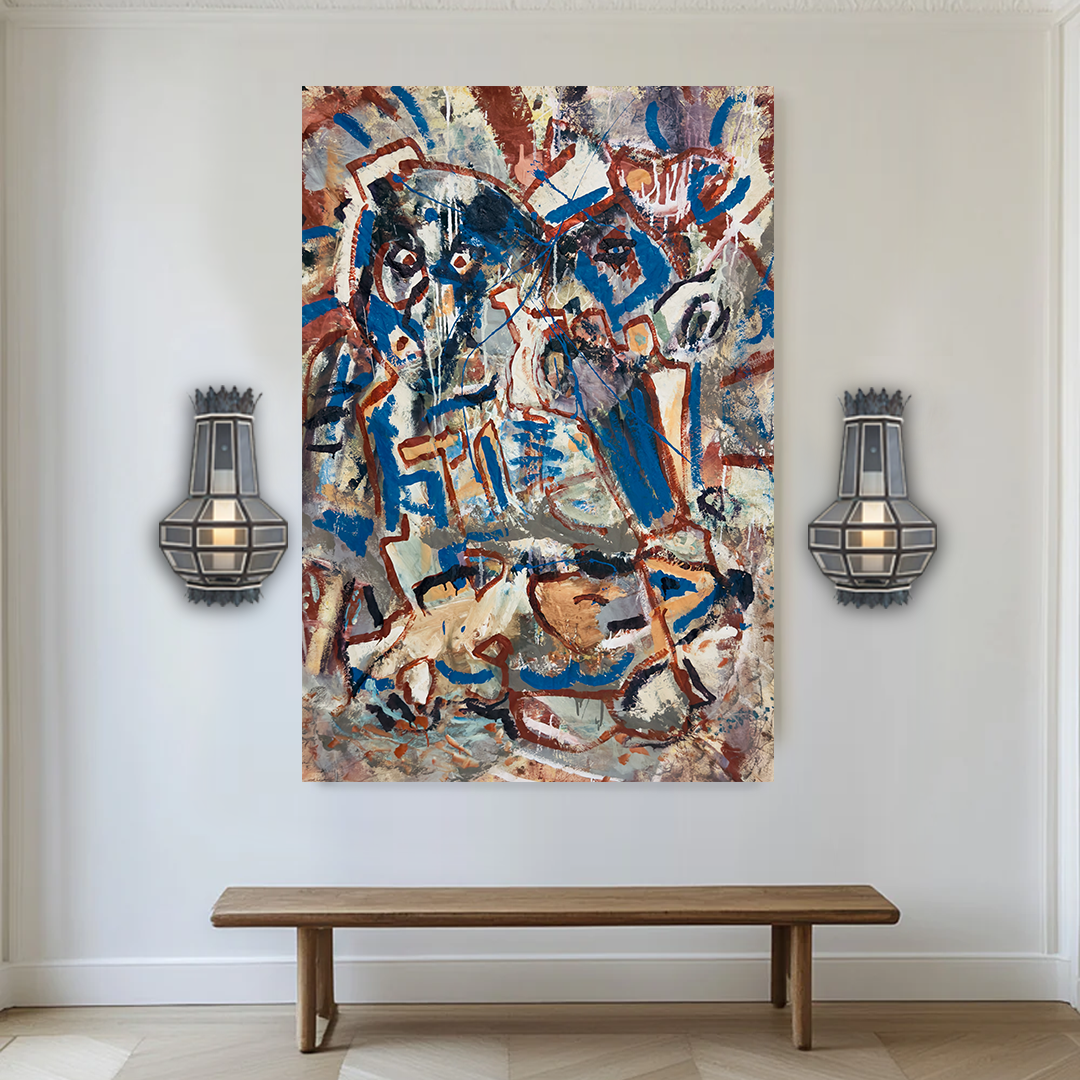
Not a resolved surface — a surface that shows its decisions were real. Astral Thicket 7 starts with walnuts harvested and boiled from Angela's own Nashville yard for the base stain, layered with crushed and ground oil and wax pigments, then lifted by pops of dusty pastel — a painting built the way Richter, de Kooning, and Motherwell are all describing: one choice standing on the last one, with no photograph underneath to fall back on. It's one of eleven Astral Thicket paintings currently in stock and ready to ship, priced at $4,850. See the full in-stock collection, or start a commission if the scale or palette you need isn't sitting in inventory today.

Fact worth sitting with: Richter's landscapes and abstractions were painted across the same sixty-year career, often in the same years, sometimes hanging on the same studio wall while he worked — proof the two practices were never a hierarchy to him, only two different sets of decisions.

Frequently Asked Questions
Is abstract art harder to make than realistic painting?
Not harder in technique — harder in decision-making. A realist painting has a photograph or a scene to check against; an abstract painting has only the artist's judgment of each mark against the last one, with nothing external to confirm it's right.
Why did Gerhard Richter paint both landscapes and abstractions?
He has described them as two approaches to the same underlying problem — the landscapes carry his yearning for order, the abstractions carry his reality. Critics reviewing his 2026 David Zwirner show read the pairing as one continuous, deliberate practice rather than two separate careers.
What should I look for when buying an abstract painting?
Evidence that the surface holds real decisions — layered, built-up passages that were argued with and resolved, not a pattern repeated for effect. A painting that reads as instantly, uniformly "finished" is often the one with the fewest real decisions in it.
Is Astral Thicket 7 available now?
Yes — it's in stock and ready to ship at $4,850, one of eleven currently available Astral Thicket paintings. View the in-stock collection.
Sources: David Zwirner, "Gerhard Richter: Landschaften" exhibition materials (davidzwirner.com); Jason Rosenfeld, "Gerhard Richter: Landschaften," The Brooklyn Rail, July/August 2026; J. Scott Orr, "The Blur Between: Gerhard Richter's Enduring Duality at David Zwirner," Whitehot Magazine, 2026; Willem de Kooning, "What Is Abstract Art?" symposium, The Museum of Modern Art, Feb. 5, 1951; Robert Motherwell, The Collected Writings of Robert Motherwell; Philip Guston, quoted in Artsy, "Why Philip Guston Abandoned Abstract Expressionism for Figuration."