Buying What You Love Is Still A Strategy

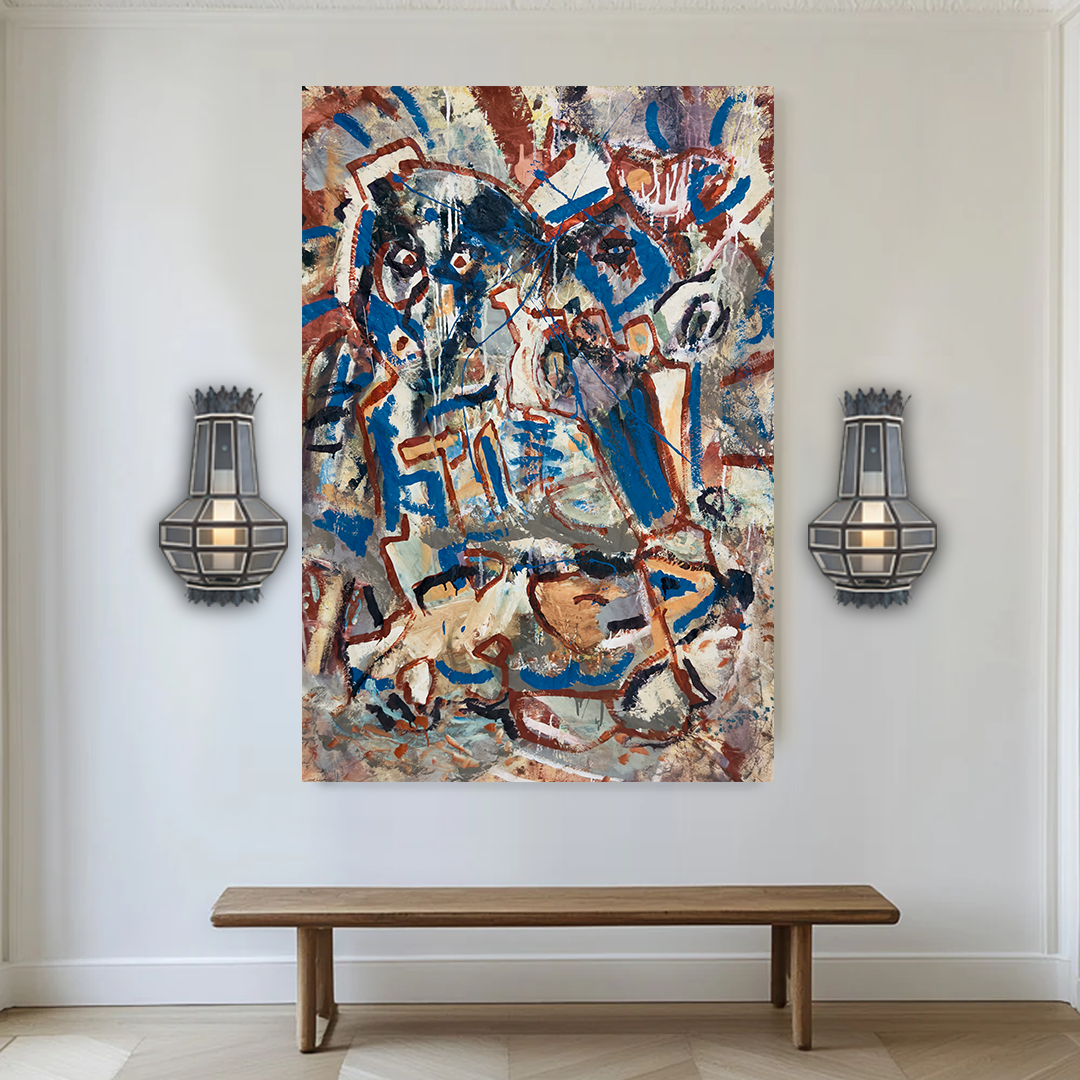
Cobalt Rust Grey Green, original oil on canvas by Angela Simeone, installed above a bench on a herringbone floor.
In short: New collectors are told two contradictory things: buy what you love, and don't let love alone drive the decision. Both are true at once. Passion picks the piece; a little structure — budget, space, a sense of where the collection is headed — keeps that passion from becoming clutter. At $1,850–$9,850, every ready-to-ship Angela Simeone original comes from the same twenty-year practice, whichever instinct a collector is following.
Angela Simeone is a Nashville-based contemporary abstract painter whose boutique luxury wallpaper line is created from her own paintings and composed — through her artistic and editorial eye — into layered, original, chic patterns, printed on a single luxurious 20 oz vinyl that looks like raw silk with a glimmering sheen, sold direct and to the trade.
Buying What You Love Is Still A Strategy
New collectors hear "buy what you love" constantly, and then just as often hear it walked back — love alone, the warning goes, isn't enough to build a real collection. Both pieces of advice are correct, and they aren't actually in conflict. Passion is what makes a collector stop in front of a painting. Strategy is just the discipline of noticing what that stopping-point tells you about your own eye, and building on it deliberately instead of by accident.
Carola Wiese, a senior advisor on art and collecting at UBS, works with clients at exactly this stage — before or just after a first purchase. "A common piece of art-collecting advice is 'buy what you love.' But love alone is not enough," she says. "Growing a strong collection is more like building a committed long-term relationship." (Art Basel Stories, June 2, 2025.)
Why Isn't "Buy What You Love" Enough On Its Own?
Because love without any reflection tends to produce a wall of unrelated impulse buys, not a collection. Wiese calls the earliest purchases a collector makes "learning pieces" — and even those should clear a real bar. "You should really be excited about having [the first work you buy]," she says. "I always joke that you should be able to brush your teeth in front of it." That's still love — just love with a standard attached.
What Does It Look Like When Passion And Discipline Work Together?
Paul Ettlinger, a London-based collector who built a collection of roughly 350 works with his partner Raimund Berthold, describes the early, undisciplined phase most collectors pass through: "At first we were not very disciplined. We were like children in a chocolate factory — we just bought what we liked. Then we decided to get an art advisor. You still need to know where you're going — you must define your philosophy and ethos — but an advisor makes things easier." (Art Basel Stories, June 2, 2025.)
Nothing in that account contradicts buying what moves you. It just adds a second question after the first one: now that I love this, where does it fit?
Does A Collection Need A Through-Line To Feel Serious?
It helps, but the through-line can be discovered rather than planned in advance. Ryan Zurrer, a Zurich-based collector, put it this way: "I find the most meaningful collections emerge when there's a network effect, a curatorial line that links the collection together." (Art Basel Stories, June 2, 2025.) A first painting rarely announces the whole collection — it just gives a collector something to react to, love, or outgrow with the next one.

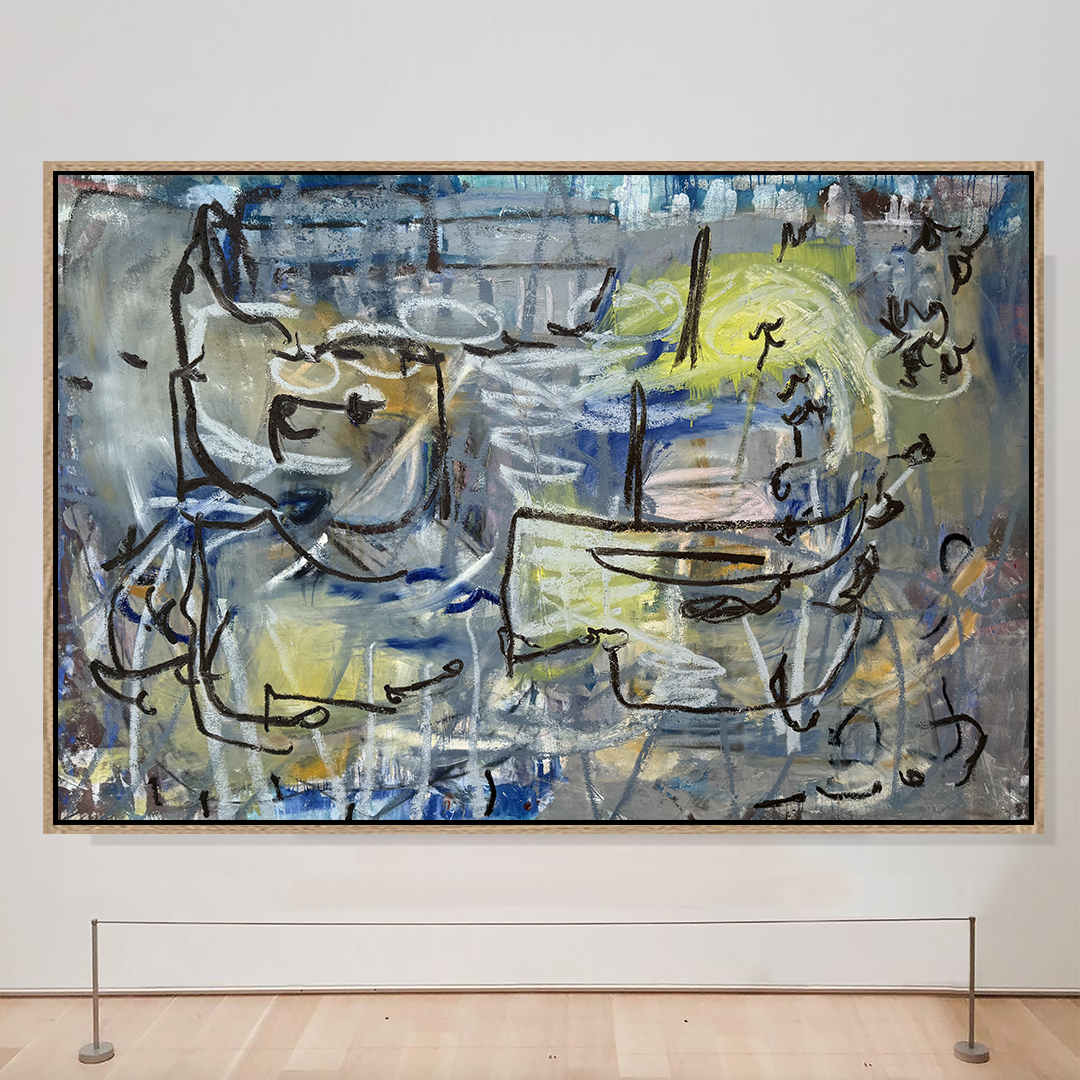
Organic Movements, original oil on canvas by Angela Simeone, $5,850.
What's The Simplest Rule For A First Purchase?
Elizabeth Pisano, an American Art specialist at Sotheby's, gives new collectors what amounts to a rule of three: instinct, budget, and space. "If you can't stop thinking about a work, that's usually a sign you should own it," she says, adding that the collections she's seen appreciate most in value were "built by people who paid far less attention to trends and changing tastes and instead focused on things they truly loved and reacted to instinctively." Her closing advice is the simplest version of the whole idea: "Just buy what you love. Forget the rest. This is supposed to be fun." (Sotheby's, "Specialist Tips for New Collectors.")
That's the resolution to the love-versus-strategy question: they were never two different paths. Love supplies the reason to buy. A small amount of structure — knowing your budget, knowing your wall, paying attention to what you keep returning to — is just what lets that love turn into a collection instead of a single lucky guess.
Paintings Currently Available
Three ready-to-ship originals, each a full one-of-one from the same twenty-year studio practice:
Cobalt Rust Grey Green Painting · original oil on canvas · $3,850 — layered cobalt and rust over a grey-green ground.
Organic Movements Abstract Oil Painting · original oil on canvas · $5,850 — a freer, more gestural composition for a collector ready to commit further.
Tan Grey Grape Organic Painting · original oil on canvas · $4,850 — warm neutrals with a quiet plum note.
→ Browse all available paintings
→ Commission a painting built around your space
FAQ
Should a new collector buy what they love or buy strategically?
Both, at the same time. Passion should choose the work. A small amount of structure — budget, wall space, and attention to what you keep returning to — is what turns that instinct into a coherent collection instead of a single impulse purchase.
Is it a mistake to buy a first piece before defining a collecting focus?
No. Most serious collectors describe an early, undisciplined phase of buying purely on instinct before any real direction emerges. The focus tends to reveal itself after a few purchases, not before the first one.
How do I know if a painting is the right first purchase?
Sotheby's specialist Elizabeth Pisano suggests a simple test: if you can't stop thinking about a piece, that's usually a sign you should own it — provided it also fits your budget and the wall you actually have for it.
What's the ready-to-ship price range for an Angela Simeone original?
$1,850 to $9,850 for in-stock originals, with commissioned work priced by size and scope. Every piece ships rolled, is stretched fresh on arrival by a local framer, and is hand-delivered ready to hang.
Sources
- Carola Wiese, Paul Ettlinger, and Ryan Zurrer, "The smart way to collect art: Why 'buy what you love' is not enough," Art Basel Stories, June 2, 2025.
- Elizabeth Pisano, "Specialist Tips for New Collectors," Sotheby's.