Float-Framing An Abstract Canvas Is A Design Decision

Framed original abstract painting by Angela Simeone in a black frame, installed in a Conrad Nashville guest suite bedroom
In short: Float-framing an abstract canvas isn't a rule — it's a design decision made piece by piece. Galleries default to float frames because they show the painted edge and add depth, but many bold abstracts read best unframed, stretched clean with nothing between the paint and the wall.
Angela Simeone is a Nashville-based contemporary abstract painter whose boutique luxury wallpaper line is created from her own paintings and composed — through her artistic and editorial eye — into layered, original, chic patterns, printed on a single luxurious 20 oz vinyl that looks like raw silk with a glimmering sheen, sold direct and to the trade.
Float-Framing An Abstract Canvas Is A Design Decision
Should you float-frame an abstract canvas for a client, or leave it unframed? There's no single right answer — it's a decision made per painting, not a rule applied across a whole project. Galleries lean toward float frames because they show the full painted edge and add a sense of depth against a wall. But plenty of contemporary abstracts, especially bold, large-scale ones, are stronger left unframed, with nothing interrupting the paint.
For a designer specifying art for a client, that means the framing question isn't really about taste — it's about what a specific painting needs, and about the studio behind the painting knowing the difference.
Why Do Galleries Default To Float Frames On Contemporary Canvas?
Because a float frame lets the entire canvas stay visible, including edges an artist may have painted deliberately. A float frame is built with a gap between the canvas and the frame's inner edge, so the painting appears to hover rather than sit tucked behind a lip. That construction protects an oil painting's surface — a standard frame lip presses against the paint, which can damage it over time, while a floater frame's lip wraps the back of the canvas instead.
Robert Benrimon of Skyframe frames it as step one of the whole decision: “Rule number one: identify the artwork.” (Artsy, "5 Tips for Finding the Right Frame for Your Art.") Before a designer chooses float, gallery wrap, or nothing at all, the painting itself — its medium, its edges, its intent — has to drive the call, not a blanket studio policy.
Should The Frame Ever Change What The Artist Intended?
No — and this is where a lot of framing decisions go wrong. Daniel Beauchemin, CEO of Chelsea Frames, put it plainly: “We should listen to the story the artist has provided us — we cannot tell a whole new one with the framing.” He added that a frame's job is closer to punctuation than narration: “Our work can be a punctuation to the work.” (Artsy, "5 Tips for Finding the Right Frame for Your Art.")
That's the real argument for float framing on the right piece: it adds structure without editing the painting. It's also the argument against forcing a frame onto a canvas that was built to be read edge to edge, unframed, with the paint meeting the wall directly.

Unframed original abstract painting by Angela Simeone installed above a leather sofa at Thistle & Rye, the Conrad Nashville's bar
When Does Unframed Actually Work Better?
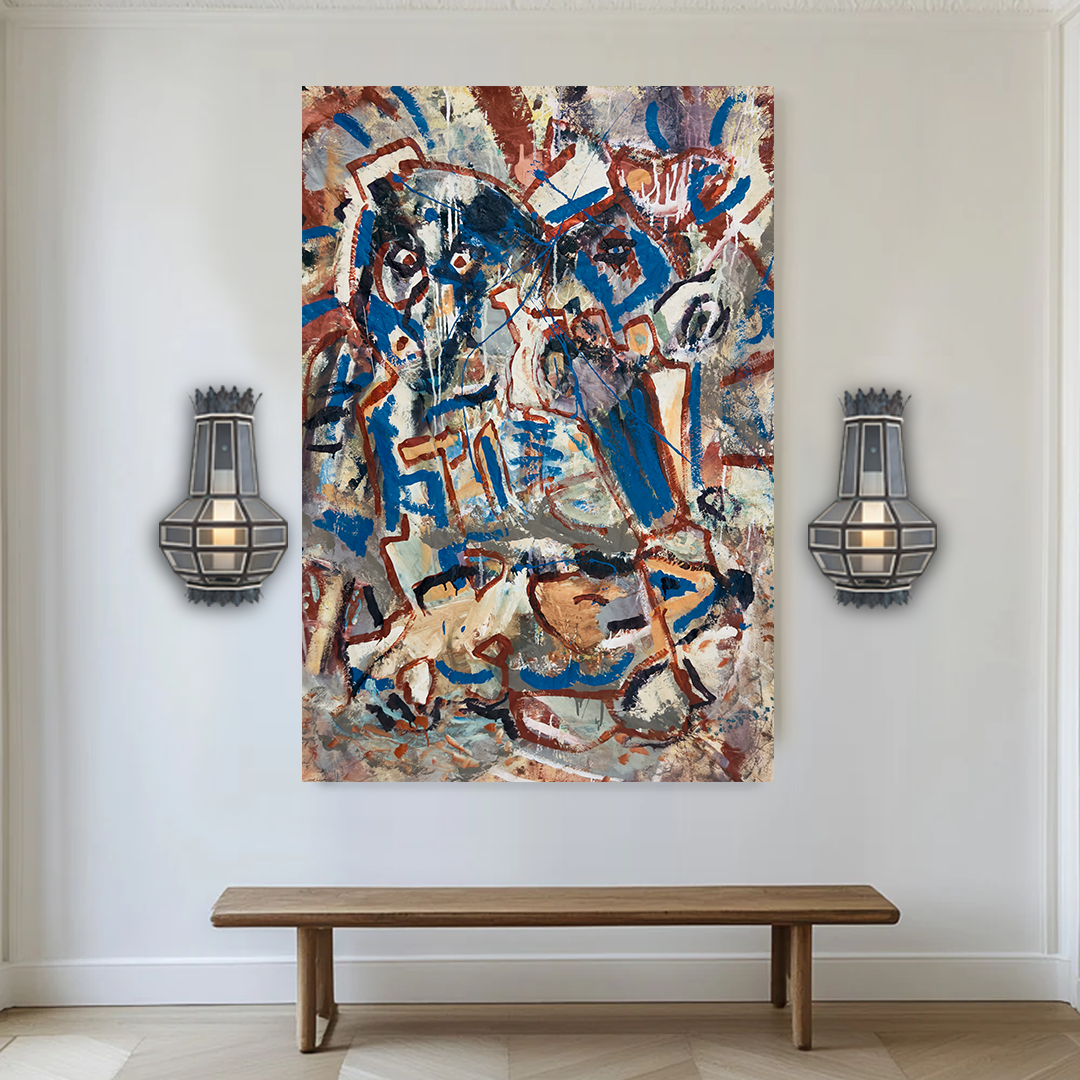
When the painting is bold enough, and the wall calm enough, to let the canvas stand as its own object. Large-scale contemporary abstracts with strong color and clean stretcher edges often read as more confident without a frame — the eye takes in the whole painting as a single gesture instead of a picture inside a border. That's especially true in hospitality and high-traffic commercial spaces, where a frame adds one more surface to maintain and one more thing that can be bumped or chipped.
Both approaches are correct in the right context. The mistake is treating "always float-frame contemporary work" or "never frame an abstract" as a fixed rule instead of a judgment call made in front of the actual painting.
Who Should Actually Make This Call — The Designer Or The Artist's Studio?
Both, working from the same information. A designer knows the room, the client's other finishes, and the mood the space needs. The studio knows the painting — how it was built, whether the edges were meant to be seen, and how it will read at full scale once it's off the easel and on the wall.
Angela Simeone removes the pressure to decide this alone: every original ships rolled and is stretched fresh on arrival by a local framer, then hand-delivered ready to hang — unframed by default. Float framing is available on request and billed separately, so a designer can make the framing call after seeing the piece installed in the actual room, in the actual light, instead of guessing from a studio photo months before delivery.
Paintings Currently Available
Two large-scale originals suited to either presentation:
Chroma Navy Grey Lilac Brown Natural Canvas Painting · 48×60 in · $7,850 — deep navy and muted lilac over warm earth tones; reads as a strong anchor float-framed or left clean.
Darkest Brown Darkest Green Yellow Canvas Painting · 50×70 in · $6,850 — a dark, saturated palette with a bright yellow counterpoint; scaled for a lobby, suite, or great room wall.
Both ready-to-ship. Flat $250 delivery continental US. Pre-ship real-light video available on request.

Chroma Navy Grey Lilac Brown Natural Canvas Painting, 48x60 inches, $7,850, by Angela Simeone — large-scale original abstract in navy, grey, and muted lilac
→ Browse all available paintings
→ Commission a painting at your size and palette
→ Trade program details
FAQ
Should I float-frame an abstract canvas or leave it unframed?
There's no universal rule. Float frames show the full painted edge and add depth, which suits many gallery-style installs. Bold, large-scale abstracts often read stronger unframed, with the paint meeting the wall directly. The decision should be made per painting, not applied as a blanket policy across a project.
Does Angela Simeone ship paintings framed or unframed?
Unframed by default. Every original ships rolled, is stretched fresh on arrival by a local framer, and is hand-delivered ready to hang. Float framing is available on request and billed separately, so the framing decision can be made after seeing the piece in the room.
Will a frame damage an oil painting over time?
A standard frame with a lip that presses against the canvas surface can damage oil paint, which never fully hardens in the traditional sense. A float frame avoids this because its lip wraps the back of the canvas rather than covering the front, leaving the painted surface untouched.
Who decides whether a specific painting should be framed — the designer or the artist?
Both, ideally working from the same information. The designer knows the room and the client's other finishes; the studio knows how the individual painting was built and whether its edges were meant to be seen. Angela Simeone lets designers make this call after delivery rather than months earlier from a studio photo.
Sources
- Robert Benrimon, Skyframe — "5 Tips for Finding the Right Frame for Your Art," Artsy.
- Daniel Beauchemin, CEO, Chelsea Frames — "5 Tips for Finding the Right Frame for Your Art," Artsy.