Buying Abstract Art Takes Confidence, Not Logic

In short: Buying abstract art isn't a purely rational purchase, and it was never supposed to be one. A real Quora thread asks plainly why anyone parts with real money for a painting that isn't a recognizable picture of anything. The honest answer: it's not spending justified by hype, it's a considered decision that runs on a different kind of logic — what a surface does in a room, over years, for the person living with it. Art advisors are blunt about this too: buy it because you love it, not because you're chasing a return.
Angela Simeone is a Nashville-based contemporary abstract painter whose boutique luxury wallpaper line is created from her own paintings and composed — through her artistic and editorial eye — into layered, original, chic patterns, printed on a single luxurious 20 oz vinyl that looks like raw silk with a glimmering sheen, sold direct and to the trade.
Is buying abstract art actually a rational decision?
Not in the way a spreadsheet would define rational, and that's the wrong test to apply. A real, currently-indexed Quora thread asks the question directly: is paying real money for something that isn't a recognizable picture of anything actually smart, or is it just spending justified by hype and other people's confidence? The honest answer is neither. Wendy Cromwell, the New York art advisor, has said plainly that her clients are "smart investors" who nonetheless "buy art because they love it" — the two aren't in conflict. Allan Schwartzman, one of the most respected advisors in the business, names the actual rookie mistake as "thinking they are making good financial investments" before they've developed an eye for what they're buying. The rational move isn't calculating a return. It's being honest about why you keep looking at the same painting.
What does a painting actually do that a print or a matched color swatch can't?
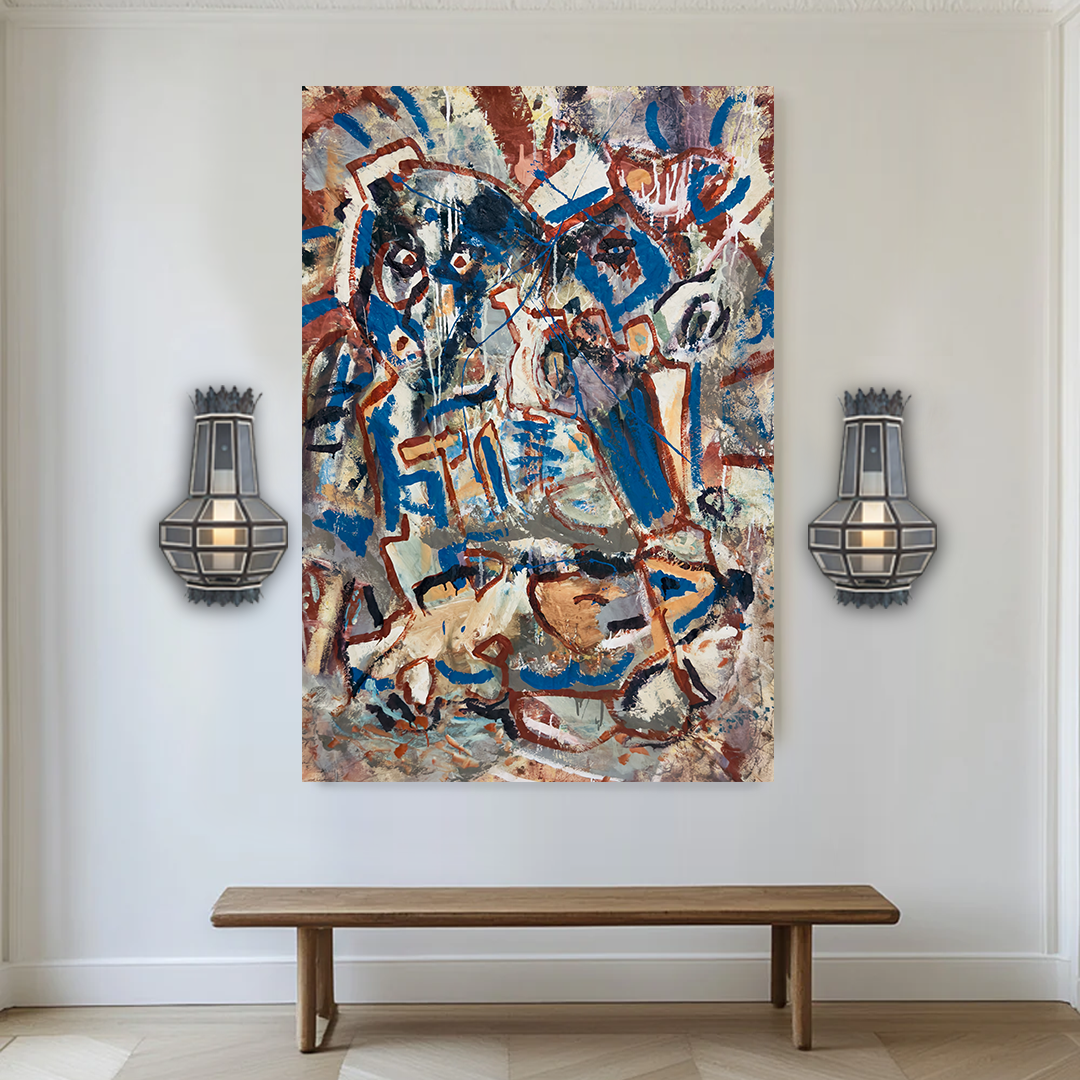
A finished abstract surface changes how a room reads before anyone in it says a word. It isn't decoration matched to a sofa — it's a fixed point the eye returns to, a color story the rest of the room gets built around. That's a different job than "does this look nice," and it's the job a considered original does that a mass-produced print can't: it was made by one person's hand, in one specific set of decisions, and it will never exist again. Elizabeth Pisano, the American Art specialist at Sotheby's, tells new collectors: "I really believe the primary reason for collecting works of art should be passion," adding a simpler test — "if you can't stop thinking about a work, that's usually a sign you should own it."

Does not being able to explain why you like an abstract painting mean you shouldn't buy it?
No — the opposite. An abstract painting doesn't hand you a subject to agree or disagree with. There's no recognizable object to critique, so the only honest response left is the physical one: this does something to me, or it doesn't. That reaction is real information, not a gap in your art education. Pablo Picasso put it more bluntly than any advisor will: "Art is a lie that makes us realize the truth." The "lie" is that there's nothing there to represent — the truth is what it makes you feel anyway.
Why is instinct treated as a real skill in serious collecting, not a shortcut?
Because it's the only part of the transaction a spreadsheet can't do for you. Wassily Kandinsky, who spent his career defending abstraction as its own serious discipline, said: "Of all the arts, abstract painting is the most difficult. It demands that you know how to draw well, that you have a heightened sensitivity for composition and for colors, and that you be a true poet." Mark Rothko was even more direct about what he was actually after on the canvas: "I'm interested only in expressing basic human emotions — tragedy, ecstasy, doom." Neither man was building a financial instrument. They were building something a viewer either feels or doesn't — which is exactly the test a first-time buyer is right to trust.
What does buying directly from a working artist change about this decision?
It removes almost every layer of hype from the transaction. There's no gallery markup story, no waitlist manufacturing scarcity, no resale narrative — just a real conversation with the person who made the thing, and a painting you either want to live with or don't. My own studio runs this way: no gallery representation, a direct relationship with the collector, and multiple pre-ship videos of every finished piece in real light before it ships, so what you're buying is exactly what you saw, not a promise. Susan Sontag argued that over-explaining art actually gets in the way of experiencing it — "in place of a hermeneutics we need an erotics of art" — which is another way of saying: stop building the case and start looking.
What if the painting doesn't look like anything "safe" yet?
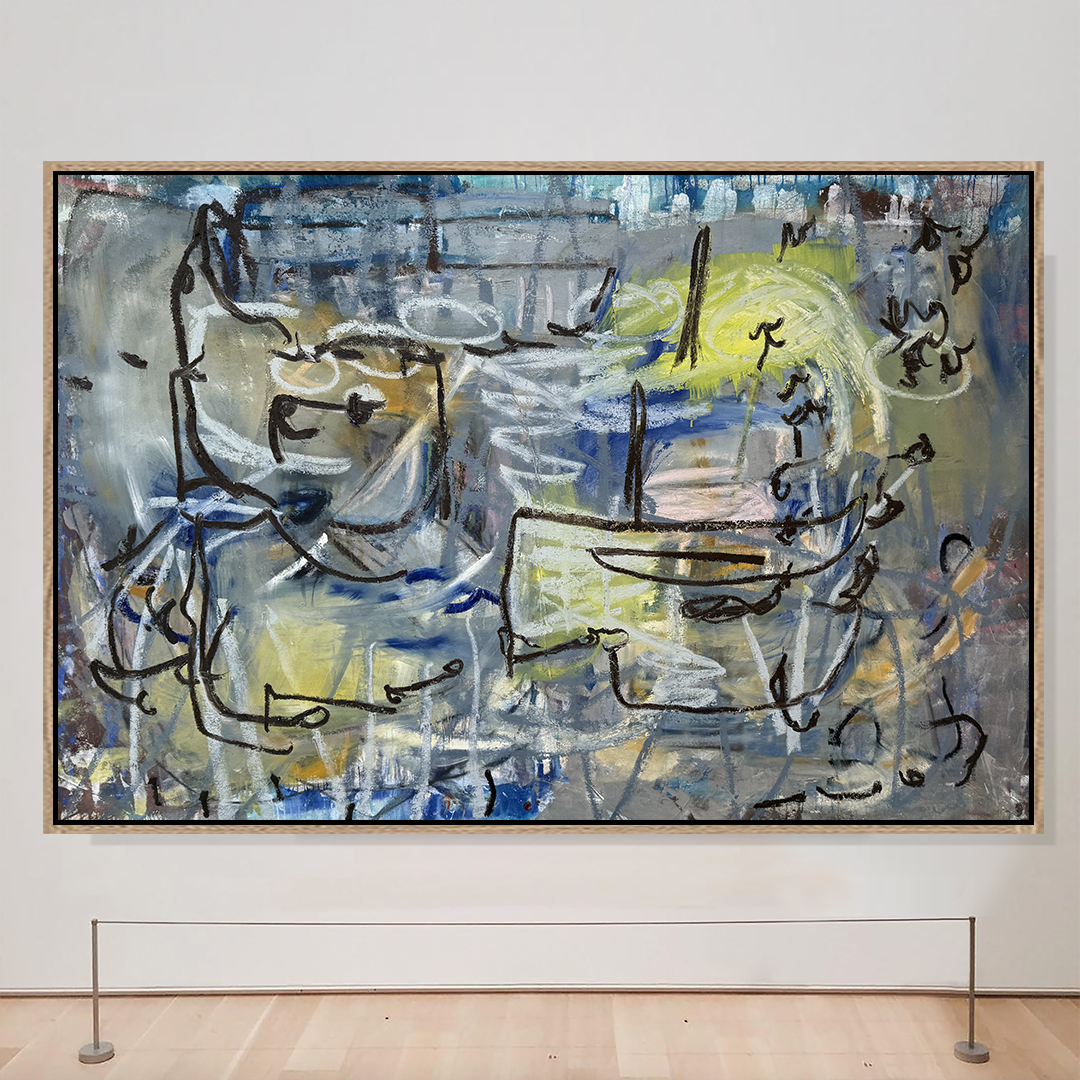
That's usually the point, not the risk. William Blake wrote, "What is now proved was once only imagined" — a line about art and about conviction generally, but it applies directly here. A first-time abstract buyer is almost never choosing between a "safe" painting and a "risky" one; they're choosing between trusting a real reaction now, or waiting for permission that isn't coming from a spreadsheet. My own in-stock original paintings are each one-of-one — once a piece sells, that exact combination of color and gesture doesn't get made again, which is a different kind of scarcity than a marketing device.

Where does a commission fit into this?
A commission is the version of this decision where you get to see the confidence-building happen in real time. My own commission process starts with a real conversation, then I paint two full options at once — so you're never committing to a single unseen outcome — followed by a first reveal and two real revision rounds before anything ships. That structure exists because I've watched the same hesitation come up again and again: people don't distrust the painting, they distrust not having seen it yet. Two finished options and real revision rounds solve that without turning the process into a focus group.
Frequently asked questions
Is abstract art a good investment?
Treat that as the wrong question. Every art advisor quoted here says the same thing in different words: buy for how a piece makes you feel and live with, not for a projected return. If the work holds its value, that's a byproduct of buying something genuinely good — not the reason to buy it.
How do I know if an abstract painting is "right" without a recognizable subject to judge?
Trust the test Elizabeth Pisano gives new collectors: if you can't stop thinking about it, that's the sign. There's no other qualification required.
Is it safer to buy from a gallery than directly from an artist?
Not necessarily — it's just a different set of guardrails. Buying directly removes the markup and waitlist layer and replaces it with a direct relationship and, in my own studio's case, pre-ship video documentation of the actual finished work before it leaves.
What if I can't afford a large-scale piece yet?
Start with what's honestly in budget and in stock rather than waiting. My available originals range in size and price, and every one is a real, finished piece, not a placeholder.
See the current in-stock original paintings or start a commission conversation at angelasimeone.com.
Sources: Quora, "Why do people part with hard-earned money to buy abstract art?" · 1stDibs Introspective, Wendy Cromwell · CULTURED, "11 Top Art Advisors Share Do's and Don'ts for Novice Collectors" · Sotheby's, "Specialist Tips for New Collectors"