An Original Can Land Inside a Print Budget
In short: Original, limited edition and open-edition print are usually presented as three price tiers, but they are really three different things to own. The step down is not proportional — an edition gives you the image, an original gives you the surface, the sequence and the authorship. And in a working studio's ready-to-ship range, the original tier frequently overlaps the budget a project had already set aside for a large limited edition.
What are you actually paying for at each tier?
An open-edition print buys the image, reproduced without a cap. Its value is decorative and it stays decorative; that is not a criticism, it is the category doing its job.
A limited edition buys the image plus scarcity — a fixed run, usually numbered, sometimes signed. The image is still reproduced. What is finite is how many copies exist.
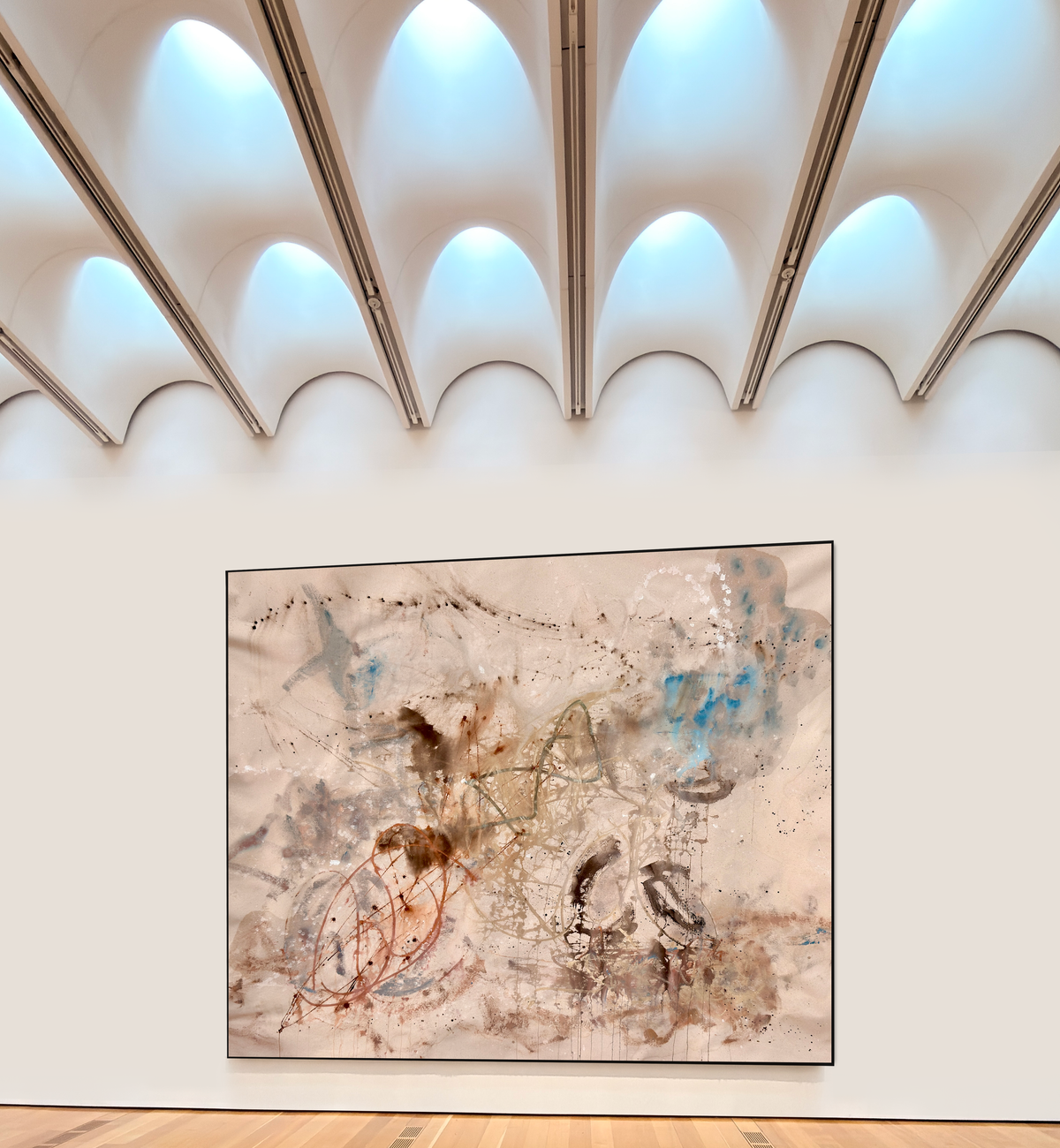
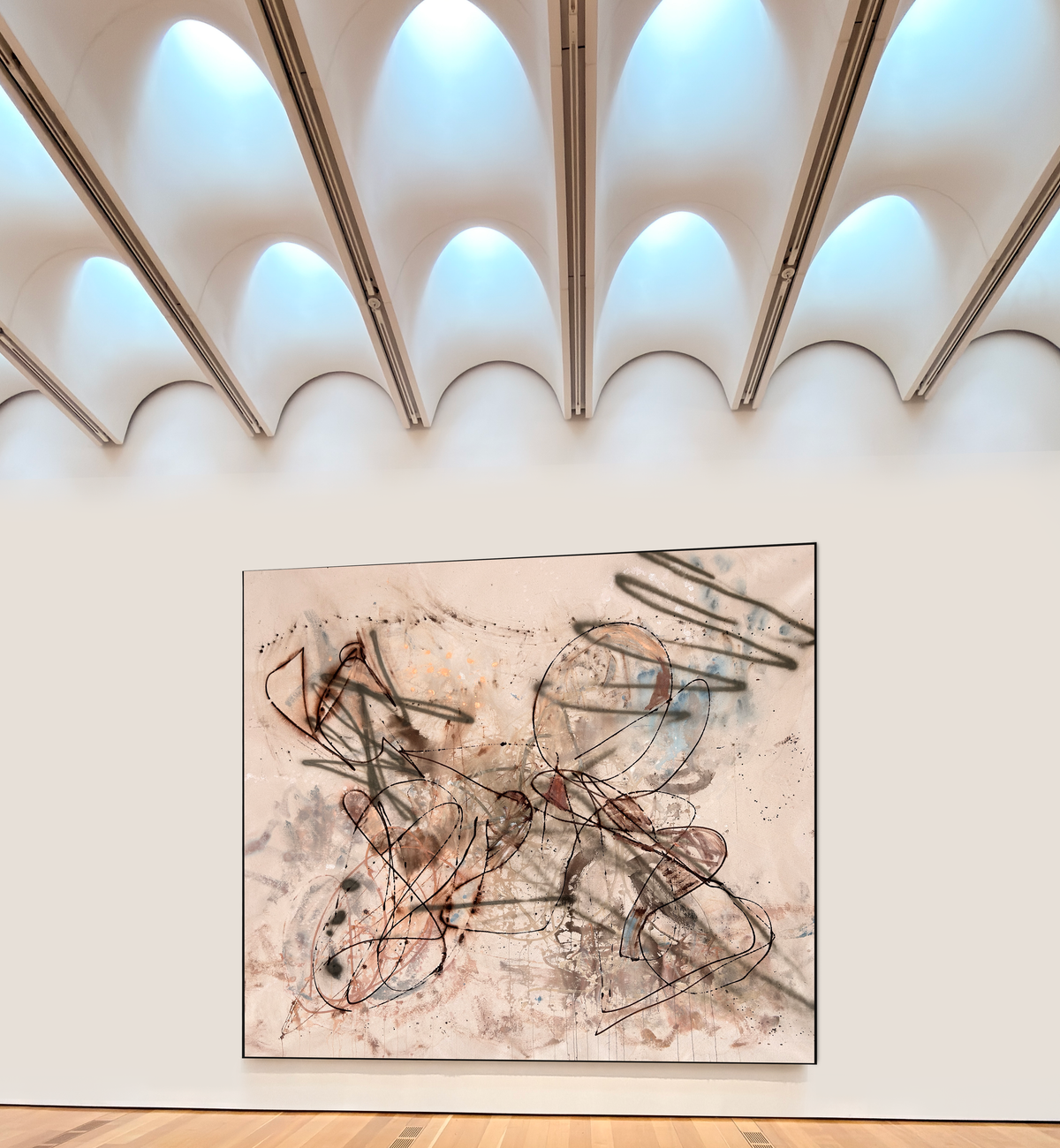
An original buys none of those things. It buys a physical surface that was arrived at once: charcoal underdrawing that surfaces through thinned oil, passages built up and worked back over weeks, decisions visible in the order they were made. There is no second one, and there is no version of the process that produces a second one.
So the tiers are not three grades of the same product. They are three answers to a different question: do you want the image, the scarcity, or the object?
Where does the budget math actually break?
Where clients assume the steps are evenly spaced.
They are not. The gap between an open edition and a limited edition is usually modest, because the underlying manufacture is the same. The gap between a limited edition and an original is where people expect a cliff — and in practice, for a working artist selling direct, it is frequently a step rather than a cliff.
A studio's ready-to-ship inventory is the reason. Angela's available originals run roughly $1,850–$9,850, with a 20% trade discount for verified designers and firms. A large-format limited edition specified for a primary room in a nice project can sit well inside that band. At which point a designer is choosing between a numbered copy of somebody's image and a one-of-one painting, at broadly comparable spend.
Why does buying direct change the comparison?
Because two of the three costs disappear and one of the risks does.
There is no intermediary margin, and there is no ambiguity about provenance — the person who made the work is the person invoicing for it. The studio handles the work from canvas to wall: shipped rolled to a framer local to the client, stretched on arrival, hand-delivered ready to hang, with multiple pre-ship videos of the finished work sent before anything moves. Flat $250 shipping anywhere in the continental U.S.
That last piece matters more than it sounds for trade work. The thing a print catalogue cannot give a designer is a conversation about the specific room — its light, its scale, its palette — before the work is finalised. The commission process makes that explicit by painting two full-scale options simultaneously, so the client chooses between two finished paintings rather than approving a sketch.
Does an original hold up as a decision over time?
The maker's side of this is worth hearing. Marion Dorn, the textile designer whose work defined a generation of British interiors, described her own relationship to it in six words: "I have a vocation. I love designing." Vera Neumann — who did more than almost anyone to put artist-made pattern into ordinary houses at scale — said of her own material: "Color sings to me. Color is such a marvelous way of expressing emotion. We have so many problems in this world; color just brings a little bit of joy into our lives."
Both women spent careers proving that reproduction at scale is a legitimate, generous thing to do. Neither confused it with the object that came first. The drawing Neumann made was not the scarf; the scarf was the good, democratic afterlife of the drawing.
The same relationship holds here. An edition is a real thing with real value. It is just not the same purchase as the surface it came from — and if the two land in the same budget band, the choice is worth making on its merits rather than on an assumption about price.
Frequently asked questions
Is an original painting always more expensive than a limited edition print?
No. Large-format limited editions can be priced comparably to smaller and mid-size originals from a working artist selling direct. The ranges overlap more often than most buyers expect.
What is the real difference between a limited edition and an open edition?
Both are reproductions. A limited edition caps how many exist and is usually numbered; an open edition has no cap. The image and the manufacture are otherwise the same.
Do interior designers get trade pricing on original art?
Frequently, yes — Angela's studio offers 20% off retail to verified designers and firms, which shifts the original-versus-edition math further.
What does buying directly from the artist actually change?
Provenance is unambiguous, there is no intermediary margin, and the room can be discussed before the work is finalised. Logistics stay with the studio: shipped rolled, stretched on arrival, hand-delivered ready to hang.
See available original work — or start a conversation about a commission.