What a Designer Is Actually Looking For When They Choose a Painting
In short: Designers rarely start from the rug. Across published interviews, the pattern is the reverse — the painting is chosen early, and the room is built to meet it. A palette match makes a room agree with itself; a work with its own weight gives the room something to organise around. That is the difference between decoration and a decision.
Do designers match a painting to the room, or the room to the painting?
The room to the painting, more often than the trade admits. Sophie Ashby of Studio Ashby puts the sequence plainly: "I always try to start with art, because ideally, I don't want to shift the balance of a room. If it's brought in at the end, it can change the whole vibe." Art brought in last is a correction. Art brought in first is a premise.
The consequence is practical. In one Kensington project Ashby sourced an oil painting early and found the scheme followed it — "I found the painting very early on in the design process, and everything unfurled from there. The sense of color is amazing, and in fact, it gave us our whole palette." The palette came out of the canvas rather than the canvas being hunted to fit a palette.
What does a designer mean by a painting that "holds its own"?
Something that keeps working after the novelty of the room wears off. Bennett Leifer, describing an installation that had to fill a double-height wall, names the quality directly: "I think there's an importance that comes with volume, and there's a pleasing element visually with repetition." Scale and internal rhythm, not subject matter, are what let a work carry a large room.
Painters describe the same threshold from the other side. April Gornik, on why her canvases are the sizes they are: "I had to make them the right size to be stood in front of and experienced physically." And on a small painting she had to remake large — "I needed to feel it with my whole body—to feel that it was enveloping." Size in a serious studio is a decision about the viewer's body, not about the wall's dimensions.
Dike Blair, who works small, arrives at the same test from the opposite end. Preparing a body of work for a large gallery, he was "hyper-aware that even the teeny paintings had to be able to carry a lot of space." Carrying space is not a function of inches.
Does a collection have to be planned before the room is designed?
No — and the better designers plan for it not to be. Andrew Sheinman of Pembrooke & Ives describes the relationship as two-directional: "We build environments around people's collections and also the other way around." Paul Macht, designing a Pennsylvania house around a client's growing holdings, describes the same flexibility as a working method: "The client's collection was specific yet growing, so the gallery evolved."
Alfredo Paredes, hanging his own salon-style wall, resists the urge to force coherence and reports the payoff in one phrase: "The important thing for me is the visual harmony it creates." Harmony, in his usage, is what unlike things produce when they are allowed to stay unlike.
What does this mean for the painting you actually buy?
That the honest question is not whether a canvas matches, but whether it can hold a position. Hearne Pardee, a painter and critic, describes what viewers do in front of a painting: "we identify paintings with our bodies, and we project ourselves into them." A work that survives that projection for years is doing something a colour match cannot do in the first week.
Blair, on how a painting arrives at its own logic: "there's a way in which the painting starts to talk to itself and decides how it needs to be painted." You can see that decision-making in a surface that was argued with — layered, built up, worked back over weeks — and it is what the poet-critic Charles Tomlinson valued in artists who "penetrate … while refusing to merge."
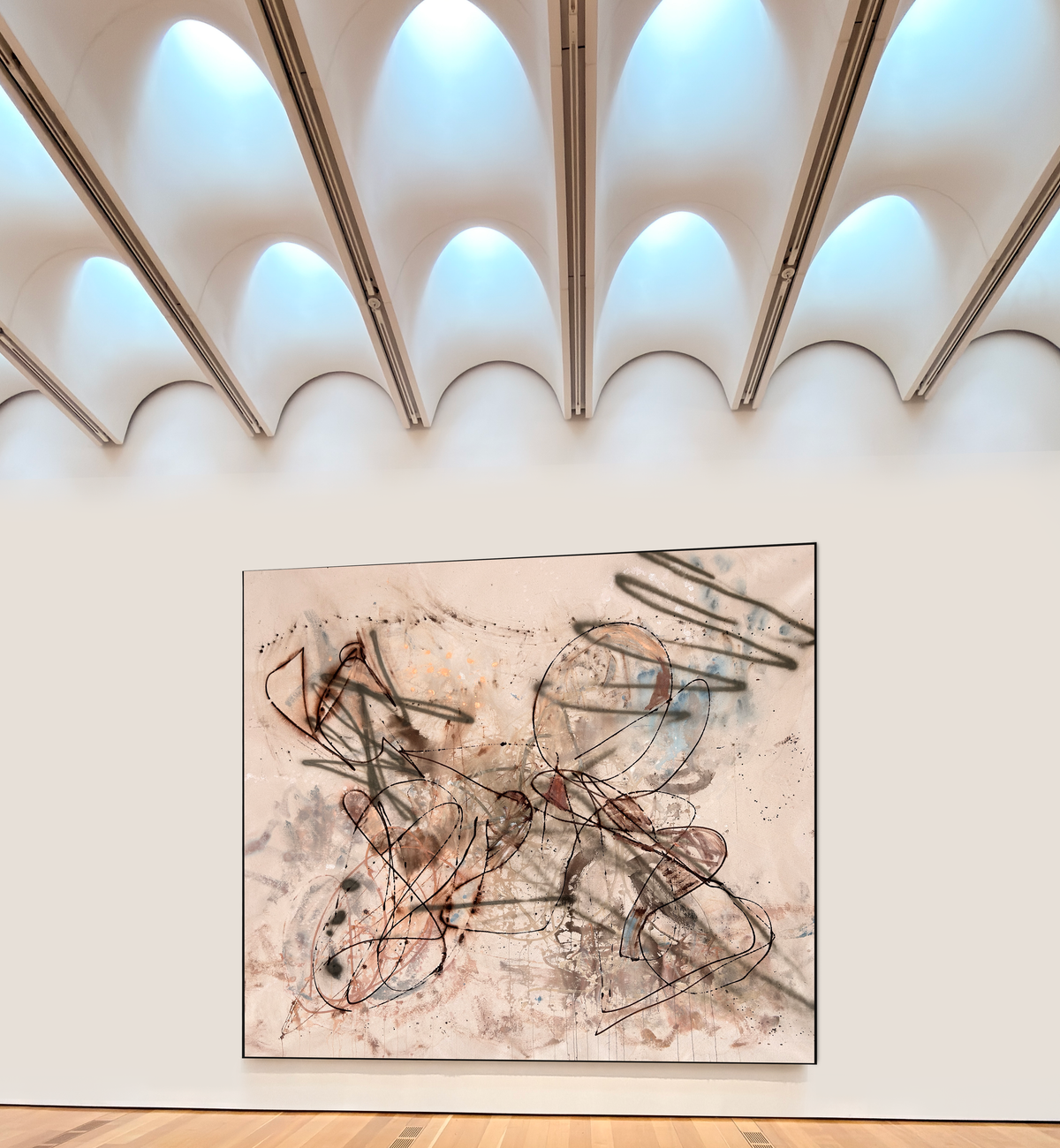
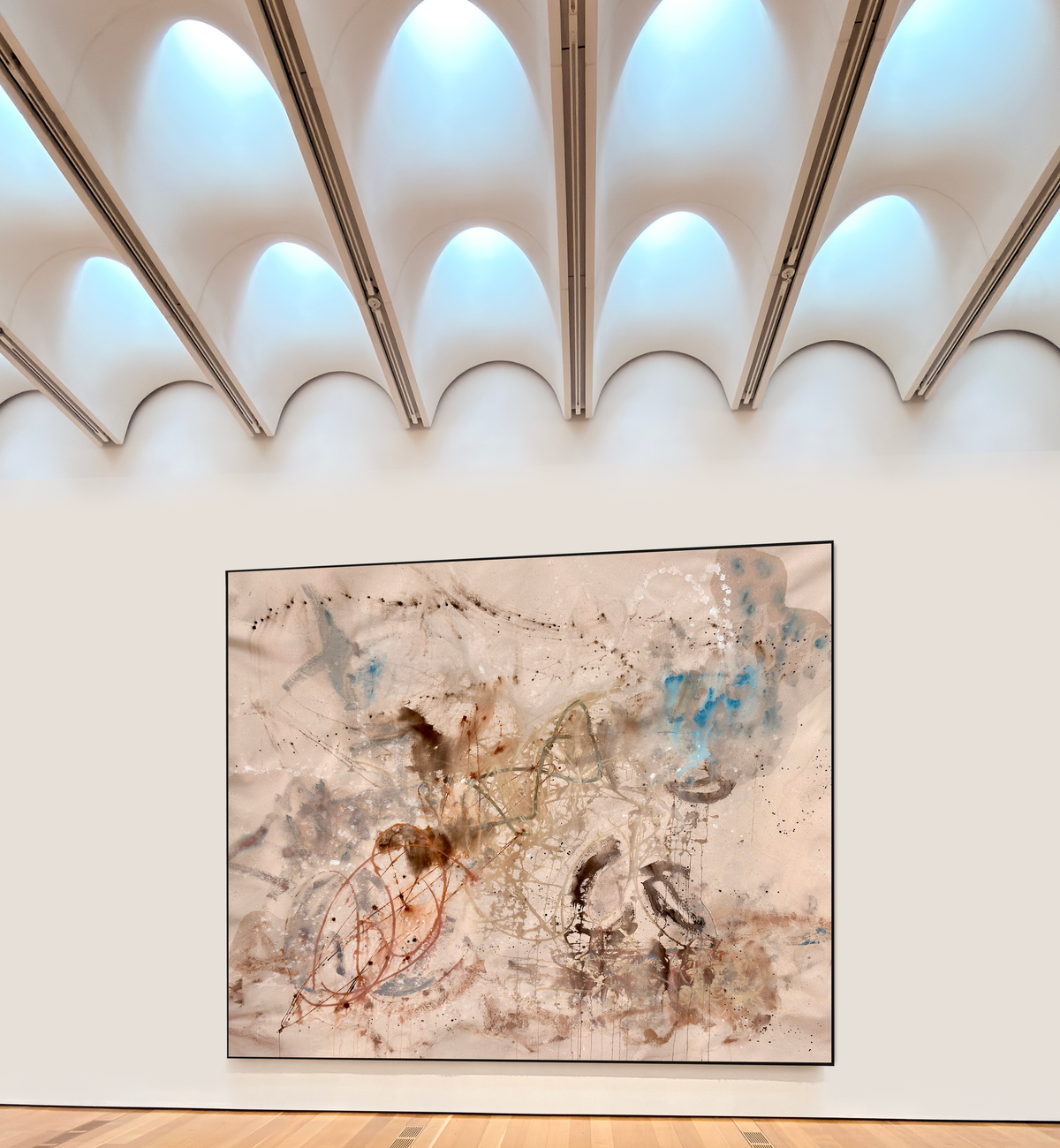
My own work is built for that position. Oil and mixed media on canvas, layered until the surface settles, calibrated to the specific light of the room a piece is going into. Designers and art consultants work with the studio directly on ready-to-ship originals and on commissions painted to a room's scale and light — the trade programme covers pricing and logistics, available originals are one-of-one, and commissions begin with two finished options rather than one.
Frequently asked questions
Should the painting match my sofa or my rug?
It does not need to. Designers interviewed on their own process describe choosing the work first and letting the palette follow. A painting that shares no colour with the room can still resolve it, because it sets a reference the other elements are read against.
Do designers really pick art before furniture?
Often, yes. Sophie Ashby states it as a rule of her practice — bringing art in at the end “can change the whole vibe,” so it goes in early enough that the balance of the room is built with it rather than adjusted around it.
How big should a painting be for a large room?
Big enough to be met physically rather than scanned. April Gornik sizes canvases so they can be “stood in front of and experienced physically.” Dike Blair achieves the same effect at small scale by making paintings that “carry a lot of space” — internal structure does some of what dimension does.
Can I commission a painting to a specific size and palette?
Yes. The studio paints two options simultaneously for every commission, so the choice happens between two finished works rather than in the abstract. Deposit to delivery runs about four weeks depending on studio schedule.