A Period Room Doesn't Need A White Cube

In short: White Cube's summer show at Claydon House doesn't wait for a neutral gallery wall — it puts more than 40 works by Tracey Emin, Antony Gormley, Anselm Kiefer, and others directly into an 18th-century Buckinghamshire manor's rococo rooms. National Trust general manager Tanya Brittain and estate owner Nicholas Verney both frame the pairing as additive, not a compromise. That's real permission for anyone assuming bold abstraction only reads against blank white walls — a worked, scraped-back surface can hold its own against wood paneling, patina, and age, the same way it holds a wall in a white-walled gallery.
Angela Simeone is a Nashville-based contemporary abstract painter whose boutique luxury wallpaper line is created from her own paintings and composed — through her artistic and editorial eye — into layered, original, chic patterns, printed on a single luxurious 20 oz vinyl that looks like raw silk with a glimmering sheen, sold direct and to the trade.
Does A Serious Contemporary Art Show Need A Neutral White-Cube Gallery?
According to one of the galleries most associated with the white-cube model itself, the answer is no. "White Cube at Claydon," on view June 6 through September 14, 2026, is an ambitious collaboration between White Cube, the National Trust, and the Verney family — the first time an international contemporary art exhibition of this scale has been presented at the 18th-century mansion. More than 40 works by artists including Tracey Emin, Antony Gormley, Anselm Kiefer, and Cai Guo-Qiang sit directly inside Claydon's historic rooms and gardens, not in a purpose-built neutral space constructed for the occasion.
What Happens When Contemporary Art Meets A Room With Its Own History?
Something gets added, not subtracted, according to the people who made the pairing happen. Nicholas Verney, whose family has owned Claydon for generations, called the exhibition an addition to the house's own character: "It is a great pleasure to support this remarkable exhibition by welcoming works from White Cube artists into our family gardens at Claydon. We have never before hosted an international exhibition of this stature here, and the opportunity is incredibly exciting." He frames the collaboration as a two-way gift — new art for the house, and the house's own heritage newly visible to people who came for the art: he hopes it will "introduce visitors to significant contemporary artworks" while inspiring them "to explore and appreciate the unique heritage and beauty of Claydon's setting." Tanya Brittain, the National Trust's general manager for the Aylesbury Vale property group, describes the same intention from the institutional side: "At the National Trust, we're committed to opening up our places in ways that spark curiosity and deepen people's connection to heritage. This collaboration with White Cube and the Verney family is an exciting example of that ambition."

What Does This Mean For Hanging Bold Abstract Art In A Traditional Home?
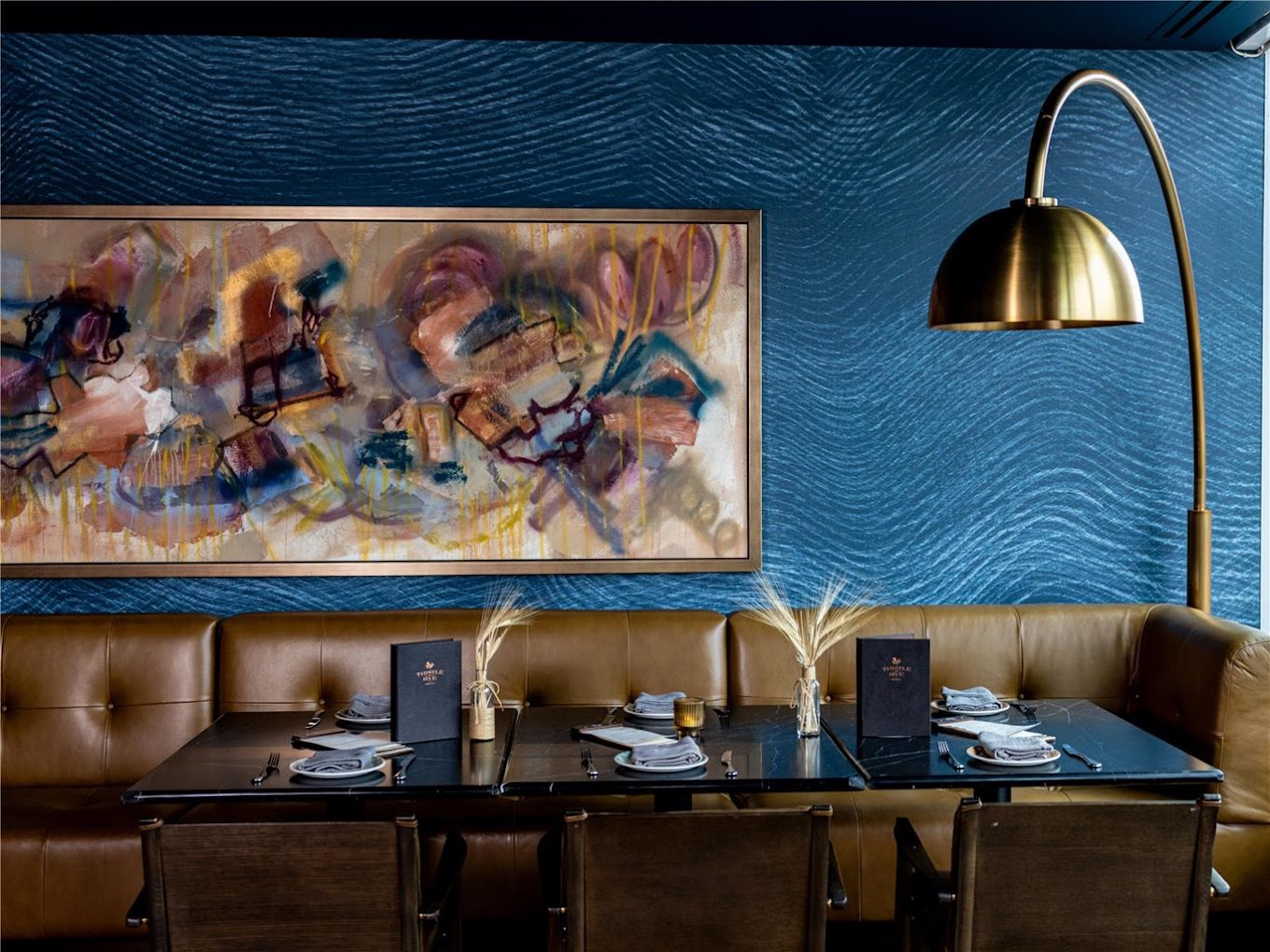
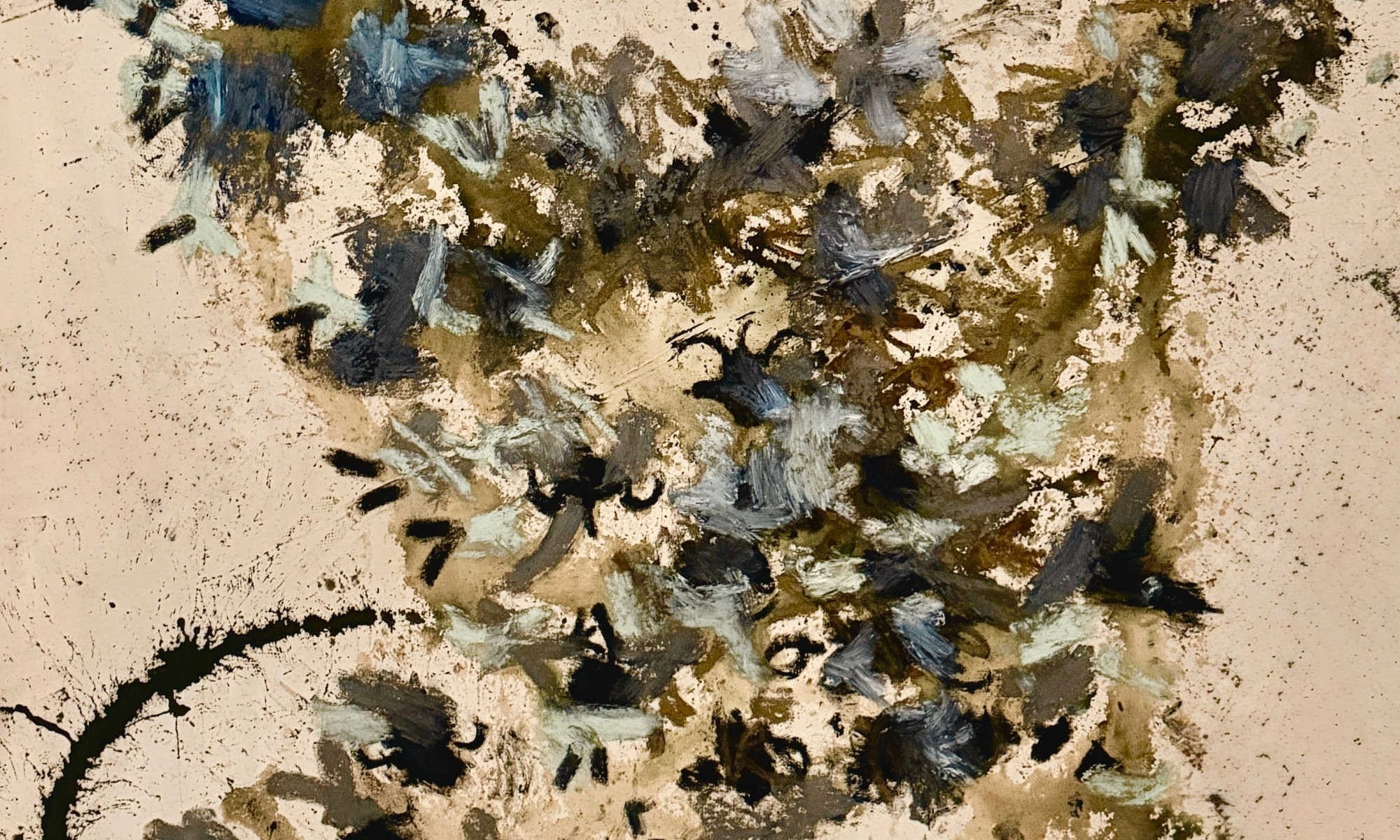
It means the instinct to save abstraction for a minimalist room is worth questioning. Claydon's rococo interiors are about as far from a white-cube gallery as an interior gets, and White Cube chose to put its most serious contemporary work there anyway — not as a novelty, but as a real curatorial argument that the two can sharpen each other. A worked, layered abstract surface — the kind built from scraped-back paint and real decision-making, not a flat print — has enough presence to hold a wall next to wood paneling, moldings, and inherited furniture the same way it holds a wall in a gallery. The contrast doesn't dilute either the room or the painting. It gives both something to react against.
Artists and critics have been making versions of this argument for as long as painting and architecture have shared a wall. Wassily Kandinsky wrote plainly that unity, not uniformity, is the actual job: "To harmonize the whole is the task of art." Mark Rothko, describing what a finished painting actually needs from the room it hangs in, put it this way: "A picture lives by companionship, expanding and quickening in the eyes of the sensitive observer." Helen Frankenthaler was even more direct about why a bold surface shouldn't wait for the "right" neutral setting: "There are no rules. That is how art is born, how breakthroughs happen. Go against the rules or ignore the rules. That is what invention is about." Robert Rauschenberg described painting's whole job as living in the gap between two things that don't obviously belong together: "Painting relates to both art and life. Neither can be made. I try to act in the gap between the two." And critic John Berger, writing about how meaning shifts with context, offered the line that explains exactly what's happening at Claydon: "The relation between what we see and what we know is never settled."

How Should A Collector With A Traditional Home Actually Choose A Piece?
The same way White Cube chose Claydon's rooms — by scale, presence, and what the pairing gives back, not by whether the walls are white. A worked abstract surface with real depth of color and texture can sit against traditional paneling, aged wood, or a formal mantel and hold its own, the same way it holds a gallery wall. That's the premise behind every original in my in-stock collection, painted to carry real presence in exactly the kind of room Claydon proves doesn't need to apologize for its own history.
See original paintings available now, or start a conversation about a commission sized to a specific traditional room.
FAQ
Does bold abstract art need a neutral, minimalist room to work?
No. White Cube's own summer 2026 exhibition at Claydon House puts more than 40 contemporary works directly into 18th-century rococo interiors, arguing the pairing adds to both the art and the room rather than diluting either.
Can a historic or traditional home hang serious contemporary art?
Yes — that's the entire premise of "White Cube at Claydon," a collaboration between White Cube, the National Trust, and the Verney family described by both parties as additive to the house's own character, not a compromise for the art.
Why might contemporary art actually look better in a traditional room?
The contrast gives both the room and the painting something to react against — a worked, layered surface reads with more presence next to wood paneling and inherited furniture than it might on a blank white wall.
How should a collector with a traditional home choose an abstract painting?
By scale and presence, not by whether the walls are white — a worked surface with real depth of color and texture holds a traditional room the same way it holds a gallery.
Sources: Museums + Heritage, "Leading International Artists Transform Historic Buckinghamshire House," 2026 (Brittain and Verney quotes); Wassily Kandinsky, "Concerning the Spiritual in Art," 1911; Mark Rothko, "The Romantics Were Prompted," Possibilities I, 1947–48; Helen Frankenthaler, widely documented interview statement; Robert Rauschenberg, "Sixteen Americans," MoMA catalogue, 1959; John Berger, "Ways of Seeing," 1972.