Carrying A Lineage Isn't Copying It

In short: originality in abstract art has never meant starting from nothing. A recent review of a contemporary painter's New York show named real formal echoes of Helen Frankenthaler, Richard Diebenkorn, and Zao Wou-Ki in her surfaces — then argued the work still stands entirely on its own terms. Carrying a lineage isn't the same as copying it. I came to my own visual language through early training, a three-year apprenticeship, and then years of teaching myself the rest.
Angela Simeone is a Nashville-based contemporary abstract painter whose boutique luxury wallpaper line is created from her own paintings and composed — through her artistic and editorial eye — into layered, original, chic patterns, printed on a single luxurious 20 oz vinyl that looks like raw silk with a glimmering sheen, sold direct and to the trade.
Does Echoing A Master Make A Painting Derivative?
A review of painter Hollis Heichemer's current solo show at a New York gallery — on view this summer — names real formal kinships to Helen Frankenthaler, Richard Diebenkorn, and Zao Wou-Ki in her color and surface, then makes the harder argument: the paintings still stand on their own terms because they invent a visual language that doesn't lean on an outside source, only on the artist's own body of work. That distinction matters more than it sounds. Any painter working in color and gesture is in conversation with the painters who made that language legible in the first place. The question worth asking isn't whether the echo exists — it almost always does — but whether the hand using it is still making its own decisions.
What The Painters Themselves Say About Finding A Surface That's Theirs
Helen Frankenthaler, whose soak-stain technique opened the vocabulary most color-field painters still work inside of, put it plainly: "You have to know how to use the accident — how to recognize it, how to control it — so the whole surface looks felt and born all at once." Richard Diebenkorn, moving between abstraction and representation his entire career, resisted the idea that lineage was ever the point: "To call this expression abstract seems to me often to confuse the issue. Abstract means literally to draw from or separate. In this sense every artist is abstract... The result is what counts." And Zao Wou-Ki, painting between two traditions his whole life, described his own aim this way: "I wanted to paint that which cannot be seen, the breath of life, the wind, movement, the life of forms." None of these three painters describe influence as a debt. They describe it as raw material — something every serious painter inherits and then has to make disappear into a surface that is unmistakably theirs.

How I Found My Own Visual Language
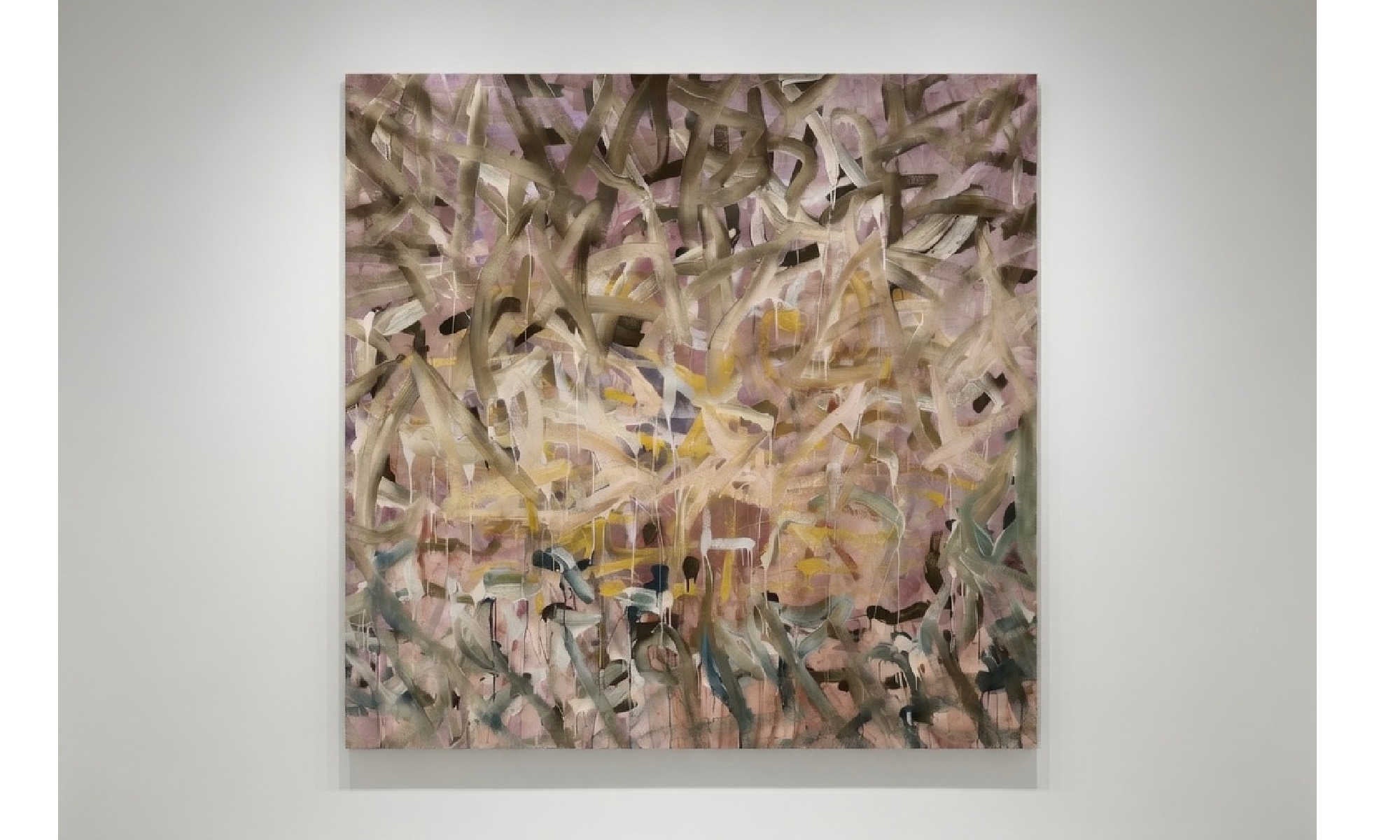
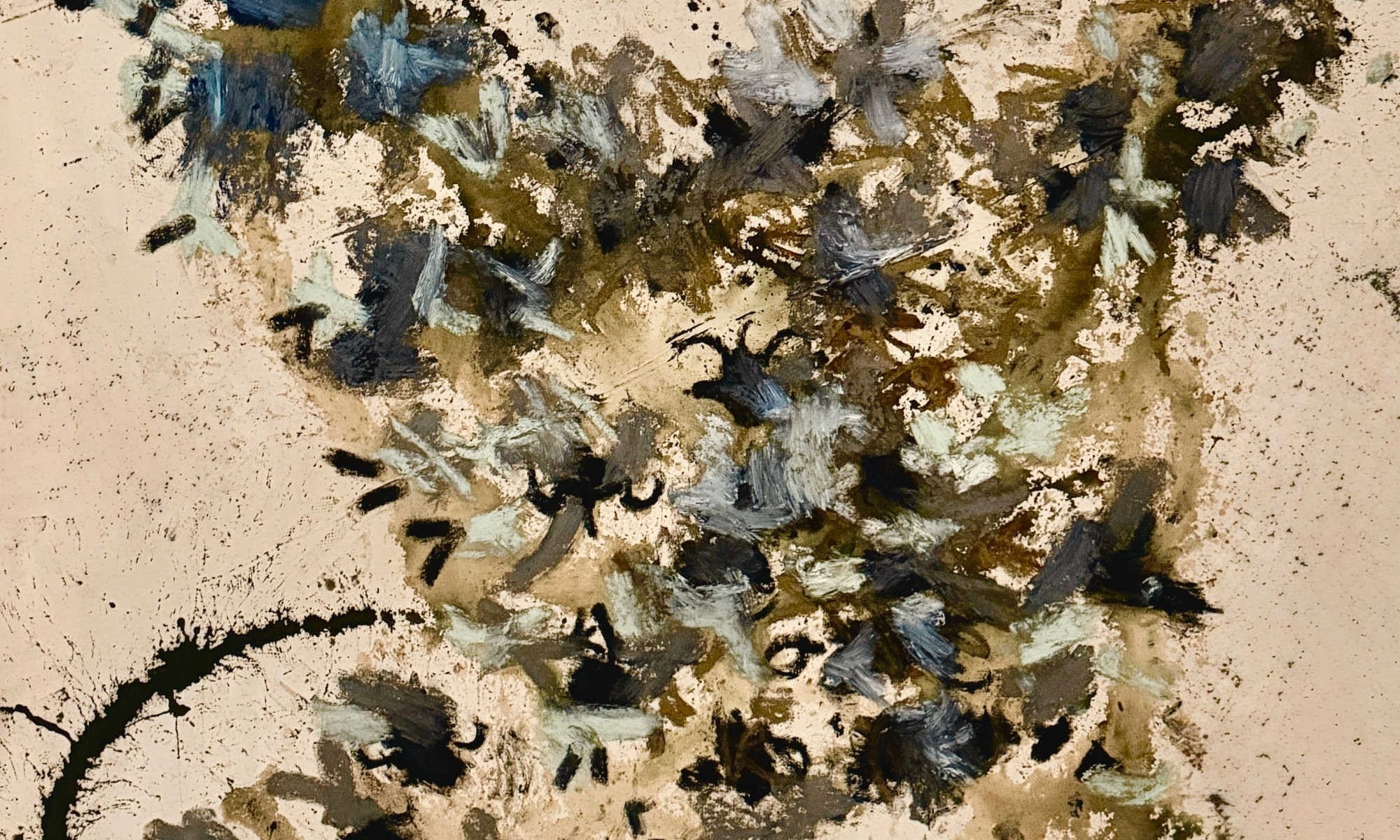
I came to abstraction after early training in portraiture, printmaking, and illustration and a three-year apprenticeship with Nashville painter David Guidera — though the abstract work is something I taught myself. There was no formula handed to me for the walnut-stain grounds, the palette-knife layering, or the scraped-back surfaces that make up a painting like Astral Thicket. That part came from years of working alone in the studio, failing at a surface until it agreed to something. T.S. Eliot made the sharpest version of this argument almost a century ago: "Immature poets imitate; mature poets steal; bad poets deface what they take, and good poets make it into something better, or at least something different." The critic Harold Bloom later built an entire theory of literature on the same idea — that real influence "always proceeds by a misreading of the prior poet, an act of creative correction." Painting works the same way. You don't get to skip the influence. You only get to decide what you do with it.

What This Means When You're Buying An Original
For a collector, this is useful information, not trivia. Dakota Sica, art advisor and owner of New York's Leslie Feely Gallery, put the market view plainly: "I can see these beautiful overlaps where younger artists are looking back in history and building upon those foundations." Berry Campbell Gallery, which has spent years placing painters who work in the Abstract Expressionist tradition, describes artists like Frank Wimberley as being "among the leading contemporary artists to continue in the Abstract Expressionist tradition" — lineage stated outright, as a credential, not a caveat. UBS Art Advisory's Rachel Peart frames the buying decision itself as personal territory: "Collecting is so inherently bespoke and personal." And advisor Maria Brito's guidance to serious collectors cuts against chasing the newest name entirely: "Great collections aren't built by chasing velocity; they're built by pacing, stewardship, and taste with a memory. Spend patience like capital." A painting that carries a visible lineage and still reads as its own thing is, by every one of these measures, doing exactly what a mature body of work is supposed to do.
Every painting I sell is one-of-one — it will hang in exactly one room, ever. Browse the current paintings available now, or start a conversation about a commission if you want a piece built to your own room and palette from the ground up.
Frequently Asked Questions
Is it a problem if a painting reminds me of a famous artist's work?
No. Nearly every serious abstract painter is working inside a visual language that traces back to a handful of 20th-century painters. What matters is whether the artist in front of you has made real decisions of their own inside that language, not whether the language itself is new.
How can I tell if a painter has developed their own style?
Look at a body of work over years, not a single piece. A painter with a genuine visual language repeats certain decisions — a palette, a way of building a surface, a recurring gesture — across dozens of works in a way that's recognizably theirs, even when the subject or color story changes.
Does training under another artist make a painter's work derivative?
No. Training and apprenticeship teach technique and discipline; they don't dictate what an artist eventually does with that foundation. Many painters, myself included, credit early training and then describe the more personal, harder-won part of their practice as self-taught.
What should I look for before I commission or buy an original abstract painting?
A coherent body of work, a real process you can ask about, and provenance you can verify — a signed piece, a certificate of authenticity, and direct contact with the artist's studio. A visible lineage to art history is a plus, not a red flag, as long as the work itself still reads as the artist's own.
Sources: Hollis Taggart Gallery, "Hollis Heichemer: Moving in Stillness" exhibition record; Richard Diebenkorn Foundation and Art & Antiques Magazine; Zao Wou-Ki and Françoise Marquet, "Autoportrait," Éditions Fayard, 1988; Smithsonian Archives of American Art oral history, Helen Frankenthaler, 1968; T.S. Eliot, "Philip Massinger," 1920; Harold Bloom, "The Anxiety of Influence," 1973; Artnet News, interview with Dakota Sica; Berry Campbell Gallery artist records; UBS/Art Basel, Rachel Peart; Maria Brito Advisory.