Wallpaper's Effect On Mood Is Now Measurable

In short: two new wallpaper collections launched this year treat a room's mood as something you can actually design for, not just describe after the fact. Architect Suchi Reddy built her new Calico Wallpaper collaboration, Luminous, directly on neuroaesthetics research — the science of how surroundings change the nervous system. Athena Calderone's new Cadence collection, also with Calico, layers hand-painted artwork with real material texture to get the same emotional depth. Wallpaper's effect on a room's mood isn't a marketing phrase anymore. It's a measurable, designed outcome.
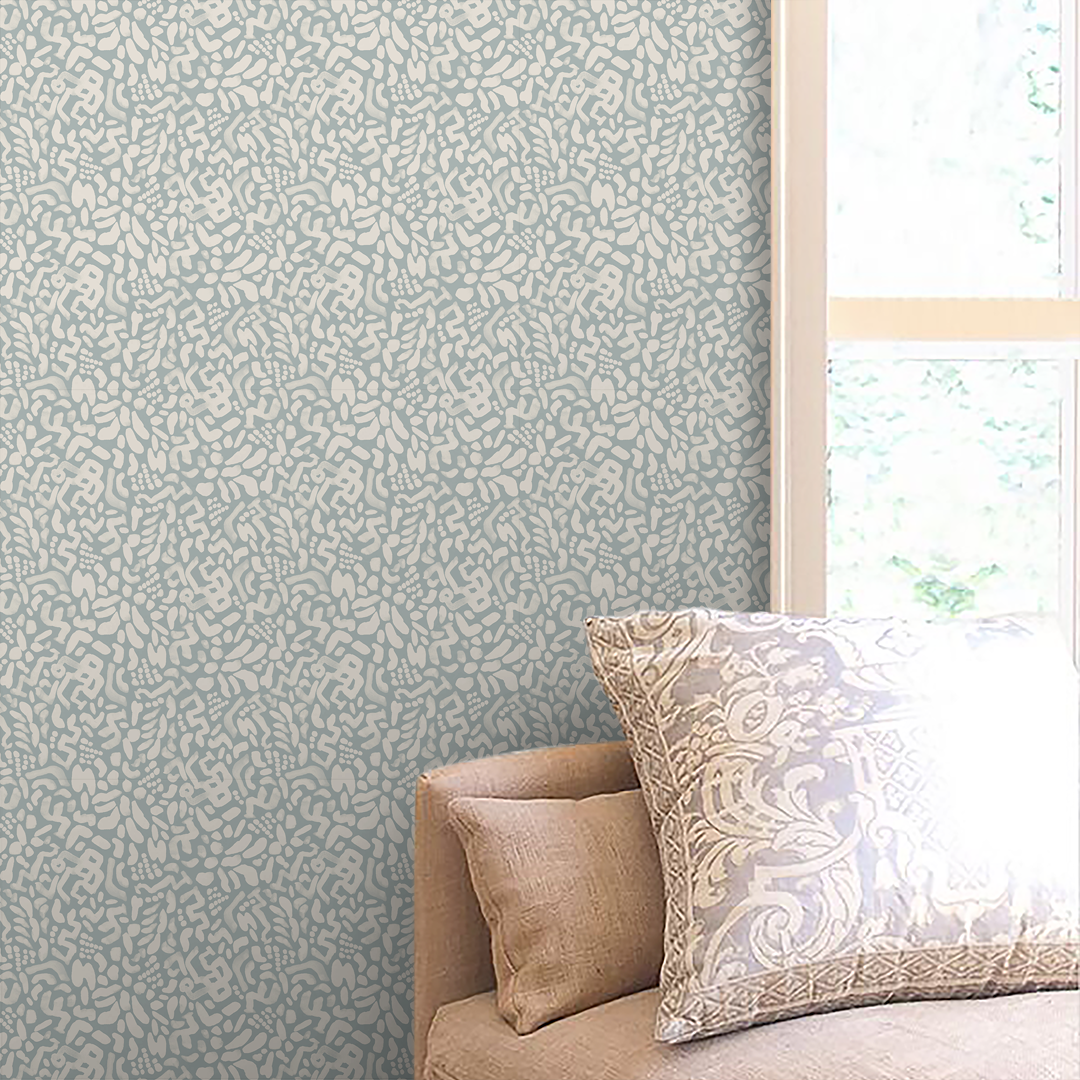
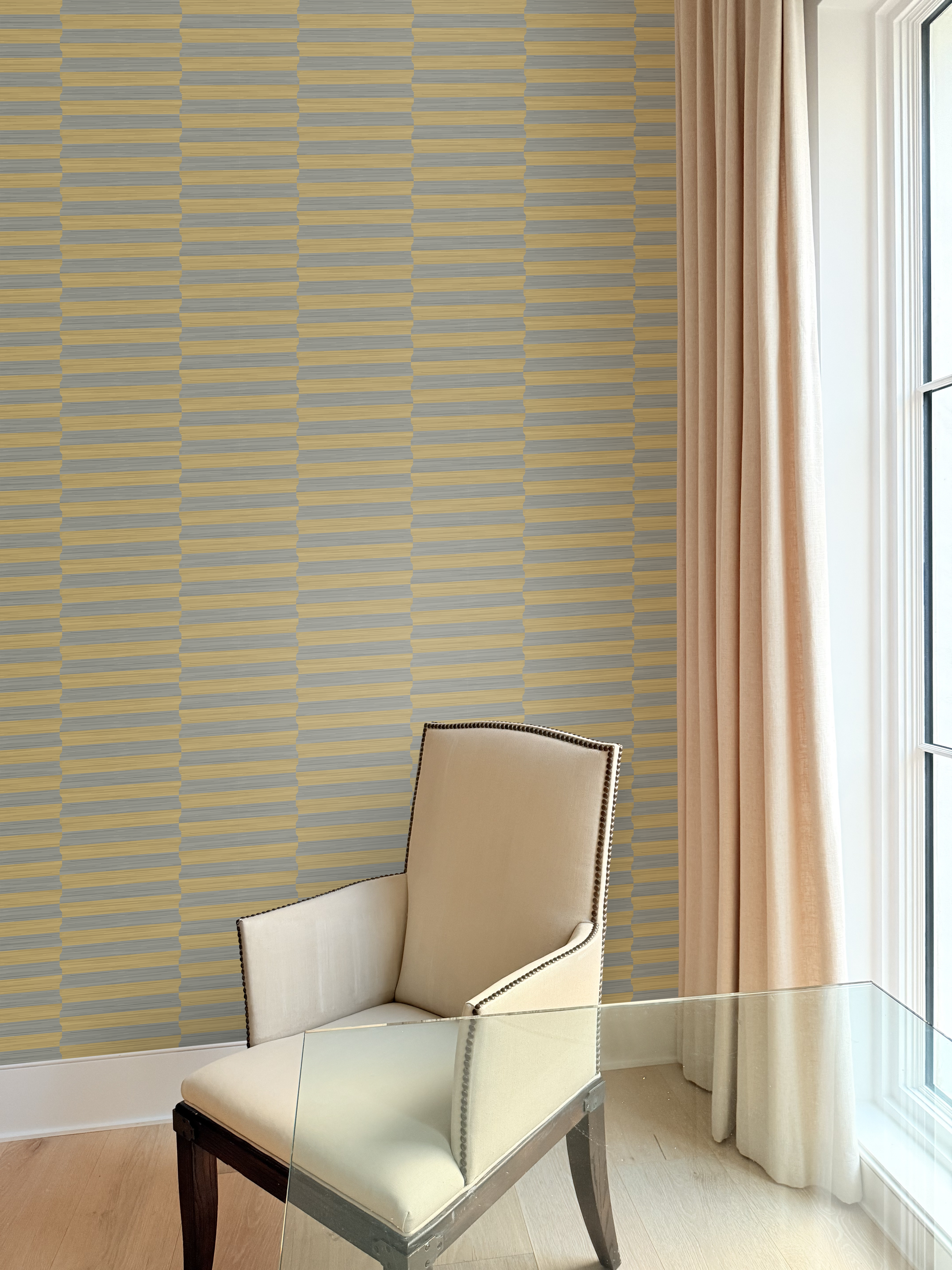
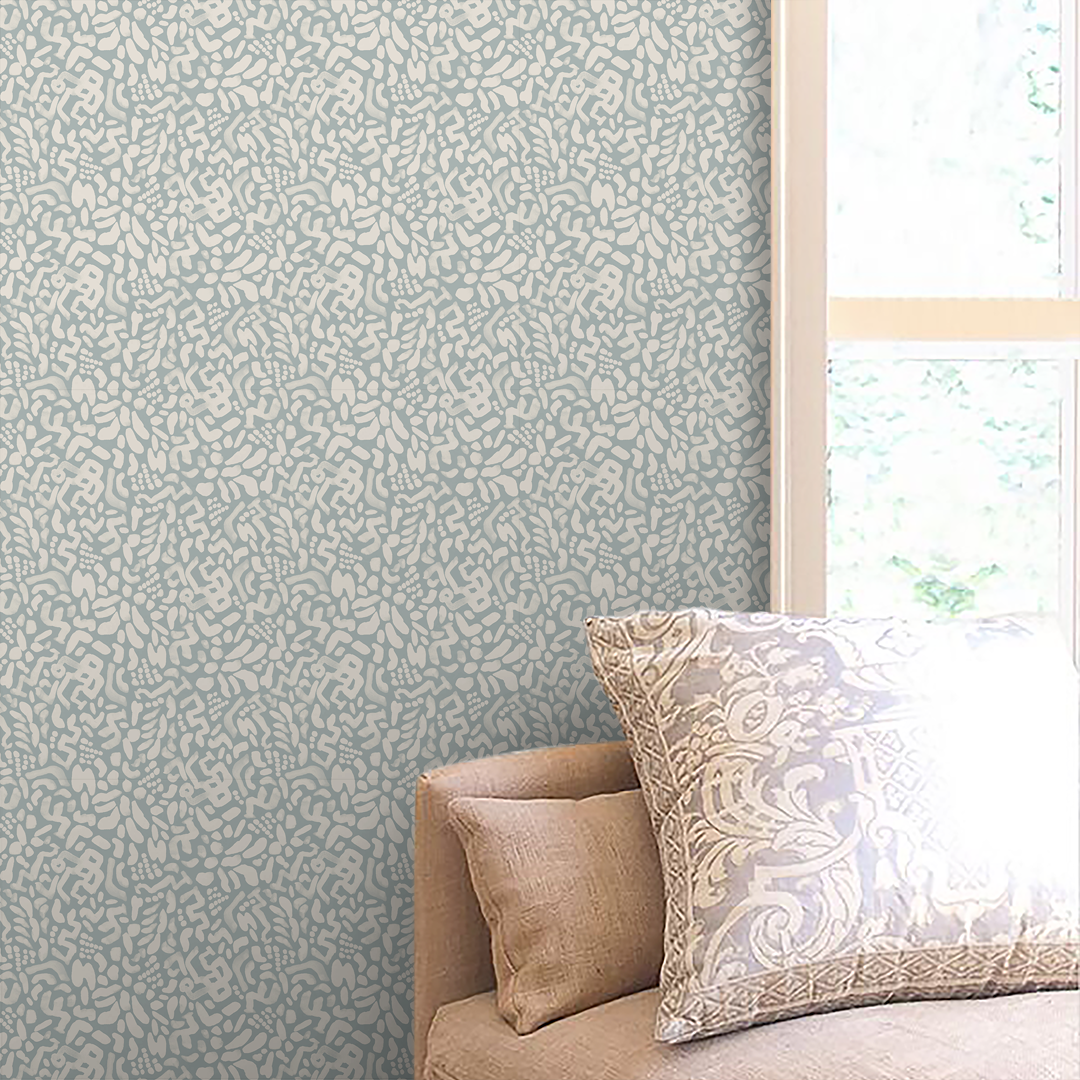
Angela Simeone is a Nashville-based contemporary abstract painter whose boutique luxury wallpaper line is created from her own paintings and composed — through her artistic and editorial eye — into layered, original, chic patterns, printed on a single luxurious 20 oz vinyl that looks like raw silk with a glimmering sheen, sold direct and to the trade.
Can A Wallpaper Pattern Actually Be Engineered To Change How A Room Feels?
Architect Suchi Reddy's new Luminous collection for Calico Wallpaper, which debuted at NYCxDesign in May 2026, is built directly on neuroaesthetics — the field of research examining how interiors register in the brain and body. "Neuroaesthetics tells us that our nervous systems are changed by what surrounds us — that beauty isn't passive, but it acts on us," Reddy told Galerie. "The challenge with wallpaper is that it has to do that work repeatedly across different light conditions, different rooms, and different lives." The six patterns in the collection use atmospheric gradients — cool silvers sliding into mauve and slate, lilac diffusing through soft gold — engineered around how the body actually registers shifting light, not around a fixed decorative motif.
What Does It Mean For A Wallpaper's Mood To Be Designed On Purpose?
Reddy described the intent behind Luminous's tonal shifts directly: "They became a way of mapping the movement through that state — the way mood doesn't hold still, but travels. I wanted someone standing in a room with these designs to feel the shift happening around them, almost imperceptibly, the way consciousness moves." Calico Wallpaper co-founder Rachel Cope, who hand-painted the gradients at full scale before they were set into repeat, described the process as genuinely experimental: "We'd move back and forth between intuitive, visual explorations and more analytical conversations about how the eye and brain interpret gradients, contrast, and spatial depth. The process challenged our instincts as designers and opened up a more experimental approach to atmosphere."

Does A Wallcovering Need Brushwork Under The Surface To Feel Handmade?
Calico Wallpaper's other new 2026 launch, Cadence, made with designer and EyeSwoon founder Athena Calderone, answers this by layering an actual hand-painted surface with scans of real aged materials — natural hide, patina — rather than inventing texture at the printing stage. Calderone described her approach to the collection this way: "Design, for me, is at its most powerful when it acknowledges history while nodding to the future. The silhouettes, materials and gestures of earlier eras offer a language that, when reinterpreted — with the Cadence wallpaper — becomes the foundation for something entirely new." Rachel Cope, describing what drew her to the collaboration, said: "I am endlessly inspired by Athena's effortless mastery of color, texture, and materiality. Everything she touches, whether an object or a space, radiates a soft, resonant elegance, and Cadence beautifully embodies the magic of her refined vision."

Why This Validates What My Own Patterns Have Always Done
Long before neuroaesthetics had a name, designers understood that a room's atmosphere wasn't incidental. Winston Churchill, arguing for rebuilding the bombed House of Commons exactly as it stood, put the underlying principle plainly: "We shape our buildings, and afterwards our buildings shape us." Johann Wolfgang von Goethe, in his 1810 Theory of Colours, made the same case about color specifically: "Each color produces a definite effect on the human being and by that very fact reveals its essential nature to the eye as well as the soul." Bauhaus color theorist Johannes Itten went further: "Colors are forces, radiant energies that affect us positively or negatively, whether we are aware of it or not." Psychologist Rudolf Arnheim, whose "Art and Visual Perception" reshaped how design schools teach the eye, wrote that "all perceiving is also thinking, all reasoning is also intuition, all observation is also invention" — mood and perception were never separate from cognition to begin with. And Gaston Bachelard, describing the way a room's scale changes the person standing in it, wrote: "When the dreamer really experiences the word immense, he sees himself liberated from his cares and thoughts." Every pattern in my own line begins as mark-making or a passage from an actual painting — the same premise Reddy and Calderone are now formalizing with research: a wall's real emotional effect starts with a real painted surface, not a printed illusion of one.
Explore the full designer wallpaper collection, or — designers — ask about the Trade Program, custom colorways, and custom scale.
Frequently Asked Questions
Can wallpaper actually change how a room feels, or is that just marketing language?
It's a real, researchable effect. Neuroaesthetics-driven collections like Calico Wallpaper's Luminous are engineered specifically around how color and light gradients register in the nervous system, not just how a pattern looks in a photo.
Does a wallcovering need visible brushwork to feel handmade?
No. What matters more is whether a real painted or textured surface exists somewhere in the process — whether that's brushwork, hand-painted gradients, or scanned material texture — rather than texture invented at the printing stage.
What makes a wallpaper pattern feel like atmosphere instead of just decoration?
Gradients, tonal shifts, and color relationships that respond to changing light throughout the day, rather than a single static repeat designed to look the same in every condition.
Is artist-designed wallpaper more expensive than a standard printed pattern?
Not necessarily — the difference is in the origin of the image and how much real texture and hand-work sits behind the final repeat, not automatically the price.
Sources: Galerie Magazine, "Suchi Reddy and Calico Wallpaper Apply Neuroaesthetics to Painterly Wall Coverings," Ryan Waddoups, May 4, 2026; Home Accents Today / Designers Today, "Calico Wallpaper Launches Cadence Collection with Athena Calderone," February 7, 2026; Johann Wolfgang von Goethe, "Theory of Colours," 1810; Winston Churchill, address to the House of Commons, October 28, 1943; Johannes Itten, "The Art of Color," 1961; Rudolf Arnheim, "Art and Visual Perception: A Psychology of the Creative Eye," 1954; Gaston Bachelard, "The Poetics of Space," 1958.