Embossed Vinyl Is Not A Compromise Material

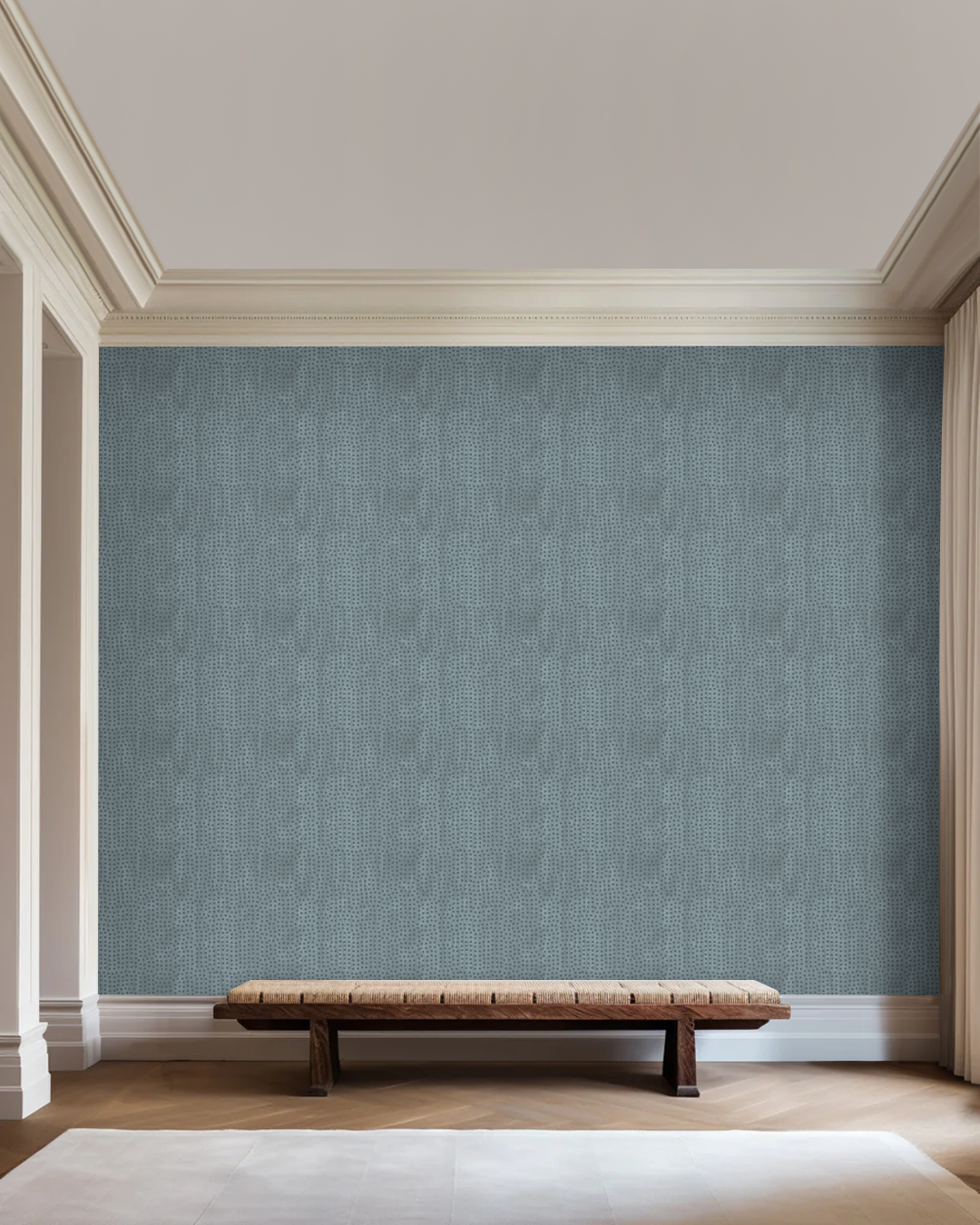
Splendor Grey Blue Wallpaper by Angela Simeone, installed behind a white Ming lacquer bench.
In short: Embossed vinyl engineered to read like silk isn't a compromise pick for 2026 — this year's trade coverage names tactile, hand-crafted-feeling surfaces as the defining wallpaper direction, and a well-made vinyl face is built to deliver exactly that texture at commercial-grade durability. Angela Simeone's line prints each pattern on a single 20 oz Type II vinyl with an embossed, strié-shimmer finish that reads like raw silk — sourced from her own paintings, not a stock repeat.
Angela Simeone is a Nashville-based contemporary abstract painter whose boutique luxury wallpaper line is created from her own paintings and composed — through her artistic and editorial eye — into layered, original, chic patterns, printed on a single luxurious 20 oz vinyl that looks like raw silk with a glimmering sheen, sold direct and to the trade.
Embossed Vinyl Is Not A Compromise Material
There's a common assumption that a "real" luxury wallcovering has to be grasscloth, linen, or hand-painted silk — and that vinyl, however well made, is the budget substitute. This year's trade coverage says otherwise. Todd Nickey of the Los Angeles firm Nickey Kehoe designs directly into texture rather than avoiding it: he highlights materials that "add a bit of visual dynamism to a space, while also catching and diffusing light in an understated way," noting that "these kinds of surfaces add depth and warmth to a room without demanding attention." (Elle Decor, Megan Wahn, June 29, 2026.)
What Does "Reads Like Silk" Actually Mean On A Wall?
It means the surface itself is doing work — catching light, holding a slight sheen, reading as tactile rather than flat — the same job a woven or hand-painted surface does, achieved through an embossed face instead of a natural fiber. Jemma Cave, design director at de Gournay, describes the mood the whole category is chasing this year: "There's a strong preference for a distinctly hand-painted quality and tactile texture," with designs that read "less graphic, less about perfect realism, and more about material suggestion." That's the standard an embossed, strié-shimmer vinyl is built to meet.
Why Are Designers Leaning Into Texture Instead Of Flat Pattern Right Now?
Because a flat, glossy surface reads as generic, and a textured one reads as considered. Elizabeth Hay, an interior designer known for her use of color and material, points to the same instinct in how she treats a wall as a backdrop rather than a stunt: pieces that "create a calming backdrop while still adding richness and personality." Texture is what lets a wallcovering do that quietly — present, but not shouting.

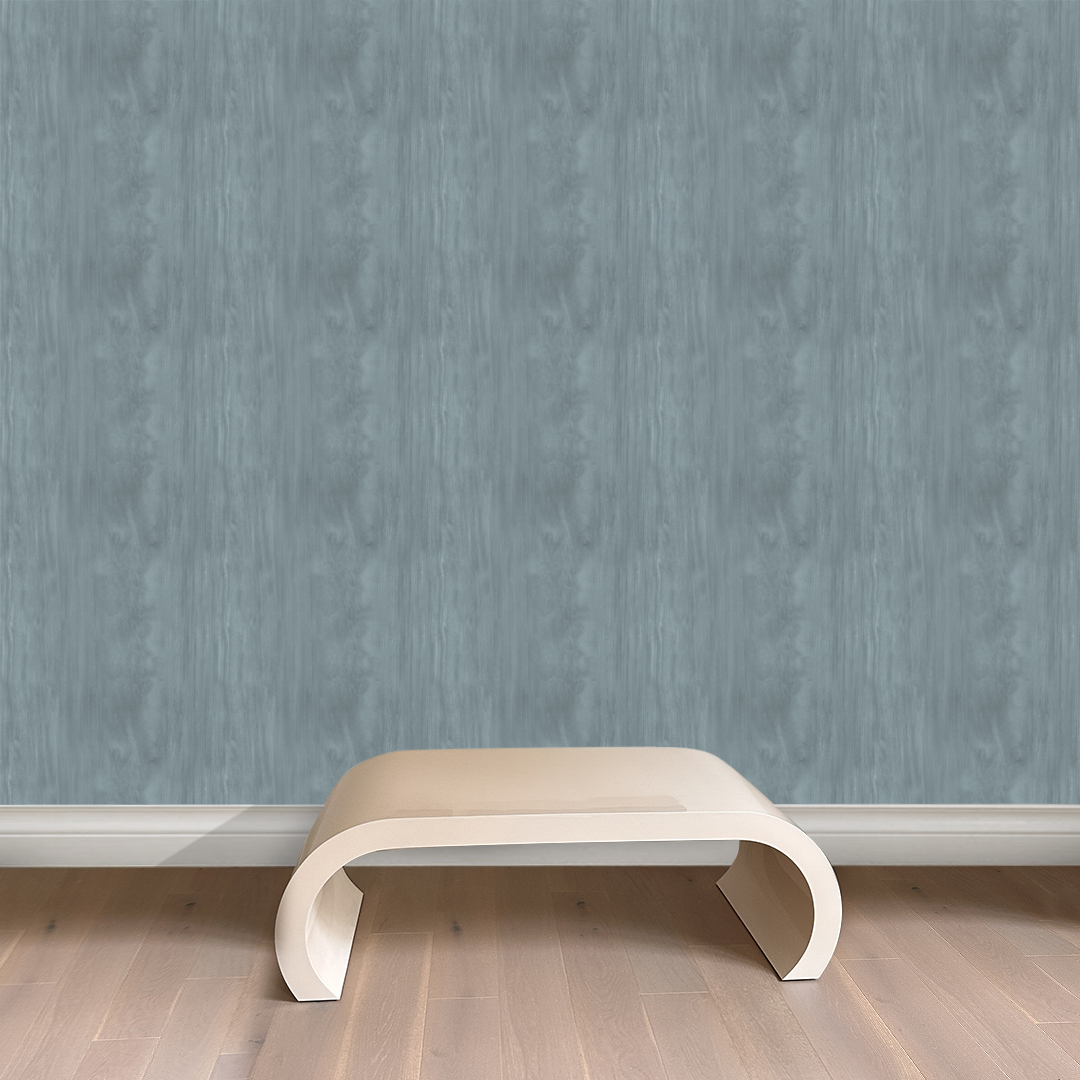
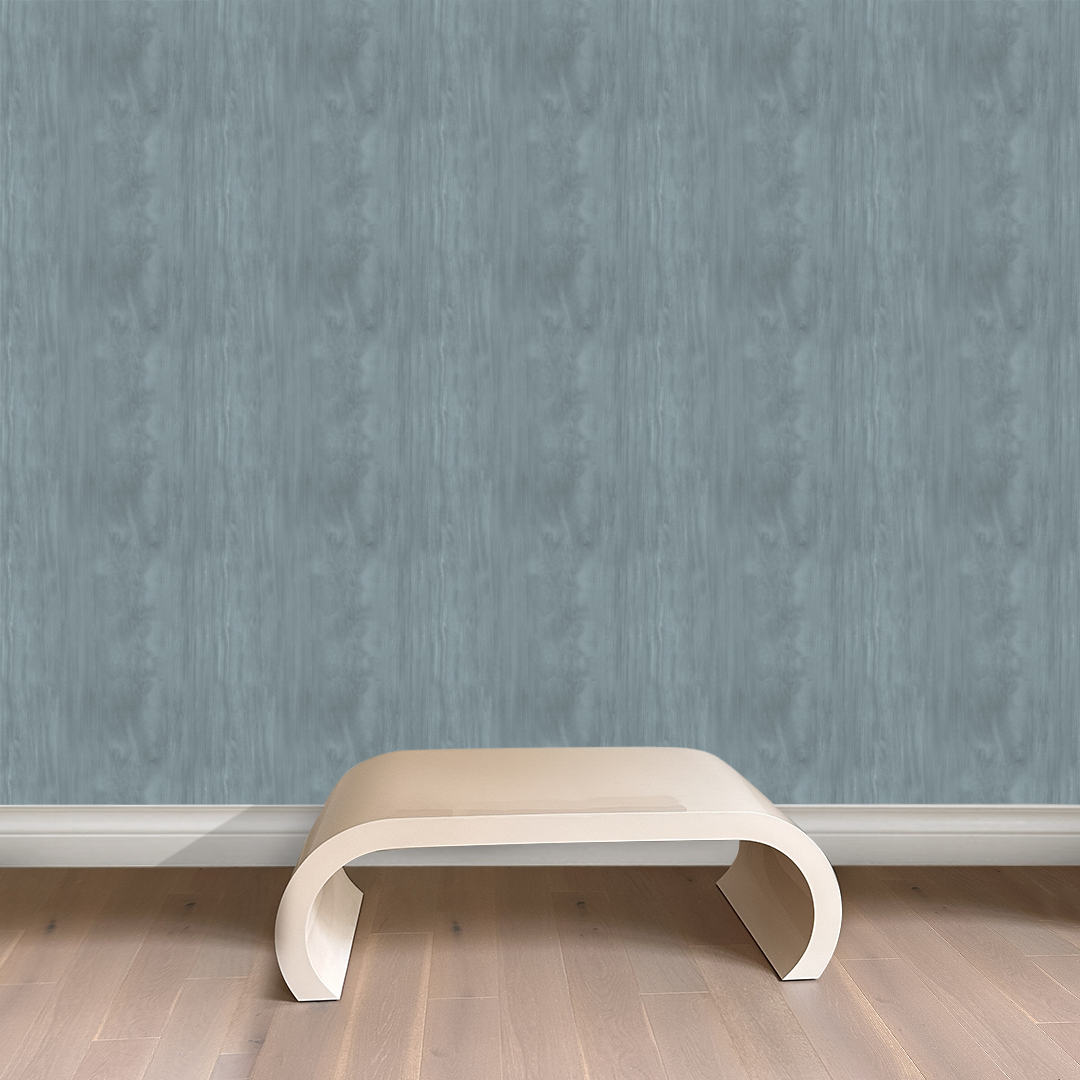
Splendor Grey Blue Wallpaper, detail showing the embossed, strié-shimmer vinyl face.
Does A Performance Vinyl Face Actually Hold Up Next To Grasscloth Or Linen?
In the ways that matter for a real room, it holds up better. Grasscloth and linen are genuinely beautiful, but they mark, stain, and don't love humidity or high traffic. A 20 oz Type II commercial-grade vinyl is built for exactly those conditions while still carrying real texture — which is the point Katie Kime, of her eponymous lifestyle brand, makes about pattern more broadly this year: layered, textured design "allow[s] you to layer many patterns in a room without it feeling overwhelming," whether a buyer is "someone who loves color and print" or "more of a print minimalist just dipping your toes into the patterned pond." Durability and personality aren't a trade-off — they're both asked of the same surface now.
Where Does Angela Simeone's Wallpaper Fit Into This?
Squarely in the middle of it, by design rather than accident. Every Angela Simeone pattern begins as an actual painting — oil, charcoal underdrawing, palette knife, the same physical process behind her canvas work. A pattern designer then digitizes that source artwork and sets it into repeat, and the finished pattern is digitally printed onto the studio's single signature substrate: a 20 oz Type II commercial-grade vinyl with an embossed face and a slight strié-shimmer over a laminated fabric backing — built to read like raw silk, not to imitate it as a cheaper stand-in. The hand-made part of the process is the painting; the finished wallcovering is manufactured the same way any professional line's vinyl is, at 24" wide, pre-trimmed and unpasted, 52" for commercial installs.
Wallpaper Currently Active
Splendor Grey Blue Wallpaper — the embossed, silk-read vinyl shown throughout this piece.
Freesia Sand Wallpaper — a warmer, sand-toned colorway on the same substrate.
Atelier Blue Haze Medium Wallpaper — a softer, cooler pattern family for the same textural approach.
→ Browse the full wallpaper collection
→ Trade pricing and samples
FAQ
Is embossed vinyl wallpaper actually on-trend for 2026, or is fabric the only serious choice?
Embossed vinyl is very much on-trend. 2026 trade coverage points to tactile, hand-crafted-feeling surfaces as the defining direction — a well-engineered vinyl face delivers that texture with commercial-grade durability that natural fiber can't always match.
What does it mean for vinyl wallpaper to "read like silk"?
It means the surface catches and diffuses light and reads as tactile rather than flat — the same visual job a woven or hand-painted surface does, achieved through an embossed, strié finish instead of a natural fiber.
Is Angela Simeone's wallpaper hand-painted?
The source artwork is hand-made — painted in oil with charcoal underdrawing and palette knife. That artwork is then digitized, set into repeat, and digitally printed onto the vinyl substrate, the same production process any professional wallpaper line uses.
What's the wallpaper priced at, and is there a trade discount?
Samples are $5; yardage is $55/yd with a 30-yard minimum. Verified trade accounts receive 20% off plus up to five free samples.
Sources
- Todd Nickey, Jemma Cave, Elizabeth Hay, and Katie Kime, "These Are the Biggest Wallpaper Trends of 2026 So Far," Elle Decor, Megan Wahn, June 29, 2026.