Does A Printed Pattern Need Real Paint's Motion Underneath It

In short: This season's designers are naming marbled, paint-in-motion wallpaper as one of 2026's strongest patterns — and the real question underneath the trend is whether a print that only imitates paint's movement gives a room the same feeling as a pattern that actually began as paint moving. Every pattern in my wallpaper line starts as an original painting, so the movement in the repeat is a record of something that really happened on canvas, not a simulation of it.
Angela Simeone is a Nashville-based contemporary abstract painter whose boutique luxury wallpaper line is created from her own paintings and composed — through her artistic and editorial eye — into layered, original, chic patterns, printed on a single luxurious 20 oz vinyl that looks like raw silk with a glimmering sheen, sold direct and to the trade.
Why are designers naming marbled, paint-like wallpaper as a 2026 trend?
Because a wall that reads as still in motion is doing something a flat print rarely does. Austin-based designer Killy Scheer, in Veranda's 2026 wallpaper trend coverage, named the surge directly: "I love the organic movement and artistry in marbled papers... each swirl feels alive and expressive." She also called the pattern a surprisingly versatile "neutral" — one that "layers beautifully with other textures, patterns, and artwork to create depth and character without overwhelming a space."
Can a flat print actually deliver the same feeling as a pattern with real movement behind it?
Designers are increasingly saying no — that a room can tell the difference between pattern that's considered and pattern that's just louder. Janine Carendi MacMurray, founder of Area Interior Design, described the quality she's after in her own material choices to Business of Home in June 2026: "There is a sense of restraint, with moments that are a bit more expressive, which keeps it from feeling static." A pattern that never resolves into something static is exactly what separates a wallcovering with real motion in it from one that's simply bold.
Does paint's motion actually get "caught" the way a photograph catches a moment?
Painters have described exactly this for decades, and it's a more precise idea than it first sounds. Joan Mitchell, in a 1986 interview with philosopher and critic Yves Michaud, said: "Of course, there is movement, what people call movement, within the frame, but it is certainly caught and if the painting works, the motion is made still, like a fish trapped in ice." That's the literal mechanism behind a painting-derived pattern — real motion, captured once, then held permanently in the repeat.
Is there a difference between a pattern that illustrates movement and one that actually is movement?
Cy Twombly drew that exact line about his own gestural line work. In a 1957 note on one of his own paintings, later cited in Richard Leeman's 2005 Twombly monograph, he wrote: "Each line is now the actual experience with its own innate history. It does not illustrate — it is the sensation of its own realization." A printed pattern engineered to resemble a brushstroke is illustrating motion. A pattern drawn from an actual painting is printing the record of motion that already happened.
Does a helen frankenthaler painting "look" like it happened all at once — and does that matter for a pattern?
She said that was the whole aim. Helen Frankenthaler described her own standard for a finished painting plainly: "A really good picture looks as if it's happened at once." A pattern built from a source painting with that quality carries the same immediacy into repeat — the wall doesn't look assembled from parts, it looks like something that occurred.

Is there a deeper reason a room with real movement in its pattern feels different to be in?
Philosophers who've written about domestic space would say yes. Gaston Bachelard, in The Poetics of Space (1958), wrote: "The house shelters day-dreaming, the house protects the dreamer, the house allows one to dream in peace." John Dewey, in Art as Experience (1934), argued that real art is "the subject-matter of experiences heightened and intensified" — not a decorative addition to ordinary life, but a more concentrated version of it. A wall that carries real, captured motion is doing the heightening Dewey describes; a flat, static print is not.
How does a pattern like this actually get made, from painting to wall?
One real painting, then one digitizing pass, then one print run — not a cycle of invented brushwork. Every pattern in my line starts as an actual painting: oil, charcoal underdrawing, palette knife, worked on canvas before any of it becomes a repeat. A pattern designer then digitizes that source image and sets it into repeat, and the finished design is digitally printed onto a 20 oz Type II commercial-grade vinyl that reads like raw silk with a soft, glimmering sheen — the same production process any professional wallpaper line uses. The mark-making underneath the pattern, though, was never invented digitally. It happened once, on canvas, the way Joan Mitchell and Cy Twombly both described.
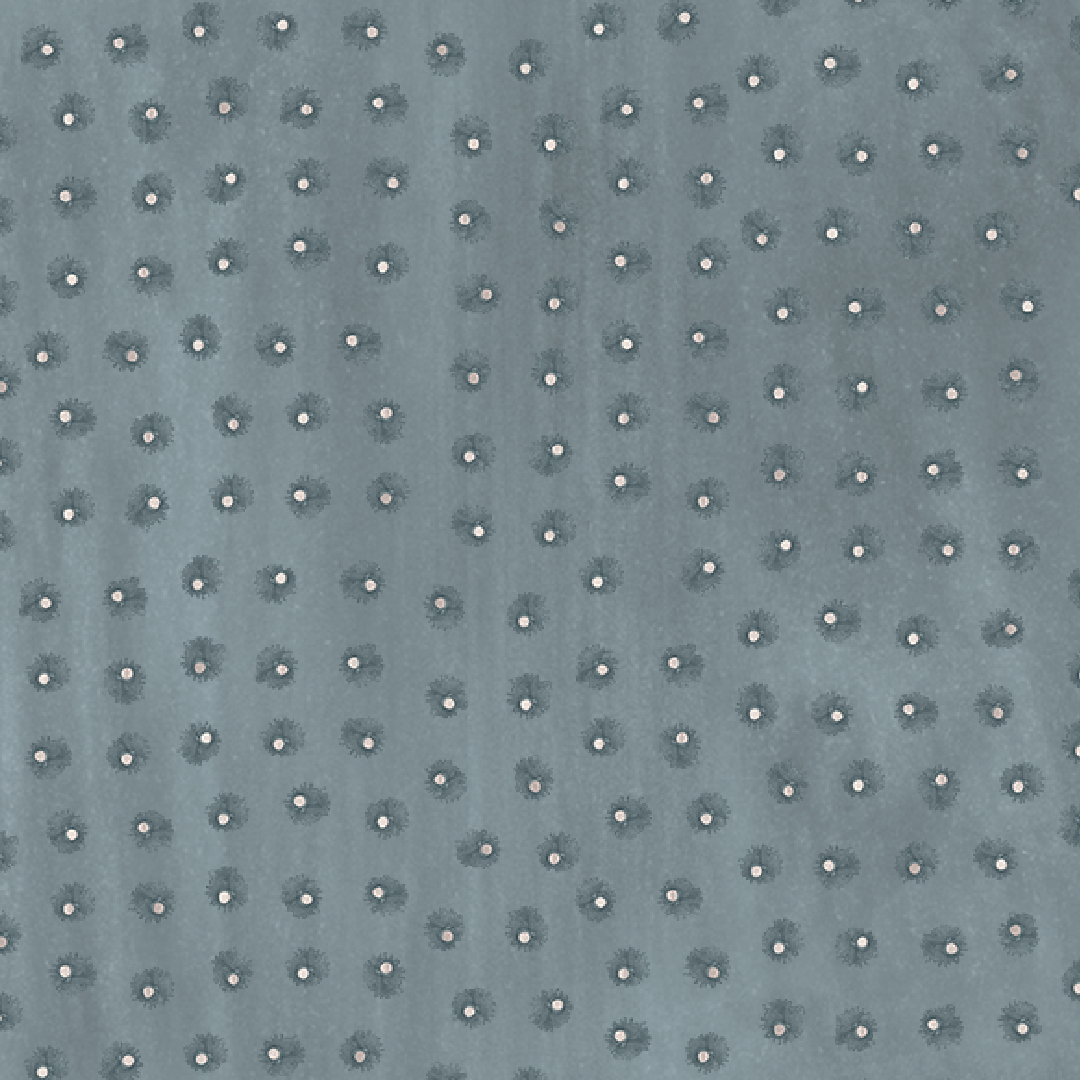
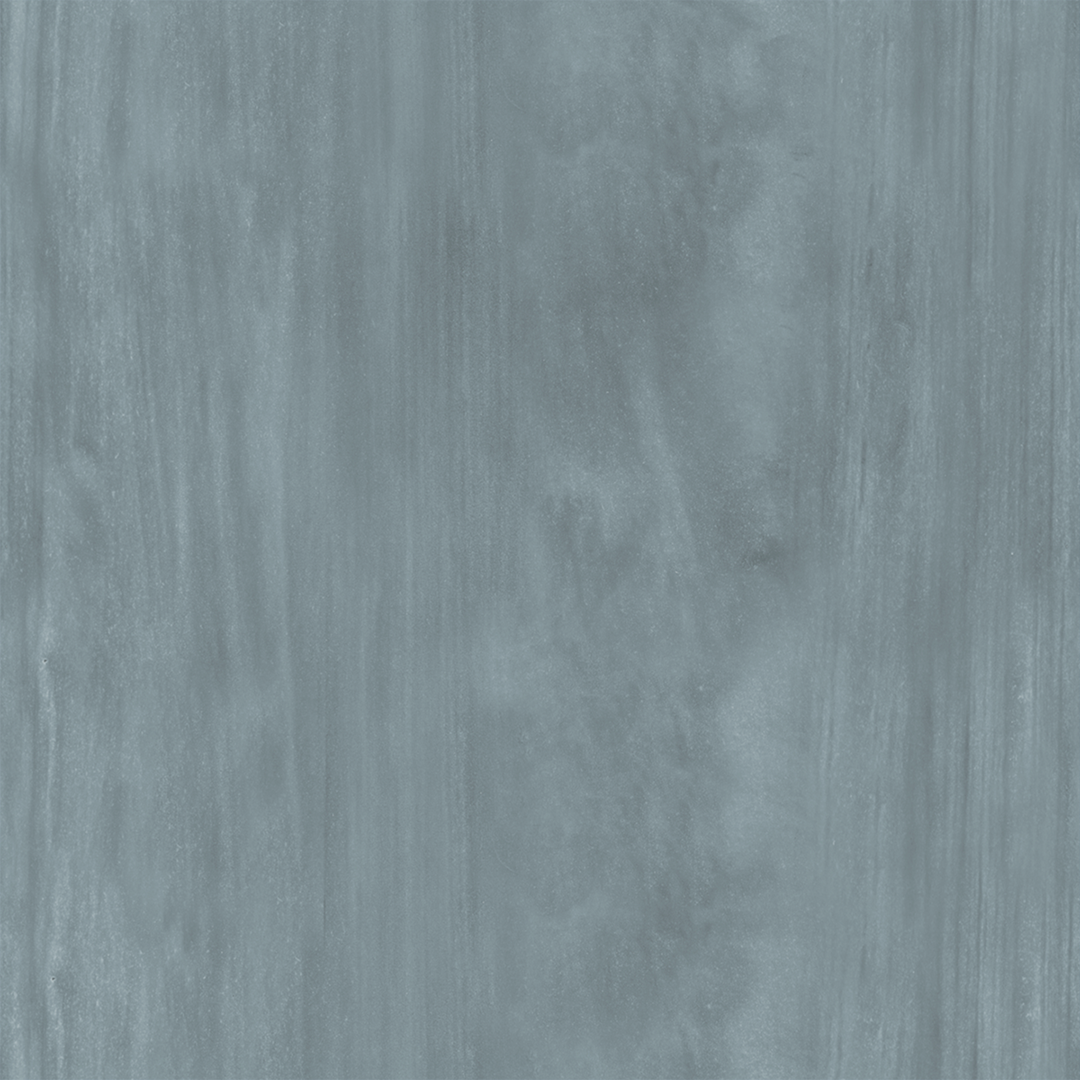
The Splendor Grey Blue pattern shown above is a direct example — a fluid, watercolor-like movement drawn straight from a painted source. Designers working on a project with this quality of pattern in mind can review the full wallpaper collection or set up a trade account for samples and pricing.
Frequently asked questions
Is this wallpaper hand-painted?
The source artwork is hand-painted — oil, charcoal underdrawing, palette knife. That artwork is then digitized and set into repeat, and the finished pattern is digitally printed onto vinyl, the same process any professional wallpaper line uses.
What makes a painting-derived pattern different from a printed brushstroke design?
A painting-derived pattern is drawn from real paint that actually moved on canvas. A printed brushstroke design is illustrating that quality without a real painted source behind it.
What is the wallpaper substrate?
A 20 oz Type II commercial-grade vinyl with a slight strié shimmer, 24 inches wide and pre-trimmed for residential use, 52 inches for commercial.
Is there a trade discount?
Yes — verified designers and firms receive 20% off retail and up to five free samples through the trade program.
New patterns and colorways post first at angelasimeone.com.
Sources: Veranda, "2026 Wallpaper Trends," designer roundup (Killy Scheer) · Caroline Biggs, "Janine Carendi MacMurray's material medley of hand-knotted rugs, woven wallcoverings and limewash paint," Business of Home, June 22, 2026 · Joan Mitchell, interview with Yves Michaud, 1986 · Cy Twombly, 1957 note, cited in Richard Leeman, Cy Twombly: A Monograph (2005) · Helen Frankenthaler, per A-Z Quotes/Wikiquote · Gaston Bachelard, The Poetics of Space (1958) · John Dewey, Art as Experience (1934).