Weighing Instinct Against Budget Is The Real Discipline

In short: Sotheby's own collecting advice names it directly: weigh instinct against your budget and your actual wall space, all three at once. That isn't a compromise on loving a piece — Sotheby's American Art specialist Elizabeth Pisano calls it "a rule of three," the real discipline behind the collections that hold up over time. For a buyer eyeing a large or oversized original, being this deliberate isn't overthinking it. It's how serious collectors actually buy.
Angela Simeone is a Nashville-based contemporary abstract painter whose boutique luxury wallpaper line is created from her own paintings and composed — through her artistic and editorial eye — into layered, original, chic patterns, printed on a single luxurious 20 oz vinyl that looks like raw silk with a glimmering sheen, sold direct and to the trade.
Is it wrong to weigh budget and wall space against a painting you love?
No — Sotheby's says the opposite. Elizabeth Pisano, the house's American Art specialist, lays out what she calls "a rule of three" for new collectors: instinct, budget, and space, balanced together rather than any one overriding the others. On instinct, she's direct: "If you can't stop thinking about a work, that's usually a sign you should own it. The collections I have seen appreciate most in value are the ones built by people who paid far less attention to trends and changing tastes and instead focused on things they truly loved and reacted to instinctively." But she doesn't stop there. On budget: "You will love something more if there is no financial guilt associated with it" — a real limit, she argues, sharpens your desire for a piece rather than dulling it. And on space, she's almost funny about it: "Especially in New York, do you really have the wall space for that 60-inch painting when you are using your oven as a supplementary closet?"
What does that look like for someone eyeing a large-scale piece specifically?
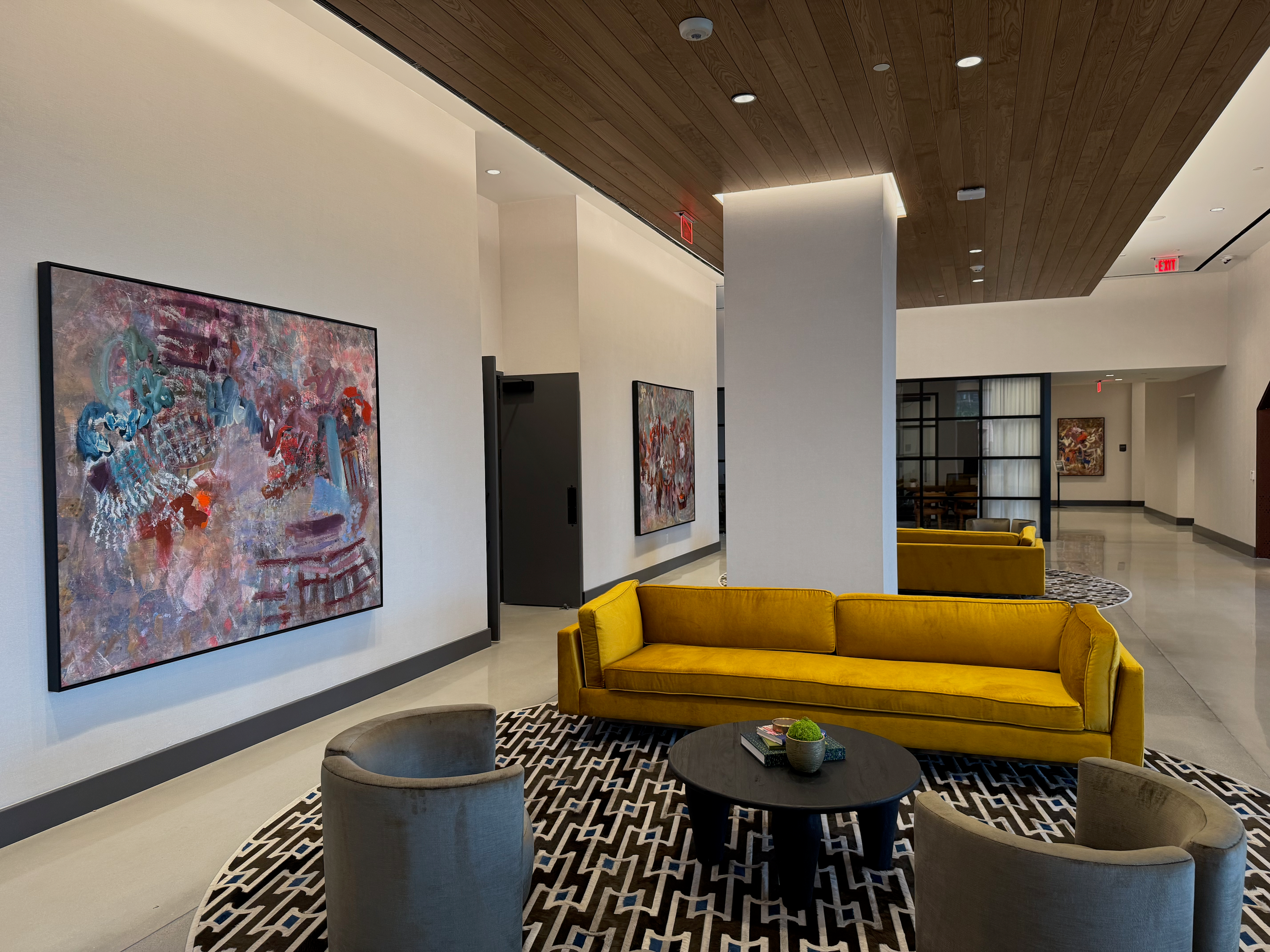
It looks like doing the practical math before the emotional case is even finished being made — and that math gets more interesting, not less romantic, as the piece gets bigger. New York art advisor Adam Green makes the point plainly: "Most collectors only have a few walls that can really handle large, oversized work, so they should try to reserve them for really special pieces." That's permission to be selective about where a large piece goes, not permission to talk yourself out of buying one. Interior designer Carolyn Cerminara, of Cerminara Design, puts the case for going big without apology: "I love to use oversized art, which makes a bold confidence statement without clutter in the space." A single large piece, chosen deliberately, often does more for a room than several smaller ones fighting for the same wall.
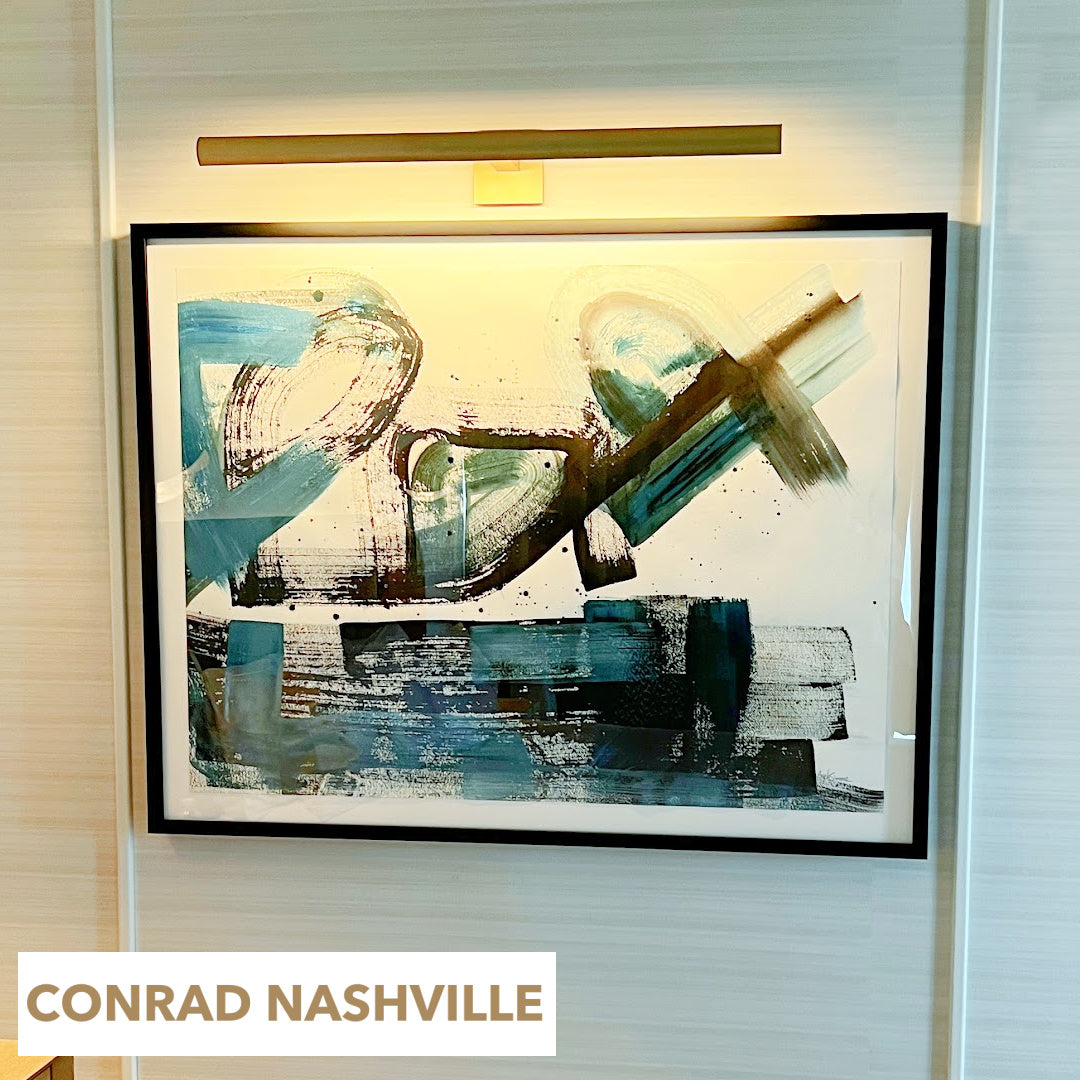
Large-scale painting asks something different of the artist, too. Painting large requires a horizontal working surface and the freedom to approach the canvas from all four sides — the work is composed in the round, not in front of, the body circling, leaning, retreating, and returning until what was made standing above can be read standing in front of. A large-scale piece resists a single focal point on purpose: there's no beginning and no end, so the eye keeps traveling and the piece keeps unfolding the longer you live with it. That's exactly the kind of piece Pisano's "rule of three" is built for — one that rewards the deliberation instead of punishing it.

Isn't waiting to weigh all three factors just a way of talking yourself out of it?
Sculptor Auguste Rodin didn't think patience and decisiveness were opposites — he thought patience was the more active of the two. "Patience is also a form of action," he said, and elsewhere: "One must work, nothing but work, and one must have patience." Weighing budget and wall space isn't hesitation dressed up as prudence. It's the work that happens before the decision, not instead of it — and it's exactly what lets a collector move quickly and confidently once the three factors actually line up.
Henry David Thoreau made a related case for why the deliberate choice is the more serious one, not the more timid one: "It is something to be able to paint a particular picture, or to carve a statue, and so to make a few objects beautiful; but it is far more glorious to carve and paint the very atmosphere and medium through which we look. To affect the quality of the day — that is the highest of arts." A single, well-considered large painting, chosen because it passed all three of Pisano's tests, does exactly that to a room — it changes the atmosphere of the whole space, not just the sixty inches of wall it covers.
"Doing what's right sometimes requires patience." — Marcus Aurelius, Meditations

How do you actually apply the "rule of three" when you're ready to buy?
Start with the instinct — notice what you keep coming back to. Then get honest about the number, and let a real budget sharpen your interest rather than dampen it, the way Pisano describes. Then measure the wall. Literally: stand in the room, look at the space above the sofa or across the entry, and be honest about what scale actually works there before falling further for a painting that won't. When all three line up, the deliberation is over and the decision is easy — that's the whole point of doing it in that order.
Angela Simeone's studio sells ready-to-ship originals from $1,850 to $9,850, with large and extra-large work built specifically for the walls that can hold it — and no upper size limit on an oversized or architectural commission built across canvas tiles for a lobby, atrium, or great room. Every piece ships rolled, stretched fresh on arrival, and hand-delivered ready to hang.
Browse the in-stock collection to measure instinct against what's actually available now, or start a commission built to the exact wall you're weighing it against.
Frequently Asked Questions
What is Sotheby's "rule of three" for new art collectors?
Sotheby's specialist Elizabeth Pisano recommends balancing three factors before buying: instinct (what you can't stop thinking about), budget (a real limit sharpens desire), and wall space (measure honestly before you fall further for a piece).
Is it practical or unromantic to think about wall space before buying art?
No — advisors and designers agree that reserving your best walls for special, oversized pieces is a sign of a serious collector, not a lack of passion.
What size original paintings does Angela Simeone's studio sell?
Ready-to-ship inventory ranges from $1,850–$9,850, medium to extra-large. Commissions have no upper size limit, including architectural and multi-panel work built for lobbies and large rooms.
How long does a large-scale commission take?
Deposit to delivery runs about four weeks, depending on the studio's schedule, and includes two full painting options developed at once plus two rounds of revision.
Sources: Sotheby's, "Specialist Tips for New Collectors" (Elizabeth Pisano); Artsy, "Large Wall Art: What You Need to Know About Buying" (Adam Green); AOL, designer roundup on oversized art (Carolyn Cerminara, Cerminara Design); Auguste Rodin, attributed; Henry David Thoreau, "Walden" (1854); Marcus Aurelius, "Meditations."
New original work from Angela Simeone's studio ships regularly — see what's in stock now at angelasimeone.com.