
The Decision Behind The Mark Beats The Tool That Made It
In short: A working abstract painter doesn't need a brush to make a serious painting. Miles McEnery Gallery's Elliott Green builds his current show entirely from carved sponges, foam rollers, metal blades, and fleece stretched over shaped plywood — no brush at all. The tool only carries out a decision the painter already made. My own palette knife, fingertip, and scraped-back layers work on the same premise: the mark matters because of the judgment behind it, not the instrument that applied it.
Angela Simeone is a Nashville-based contemporary abstract painter whose boutique luxury wallpaper line is created from her own paintings and composed — through her artistic and editorial eye — into layered, original, chic patterns, printed on a single luxurious 20 oz vinyl that looks like raw silk with a glimmering sheen, sold direct and to the trade.
Does an abstract painter need a brush to make a serious painting?
No. Miles McEnery Gallery's current show, "Lost Horizon" (on view through August 14, 2026), is built from painter Elliott Green's own toolkit of carved sponges, foam rollers, metal blades, and fleece stretched over shaped plywood — he loads the fleece with paint and glides it across the canvas to raise dimensional cloud forms, no bristle involved. Critic John Yau, writing on Green's practice, put it directly: "He uses different tools to apply layers of creamy paint to the canvas, as well as scrape it off. I am guessing soft bristle brushes and paint scrapers but I would not be surprised if he used other tools, including some of his own devising." The tools change; what stays constant is the decision behind each one.
What tools do abstract painters use instead of a brush?
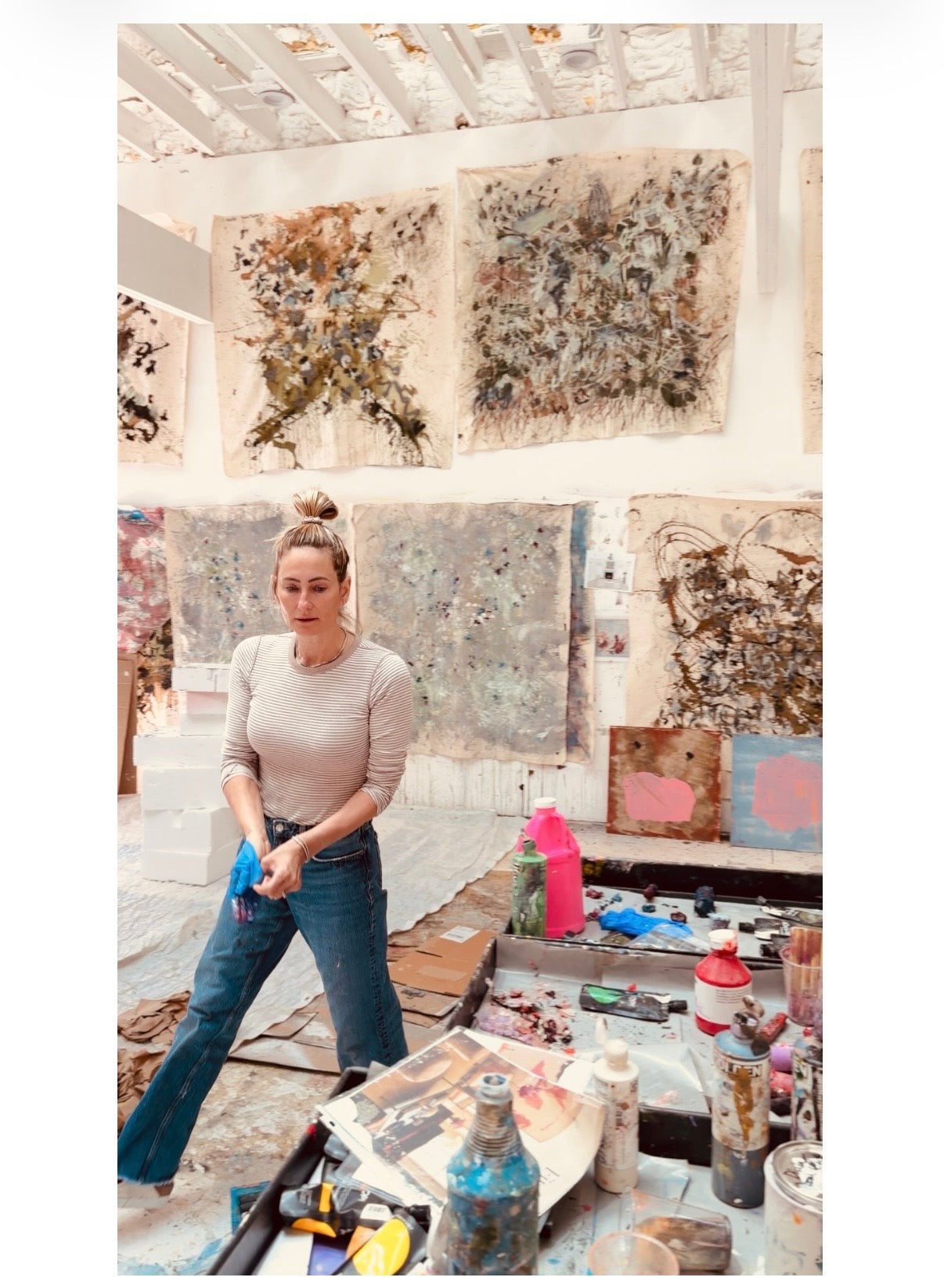
Green himself has described working with a drywall knife instead of a printmaker's roller: "There was always leftover paint that I cleaned up and threw away — until two years ago when I had the idea to press paper onto the wet paint... I make the impression by pressing over the back of the paper with a drywall knife — it works better than the rubber roller the printmakers use." That's a working painter choosing a hardware-store tool over the traditional one because it makes the specific mark he wants. In my own studio, the tools are a palette knife, a fingertip, and charcoal underdrawing — oil thinned with medium, built up and scraped back in layers until the surface settles.

Why does the decision behind the mark matter more than the tool itself?
Because the tool only executes a choice the painter has already made — where to press, how hard, when to stop, when to scrape a layer back down to what's underneath. Gary Brewer, in his essay for "Lost Horizon," described the experience of Green's paintings as "a deeply satisfying experience to be held between fictional space and the pure physicality of the medium." That physicality — the argument between a hand and a surface — is what a viewer is actually responding to, whatever implement carried it out. Green himself frames the outcome in terms of intent, not equipment: "I try to give each cloud, mountain or landscape an individual quality. They are almost like animated characters."
What does this look like in my own studio?
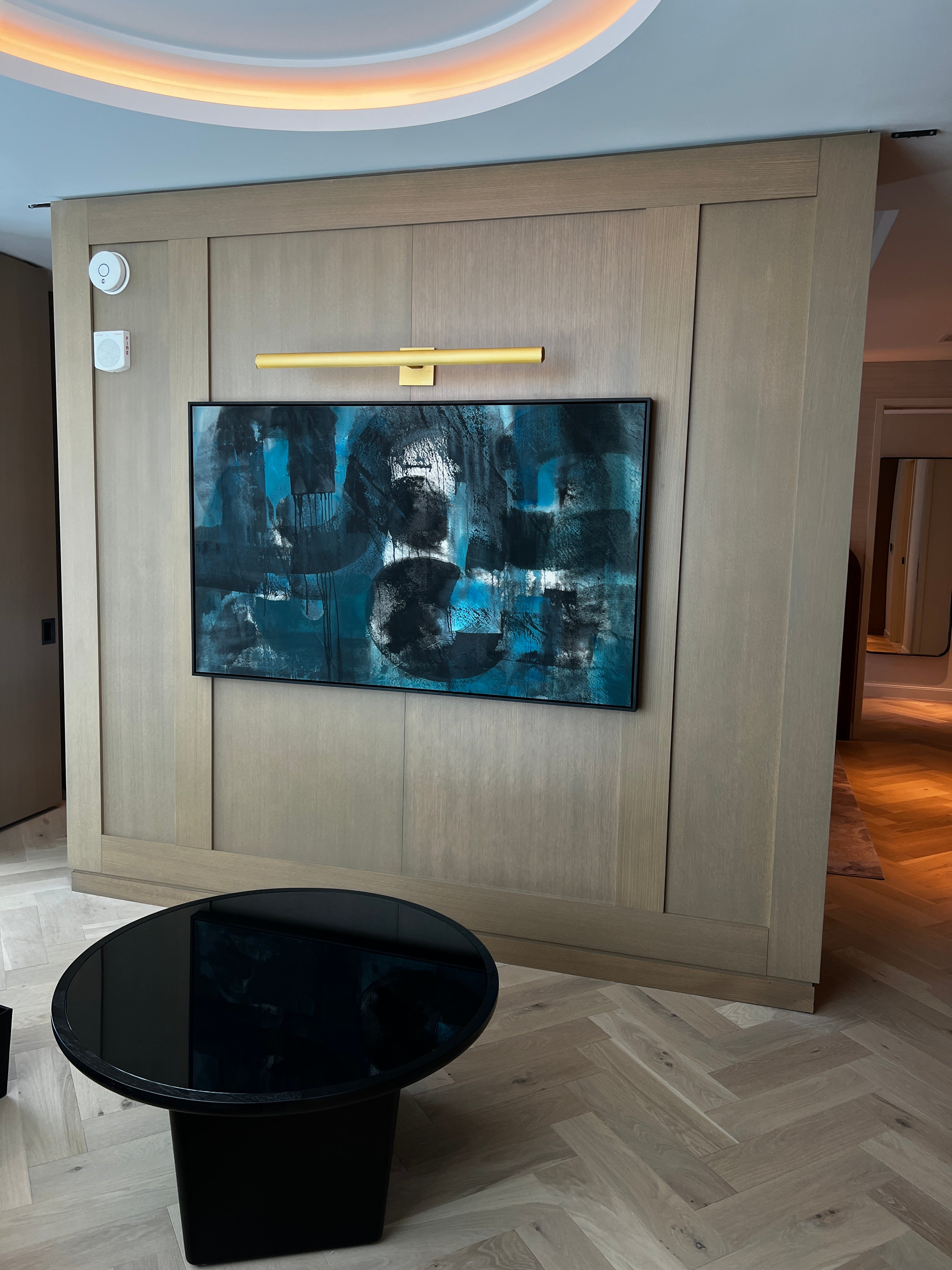
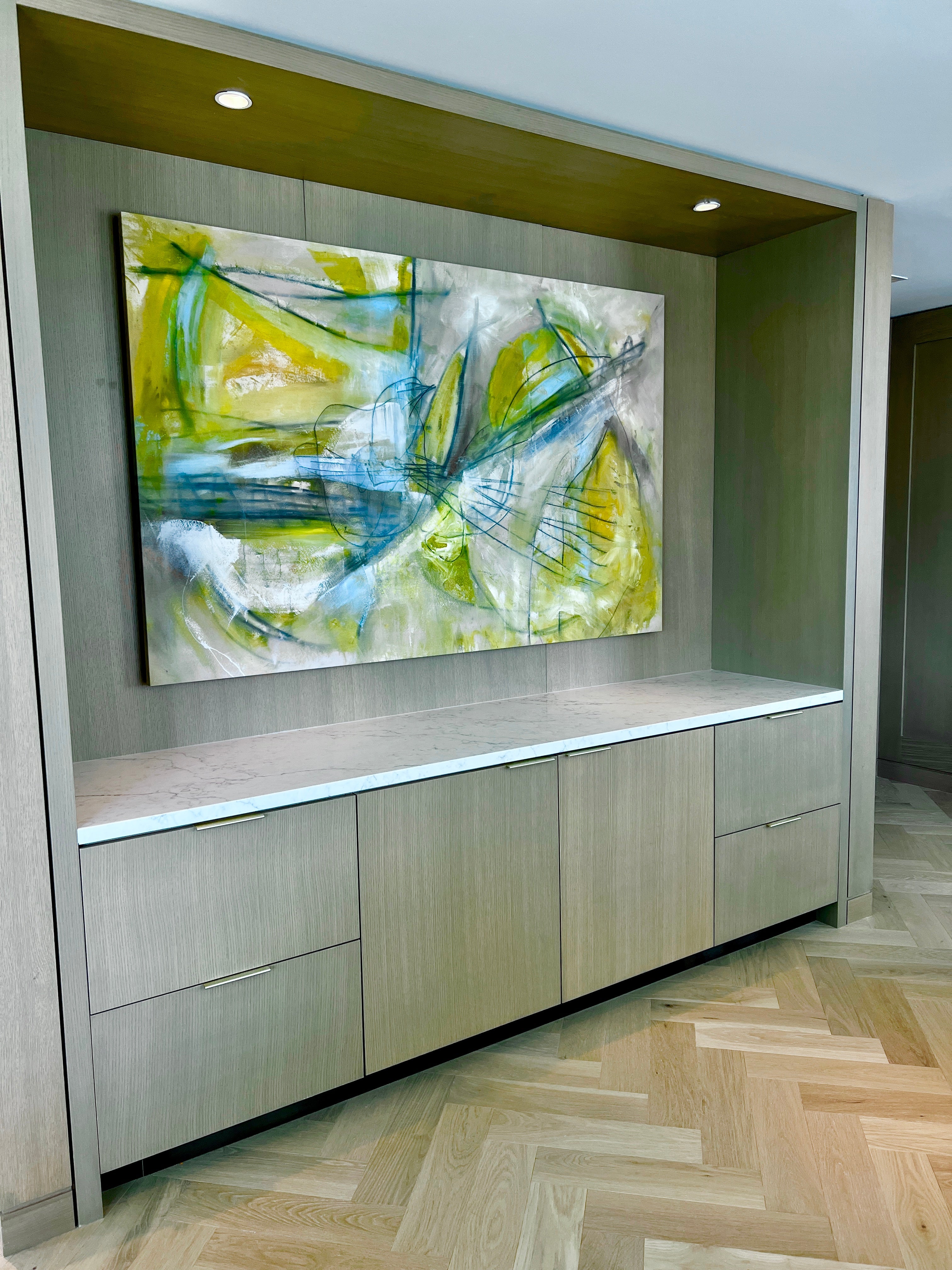
My Astral Thicket series works the same way. Walnuts harvested and boiled from my own yard become the base stain; crushed and ground oil and wax pigments are layered over it with a palette knife, then lifted by pops of dusty pastel. No single tool defines the series — the decision does: how much stillness to leave in, where the linework interrupts it, when a passage is a forest disappearing and when it reads as a night sky. Astral Thicket 5 and Astral Thicket 7, both currently in stock, carry that same built-up, scraped-back surface.

Does a painting's value depend on which tool made it?
No — and this is worth saying plainly to a collector or designer weighing an original. What John Yau called Green's paintings — worlds that "feel complete and unlike anything else in contemporary art" — earned that description on the strength of the resolved surface, not a receipt for which tool touched it. The same standard applies to any working abstract painter's inventory: judge the decision on the canvas, not the hardware that made it.
Frequently asked questions
Does an abstract painter need a brush to make a serious painting?
No. A serious abstract painting is judged by the decision behind every mark, not the tool that made it — painters have long worked with palette knives, sponges, rollers, scrapers, and their own hands.
What tools do abstract painters use instead of a brush?
Carved sponges, foam rollers, metal blades, fleece over shaped plywood, drywall knives, palette knives, and fingertips — each producing a different, specific mark.
Why does the decision behind the mark matter more than the tool itself?
The tool only executes a choice the painter already made — where to press, how hard, when to stop. The variable is judgment, not equipment.
Does a painting's value depend on which tool made it?
No. Collectors and designers respond to a resolved surface and a confident decision, valued the same way regardless of the implement behind it.
For a piece built the same way — palette knife, scraped-back layers, one of a kind — the current in-stock paintings are listed with real dimensions and pricing, including Astral Thicket 5 and 7 above. For a piece built to a specific room, start at commissions.
New paintings and commission openings post first at angelasimeone.com.
Sources: Miles McEnery Gallery, "Elliott Green: Lost Horizon" exhibition press release, milesmcenery.com, 2026. John Yau, "Elliott Green's Voyage of Self-Discovery," Hyperallergic, June 13, 2020.