
A Hotel Room Has To Feel Right Before It Photographs Well
In short: Wimberly Interiors/WATG's own 2026 hospitality forecast names a real shift in the industry: away from rooms designed for the photograph and toward rooms designed for how they feel the moment a guest walks in. Original art for hotels fits that shift directly — a real, hand-made painting placed for a specific wall reads as considered in a way a guest feels before they can name why, the same instinct behind my studio's 33-painting placement at the Conrad Nashville.
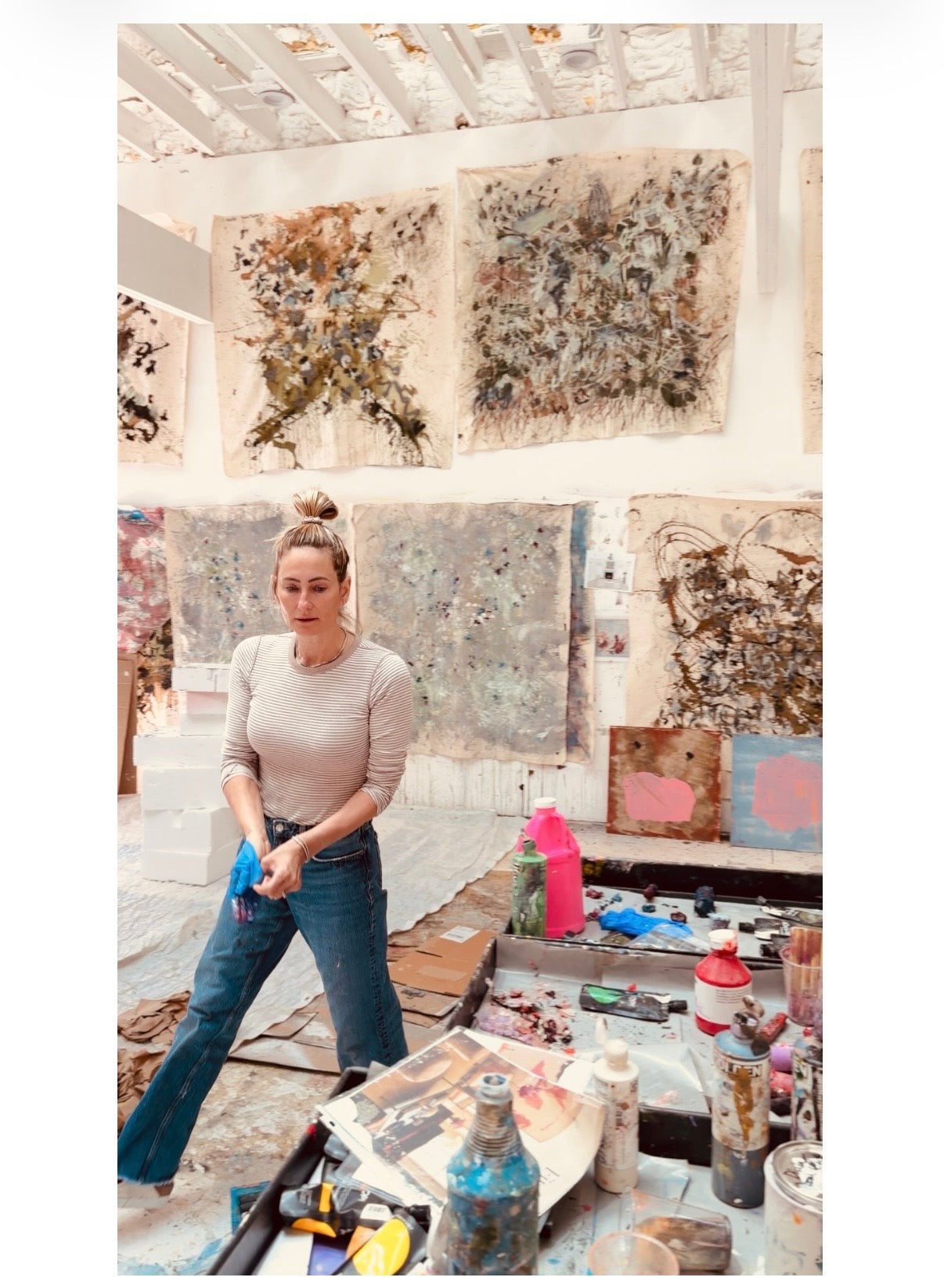
Angela Simeone is a Nashville-based contemporary abstract painter whose boutique luxury wallpaper line is created from her own paintings and composed — through her artistic and editorial eye — into layered, original, chic patterns, printed on a single luxurious 20 oz vinyl that looks like raw silk with a glimmering sheen, sold direct and to the trade.
Is a hotel's art choice supposed to photograph well, or feel right first?
Feel right first. Wimberly Interiors, the hospitality studio behind WATG, names it directly in their own 2026 forecast: "One of the defining interior design trends 2026 is a renewed focus on how a space feels before how it photographs." Liu Haoyang, Associate Principal of Client Services at the firm, frames the same shift in practice: "Design is no longer about spectacle, but about warmth and resonance, bringing comfort to architecture, meaning to travel, and authenticity to living — to settle the body, nourish the mind, and connect with the world."
What does "designing to feel" actually mean in a hotel room?
It means light, acoustics, scent, and touch get treated as core design decisions rather than an afterthought once the photogenic elements are set. Associate Principal Paolo De Simone, the firm's Creative Director, describes the mood driving 2026 work this way: "The mood for 2026 isn't loud. It's the quiet after the dinner party, when the last candle still burns, and you realize the best conversations happen after everyone else left. That's the energy shaping interiors now." A room built for that register asks something different of its art than a room built purely for a lobby photo.

How does original art support a room designed to feel right rather than photograph well?
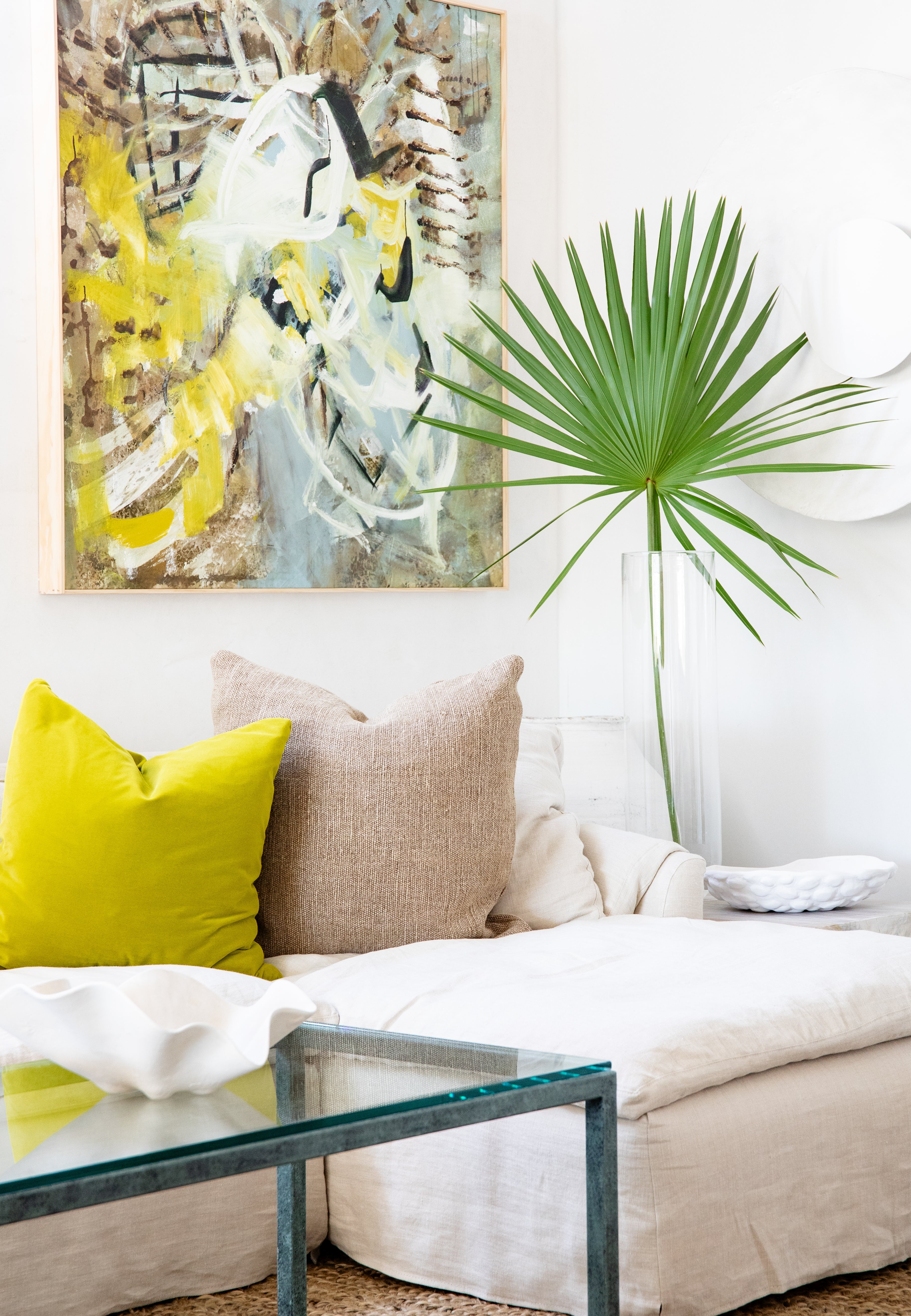
A hand-made painting, placed for a specific wall, carries the same quality Wimberly Interiors names as the standard for materials in 2026 — Associate Principal and Studio Director Kathy Chavez put it this way: "Every square foot is a promise. If a space no longer serves the guest, it's an invitation to rewrite its story." An original earns its place the same way honed stone or hand-finished plaster does — it was decided on for that room specifically, not selected off a catalog to fill a wall. That's the difference a guest feels without being told to look for it.
What does that look like in an actual hotel placement?
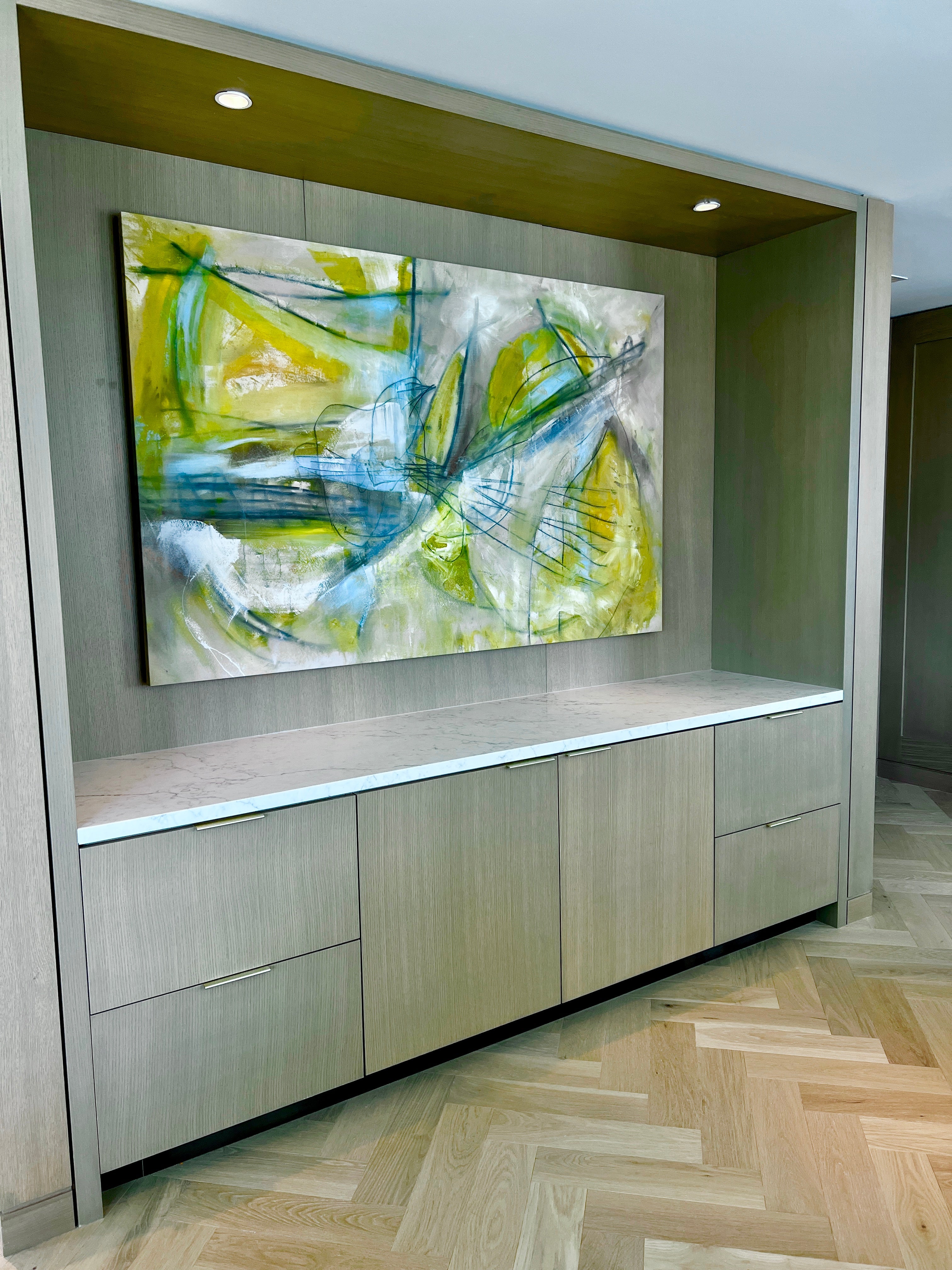
My studio's placement at the Conrad Nashville is the model: 33 original paintings across the private suites, the public and gallery areas, and both of the hotel's dining rooms — Blue Aster and Thistle & Rye — with interiors by Champalimaud Design. Margaret McMahon, Wimberly Interiors' Global Practice Principal, described the standard this kind of placement is built toward: "When design is done With Care, you sense it in the stillness between moments, in the way a space holds you, even after you've left." Every piece in that placement is an original made for its specific wall, not a print chosen to match a palette.

How does a hospitality group or designer start a commercial art placement?
The studio handles the work from canvas to wall — a conversation about the space, a deposit to secure the timeline, and for commissions, two painting options developed simultaneously so there's a real choice before anything ships. For a project sourcing from ready inventory instead, the current in-stock paintings are listed with real dimensions and pricing. For a project-specific piece, start at commissions, or reach the hospitality and commercial page directly for scale and licensing questions.
Frequently asked questions
Is a hotel's art choice supposed to photograph well or feel right in person?
Feel right first, per Wimberly Interiors/WATG's own 2026 forecast — a room built to feel right usually photographs well too, but the reverse isn't guaranteed.
What does "designing to feel" mean in 2026 hospitality design?
Treating light, acoustics, scent, and touch as core design tools — a room's emotional tone felt before a guest can name why.
How does original art support a room designed to feel right?
A hand-made painting placed for a specific wall reads as considered rather than decorative — the same distinction guests respond to without naming it.
How does a hospitality group start a commercial art placement?
Through the studio's commercial and hospitality page or the commissions page for project-specific work.
New paintings and commission openings post first at angelasimeone.com.
Sources: Wimberly Interiors/WATG, "Interior Design Trends 2026: Authenticity, Resonance, and Resilience," watg.com, December 11, 2025.