One Large Statement Painting vs. a Gallery Wall: Which Should I Do?

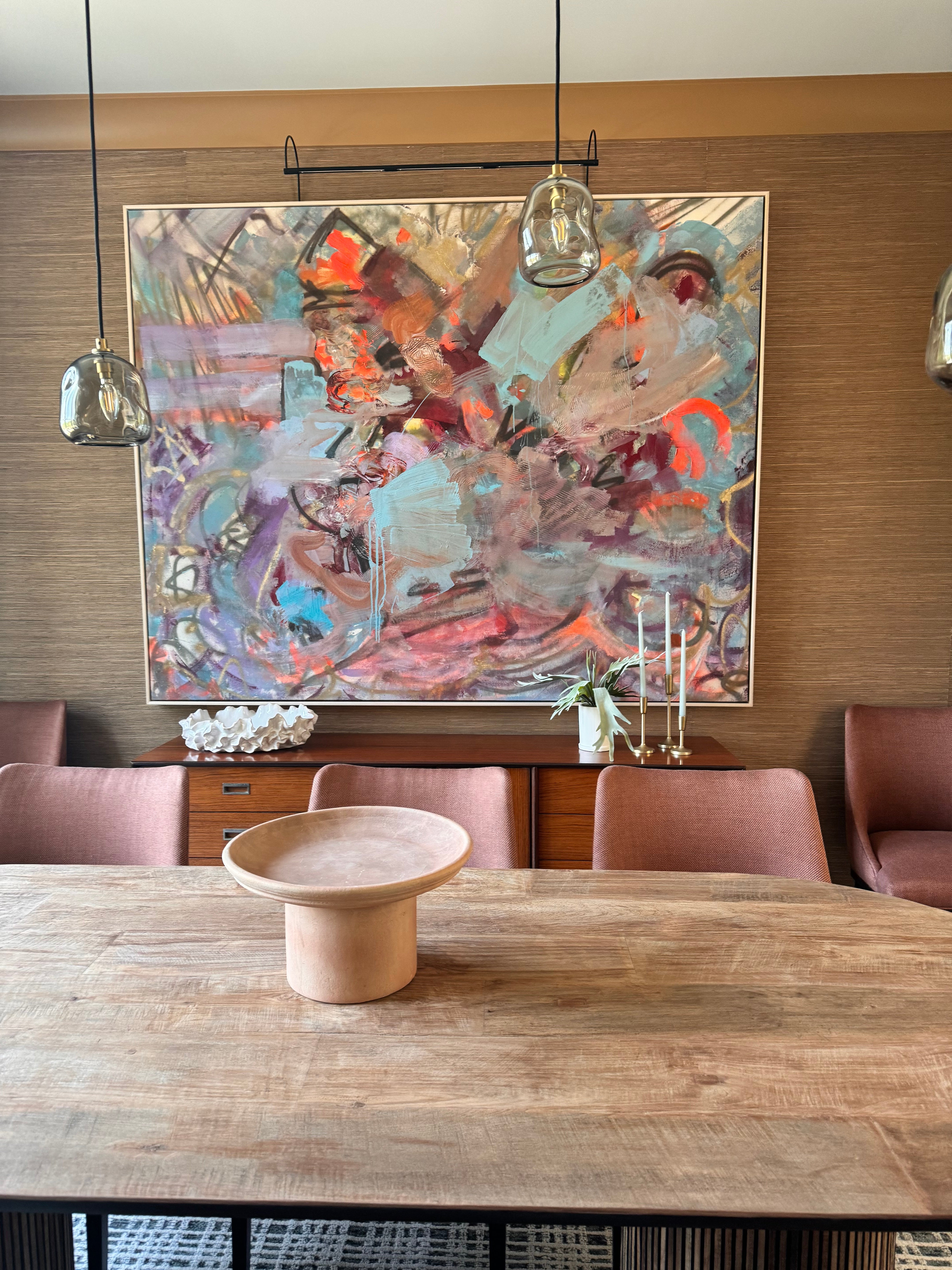
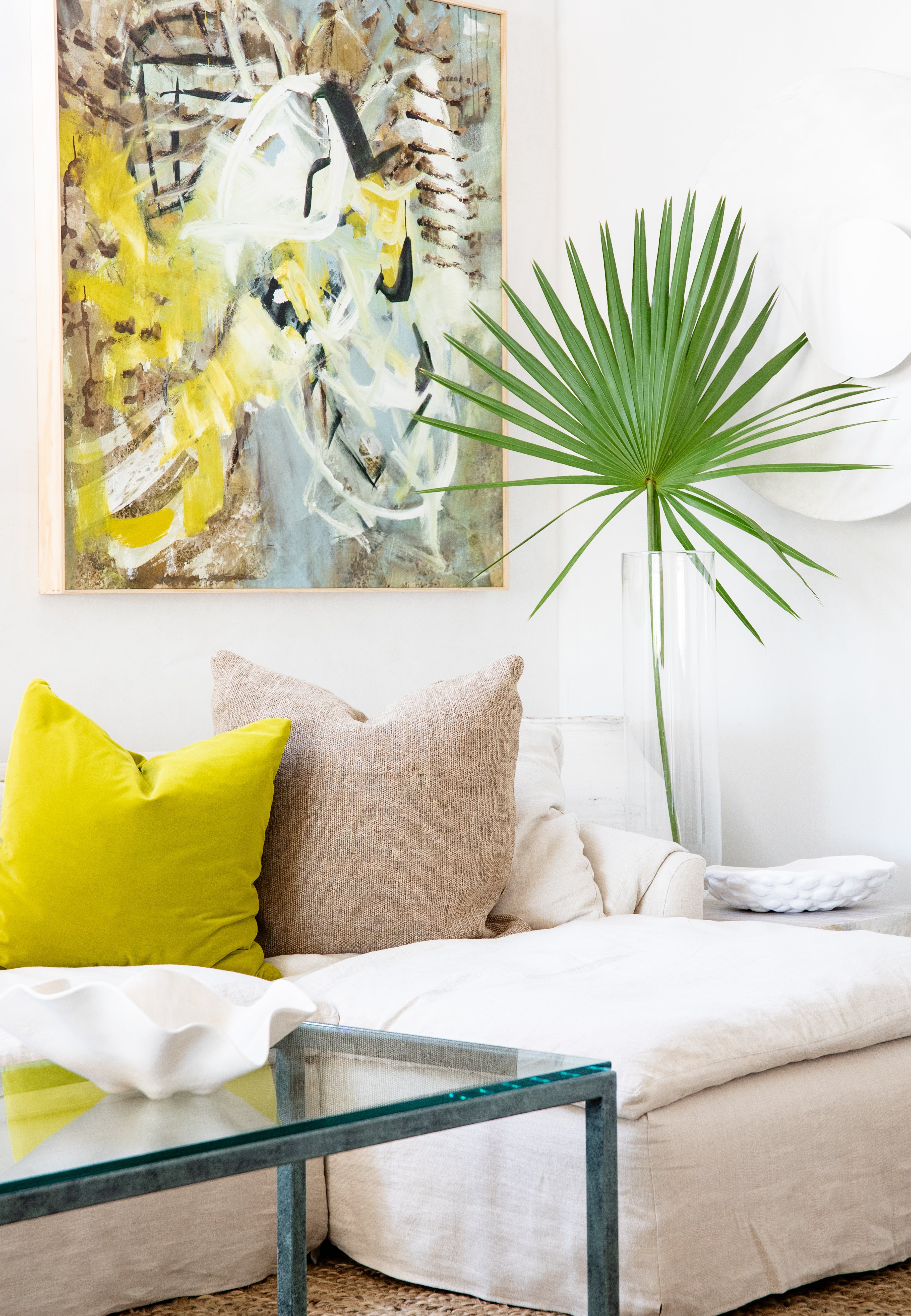
A single large-scale original by Angela Simeone anchors this Starr Sanford Design living room, above a bouclé sofa.
TL;DR: Interior designers in 2026 are moving away from overly styled gallery walls toward one strong, generously sized original piece. A single painting at the right scale anchors a room better than a dozen smaller frames—and does it with less visual noise.
Angela Simeone is a Nashville abstract painter with a twenty-year body of work. Her large-scale originals hang in the Conrad Nashville (placed by Champalimaud) and in the Frist Clinic and Sarah Cannon Cancer Center.
One large statement painting vs. a gallery wall—this is one of the questions I hear most from collectors who've been living with white walls longer than they planned. My answer is almost always the same: go big, go single, and don't let the wall break into pieces.
Here’s what the designers and the data are telling us right now—and then I’ll show you where a large-scale original fits.
Does a statement painting or a gallery wall make a room feel better?
“Art is the layer that makes a room feel collected, evolved, and alive,” says Henriette von Stockhausen, Creative Director of VSP Interiors. “Often, it’s that single unexpected piece that makes the whole room feel considered rather than conventional, balancing richness and cutting through pattern and texture with clarity.”
A gallery wall can work beautifully when the curator knows exactly what they’re doing—but most living rooms are not galleries, and most collections of twelve prints assembled over the years don’t hang together the way they look on Pinterest. Interior designer and creative consultant Hattie Hansard of Joanna Wood has noticed the shift firsthand: in recent years, she’s seen a move away from “overly styled gallery walls” toward “more intentional, breathing space around fewer, stronger pieces.”
“Furniture can create comfort and layout, but art introduces personality and narrative,” Hansard says. “It anchors a scheme and often becomes the emotional focal point of the space. A room without art can feel unfinished; even a single piece can bring cohesion and intention.”
The case for the statement painting, in one sentence: the right original in the right scale doesn’t compete—it resolves the room.
How big should my statement painting be?
Bigger than you think. This is the most consistent piece of advice I hear from designers, and from the collectors who’ve bought my work and then written to me after install.
“Scale is really important—hanging artworks that are too small is one of the most common mistakes,” Hansard confirms. “A generous piece above a sofa feels confident, while tiny frames floating in space—unless you’re a curator and really know what you’re doing—can look a bit untethered.”
Von Stockhausen agrees: “A generously sized artwork can anchor a room and give structure to a layered scheme, especially in period or traditional interiors.” Her rule of thumb: a piece should prevent the room from feeling fragmented, not add to the fragmentation.
For most sofas (84”–96” wide), your painting should be at least 60” wide—ideally closer to 72”–84”. For a double-height wall or a great room, scale up from there.

One statement painting, instead of a gallery wall, anchors this neutral living room in wood panelling and copper tones.
Which room benefits most from a single statement painting?
Living rooms and primary bedrooms are where a single statement painting earns its keep most clearly. The space above the sofa—especially if the sofa is a primary seating anchor—is where one large original does the most structural work in a room.
Von Stockhausen’s framing lands exactly right: “People are almost always too cautious with art. The key is confidence and a sense of play—often one unexpected piece transforms the whole space.”
The gallery wall works better in stairwells, hallways, and rooms with irregular wall shapes where a single canvas would look awkward. For a flat expanse of wall in a sitting room, one large piece nearly always wins.
What makes an original painting different from a print in this context?
A gallery wall almost always uses prints—the same image reproduced and grouped for visual rhythm. A statement painting, if it’s an original, does something a reproduction cannot: it holds the room differently in different light, at different times of day, from different angles. The physical surface—the texture of paint built up over hours of working—reads from across the room. It draws the eye and keeps it.
That’s the reason collectors who choose one large original over twelve prints will tell you, months later, that the room feels alive in a way they hadn’t expected.
Large statement paintings available now
These are the works I currently have in the studio ready to ship:
- Marigold Blue Grey Coffee Brown Abstract Oil Painting — $7,850. Warm gold moving into grey and brown, built up over weeks in my Nashville studio. One-of-one.
- Red Earth Ocean Blue — $8,850. Rich oxide reds and deep ocean blues, large scale. One-of-one.
- Peach Rust Brown Yellow Blue — $7,800. Soft and earthy at first glance, more complex as the light shifts. One-of-one.
All three are original oil paintings on canvas. Each ships with a signed certificate of authenticity and a pre-ship video in real light.
→ See all available paintings
→ Commission a painting for a specific wall or palette