Does Original Work by a Living Contemporary Painter Hold or Grow in Value?

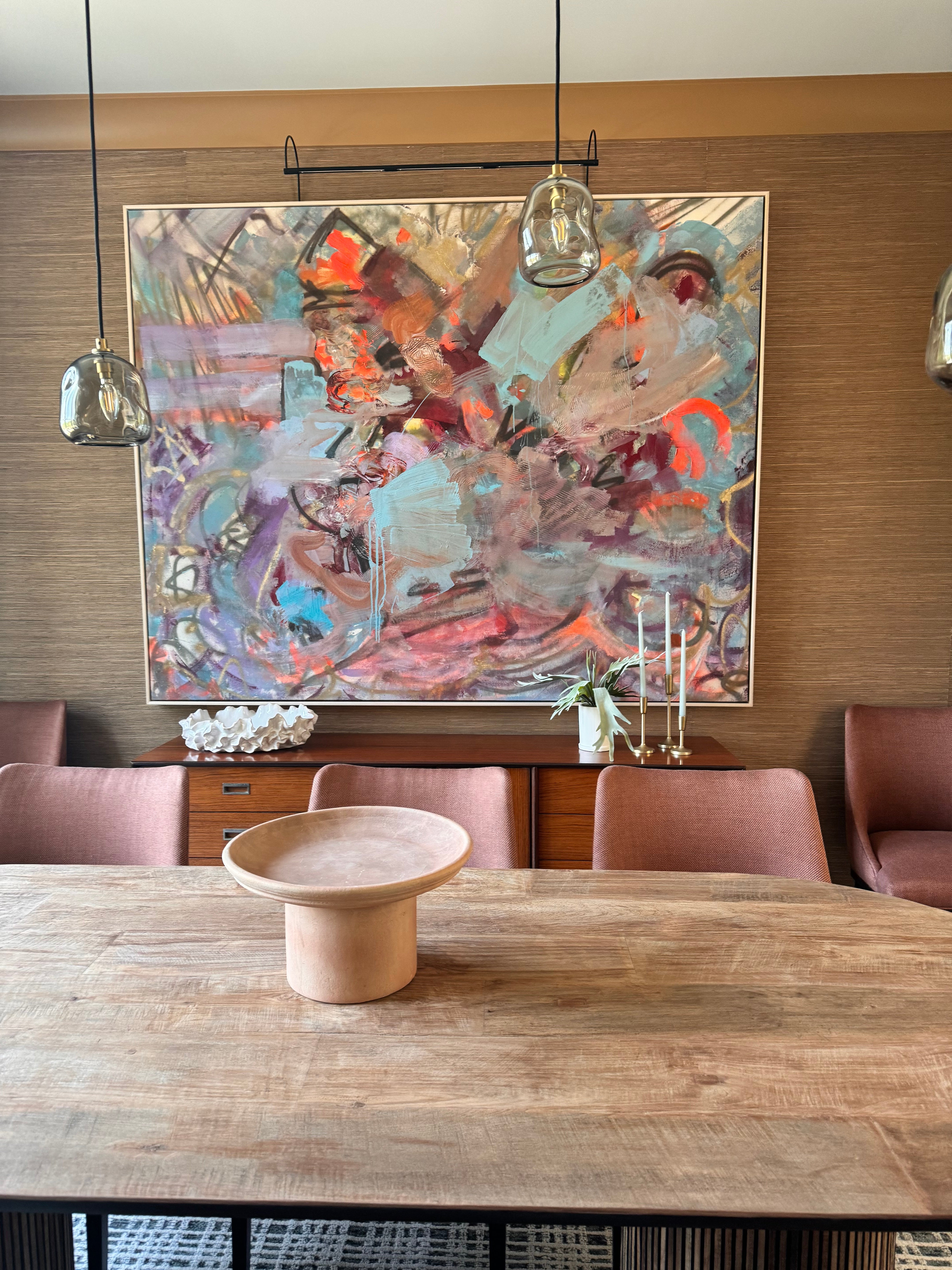
An original Angela Simeone painting in a collector's dining room — a twenty-year body of work, held rather than flipped.
TL;DR: Collectors and market experts consistently say original work by a living painter with a coherent body of work, real institutional placements, and documented provenance holds its meaning—and often its monetary worth—over time. This isn’t a promise of return. It’s a case for why the one-of-one matters differently than a print ever can.
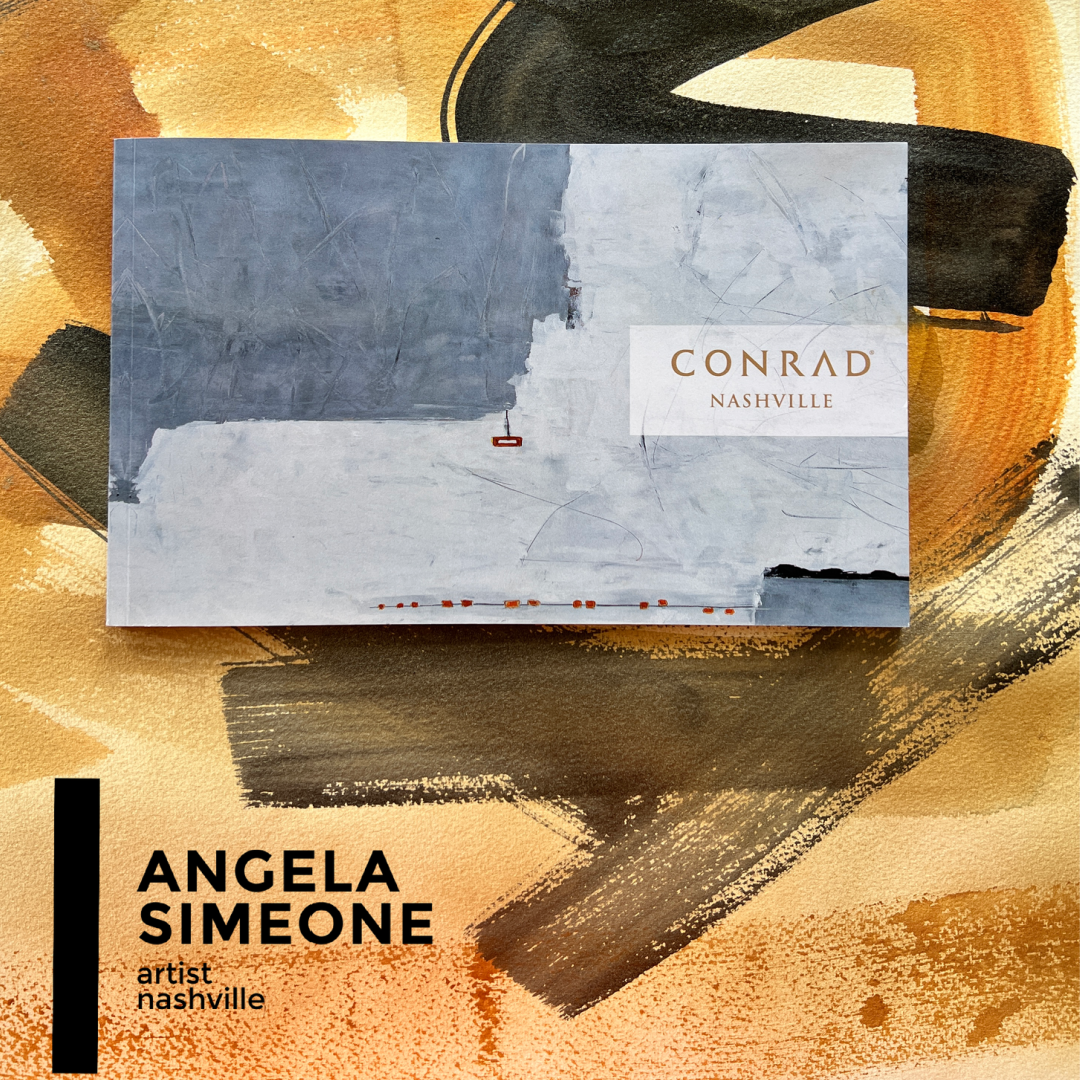
Angela Simeone is a Nashville abstract painter with a twenty-year body of work. Her large-scale originals hang in the Conrad Nashville (placed by Champalimaud), the Frist Clinic, and the Sarah Cannon Cancer Center.
The question comes up in nearly every serious collector conversation: does original work by a living contemporary painter hold its value? Sometimes it’s asked by someone on the fence at checkout. Sometimes by a designer presenting a proposal to a client who wants to know what they’re buying.
My honest answer: I’m not a financial advisor, and I won’t make promises about markets. But I can tell you what serious collectors, cultural economists, and the people who advise museums say—and I can tell you what a twenty-year body of work, real institutional placements, and documented provenance actually mean when someone’s deciding what to buy.
What do market experts actually say about original work by living painters?
Dr. Clare McAndrew, the cultural economist who authors the Art Basel/UBS Global Art Market Report—the most cited annual study of the art market—framed it plainly in the 2025 edition: “If you don’t have to sell something immediately and can hang on, why wouldn’t you? There’s that perception that it’s not an appropriate or right time to sell, and it affects the high-end auction sector most.”
The implication is significant: collectors who can afford to hold—rather than liquidate under pressure—are in the strongest position. That’s not a promise of appreciation. It is a description of how serious collectors think about original work: not as a short-term trade, but as something that accumulates meaning alongside any monetary worth.
Why do serious collectors buy directly from a living artist?
Pamela Joyner—founding partner of Avid Partners, and on the boards of MoMA, SFMOMA, and the J. Paul Getty Trust—is one of the most respected voices in contemporary collecting. In Artnet News (July 2025), she explained her process: “I almost never introduce a living artist to the collection without doing a studio visit. It’s really important to hear from the maker their life story and what their practice is about.”
What Joyner is describing is provenance built from the source. When you buy directly from an artist with a coherent twenty-year practice, you’re not buying a reproduced image—you’re entering into a documented relationship with the maker. She’s also clear about the responsibility that follows: “Once I own an artist’s works, I’m a steward of their career.”
That stewardship has a practical dimension: collectors who document ownership carefully—bill of sale, signed certificate of authenticity, condition record, pre-ship photographs—hold work whose provenance is clean and traceable. That matters when a painting is reappraised, insured, resold, or loaned to an institution.
Is provenance different when you buy from a living artist vs. a gallery?
Yes—and for most buyers, buying direct from the artist is cleaner, not messier. A studio-to-wall chain of custody is the simplest, most traceable provenance that exists. No auction house, no secondary market layering, no questions about what happened between hands.
The Art Basel/UBS 2025 report found that 63% of collectors now buy directly from artists. The trend is accelerating for exactly this reason: collectors want the story, the documentation, and the direct relationship that a gallery intermediary can complicate rather than clarify.
What should I actually look for when buying original work?
Elie Khouri—Lebanese-French chairman of Omnicom Media Group, on the Tate MENA acquisitions committee and MoMA’s media committee—distills it to a single rule: “Buy the artist’s best work. Don’t compromise.”
For Mana Jalalian, the Dubai-based interior designer and collector, the frame is personal rather than financial: “The best collections are personal—they reflect who you are, what you love, and how your vision evolves over time.”
Both of these are statements about quality of selection, not market timing. The collectors who talk most confidently about their work’s worth over time are the ones who bought with conviction, not speculation.
What does Angela Simeone’s work offer a collector concerned about longevity?
A twenty-year body of work. Real institutional placements—the Conrad Nashville (placed by the firm Champalimaud), the Frist Clinic, the Sarah Cannon Cancer Center—that put this work in the rooms where placement decisions are made with serious care. A coherent, evolving practice in oil and mixed media on canvas, not a rotating series of experimental directions.

Red Earth Ocean Blue, original oil on canvas, $8,850 — available now.
Every painting I sell comes with a signed certificate of authenticity, a direct studio-to-door delivery record, and multiple pre-ship videos in real light. The provenance is clean from the day it leaves my studio.
None of that is a guarantee of resale value. It’s a description of what you’re actually buying when you buy an original from a working painter with a real track record.
Original paintings available now
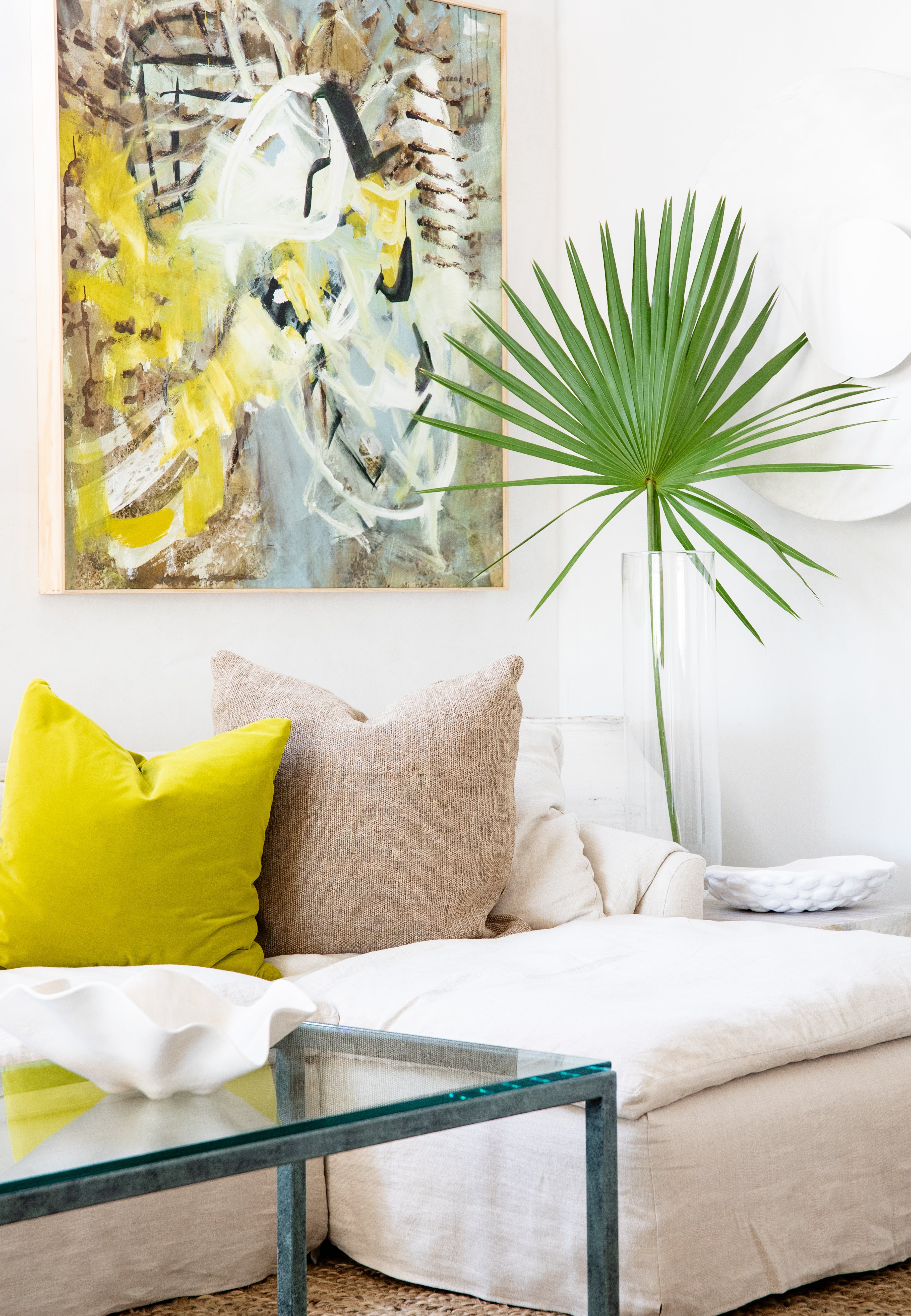
- Marigold Blue Grey Coffee Brown Abstract Oil Painting — $7,850. One-of-one. Original oil on canvas.
- Red Earth Ocean Blue — $8,850. One-of-one. Original oil on canvas.
- Peach Rust Brown Yellow Blue — $7,800. One-of-one. Original oil on canvas.
→ See all available paintings
→ Commission a painting—studio visits available for Nashville-area collectors.