Photoshop Can Sketch a Composition. Only Paint Settles It.
In short: Yes, it is still a hand-made painting. Painters have used digital tools at the sketch stage since the mid-1990s, in the same role charcoal underdrawing has always filled: working out composition before the paint goes on. April Gornik, whose current show is at Miles McEnery Gallery, describes her own practice as a balance of the computer, the paint and the charcoal sticks. What decides the question is what happened on the canvas afterward.
Someone reads that a painter worked from collaged reference photos, or laid out a composition on a screen before touching a brush, and a small suspicion arrives with it. If part of the thinking happened digitally, how hand-made is the object on the wall.
The question is worth asking plainly, because the answer is not defensive.
Do serious painters actually use digital tools before they paint?
Openly, and for a long time. April Gornik — a painter showing at Miles McEnery Gallery in New York, in her third solo exhibition with that gallery — described her working method to The Brooklyn Rail in April 2026 without a trace of apology:
1. "It's a beautiful balance of modern and ancient technology, the computer and the paint and the charcoal sticks."
— April Gornik, painter
She dates the habit precisely.
2. "I started messing around with Photoshop in the mid-nineties when I was trying to be a more organized person… It quickly became a sketch tool for me—great for collaging, because I can do it so quickly."
— April Gornik
Thirty years, in other words. The interviewer, painter and critic Hearne Pardee, put the comparison directly to her: that collage and underpainting are different operations, one stacking images and the other working against the light of the ground. Gornik's answer named what each material gives away for free:
3. "In the charcoal drawings, the paper gives you light automatically; you don't have to concoct it out of paint. You just have to not wreck it. Big difference."
— April Gornik
That is a technical observation, not a philosophical one, and it is the reason the sketch stage has never been the part of painting anyone romanticised. Under-drawings get covered. Studies get discarded. The tool that produced them is a tool.
Where does the sketch stop mattering?
At a point the painter has to find each time.
4. "There's the point where the sketch has to just go away, which is different for each work."
— April Gornik
Everything a buyer is actually paying for happens after that point. Gornik describes pulling irregularity back out of a photo sketch on purpose, because nature's irregularity is richer than anything a plan contains — something she can imitate but, in her word, cannot grow. The painting stops obeying the sketch and starts obeying itself.
That transfer of authority is the whole question. A digital sketch is a proposal. Oil on canvas is the argument.
What is a buyer really checking when they ask this?
Three things, usually, and none of them is about software.
Is it one of one. An original painting exists once, at one size, with one surface. That is a physical fact about the object, unaffected by how the composition was worked out.
Was it made by the hand it is attributed to. A named artist, a documented practice, a body of work with a traceable history — not a pattern generated on request.
Can the surface be read. Layers, edges where one decision sits on top of an older one, places the painter went back in. A surface carries its own record of having been made slowly by a person, and it is the least fakeable thing in the room.
How this studio actually works
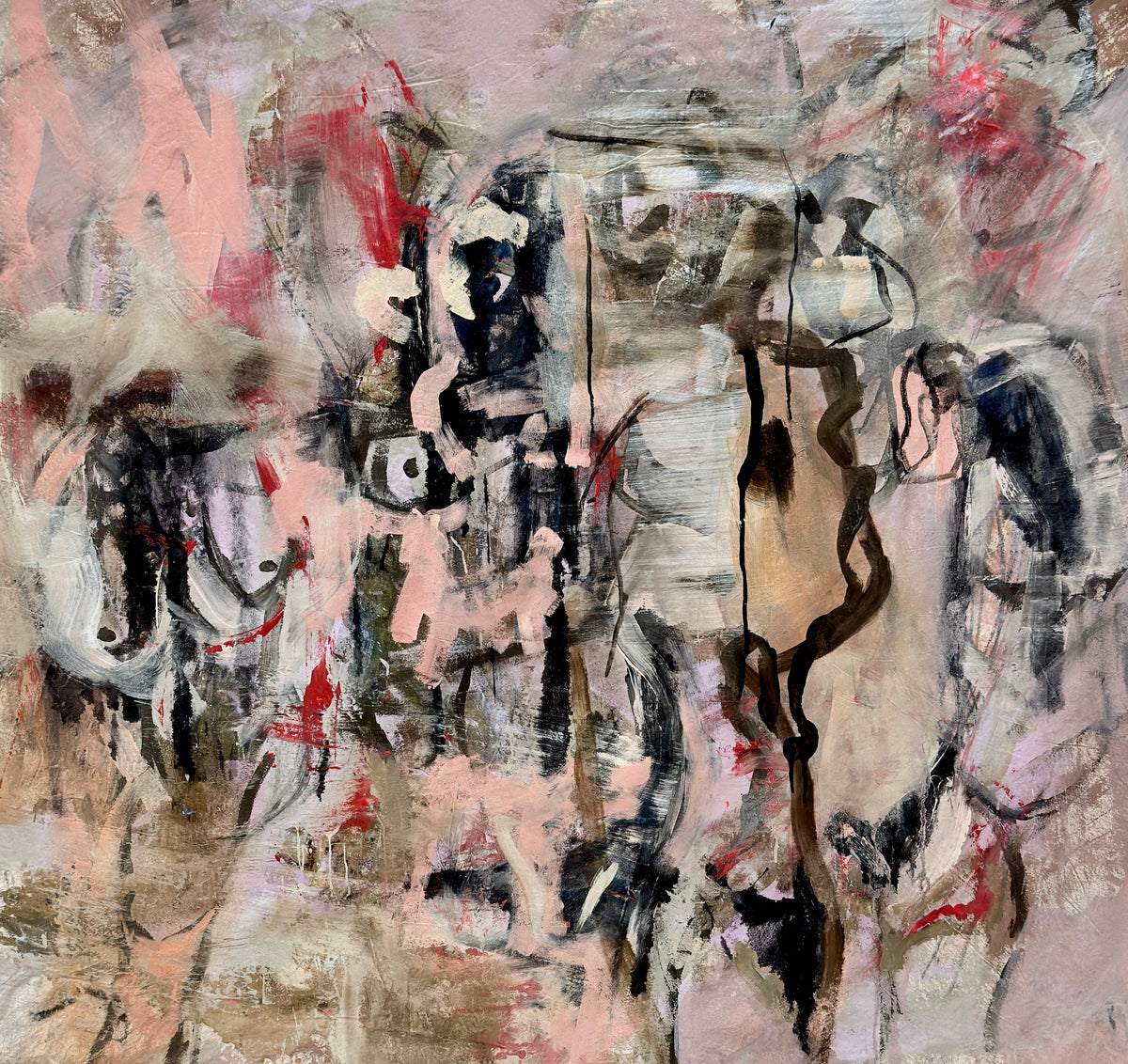
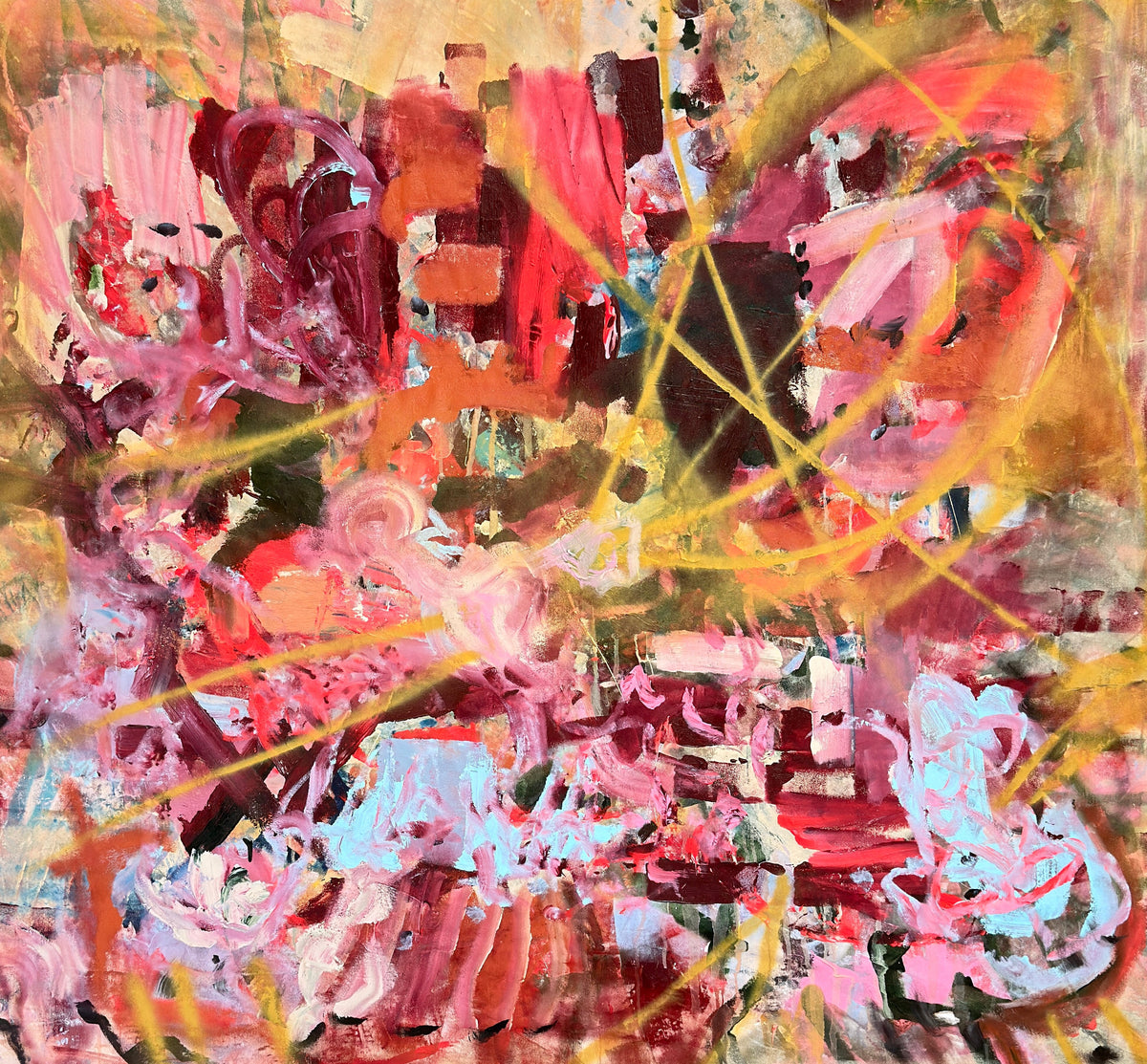
My compositions start in charcoal on the canvas itself — an underdrawing that mostly disappears, and sometimes surfaces again through a thin passage of colour later. Oil thinned with medium goes over that, then palette knife, then fingertip. Some pieces are painted over for weeks before they settle. The Astral Thicket series begins further back than that: walnuts harvested and boiled from my own yard become the base stain, layered with crushed and ground oil and wax pigments, then lifted by pops of dusty pastel.
I pick a colour story and anticipate the hues as fluid secondary and tertiary outcomes, and I do not plan the result. Not knowing is the primary draw of the work for me. Whatever a painter uses to arrange a composition beforehand, that part is untouched: the surface is still built in layers by hand, over weeks, and it still argues back.
What to ask instead
If the hand-made question matters to you — and it should — the useful version of it is about the object, not the process upstream of it. Ask how the surface was built. Ask what the ground is. Ask to see the piece move in real light before it ships, at real scale, so the texture reads. Ask who painted it and what else they have painted.
A sketch is where a painting is imagined. The canvas is where it is decided.
Related reading
- Original paintings available now
- About Angela Simeone
- Commission an original painting
- More on contemporary art and abstract painting
Frequently asked questions
Is a painting still original if the artist used a digital sketch?
Yes. An original painting is a one-of-one physical object made by hand in paint. The tools used to plan a composition — charcoal, thumbnail studies, collaged photographs, Photoshop — sit upstream of the object and have been part of painting practice for centuries in one form or another. April Gornik, showing at Miles McEnery Gallery, has used Photoshop as a sketch tool since the mid-1990s.
How is that different from AI-generated art?
An AI-generated image is produced by a model rather than painted. A digital sketch is a plan that a painter then executes by hand in oil on canvas, and typically abandons partway through. The difference is whether a physical painting was made, by a named person, over time.
What should I ask an artist about how a painting was made?
Ask what the ground is, how many layers went down, whether there is an underdrawing, and how long the piece took. Ask for video of the finished work in real light. Answers arrive quickly from a working studio.
Does a charcoal underdrawing show in the finished painting?
Sometimes. It is usually covered, but a thin or lifted passage can let it surface again, which is part of why a built-up surface reads as having a history rather than a single moment.
See the work
Browse the original paintings currently available, each one of one. Original paintings available now.
Sources
- The Brooklyn Rail, April Gornik with Hearne Pardee, In Conversation, April 2026
- Miles McEnery Gallery, April Gornik artist page