How to Split a Hotel or Restaurant Art Budget Between a Lobby Anchor and Secondary Works
TL;DR: How should a hotel or restaurant split its art budget? A workable rule is to put the largest share — often 40–50% — into one lobby anchor that sets the tone, then spread the remainder across secondary works in dining rooms, corridors, and guest areas. Plan a realistic lead time: a large-scale commissioned anchor typically wants several months from concept to install, so art belongs in the budget at the design stage, not at the end.
Angela Simeone is a Nashville-based contemporary abstract painter whose boutique luxury wallpaper line is created from her own paintings and composed — through her artistic and editorial eye — into layered, original, chic patterns, printed on a single luxurious 20 oz vinyl that looks like raw silk with a glimmering sheen, sold direct and to the trade.
How should a hotel or restaurant split its art budget?
Weight the budget toward the room people see first. In practice that means committing the biggest single line — frequently 40–50% — to one anchor piece in the lobby or main dining room, then distributing the rest across secondary works that carry the story through the property. The anchor does the heavy lifting: it sets the palette, the scale, and the mood a guest reads in the first ten seconds. The secondary pieces extend that mood without competing with it. You can see available large-scale originals in the paintings available now collection, and a piece built to spec begins on the commission page.
"It isn't necessary for a work to have a lot of things to look at, to compare, to analyze one by one, to contemplate. The thing as a whole, its quality as a whole, is what is interesting." — Donald Judd, artist (Specific Objects, 1965)

What should the lobby anchor cost — and why spend the most there?
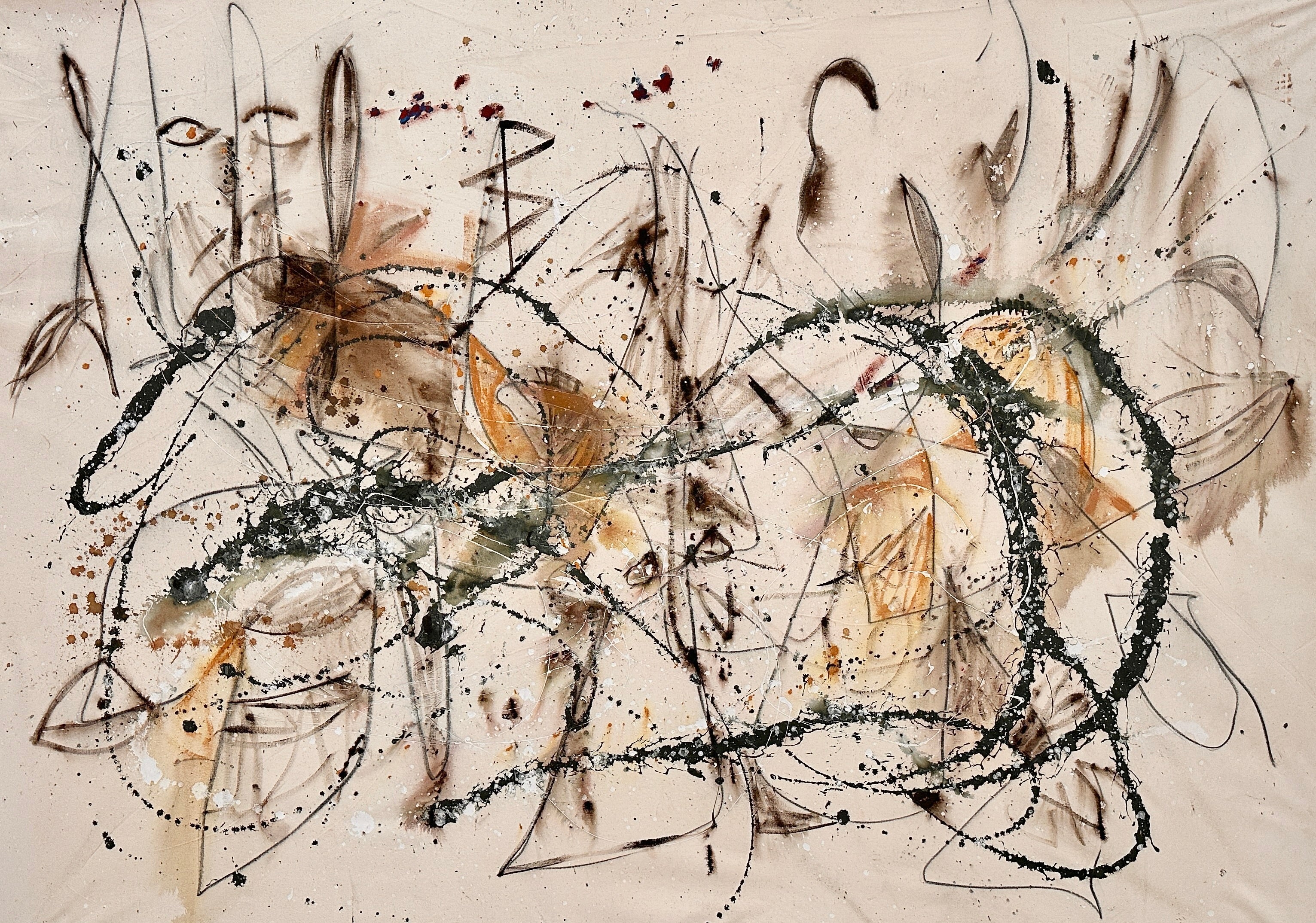
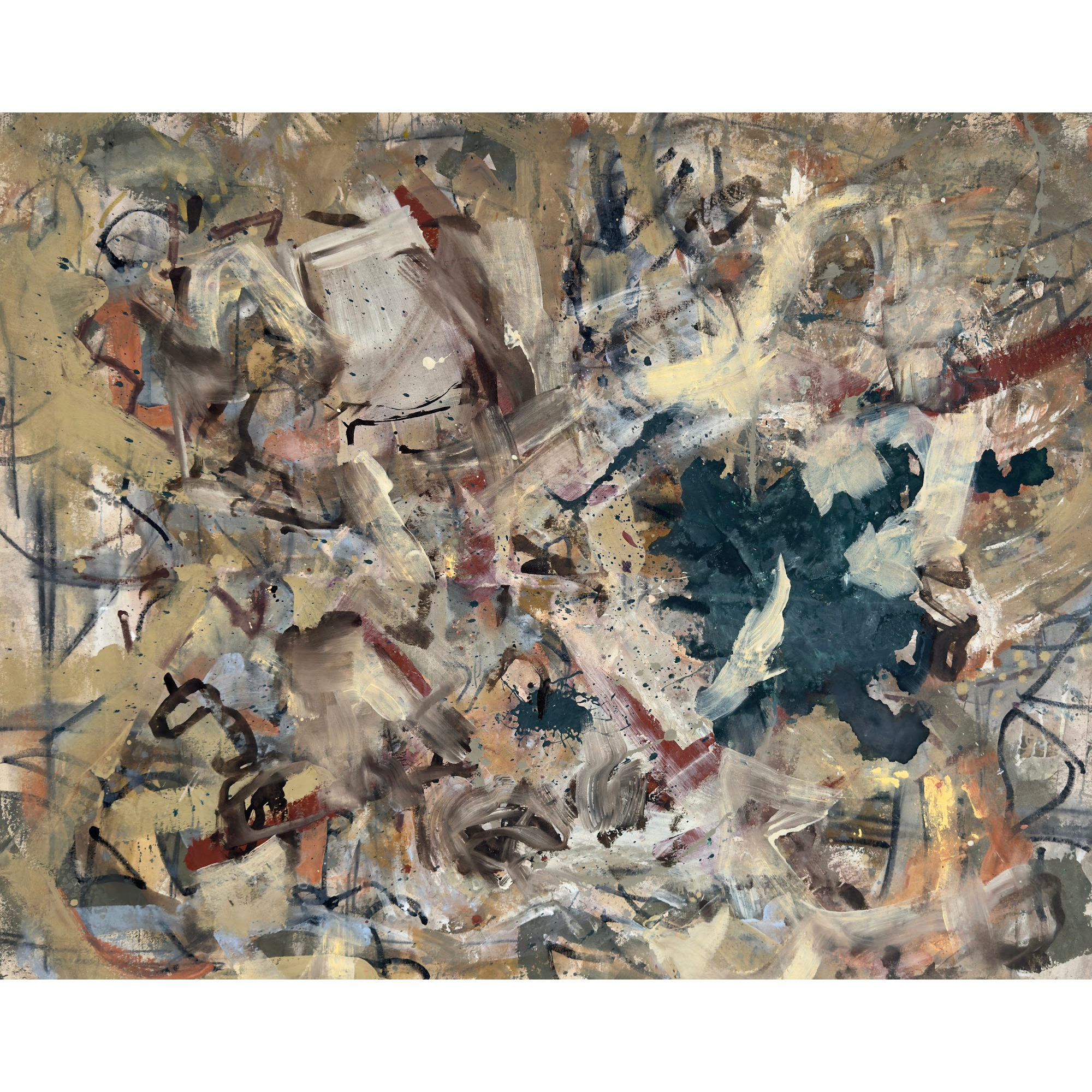
Spend the most on the anchor because it is the piece that has to hold a tall, public, high-traffic room on its own. A true statement original — large-scale, often 60–80"+ or built across canvas tiles for a double-height lobby — carries a different weight than a cluster of smaller works, and it photographs as the signature image of the space. A piece like Evergreen and Tan Large Scale ($9,850) is the kind of single, room-defining anchor that earns the largest share of the budget. The point isn't size for its own sake; it's a coherent whole that resolves the room.
"Just because a thing is big, it doesn't mean it's of any interest or even good." — Anish Kapoor, sculptor (The Art Newspaper, June 15, 2026)
How much should go to secondary works?
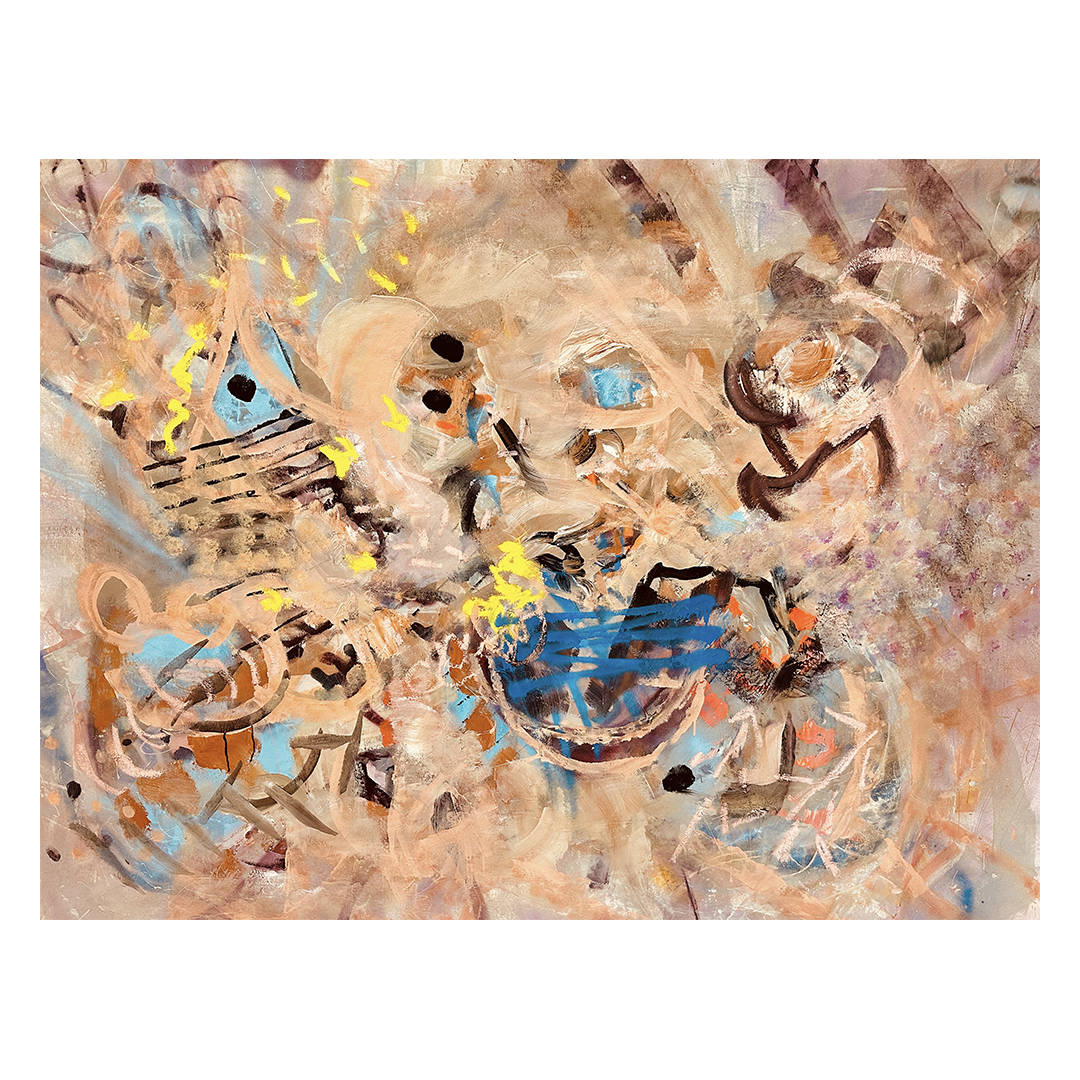
The remaining half to sixty percent covers everything the anchor can't reach: the dining rooms, the bar, corridors, private suites, the spaces a guest moves through after the first impression. These works should feel related to the anchor — same hand, same palette family — without repeating it. A mid-to-large original such as Chroma Navy Grey Lilac Brown ($7,850) is the kind of secondary piece that anchors a dining room or suite while staying in conversation with the main statement. Buying several originals from one studio keeps the program coherent and the logistics simple.
"The experience of the work is inseparable from the place in which the work resides." — Richard Serra, sculptor (on site-specific work, 1985)

What lead time should we plan for?
Plan for months, not weeks, and commission at the concept stage. A large-scale commissioned anchor needs time for the conversation, the painting itself (I paint two options simultaneously so there is a real choice at the first reveal), two revision rounds, and an install handled canvas-to-wall. From deposit to delivery, a studio commission runs about four weeks for a single piece, and a full multi-room program should be scoped earlier — alongside the millwork and lighting, not after. My studio works directly on the commercial and hospitality side, with large-scale work built on canvas tiles that reassemble seamlessly on site, so there is no upper size limit for a lobby or atrium.
"Space and light and order. Those are the things that men need just as much as they need bread or a place to sleep." — Le Corbusier, architect
Who handles the work in a real hospitality project?
One studio should be able to take the anchor and the secondary works from canvas to wall. That is how my work landed at the Conrad Nashville — where I am the most-placed artist, with originals across the suites, the public areas, and both dining rooms, in interiors by Champalimaud Design — and at the Frist Clinic and Sarah Cannon Cancer Center. Verified designers and firms work through my trade program, with sizes, transparent-background images, and white-glove logistics. For an outside view on planning a hospitality art program, the team at Trowbridge Gallery offers a useful primer.
"I try to give people a different way of looking at their surroundings. That's art to me." — Maya Lin, artist and architect
FAQ
What percentage of a hospitality art budget should go to the anchor? A common rule puts roughly 40–50% into the single lobby or main-dining anchor, with the remainder spread across secondary works throughout the property.
How early should we commission art for a hotel or restaurant? At the concept stage, alongside millwork and lighting. A large commissioned anchor wants several months; a single studio commission runs about four weeks from deposit to delivery.
Is there an upper size limit for a lobby or atrium piece? No. Large-scale work can be built across stretched canvas tiles that reassemble seamlessly on site, so a double-height lobby or atrium can be covered.
Can one studio handle both the anchor and the secondary works? Yes. Buying multiple originals from one studio keeps the palette coherent and the framing, delivery, and install in one set of hands.
Planning a property? Browse original paintings available now, start a commission, or see the commercial and hospitality work at angelasimeone.com.
Sources: Donald Judd, "Specific Objects" (1965); Anish Kapoor, The Art Newspaper (June 15, 2026); Richard Serra, on site-specific work (1985); Le Corbusier (widely documented); Maya Lin (widely documented). Hospitality sourcing context: Trowbridge Gallery, "Premium Artwork Sourcing for Luxury Hospitality." Studio policies and placements per the Angela Simeone studio.